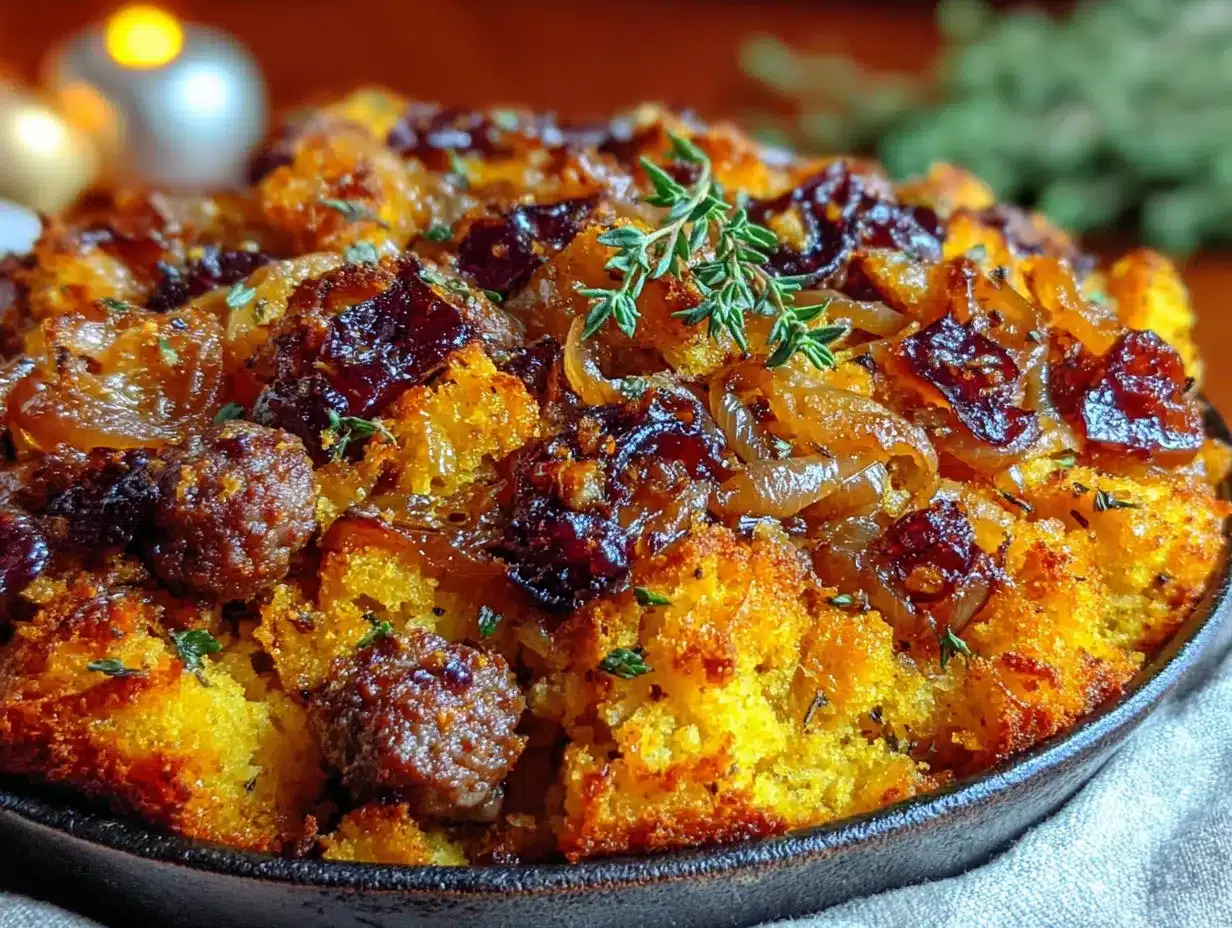
The edges are what I made this for. Not the soft middle, not the juicy sausage bites tucked inside—the edges. That dark amber crust where the cornbread meets the heat of the pan, where the apples have caramelized into something almost jammy, where the whole thing gets this texture that’s part crouton, part spoonbread, and entirely the reason I keep making this stuffing even when it’s not Thanksgiving. Everything else about this dish is secondary to that one moment when you press your fork down and hear it—that faint crackle of a perfectly browned corner giving way.
I’ve never been a traditional stuffing person. The mushy, one-note version that shows up on holiday tables never really did it for me. But this savory gluten-free cornbread stuffing with apples and sausage? That’s different. That’s the kind of side dish that makes you forget there’s a turkey in the oven. The first time I made it, I was testing a gluten-free cornbread recipe for a friend with celiac, and I had leftover cubes drying out on the counter. I threw in some breakfast sausage I had in the fridge, a Honeycrisp apple that was about to go soft, and crossed my fingers. What came out of the oven was so good I ate it straight from the baking dish, standing over the counter, burning my tongue on those crispy edges.
That’s the thing about this recipe. It’s not trying to be a holiday showstopper, though it absolutely can be. It’s just honest, savory-sweet comfort food that happens to be gluten-free. And once you taste those edges, you’ll understand why I keep coming back to it.
Why You’ll Love This Recipe
This isn’t your average stuffing. It’s got personality, texture, and a whole lot of flavor packed into every bite. Here’s why it’s earned a permanent spot in my recipe rotation:
- Gluten-Free Without Sacrifice : Most gluten-free stuffings are dry, crumbly, or taste like cardboard. This one uses homemade cornbread that stays tender and holds its shape, even after soaking up all that savory broth.
- Sweet and Savory Balance : The apples bring a natural sweetness that plays off the spicy sausage and earthy sage. It’s not cloying—it’s just right, like the best fall dish you’ve ever had.
- Make-Ahead Friendly : You can prep the cornbread days in advance, assemble the stuffing the night before, and bake it off when you’re ready. Perfect for busy holidays or stress-free entertaining.
- Packed with Texture : Between the crispy edges, tender apples, juicy sausage, and soft cornbread interior, every spoonful is a little different. Honestly, it’s the kind of dish that keeps you going back for “just one more bite.”
- Works for Any Occasion : Thanksgiving, Friendsgiving, Sunday dinner, or even a random Tuesday when you want something cozy—this stuffing delivers. It’s impressive enough for guests but easy enough for a weeknight side.
What makes this version different from every other stuffing recipe out there? It’s the technique. I dry out the cornbread just enough so it absorbs the broth without turning to mush. I caramelize the apples separately before folding them in, so they keep their shape and add little pockets of sweetness. And I use a mix of breakfast sausage and Italian sausage for depth. It’s tested, tweaked, and perfected over multiple batches—trust me, this is the one.
What Ingredients You Will Need
This savory gluten-free cornbread stuffing uses simple, whole ingredients that come together to create something truly special. Most of these are pantry staples or easy to find at any grocery store.
For the Cornbread
- 1 cup gluten-free all-purpose flour (I prefer Bob’s Red Mill 1-to-1 Baking Flour for best texture)
- 1 cup yellow cornmeal (medium grind works best—not too fine, not too coarse)
- 1 tablespoon baking powder (aluminum-free for no bitter aftertaste)
- 1 teaspoon salt
- 1 tablespoon sugar (just a touch to balance the cornmeal’s earthiness)
- 2 large eggs, room temperature
- 1 cup buttermilk (or 1 cup milk mixed with 1 tablespoon lemon juice, let sit 5 minutes)
- ¼ cup unsalted butter, melted and cooled slightly
For the Stuffing
- 1 pound breakfast sausage (I use Jimmy Dean’s mild or sage variety; avoid links, go for bulk)
- ½ pound sweet Italian sausage, casings removed (adds that extra layer of flavor)
- 2 medium apples, peeled and diced into ½-inch cubes (Honeycrisp or Granny Smith work great)
- 1 large yellow onion, diced
- 3 celery stalks, diced
- 4 cloves garlic, minced
- 2 tablespoons fresh sage, chopped (or 2 teaspoons dried)
- 1 tablespoon fresh thyme leaves (or 1 teaspoon dried)
- 1 teaspoon dried rosemary
- ½ teaspoon black pepper
- ½ teaspoon salt (plus more to taste)
- 2 cups low-sodium chicken broth (vegetable broth works too)
- 2 large eggs, beaten (to bind everything together)
- ¼ cup unsalted butter, plus more for greasing the dish
Ingredient Tips
For the cornbread, don’t skip the buttermilk—it adds moisture and a slight tang that balances the richness of the sausage. If you’re dairy-free, use unsweetened almond milk with a splash of apple cider vinegar. When choosing apples, go for something that holds its shape when cooked. Honeycrisp is my go-to for its sweetness and firm texture, but Granny Smith adds a nice tart contrast. And for the sausage, I’ve tested this with turkey sausage too, and it works—just add a tablespoon of olive oil when browning since turkey sausage is leaner.
Equipment Needed
You don’t need anything fancy here. Most of this is standard kitchen gear:
- 9×13-inch baking dish (glass or ceramic works best for even heating)
- Large skillet or Dutch oven (for browning the sausage and sautéing the vegetables)
- Medium mixing bowl (for the cornbread batter)
- Large mixing bowl (for combining the stuffing ingredients)
- Whisk
- Wooden spoon or spatula
- Chef’s knife and cutting board
- Measuring cups and spoons
- Aluminum foil (for covering during baking)
If you don’t have a 9×13, you can use a 10-inch cast iron skillet for the whole thing—just bake the cornbread in it first, then use it for the stuffing. It saves on dishes and adds a nice crust. My grandmother’s old Pyrex dish is my go-to, but honestly, any oven-safe baking dish will do.
Preparation Method
Let’s get cooking. This recipe has a few steps, but I’ve broken it down so it feels manageable. Take your time, and don’t rush the browning—that’s where the flavor lives.
Step 1: Make the Cornbread (Can Be Done Up to 3 Days Ahead)
- Preheat your oven to 400°F (200°C). Grease a 9×9-inch baking pan or 10-inch cast iron skillet with butter.
- In a medium bowl, whisk together the gluten-free flour, cornmeal, baking powder, salt, and sugar.
- In a separate small bowl, whisk the eggs, buttermilk, and melted butter until combined.
- Pour the wet ingredients into the dry and stir until just combined. Don’t overmix—a few lumps are fine.
- Pour the batter into the prepared pan and spread evenly. Bake for 18–22 minutes, until the edges are golden and a toothpick inserted in the center comes out clean.
- Let the cornbread cool completely in the pan. Once cool, cut it into ½-inch cubes and spread them on a baking sheet. Leave them out overnight to dry, or bake at 300°F (150°C) for 15–20 minutes if you’re short on time.
Pro tip: The drier the cornbread cubes, the better they’ll absorb the broth without turning mushy. I’ve made the mistake of using fresh cornbread before, and the stuffing came out more like cornbread pudding. Good, but not what we’re going for here.
Step 2: Cook the Sausage and Vegetables
- In a large skillet or Dutch oven over medium-high heat, cook the breakfast sausage and Italian sausage, breaking it up with a wooden spoon as it browns. Cook until no longer pink, about 6–8 minutes.
- Use a slotted spoon to transfer the sausage to a large bowl, leaving about 2 tablespoons of rendered fat in the skillet.
- Add the diced apples to the skillet and cook over medium heat for 3–4 minutes, until they start to soften and caramelize. Transfer them to the bowl with the sausage.
- Add the butter to the skillet. Once melted, add the onion and celery. Cook for 5–6 minutes, stirring occasionally, until the vegetables are translucent and starting to brown at the edges.
- Add the garlic, sage, thyme, rosemary, salt, and pepper. Cook for 1 more minute until fragrant.
- Pour the vegetable mixture into the bowl with the sausage and apples. Stir to combine.
Step 3: Assemble the Stuffing
- Preheat your oven to 375°F (190°C). Grease a 9×13-inch baking dish with butter.
- In the large bowl, add the dried cornbread cubes to the sausage and vegetable mixture. Toss gently to distribute everything evenly.
- In a small bowl, whisk the beaten eggs into the chicken broth.
- Pour the broth mixture over the cornbread mixture. Use a spatula to fold everything together until the cornbread cubes are evenly moistened. Don’t stir too vigorously—you want some texture, not mush.
- Transfer the mixture to the prepared baking dish and spread it into an even layer.
Step 4: Bake
- Cover the dish with aluminum foil and bake for 30 minutes.
- Remove the foil and bake for an additional 20–25 minutes, until the top is golden brown and the edges are crispy.
- Let the stuffing rest for 5–10 minutes before serving. This helps it set and makes it easier to scoop.
Sensory cue: When it’s done, the kitchen should smell like Thanksgiving morning—sage, browned butter, and sausage. The top will be crackling and dark in spots, and the broth will have mostly absorbed into the cornbread. If you see a little pool of buttery liquid, that’s perfect—it’ll soak back in as it rests.
Cooking Tips & Techniques
I’ve made this savory gluten-free cornbread stuffing more times than I can count, and I’ve learned a few things along the way. Here’s what I wish someone had told me:
- Dry the cornbread thoroughly. This is the single most important step. If your cubes are even slightly moist, they’ll turn into paste when you add the broth. Spread them out on a baking sheet and let them sit uncovered overnight, or bake them low and slow. You want them dry enough that they snap when you break one in half.
- Don’t skip caramelizing the apples. Raw apples release water as they cook, which can make the stuffing soggy. By cooking them first, you concentrate their sweetness and keep their texture intact. Plus, those caramelized bits add a depth of flavor you can’t get any other way.
- Season in layers. Season the sausage, season the vegetables, season the broth. If you wait until the end to add salt and pepper, the flavors won’t penetrate the cornbread. Trust me on this—I once undersalted the whole thing and had to serve it with extra gravy to compensate.
- Use low-sodium broth. Sausage is already salty, so regular broth can push this over the edge. Low-sodium gives you control. You can always add more salt at the end if needed.
- Let it rest. I know it’s tempting to dig in right away, but resting allows the cornbread to finish absorbing the liquid. The texture improves dramatically after 10 minutes.
Variations & Adaptations
This recipe is flexible, and I’ve tried several variations over the years. Here are some of my favorites:
- Vegetarian Version: Skip the sausage and double the mushrooms. Use cremini or shiitake, diced and sautéed until golden. Add an extra tablespoon of olive oil and a splash of soy sauce for umami. It’s hearty enough that even meat-eaters won’t miss the sausage.
- Dairy-Free Adaptation: Use vegan butter or olive oil in place of butter, and substitute the buttermilk with unsweetened almond milk mixed with a tablespoon of apple cider vinegar. The texture will be slightly less rich, but it still works beautifully.
- Add Nuts for Crunch: Toasted pecans or walnuts add a lovely crunch and nutty flavor. Fold in ½ cup of chopped, toasted nuts just before baking. I did this for a Friendsgiving once, and it was the first dish to disappear.
- Swap the Apples: Pears work wonderfully in place of apples, especially Bosc or Anjou. They’re less tart and have a delicate sweetness that pairs well with sage. Dried cranberries are also a nice addition—just rehydrate them in warm water for 10 minutes first.
- Spicy Kick: Use hot Italian sausage instead of sweet, and add a diced jalapeño (seeds removed) along with the onions. The heat cuts through the richness and wakes up the whole dish.
Serving & Storage Suggestions
This stuffing is best served warm, straight from the oven, when the edges are still crispy and the center is tender. I like to garnish it with a sprinkle of fresh parsley or a few sage leaves for color. It pairs beautifully with roasted turkey, of course, but don’t limit yourself. I’ve served it alongside perfect baked salmon with lemon butter sauce for a non-traditional holiday meal, and it was a hit. It also works as a side for smothered pork chops with rich onion gravy or even a simple roast chicken.
For leftovers, let the stuffing cool completely, then transfer it to an airtight container. It will keep in the refrigerator for up to 4 days. The flavors actually meld and deepen overnight, so day-two stuffing is often better than day-one.
To reheat, place individual portions in a skillet over medium heat with a splash of broth or water. Cover and cook for 5–7 minutes, until warmed through. This method helps restore some of the crispy edges. You can also reheat it in a 350°F oven, covered, for about 15 minutes. Avoid the microwave—it turns the cornbread rubbery.
Can you freeze it? Yes, but with a caveat. Freeze the unbaked stuffing in the baking dish, tightly wrapped in foil and then a layer of plastic wrap. When you’re ready to bake, thaw it overnight in the refrigerator, then bake as directed, adding 10–15 minutes to the covered baking time. The texture won’t be quite as crisp as fresh, but it’s still delicious.
Nutritional Information & Benefits
Here’s a rough estimate per serving (based on 8 servings):
- Calories: 420
- Protein: 18g
- Fat: 24g
- Carbohydrates: 36g
- Fiber: 4g
- Sugar: 8g
- Sodium: 680mg
This stuffing is a good source of protein from the sausage and eggs, and the apples provide a nice dose of fiber and vitamin C. The cornmeal adds complex carbohydrates for sustained energy, and the herbs bring antioxidants and anti-inflammatory properties. If you’re watching your sodium, use low-sodium broth and look for sausage with lower salt content. For a lighter option, swap half the sausage for extra mushrooms and celery.
One thing I love about this recipe is that it feels indulgent without being heavy. It’s the kind of dish that satisfies a craving for comfort food while still being made from whole, recognizable ingredients. That’s a win in my book.
Conclusion
This savory gluten-free cornbread stuffing with apples and sausage has become my go-to for every fall gathering, and I think it’s about to become yours too. It’s got everything you want in a stuffing—crispy edges, tender center, sweet bursts of apple, savory sausage, and that unmistakable aroma of sage and thyme. Plus, it’s gluten-free, so everyone at the table can enjoy it without a second thought.
I’d love to hear how it turns out for you. Did you try a variation? Add something unexpected? Burn the edges on purpose like I do? Drop a comment below and let me know—I read every single one, and your tweaks might just inspire my next batch. And if you’re looking for more cozy side dishes, check out my make-ahead creamy green bean casserole or these maple brown sugar roasted sweet potatoes. Happy cooking, friends—and don’t forget to save those crispy edges for yourself.
Frequently Asked Questions
Can I use store-bought gluten-free cornbread instead of making my own?
Absolutely. If you’re short on time, pick up a gluten-free cornbread mix or a pre-made loaf from the bakery section. Just make sure to dry it out before using, since store-bought cornbread tends to be softer and more moist than homemade.
Can I make this stuffing ahead of time?
Yes! Assemble the stuffing completely (don’t bake it), cover it tightly, and refrigerate for up to 24 hours. When you’re ready to bake, let it sit at room temperature for 20 minutes while the oven preheats, then bake as directed. You may need to add 5–10 minutes to the covered baking time.
What’s the best way to dry out cornbread cubes?
Spread the cubes on a baking sheet in a single layer and leave them uncovered at room temperature overnight. If you’re in a hurry, bake them at 300°F for 15–20 minutes, stirring halfway through. They should feel dry and slightly hard, not soft or bendable.
Can I use a different type of sausage?
Definitely. Turkey sausage, chicken sausage, or even chorizo would work. Just keep in mind that different sausages have different fat contents and seasoning profiles. If using a leaner sausage, add a tablespoon of olive oil when browning to keep things moist.
How do I prevent the stuffing from being too dry or too soggy?
The key is the liquid-to-cornbread ratio. Start with 2 cups of broth and add more only if the mixture looks dry after stirring. The cornbread should be moist but not swimming in liquid. If it’s too wet, add a handful of extra dried cornbread cubes. If it’s too dry, drizzle in a little more broth until it feels right.
Pin This Recipe!
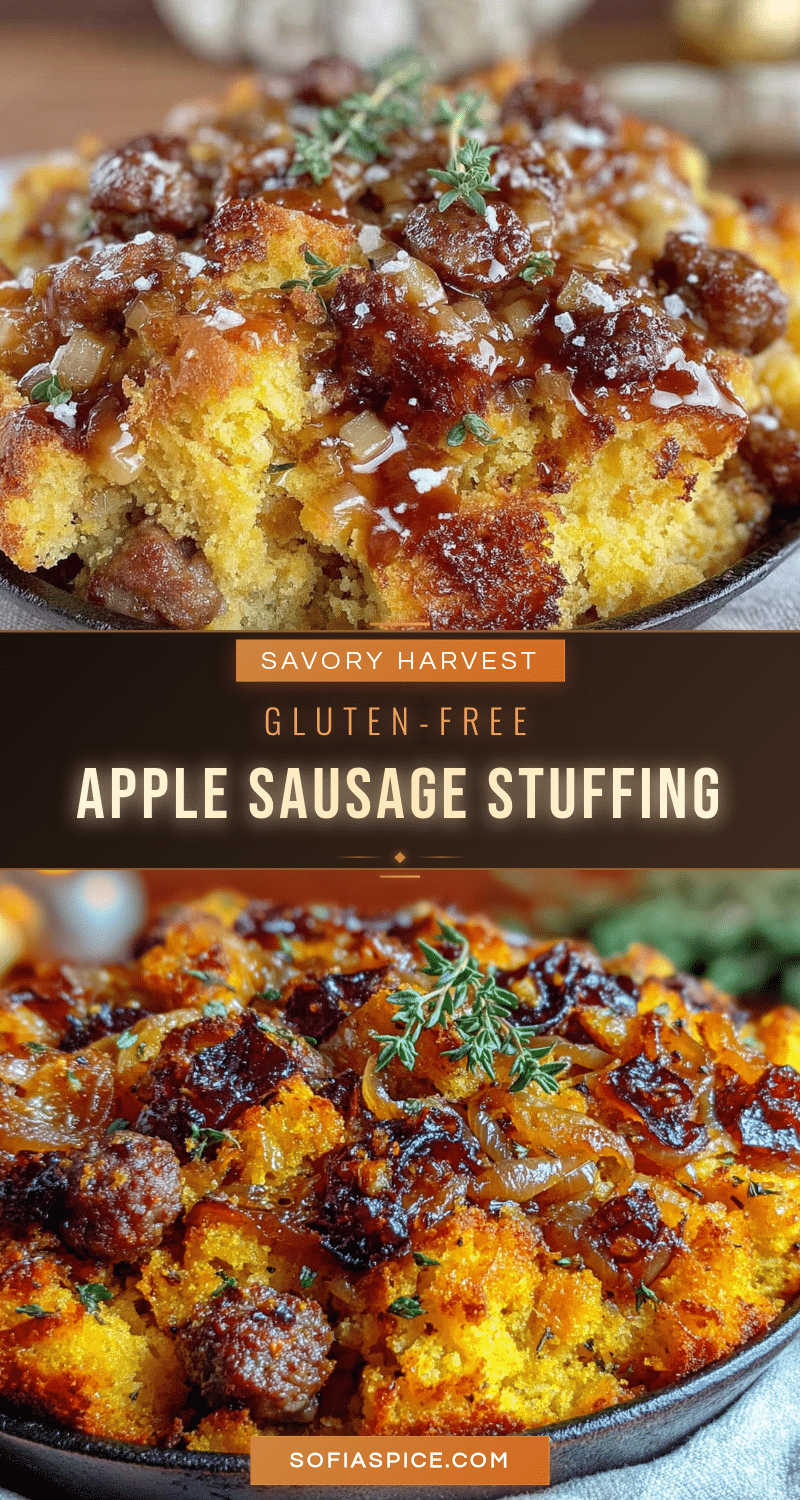
Best Savory Gluten-Free Cornbread Stuffing with Apples & Sausage

This savory gluten-free cornbread stuffing features crispy edges, tender apples, and juicy sausage for a perfect balance of sweet and savory. It’s a make-ahead friendly side dish that works for Thanksgiving, Friendsgiving, or any cozy fall meal.
- Prep Time: 30 minutes
- Cook Time: 1 hour 15 minutes
- Total Time: 1 hour 45 minutes
- Yield: 8 servings 1x
- Category: Side Dish
- Cuisine: American
Ingredients
- 1 cup gluten-free all-purpose flour (Bob’s Red Mill 1-to-1 Baking Flour recommended)
- 1 cup yellow cornmeal (medium grind)
- 1 tablespoon baking powder (aluminum-free)
- 1 teaspoon salt
- 1 tablespoon sugar
- 2 large eggs, room temperature
- 1 cup buttermilk (or 1 cup milk mixed with 1 tablespoon lemon juice, let sit 5 minutes)
- ¼ cup unsalted butter, melted and cooled slightly
- 1 pound breakfast sausage (mild or sage, bulk)
- ½ pound sweet Italian sausage, casings removed
- 2 medium apples, peeled and diced into ½-inch cubes (Honeycrisp or Granny Smith)
- 1 large yellow onion, diced
- 3 celery stalks, diced
- 4 cloves garlic, minced
- 2 tablespoons fresh sage, chopped (or 2 teaspoons dried)
- 1 tablespoon fresh thyme leaves (or 1 teaspoon dried)
- 1 teaspoon dried rosemary
- ½ teaspoon black pepper
- ½ teaspoon salt (plus more to taste)
- 2 cups low-sodium chicken broth (vegetable broth works too)
- 2 large eggs, beaten
- ¼ cup unsalted butter, plus more for greasing the dish
Instructions
- Make the cornbread: Preheat oven to 400°F (200°C). Grease a 9×9-inch baking pan or 10-inch cast iron skillet with butter.
- In a medium bowl, whisk together gluten-free flour, cornmeal, baking powder, salt, and sugar.
- In a separate small bowl, whisk eggs, buttermilk, and melted butter until combined.
- Pour wet ingredients into dry and stir until just combined (a few lumps are fine).
- Pour batter into prepared pan and spread evenly. Bake for 18–22 minutes until edges are golden and a toothpick inserted in center comes out clean.
- Let cornbread cool completely, then cut into ½-inch cubes and spread on a baking sheet. Leave out overnight to dry, or bake at 300°F (150°C) for 15–20 minutes if short on time.
- Cook the sausage and vegetables: In a large skillet or Dutch oven over medium-high heat, cook breakfast sausage and Italian sausage, breaking it up, until no longer pink (6–8 minutes).
- Use a slotted spoon to transfer sausage to a large bowl, leaving about 2 tablespoons of rendered fat in the skillet.
- Add diced apples to the skillet and cook over medium heat for 3–4 minutes until softened and caramelized. Transfer to bowl with sausage.
- Add butter to the skillet. Once melted, add onion and celery. Cook for 5–6 minutes until translucent and starting to brown.
- Add garlic, sage, thyme, rosemary, salt, and pepper. Cook for 1 minute until fragrant.
- Pour vegetable mixture into bowl with sausage and apples. Stir to combine.
- Assemble the stuffing: Preheat oven to 375°F (190°C). Grease a 9×13-inch baking dish with butter.
- In the large bowl, add dried cornbread cubes to the sausage and vegetable mixture. Toss gently to distribute.
- In a small bowl, whisk beaten eggs into chicken broth.
- Pour broth mixture over cornbread mixture. Fold together until cornbread cubes are evenly moistened (don’t overmix).
- Transfer mixture to prepared baking dish and spread into an even layer.
- Bake: Cover dish with aluminum foil and bake for 30 minutes.
- Remove foil and bake for an additional 20–25 minutes until top is golden brown and edges are crispy.
- Let stuffing rest for 5–10 minutes before serving.
Notes
Dry the cornbread cubes thoroughly to prevent mushiness. Caramelize apples separately for best texture. Season in layers for depth of flavor. Use low-sodium broth to control saltiness. Let stuffing rest before serving for best texture.
Nutrition
- Serving Size: 1 serving (about 1 c
- Calories: 420
- Sugar: 8
- Sodium: 680
- Fat: 24
- Saturated Fat: 10
- Carbohydrates: 36
- Fiber: 4
- Protein: 18
Keywords: gluten-free stuffing, cornbread stuffing, apple sausage stuffing, Thanksgiving stuffing, gluten-free side dish, savory stuffing