That evening, I was juggling way too many things—emails buzzing, phone calls ringing, and honestly, my hunger creeping up faster than I wanted to admit. The last thing I wanted was to spend ages in the kitchen, but something savory and satisfying was desperately needed. I had a random packet of thinly sliced beef in the fridge and some leftover kimchi rice from a previous meal, which was just begging to be used up. Honestly, I was skeptical at first. Korean beef bulgogi seemed like one of those dishes that required a ton of fuss, but I figured, why not toss everything into a bowl and see what happens?
Before long, the kitchen smelled like a bustling Korean street food stall, the caramelized soy marinade hugging the beef perfectly, while the tangy kimchi rice brought the whole thing together. I ended up making this savory Korean beef bulgogi bowl with kimchi rice multiple times that week—each time tweaking the marinade a bit, adding a few fresh scallions here, a sprinkle of sesame seeds there. What stuck with me was how this simple bowl felt like a tiny celebration in a bowl, comforting yet vibrant, and honestly, it became my go-to when I craved something both quick and flavorful without the kitchen chaos.
It’s not just the flavors, though. This recipe somehow turned a chaotic evening into a moment of calm, and that’s why it’s stayed in my regular rotation ever since.
Why You’ll Love This Recipe
After making this savory Korean beef bulgogi bowl with kimchi rice more times than I can count, I can honestly say it’s one of those recipes that checks nearly every box for a home cook who wants something delicious without the headache. Here’s why it’s such a keeper:
- Quick & Easy: The marinade comes together in under 10 minutes, and the entire bowl is ready in about 30 minutes tops—perfect for those busy weeknights or when you just want comfort food fast.
- Simple Ingredients: Nothing fancy or hard to find here. Most of these ingredients are pantry staples or easy to grab at any grocery store, which saves you from hunting down anything exotic.
- Perfect for Any Occasion: Whether you’re cooking for yourself, impressing friends with a homemade bowl, or bringing a tasty dish to a casual potluck, this recipe fits the bill.
- Crowd-Pleaser: The savory-sweet balance in the bulgogi marinade along with the tangy kick of kimchi rice always gets nods of approval from kids and adults alike.
- Unbelievably Delicious: The texture of tender, thinly sliced beef with that rich, slightly caramelized sauce combined with the fermented tang of kimchi rice is just next-level comfort food.
This isn’t just another bulgogi recipe, either. I blend in a hint of toasted sesame oil and a dash of garlic that really lifts the flavors. Plus, the kimchi rice isn’t your standard side—it’s a flavorful powerhouse on its own, adding depth and complexity that makes this bowl feel special. It’s the kind of meal that makes you close your eyes after the first bite and just savor the moment. If you like dishes with bold flavors that don’t require hours of prep, you’re going to appreciate how this recipe fits into a busy life while still tasting like something you’d get from your favorite Korean spot.
What Ingredients You Will Need
This recipe uses simple, wholesome ingredients to deliver bold flavor and satisfying texture without the fuss. Most of these are pantry staples, and you probably have several on hand already. The kimchi rice takes advantage of homemade or store-bought kimchi to add that signature tang. Feel free to swap ingredients to fit your pantry or preferences!
- For the Bulgogi Marinade and Beef:
- 1 pound (450 g) thinly sliced beef ribeye or sirloin (look for a good-quality cut with some marbling for tenderness)
- 3 tablespoons soy sauce (I recommend Kikkoman for a balanced saltiness)
- 2 tablespoons brown sugar (adds that perfect caramelized sweetness)
- 1 tablespoon sesame oil (toasty flavor that’s essential here)
- 3 garlic cloves, minced (fresh garlic is key for punch)
- 1 teaspoon freshly grated ginger (adds subtle warmth)
- 2 green onions, thinly sliced (white and green parts separated)
- 1 tablespoon rice wine or mirin (optional but adds nice depth)
- Freshly ground black pepper, to taste
- For the Kimchi Rice:
- 2 cups cooked short-grain white rice (preferably day-old for better texture)
- ½ cup well-fermented kimchi, chopped (store-bought is fine; adjust amount for spice tolerance)
- 1 tablespoon kimchi juice (from the jar, for extra tang)
- 1 teaspoon sesame oil
- Optional: sliced scallions or toasted sesame seeds for garnish
- To Serve:
- Fresh cucumber slices or julienned carrots (adds crunch and freshness)
- Soft boiled or fried eggs (optional but highly recommended)
- Kimchi or extra pickled vegetables on the side
- Non-stick or cast iron skillet – A good skillet helps develop that nice caramelization on the beef without sticking. If you don’t have cast iron, a heavy-bottomed pan works too.
- Mixing bowls – For marinating the beef and mixing kimchi rice.
- Sharp knife and cutting board – For slicing beef (if not pre-sliced), chopping kimchi, and prepping veggies.
- Measuring spoons and cups – Accuracy matters for the marinade balance.
- Rice cooker or pot for rice – To make sure your rice comes out fluffy, you can use a rice cooker or cook it on the stove.
- Spatula or wooden spoon – For stirring the kimchi rice and cooking beef evenly.
- Prepare the Marinade and Beef: In a medium bowl, combine 3 tablespoons soy sauce, 2 tablespoons brown sugar, 1 tablespoon sesame oil, minced garlic, grated ginger, and rice wine (if using). Mix well until sugar dissolves. Add the thinly sliced beef and white parts of the green onions. Toss to coat all the slices evenly. Cover and marinate for at least 20 minutes in the fridge (up to 2 hours for deeper flavor).
- Prepare Kimchi Rice: While the beef marinates, take 2 cups of cooked short-grain rice (leftover rice works best). In a bowl, mix the rice with chopped kimchi, 1 tablespoon kimchi juice, and 1 teaspoon sesame oil. Stir gently to combine. Set aside to let the flavors meld.
- Cook the Beef: Heat a large skillet over medium-high heat. Once hot, add the marinated beef in a single layer, leaving excess marinade behind. Let the beef sear undisturbed for about 2 minutes until it starts caramelizing, then stir and cook for another 2-3 minutes until cooked through and slightly sticky. Avoid overcrowding the pan; cook in batches if necessary. The beef should be tender and glossy with that beautiful bulgogi glaze.
- Warm the Kimchi Rice: In a separate pan or microwave, gently warm the kimchi rice just before serving. The warmth helps release the kimchi aroma and softens the rice.
- Assemble the Bowl: Spoon the kimchi rice into bowls, top with a generous serving of bulgogi beef. Add fresh cucumber slices or carrots for crunch. If using, top with a soft boiled or fried egg and sprinkle with sliced green onions (green parts) and toasted sesame seeds.
- Final Touches: Serve immediately with extra kimchi or pickled veggies on the side for an extra punch of flavor and texture contrast.
- Vegetarian Version: Swap beef for thinly sliced king oyster mushrooms or tempeh marinated in the same bulgogi sauce. The mushrooms have a meaty texture that soaks up flavors beautifully.
- Spicy Kick: Add gochujang (Korean chili paste) to the marinade for some heat. Start with 1 tablespoon and adjust to your spice tolerance. This adds a smoky depth that’s fantastic if you love spicy food.
- Low-Carb Option: Replace the rice with cauliflower rice. Toss the cauliflower rice with kimchi and a splash of sesame oil, then warm it up. It’s a lighter, grain-free alternative.
- Seasonal Veggies: In spring or summer, add quick-pickled radishes or fresh cucumber ribbons to brighten the bowl. In winter, roasted sweet potatoes or steamed broccoli make hearty additions.
- Egg Variations: Aside from soft boiled or fried eggs, try a quick scrambled egg stirred into the rice for a creamy texture that kids especially love.
If you want a gluten-free version, just swap the soy sauce with tamari or coconut aminos. For a plant-based twist, try thinly sliced mushrooms marinated in the same bulgogi sauce. The balance of salty, sweet, and umami is what makes this bowl sing, so I don’t recommend trimming down the key marinade ingredients.
Equipment Needed
If you’re on a budget, a regular non-stick pan works fine. I’ve tried this recipe on my trusty cast iron skillet and a stainless steel frying pan, and both give good results, though cast iron gives a slightly better sear. Just keep your pan well-seasoned or use a small amount of oil to reduce sticking. Also, a rice cooker can be a game-changer for fluffy rice, but stovetop rice works perfectly with a pinch of patience.
Preparation Method
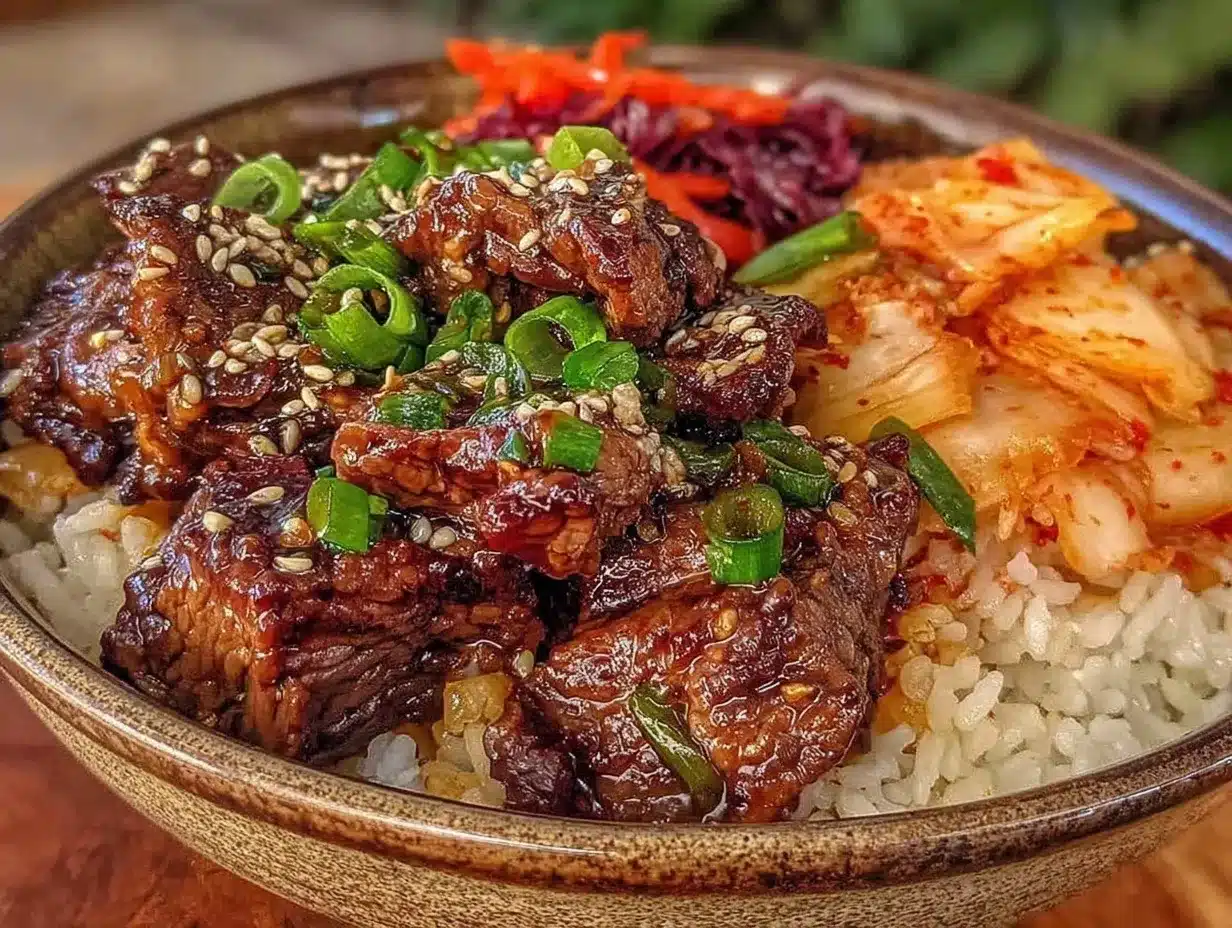
Pro tip: If your bulgogi sauce seems too salty, a quick squeeze of fresh lime or a pinch of sugar balances it out nicely. Also, don’t rush the sear—letting the beef caramelize slightly makes all the difference. And if you find your kimchi rice a little dry, splash a tiny bit of water or broth before warming to soften it up.
Cooking Tips & Techniques
Cooking bulgogi isn’t as intimidating as it sounds, but a few tricks help make this recipe foolproof and delicious every time. First, the key is slicing your beef thin—ideally ⅛ inch thick or thinner—so it cooks quickly and soaks up the marinade.
Marinate for at least 20 minutes, but no longer than 2 hours. Too long and the acid in the marinade can break down the meat texture awkwardly. Also, don’t add the sugar directly to the pan; mixing it into the marinade ensures it caramelizes perfectly with the beef.
When cooking, high heat is your friend. A hot pan helps sear the beef quickly, locking in juices and creating that signature slightly sticky glaze. Avoid overcrowding the pan—work in batches if needed. Too many slices at once steam the meat instead of searing it.
For the kimchi rice, use day-old rice if possible. Freshly cooked rice tends to be too moist and sticky, which makes the dish mushy. The leftover rice is drier and holds up better when mixed with the kimchi and warmed.
I once tried making this with fresh rice in a hurry, and it turned into a sticky mess that lost the lovely texture balance—lesson learned! Finally, don’t be shy with garnishes like sesame seeds or fresh scallions; they add that last layer of flavor and freshness.
Variations & Adaptations
This savory Korean beef bulgogi bowl with kimchi rice is pretty adaptable, so you can tweak it to your taste or dietary needs. Here are some ideas I’ve tried or recommend:
One time I mixed in some zesty kimchi slaw alongside this bowl for a little crunch and tang. It was a hit, especially with friends who love layers of flavor and texture.
Serving & Storage Suggestions
This bulgogi bowl is best served fresh and warm, right after cooking. The contrast of hot beef and rice with cool, crisp veggies or pickles is part of the charm. I like to present it in deep bowls to keep everything snug and cozy, then top it with an egg to make it feel indulgent.
Pair it with a light, crisp cucumber salad or steamed greens to balance the richness. A chilled glass of jasmine tea or even a sparkling water with lime feels refreshing alongside the bold flavors.
For leftovers, store the beef and kimchi rice separately in airtight containers in the refrigerator for up to 3 days. Reheat gently in a skillet or microwave, adding a splash of water to keep the rice fluffy. Avoid reheating the egg; best to cook fresh when serving again.
Flavors do deepen after a day or two in the fridge, especially the kimchi rice, so if you enjoy tangier notes, leftovers can be even better the next day.
Nutritional Information & Benefits
This savory Korean beef bulgogi bowl with kimchi rice offers a balanced meal with protein, carbs, and probiotics. A typical serving provides approximately:
| Nutrient | Amount per Serving |
|---|---|
| Calories | 450-500 kcal |
| Protein | 30-35 g |
| Carbohydrates | 45-50 g |
| Fat | 12-15 g |
| Fiber | 3-5 g |
The kimchi is a fantastic source of probiotics, which support gut health and digestion. Beef provides high-quality protein and iron, essential for energy and muscle repair. Using short-grain rice lends a satisfying carbohydrate base for sustained energy.
For those mindful of allergens, this recipe contains soy and sesame, so substitute tamari or coconut aminos and omit sesame seeds if needed. The bowl fits well into a balanced diet and can be adjusted for low-carb or vegetarian diets as mentioned earlier.
Conclusion
This savory Korean beef bulgogi bowl with kimchi rice is one of those meals that feels like a little treat without requiring hours in the kitchen. I love how it turns simple ingredients into something rich, comforting, and layered with excitement in every bite. It’s flexible enough for busy days but special enough to share with friends or family.
Feel free to tweak the spice levels or add your favorite veggies to make it your own—cooking should always be a little adventure. For a quick dinner that doesn’t skimp on flavor, this bowl consistently delivers.
And hey, if you’re curious about other quick and tasty bowls, you might enjoy the savory Korean BBQ beef bowls with zesty kimchi slaw or even the crispy grilled pesto chicken flatbread pizza for something a bit different but just as satisfying.
Give this recipe a try, and let me know how you make it your own! There’s something truly special about a bowl that brings comfort and joy in every bite.
FAQs
Can I use a different cut of beef for bulgogi?
Yes! While ribeye or sirloin are ideal for tenderness and flavor, you can also use flank steak or skirt steak. Just slice thinly against the grain to keep it tender.
Is kimchi rice hard to make at home?
Not at all! It’s simply cooked rice mixed with chopped kimchi, kimchi juice, and a bit of sesame oil. Using day-old rice helps keep the texture just right.
Can I make this recipe gluten-free?
Absolutely. Swap regular soy sauce for tamari or coconut aminos, and double-check your kimchi ingredients since some brands use gluten-containing additives.
How spicy is this bulgogi bowl?
The base recipe has mild heat from the kimchi, but it’s easily adjustable. Add more kimchi or a spoonful of gochujang if you want it spicier.
What’s the best way to store leftovers?
Store the beef and kimchi rice separately in airtight containers in the fridge for up to 3 days. Reheat gently on the stove or microwave with a splash of water for best texture.
Pin This Recipe!
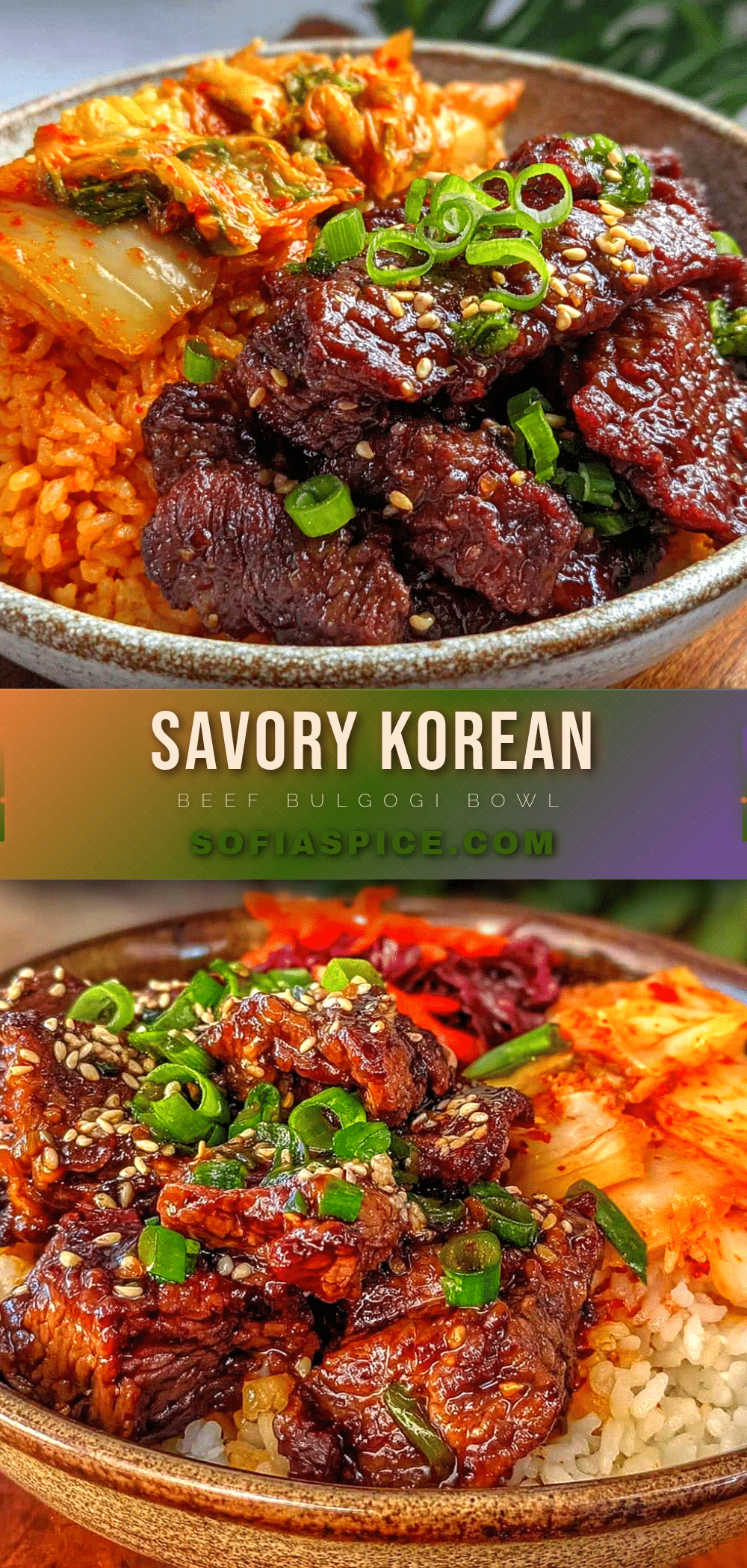
Savory Korean Beef Bulgogi Bowl Recipe Easy Homemade Kimchi Rice Bowl
A quick and easy Korean beef bulgogi bowl with flavorful kimchi rice, perfect for busy weeknights. This recipe combines tender marinated beef with tangy kimchi rice for a comforting and vibrant meal.
- Prep Time: 10 minutes
- Cook Time: 15 minutes
- Total Time: 30 minutes
- Yield: 4 servings 1x
- Category: Main Course
- Cuisine: Korean
Ingredients
- 1 pound thinly sliced beef ribeye or sirloin
- 3 tablespoons soy sauce
- 2 tablespoons brown sugar
- 1 tablespoon sesame oil
- 3 garlic cloves, minced
- 1 teaspoon freshly grated ginger
- 2 green onions, thinly sliced (white and green parts separated)
- 1 tablespoon rice wine or mirin (optional)
- Freshly ground black pepper, to taste
- 2 cups cooked short-grain white rice (preferably day-old)
- ½ cup well-fermented kimchi, chopped
- 1 tablespoon kimchi juice
- 1 teaspoon sesame oil
- Fresh cucumber slices or julienned carrots (for serving)
- Soft boiled or fried eggs (optional)
- Kimchi or extra pickled vegetables (for serving)
- Optional garnish: sliced scallions (green parts) and toasted sesame seeds
Instructions
- In a medium bowl, combine soy sauce, brown sugar, sesame oil, minced garlic, grated ginger, and rice wine (if using). Mix well until sugar dissolves.
- Add the thinly sliced beef and white parts of the green onions to the marinade. Toss to coat evenly. Cover and marinate in the fridge for at least 20 minutes, up to 2 hours.
- While the beef marinates, mix cooked rice with chopped kimchi, kimchi juice, and sesame oil in a bowl. Stir gently and set aside.
- Heat a large skillet over medium-high heat. Add marinated beef in a single layer, leaving excess marinade behind. Sear undisturbed for about 2 minutes until caramelized, then stir and cook another 2-3 minutes until cooked through and glossy. Cook in batches if needed.
- Warm the kimchi rice gently in a pan or microwave before serving.
- Assemble bowls by spooning kimchi rice into bowls, topping with bulgogi beef, fresh cucumber slices or carrots, and optional soft boiled or fried egg.
- Garnish with sliced green onions and toasted sesame seeds if desired. Serve immediately with extra kimchi or pickled vegetables on the side.
Notes
Use day-old rice for best texture in kimchi rice. Marinate beef for at least 20 minutes but no longer than 2 hours to avoid meat texture breakdown. Cook beef in batches to avoid steaming. Adjust saltiness with lime juice or sugar if needed. For gluten-free, substitute soy sauce with tamari or coconut aminos. For vegetarian, use thinly sliced mushrooms or tempeh instead of beef.
Nutrition
- Serving Size: 1 bowl (approximatel
- Calories: 475
- Sugar: 8
- Sodium: 900
- Fat: 13.5
- Saturated Fat: 4.5
- Carbohydrates: 47.5
- Fiber: 4
- Protein: 32.5
Keywords: Korean beef bulgogi, kimchi rice bowl, quick Korean recipe, bulgogi marinade, easy weeknight dinner, Korean comfort food