My brother Mark did not trust vegetables that had been sweetened. He called it “nature’s candy betrayed” and would push roasted carrots to the side of his plate like they had personally offended him. So when I told him I was making honey balsamic roasted root vegetables for our Sunday dinner, he gave me that look—the one that said I had finally lost my mind. The thing is, I didn’t care. I had been testing this recipe for weeks, and I knew something was there. The honey wasn’t about making vegetables taste like dessert. It was about coaxing out what was already hiding inside them.
I remember the first time I nailed it. The kitchen smelled like a fall festival—sweet, tangy, a little woodsy from the rosemary. I pulled the sheet pan out of the oven and the edges of the parsnips had caramelized into something that looked almost like candy. Not candy-candy, but the kind of deep, sticky brown that makes you suspicious of how good it probably is. I grabbed a piece of carrot, blew on it until I couldn’t wait anymore, and burned the roof of my mouth. Worth it. Completely worth it.
Mark took one bite at dinner. Then another. Then he asked if he could take the leftovers home. I didn’t say a word. I just smiled and handed him the container. That’s the thing about this recipe—it doesn’t need a sales pitch. It just needs one bite.
Why You’ll Love This Recipe
This honey balsamic roasted root vegetables recipe has become my go-to for pretty much every occasion. Whether I’m making a cozy weeknight side or bringing something to a holiday potluck, it never disappoints. Here’s why it works:
- Simple Ingredients: You probably have most of these in your kitchen right now. Honey, balsamic vinegar, olive oil, salt, pepper, and whatever root vegetables you have on hand. No fancy trips to specialty stores.
- Quick & Easy: About 10 minutes of active prep time, then the oven does the heavy lifting. Perfect for those nights when you need something impressive without the stress.
- Perfect for Fall Gatherings: This dish fits right in alongside slow cooker butternut squash apple soup for a complete autumn meal that tastes like comfort in a bowl.
- Crowd-Pleaser: I’ve served this to picky eaters, vegetable skeptics, and full-on carnivores. It disappears every single time. There’s something about that sticky, caramelized exterior that wins people over.
- Unbelievably Delicious: The honey balsamic glaze creates this incredible balance—sweet, tangy, savory, with just a hint of earthiness from the roasted roots. The edges get crispy, the insides stay tender, and the whole thing tastes like you spent hours on it.
What makes this recipe different from the dozens of other roasted vegetable recipes out there? It’s the technique. Most recipes tell you to toss everything together and roast. That works, but it doesn’t give you the deep caramelization you’re after. I roast the vegetables first with just oil and salt, then add the honey balsamic mixture halfway through. That way, the sugars don’t burn, and you get that perfect sticky glaze without any bitterness. It’s a small change, but it makes all the difference.
Honestly, this is the kind of recipe that makes you close your eyes after the first bite. It’s comfort food that happens to be good for you—colorful, nourishing, and deeply satisfying. And it makes your kitchen smell incredible while it’s cooking. That’s a win in my book.
What Ingredients You Will Need
This recipe uses simple, wholesome ingredients to create something that tastes far more complex than it is. Here’s everything you’ll need:
For the Vegetables
- 2 large carrots, peeled and cut into 1-inch chunks (look for firm, bright orange carrots—skip the baby carrots, they don’t caramelize as well)
- 2 large parsnips, peeled and cut into 1-inch chunks (they add a subtle sweetness that’s different from carrots)
- 1 large sweet potato, peeled and cut into 1-inch cubes (I prefer Garnet or Jewel varieties for their creamy texture)
- 1 medium red onion, cut into 1-inch wedges (the edges get beautifully charred and sweet)
- 2 medium red potatoes, scrubbed and cut into 1-inch chunks (no need to peel—the skin adds texture)
- 3 cloves garlic, smashed (whole cloves roast into sweet, spreadable goodness)
For the Honey Balsamic Glaze
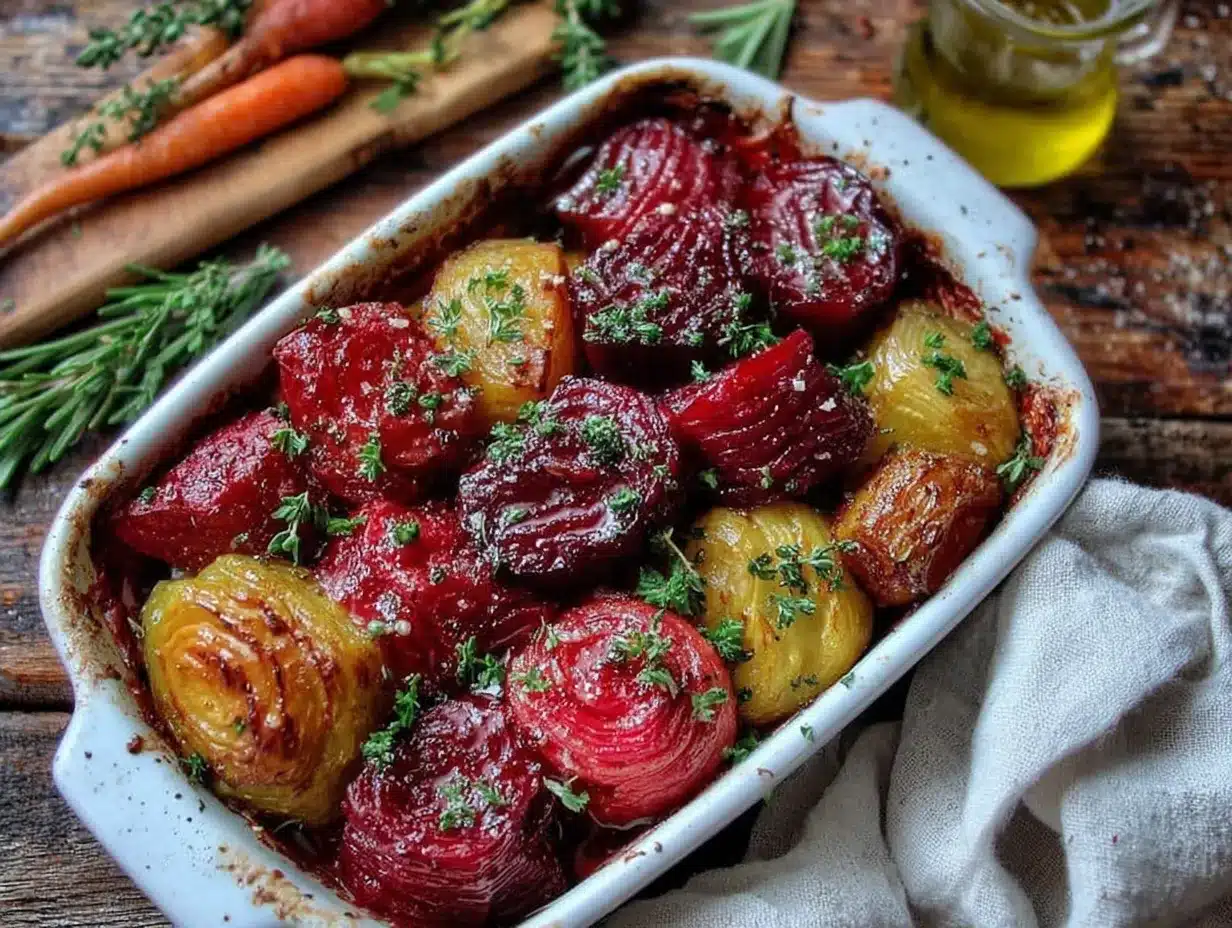
- 3 tablespoons extra virgin olive oil (divided—use 2 for the initial roast and 1 for the glaze)
- 3 tablespoons honey (use a good quality honey—it makes a difference in flavor)
- 2 tablespoons balsamic vinegar (I recommend a moderately aged vinegar, not the super thick aged stuff)
- 1 tablespoon fresh rosemary, finely chopped (or 1 teaspoon dried, but fresh is noticeably better)
- 1 teaspoon fresh thyme leaves (optional but lovely)
- 1/2 teaspoon salt (plus more to taste)
- 1/4 teaspoon black pepper (freshly ground is best)
For Serving (Optional)
- Fresh parsley, chopped for garnish
- Flaky sea salt for finishing (I love Maldon for this)
- Crumbled goat cheese or feta (adds a tangy contrast)
- Toasted walnuts or pecans (for crunch)
A note on substitutions: You can swap in whatever root vegetables you have on hand. Beets, turnips, celery root, or even butternut squash all work beautifully. Just keep the pieces roughly the same size so they cook evenly. If you’re using beets, I’d recommend roasting them separately unless you want everything to turn pink. Not that there’s anything wrong with pink vegetables—they’re just not what we’re going for here.
Equipment Needed
You don’t need much for this recipe, which is part of why I love it. Here’s what you’ll want:
- Large sheet pan (half-sheet size, about 18×13 inches)—go for a heavy-duty one with rolled edges. Cheap pans can warp in the oven and cause uneven cooking. I use Nordic Ware, and they’ve held up for years.
- Parchment paper or silicone baking mat (parchment makes cleanup a breeze, but a silicone mat works too—just note that it may affect browning slightly)
- Chef’s knife and cutting board (a sharp knife makes all the difference when cutting through sweet potatoes)
- Vegetable peeler (optional if you leave the skins on the potatoes)
- Small bowl for whisking the glaze together
- Whisk or fork for mixing
- Spatula or tongs for flipping the vegetables halfway through
If you don’t have a silicone baking mat, don’t worry. Parchment paper works great and is available at any grocery store. Just don’t use wax paper—it will melt in the oven. I learned that one the hard way, and cleaning melted wax off a sheet pan is not my idea of a good time.
Preparation Method
Alright, let’s get cooking. This method is straightforward, but there are a few tricks that make the difference between good roasted vegetables and unforgettable ones.
- Preheat your oven to 425°F (220°C). This is important—a hot oven is key for caramelization. If your oven runs cool, bump it up to 450°F. I’ve tested this at both temperatures and 425°F gives the best balance of caramelized exterior and tender interior without burning the honey.
- Prepare your vegetables. Wash and peel the carrots, parsnips, and sweet potato. Cut everything into 1-inch chunks. For the red onion, cut it into wedges—separate the layers slightly so the glaze can get in between. For the red potatoes, just scrub them well and cut into 1-inch pieces. Smash the garlic cloves with the flat side of your knife—this releases more flavor than slicing.
- Season with oil and salt first. Toss the vegetables with 2 tablespoons of olive oil and 1/2 teaspoon of salt. Spread them in a single layer on your prepared sheet pan. Don’t crowd the pan—if things are too close together, they’ll steam instead of roast. If you need to use two pans, do it. Your vegetables will thank you.
- Roast for 15 minutes. Pop the pan in the oven and let the vegetables get a head start. This initial roast without the glaze is what gives you those crispy edges. The vegetables will start to soften and brown slightly.
- Make the honey balsamic glaze. While the vegetables are roasting, whisk together the remaining 1 tablespoon olive oil, honey, balsamic vinegar, rosemary, thyme, and a pinch of pepper. Taste it. It should be sweet and tangy with a hint of herbiness. If it seems too sharp, add a little more honey.
- Add the glaze. After 15 minutes, pull the pan out of the oven. Drizzle the honey balsamic mixture over the vegetables and toss gently with a spatula or tongs to coat everything evenly. Spread them back into a single layer.
- Roast for another 15-20 minutes. Return the pan to the oven and roast until the vegetables are tender when pierced with a fork and the edges are caramelized and sticky. The exact time depends on the size of your pieces and your oven, so start checking at 15 minutes. You’re looking for deep golden-brown edges and a fork that slides through with minimal resistance.
- Finish with fresh herbs and flaky salt. When the vegetables come out of the oven, sprinkle them with fresh parsley and a pinch of flaky sea salt. The salt crystals add little bursts of flavor that contrast beautifully with the sweet glaze.
A few notes as you go: If you notice the vegetables are browning too quickly but aren’t tender yet, tent the pan loosely with foil for the last 5-10 minutes. Every oven is different, and sometimes you need to adjust. Also, don’t skip the stirring at the halfway point—it ensures even cooking and helps the glaze coat every piece.
Cooking Tips & Techniques
I’ve made this recipe more times than I can count, and I’ve learned a few things along the way. Here are the tips that make the biggest difference:
Cut vegetables evenly. This is the number one tip for even roasting. If your sweet potato pieces are twice the size of your carrot pieces, you’ll end up with burnt carrots and undercooked sweet potatoes. Take the extra minute to make everything uniform. Your future self will thank you.
Don’t overcrowd the pan. I cannot stress this enough. Vegetables need space to caramelize. If they’re packed together, they release steam and end up soggy. Use two pans if you need to, or roast in batches. I know it’s tempting to cram everything onto one pan to save cleanup, but the texture difference is noticeable.
Add the glaze later. This is the trick that changed everything for me. When I first started making honey balsamic roasted vegetables, I would toss everything together before roasting. The honey would burn, the balsamic would turn bitter, and I’d end up with sad, blackened vegetables. Roasting the vegetables with just oil and salt first, then adding the glaze halfway through, gives you all the flavor without any of the bitterness.
Use a hot oven. 425°F is the sweet spot. It’s hot enough to caramelize the natural sugars in the vegetables without burning the glaze. If you’re short on time, you can go up to 450°F, but watch them closely—things can go from perfect to burnt in a minute or two.
Flip halfway through. When you add the glaze, take the time to flip each piece. This ensures even cooking and helps the glaze coat every surface. I use tongs for this, but a spatula works too.
One mistake I made early on was using too much balsamic vinegar. I thought more flavor would be better, but it made the vegetables soggy and the vinegar flavor overpowered everything. Trust the measurements—2 tablespoons is plenty. The balsamic is meant to complement the vegetables, not dominate them.
Variations & Adaptations
One of the things I love about this recipe is how adaptable it is. Here are some variations I’ve tried and loved:
Maple-Dijon Version: Swap the honey for maple syrup and add 1 tablespoon of Dijon mustard to the glaze. The mustard adds a tangy kick that cuts through the sweetness beautifully. This version is particularly good with Brussels sprouts and butternut squash.
Herb Variations: Don’t have rosemary? No problem. Try fresh sage, oregano, or even a teaspoon of dried Italian seasoning. Each herb brings a different personality to the dish. Sage gives it a cozy, almost Thanksgiving-like feel, while oregano makes it feel more Mediterranean.
Spicy Kick: Add 1/4 teaspoon of red pepper flakes to the glaze for a subtle heat that builds as you eat. The sweetness of the honey and the heat from the pepper create a lovely contrast. I did this once when I had a cold and wanted something warming—it was surprisingly good.
Different Vegetable Combinations: Try this with Brussels sprouts (halved), cauliflower florets, or chunks of butternut squash. Just adjust cooking times as needed—Brussels sprouts cook faster, while dense squash takes longer. If you’re mixing quick-cooking and slow-cooking vegetables, you can add the quick ones later or cut them larger.
Dietary Adaptations: This recipe is naturally gluten-free and dairy-free as written. For a lower-sugar version, reduce the honey to 1 tablespoon and add an extra tablespoon of balsamic vinegar. You’ll lose some of the sticky sweetness, but the vegetables will still be delicious.
Sheet Pan Meal: Turn this into a complete meal by adding chicken thighs or Italian sausage to the pan during the last 20 minutes of roasting. The juices from the meat mingle with the honey balsamic glaze and create something truly special. I’ve done this for busy weeknights, and it’s become a family favorite alongside dishes like smoky sausage and bell pepper skewers.
Serving & Storage Suggestions
These honey balsamic roasted root vegetables are incredibly versatile when it comes to serving. Here’s how I like to enjoy them:
Serving Temperature: They’re best served warm, straight from the oven, when the edges are still crispy and the glaze is sticky. But honestly, they’re also delicious at room temperature—perfect for potlucks or picnic sides.
Presentation: Transfer the vegetables to a serving platter and scatter fresh herbs on top. A sprinkle of flaky sea salt right before serving adds a lovely crunch and burst of flavor. If you’re feeling fancy, add a drizzle of balsamic reduction or a handful of toasted walnuts.
Pairings: These vegetables go beautifully with roasted chicken, grilled steak, or baked fish. They’re also fantastic alongside creamy tomato basil soup with crispy grilled cheese croutons for a cozy fall meal. For a holiday table, they’re a wonderful alternative to traditional roasted potatoes.
Storage: Leftovers can be stored in an airtight container in the refrigerator for up to 4 days. The vegetables will soften as they sit, but the flavor actually improves. I often make a double batch on purpose just for leftovers.
Reheating: The best way to reheat these is in a 400°F oven for 5-10 minutes. This helps restore some of the crispy edges. You can also reheat them in a skillet over medium heat with a tiny splash of water or broth. Avoid the microwave if you can—it makes them soggy.
Freezing: These vegetables freeze reasonably well for up to 3 months. Spread them on a sheet pan to freeze individually, then transfer to a freezer bag. To reheat, spread them on a pan and roast at 400°F until hot and crispy, about 10-15 minutes. Don’t thaw before reheating—just pop them in straight from the freezer.
One thing I’ve noticed: the flavors continue to develop overnight. The vegetables absorb more of the honey balsamic glaze, and the sweetness becomes more pronounced. If you’re meal prepping, make these a day ahead—they might be even better the next day.
Nutritional Information & Benefits
These honey balsamic roasted root vegetables aren’t just delicious—they’re packed with nutrients too. Here’s a rough breakdown per serving (about 1 cup):
| Nutrient | Amount Per Serving |
|---|---|
| Calories | 180-220 |
| Total Fat | 7-9g |
| Carbohydrates | 30-35g |
| Fiber | 5-7g |
| Sugar | 12-15g (naturally occurring plus honey) |
| Protein | 2-4g |
| Vitamin A | 200%+ DV (from carrots and sweet potatoes) |
| Vitamin C | 20-30% DV |
| Potassium | 15-20% DV |
Health Benefits: Root vegetables are loaded with fiber, which supports digestive health and helps you feel full longer. Carrots and sweet potatoes are rich in beta-carotene, which your body converts to vitamin A for healthy vision and immune function. The olive oil provides healthy monounsaturated fats that help your body absorb fat-soluble vitamins. And balsamic vinegar has been shown to help regulate blood sugar levels when consumed with carbohydrate-rich meals.
Dietary Considerations: This recipe is naturally gluten-free, dairy-free, and vegan-friendly (just use maple syrup instead of honey if you’re strict vegan). It’s also nut-free and egg-free, making it safe for most common allergies. If you’re watching your sugar intake, you can reduce the honey to 1 tablespoon—the natural sweetness of the roasted vegetables will still shine through.
I love that this dish feels indulgent while actually being really good for you. It’s the kind of recipe that makes you feel virtuous without feeling deprived. And honestly, that’s my favorite kind of cooking.
Frequently Asked Questions
Can I use frozen vegetables for this recipe?
I wouldn’t recommend it. Frozen vegetables release a lot of water as they thaw, which will steam instead of roast. You’ll end up with soggy vegetables instead of caramelized ones. If you’re in a pinch, you can thaw and pat them dry thoroughly before roasting, but fresh vegetables really do give the best results here.
How do I prevent the honey from burning?
This is why we add the glaze halfway through roasting instead of at the beginning. The honey and balsamic vinegar both contain sugars that can burn at high temperatures. By giving the vegetables a head start with just oil and salt, you reduce the time the glaze spends in the oven. If you notice the glaze starting to darken too quickly, tent the pan with foil for the last few minutes.
Can I make this recipe ahead of time?
Absolutely. You can prep the vegetables and make the glaze up to a day in advance. Store the cut vegetables in a bowl of cold water in the refrigerator to prevent browning, and keep the glaze in a separate container. When you’re ready to cook, drain the vegetables, pat them dry, and proceed with the recipe. Leftovers also keep well for several days.
What other vegetables work well in this recipe?
Pretty much any root vegetable works. Try beets (roast them separately to avoid pink staining), celery root, turnips, rutabaga, or even chunks of winter squash like butternut or acorn. If you’re using quick-cooking vegetables like zucchini or bell peppers, add them during the last 10 minutes of roasting so they don’t turn to mush.
Can I double this recipe for a crowd?
Yes, but use two sheet pans instead of one. Crowding the pan is the enemy of caramelization. Spread the vegetables in a single layer on two pans, and rotate them halfway through roasting for even cooking. You may need to add a few extra minutes to the cooking time since the oven will be more full.
Conclusion
These honey balsamic roasted root vegetables have become a staple in my kitchen for good reason. They’re simple enough for a Tuesday night, impressive enough for a holiday table, and adaptable enough to work with whatever vegetables you have on hand. The combination of sweet honey, tangy balsamic, and earthy roasted roots is one of those flavor pairings that just works—every single time.
What I love most about this recipe is how it transforms humble vegetables into something special. Carrots and parsnips and sweet potatoes—things you might normally pass by in the produce aisle—become the star of the meal. And that’s the kind of cooking I believe in. Making the most of simple ingredients, treating them with care, and letting their natural flavors shine.
I hope you give this recipe a try. Play with the vegetables, adjust the herbs, make it your own. And when you do, I’d love to hear about it. Drop a comment below and let me know how it turned out—what vegetables you used, what you served it with, and whether anyone asked for the recipe. Because trust me, they will.
Happy roasting, friends. Your kitchen is about to smell amazing.
Pin This Recipe!
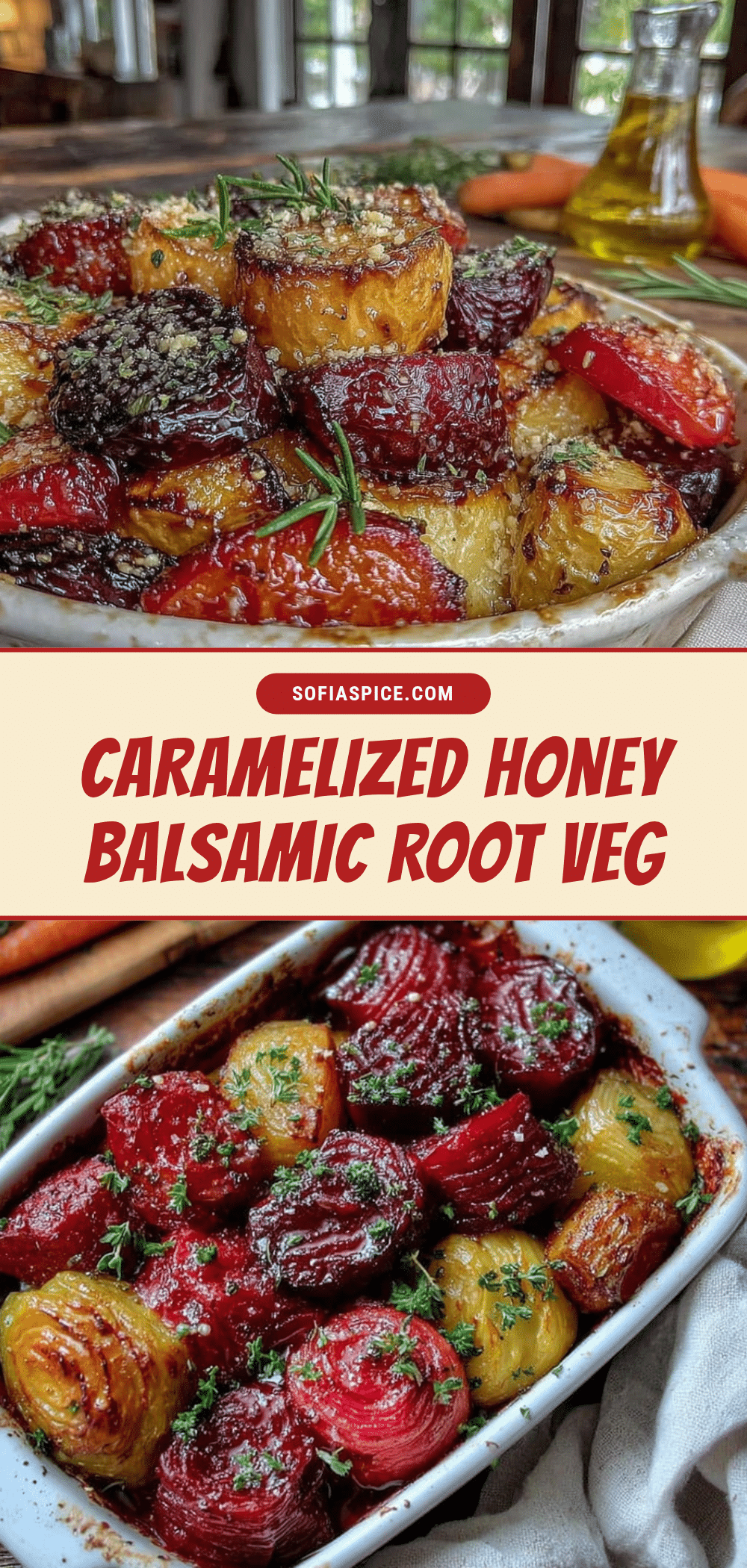
Perfect Honey Balsamic Roasted Root Vegetables
These honey balsamic roasted root vegetables are caramelized, sticky, and perfectly balanced with sweet and tangy flavors. A simple yet impressive side dish that transforms humble vegetables into the star of any meal.
- Prep Time: 10 minutes
- Cook Time: 30-35 minutes
- Total Time: 40-45 minutes
- Yield: 4 servings 1x
- Category: Side Dish
- Cuisine: American
Ingredients
- 2 large carrots, peeled and cut into 1-inch chunks
- 2 large parsnips, peeled and cut into 1-inch chunks
- 1 large sweet potato, peeled and cut into 1-inch cubes
- 1 medium red onion, cut into 1-inch wedges
- 2 medium red potatoes, scrubbed and cut into 1-inch chunks
- 3 cloves garlic, smashed
- 3 tablespoons extra virgin olive oil, divided
- 3 tablespoons honey
- 2 tablespoons balsamic vinegar
- 1 tablespoon fresh rosemary, finely chopped
- 1 teaspoon fresh thyme leaves (optional)
- 1/2 teaspoon salt
- 1/4 teaspoon black pepper
- Fresh parsley, chopped for garnish (optional)
- Flaky sea salt for finishing (optional)
- Crumbled goat cheese or feta (optional)
- Toasted walnuts or pecans (optional)
Instructions
- Preheat your oven to 425°F (220°C).
- Prepare the vegetables: wash and peel the carrots, parsnips, and sweet potato. Cut everything into 1-inch chunks. Cut the red onion into wedges and separate the layers slightly. Scrub the red potatoes and cut into 1-inch pieces. Smash the garlic cloves with the flat side of a knife.
- Toss the vegetables with 2 tablespoons of olive oil and 1/2 teaspoon of salt. Spread them in a single layer on a parchment-lined sheet pan. Do not overcrowd.
- Roast for 15 minutes.
- While the vegetables roast, make the honey balsamic glaze: whisk together the remaining 1 tablespoon olive oil, honey, balsamic vinegar, rosemary, thyme, and pepper.
- After 15 minutes, remove the pan from the oven. Drizzle the glaze over the vegetables and toss gently to coat. Spread back into a single layer.
- Roast for another 15-20 minutes, until the vegetables are tender when pierced with a fork and the edges are caramelized and sticky.
- Sprinkle with fresh parsley and flaky sea salt before serving.
Notes
Add the glaze halfway through roasting to prevent burning. Cut vegetables evenly for uniform cooking. Do not overcrowd the pan. If using beets, roast them separately to avoid staining other vegetables. For a lower-sugar version, reduce honey to 1 tablespoon. Leftovers keep in the refrigerator for up to 4 days and reheat well in a 400°F oven for 5-10 minutes.
Nutrition
- Serving Size: 1 cup
- Calories: 200
- Sugar: 14
- Sodium: 300
- Fat: 8
- Saturated Fat: 1
- Carbohydrates: 33
- Fiber: 6
- Protein: 3
Keywords: honey balsamic roasted root vegetables, roasted root vegetables, honey balsamic vegetables, fall side dish, roasted vegetables, caramelized vegetables