I ruined salmon three different ways before I finally figured out this maple Dijon glaze. Burnt it under the broiler. Overcooked it until it flaked into sad little pieces. And once—I am not proud of this—I used cheap maple syrup that crystallized into a weird, gritty crust nobody wanted to eat.
Honestly, I was ready to give up on salmon altogether. It felt like one of those fancy restaurant dishes that just wasn’t meant for a regular Tuesday night kitchen. But here’s the thing—I kept coming back to it because I wanted a quick, healthy dinner that actually tasted like something special. Not a compromise. Not a “well, it’s good for you” kind of meal. Something I’d actually look forward to eating.
The breakthrough came on a random weeknight when I was out of ideas and low on patience. I had a single salmon filet in the fridge, some Dijon mustard, and the last drizzle of maple syrup from pancake Sunday. I figured—what’s the worst that could happen? And honestly? That accidental combination turned into the best 20-minute dinner I’ve ever made. No exaggeration. The glaze caramelizes just enough to create this sticky, sweet-savory crust while the salmon stays buttery and tender underneath. It’s the kind of meal that makes you feel like you’ve got your life together, even if you’re eating it straight off the cutting board.
This Easy Maple Dijon Glazed Salmon is now my go-to for busy nights when I need dinner fast but still want it to feel like a real meal. It’s forgiving, it’s fast, and it tastes way more impressive than the effort it takes.
Why You’ll Love This Recipe
Let me tell you why this particular salmon recipe is different from all the others floating around the internet. I’ve tested this more times than I care to admit, and every single detail has been tweaked for maximum flavor with minimum fuss.
- Ready in 20 Minutes : From the moment you pull the salmon out of the fridge to the moment you’re sitting down to eat, you’re looking at less than half an hour. That’s faster than takeout.
- Simple Pantry Ingredients : You probably already have maple syrup and Dijon mustard in your fridge right now. No weird specialty ingredients, no last-minute grocery runs.
- Perfect for Busy Weeknights : Whether you’re cooking for one or feeding a family, this recipe scales beautifully and requires almost zero cleanup.
- Impressive Enough for Guests : I’ve served this at casual dinner parties and gotten requests for the recipe every single time. It looks fancy but it’s secretly easy.
- Unbelievably Delicious : The glaze creates this beautiful caramelized crust that’s sweet, tangy, and slightly savory all at once. The salmon stays moist and flaky—never dry or overcooked.
What makes this recipe different from the rest is the ratio. I spent weeks tweaking the maple-to-Dijon balance until it hit that perfect sweet-tangy spot. Too much maple and it’s cloying. Too much mustard and it overpowers the fish. This version? It’s Goldilocks-level just right. The first time you taste it, you’ll close your eyes for a second. I promise.
What Ingredients You Will Need
This recipe uses simple, wholesome ingredients that come together to create something genuinely special. Most of these are pantry staples, which means you can make this salmon on a whim without any special planning.
For the Salmon
- 4 salmon filets (6 oz each, skin on or off—your preference, about 170g each)
- 1 tablespoon olive oil (for searing, use avocado oil if you prefer a higher smoke point)
- ½ teaspoon salt (I use kosher salt for better flavor distribution)
- ¼ teaspoon black pepper (freshly ground is best here)
For the Maple Dijon Glaze
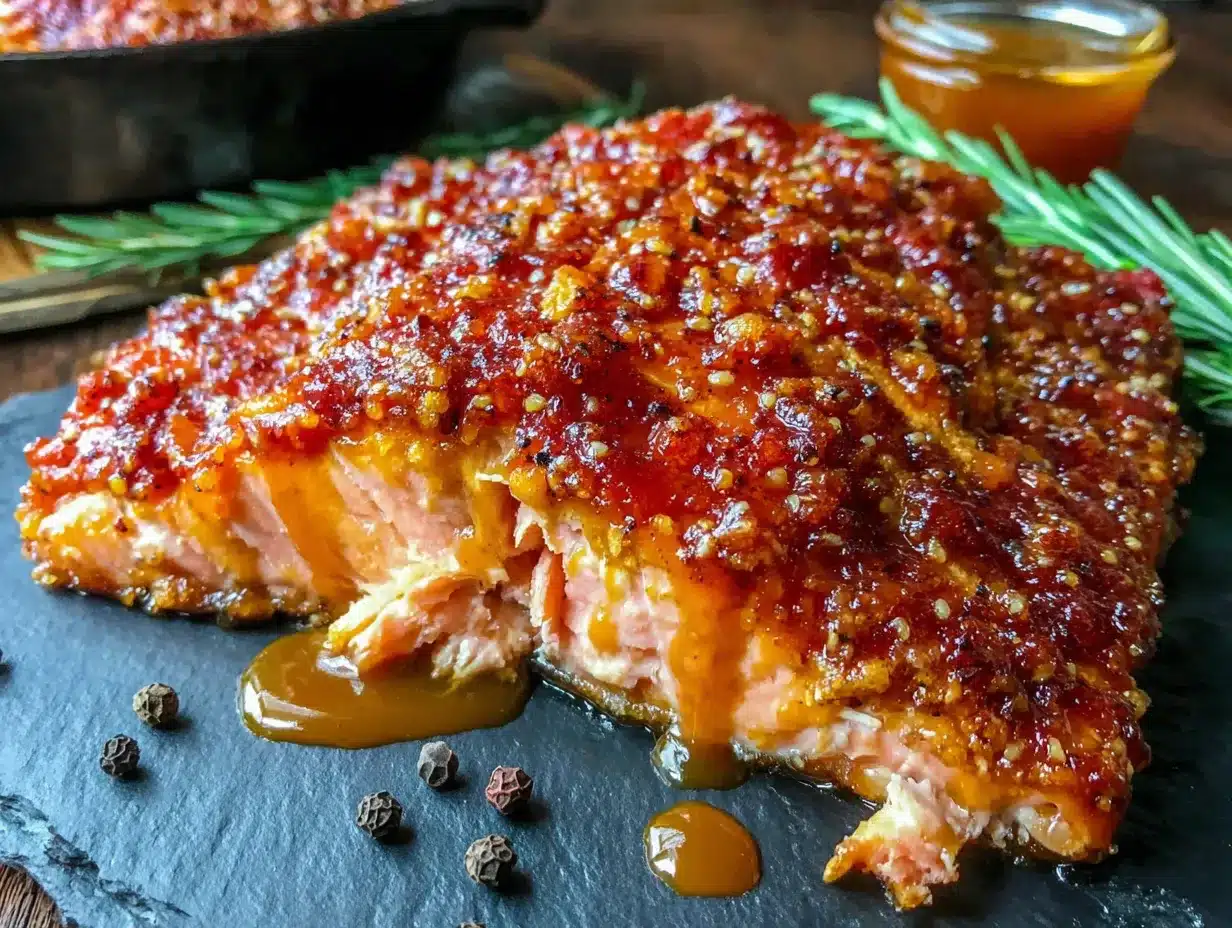
- 3 tablespoons pure maple syrup (please don’t use pancake syrup—the real stuff makes a huge difference)
- 2 tablespoons Dijon mustard (I recommend Grey Poupon for its smooth texture and balanced heat)
- 1 tablespoon whole grain mustard (adds texture and little pops of flavor, optional but highly recommended)
- 1 clove garlic (minced finely, about 1 teaspoon)
- 1 teaspoon apple cider vinegar (brightens everything up without making it taste vinegary)
Optional Garnishes
- Fresh parsley or dill (chopped, for color and freshness)
- Lemon wedges (for squeezing right before eating)
- Toasted sesame seeds (adds a nice crunch if you’re into that)
A quick note on ingredient selection—look for salmon filets that are similar in thickness so they cook evenly. If you’re using frozen salmon, make sure it’s completely thawed and patted very dry before cooking. Wet salmon won’t sear properly, and you’ll end up with steamed fish instead of beautifully caramelized filets.
Equipment Needed
You don’t need a fancy kitchen to make this recipe work. Here’s what you’ll need:
- Large oven-safe skillet (cast iron is ideal, but any heavy-bottomed oven-safe pan works—stainless steel is great too)
- Small mixing bowl (for whisking the glaze together)
- Whisk or fork (for mixing the glaze ingredients)
- Fish spatula or thin metal spatula (makes flipping the salmon much easier without breaking it apart)
- Tongs (helpful for handling the filets)
- Instant-read thermometer (optional but highly recommended for perfect doneness every time)
- Aluminum foil (for tenting the salmon while it rests)
If you don’t have an oven-safe skillet, you can transfer the salmon to a baking sheet lined with parchment paper after searing. I’ve done this many times and it works perfectly. Just make sure to scrape all that delicious glaze onto the salmon before it goes in the oven.
Preparation Method
Step 1: Prep the Salmon
Take your salmon filets out of the refrigerator about 10-15 minutes before cooking. This helps them cook more evenly. Pat each filet dry with paper towels—this is crucial for getting a good sear. Season both sides generously with salt and pepper.
Pro tip: If your filets have pin bones, run your fingers along the surface to feel for them and pull them out with tweezers. Nobody wants to bite into a bone.
Step 2: Make the Glaze
In your small mixing bowl, whisk together the maple syrup, Dijon mustard, whole grain mustard, minced garlic, and apple cider vinegar. Taste it. The balance should be sweet with a tangy kick and a hint of garlic. If it tastes too sharp, add a tiny bit more maple syrup. If it’s too sweet, add a splash more vinegar. Trust your palate here.
Step 3: Sear the Salmon
Place your large oven-safe skillet over medium-high heat and add the olive oil. Wait until the oil shimmers—about 2 minutes. Carefully place the salmon filets in the skillet, skin-side down if they have skin. Let them cook undisturbed for 3-4 minutes. You’ll see the edges turning opaque and the bottom getting golden brown.
Sensory cue: You should hear a steady sizzle. If it’s screaming, your heat is too high. If it’s barely whispering, turn it up a notch.
Step 4: Glaze and Finish in the Oven
Preheat your oven to 400°F (200°C). Flip the salmon filets carefully using your fish spatula. Brush a generous layer of the maple Dijon glaze over each filet. Reserve about half the glaze for later. Transfer the skillet to the preheated oven and roast for 5-7 minutes, depending on the thickness of your filets.
Temperature guide: For medium-rare, cook until the internal temperature reaches 120°F (49°C). For medium, aim for 125°F (52°C). The salmon will continue cooking slightly after you remove it from the oven.
Step 5: Glaze Again and Rest
Remove the skillet from the oven. Brush the remaining glaze over the salmon filets. Tent loosely with aluminum foil and let them rest for 3 minutes. This resting period is non-negotiable—it allows the juices to redistribute and the glaze to set into a beautiful, sticky coating.
Step 6: Serve
Transfer the salmon to plates or a serving platter. Spoon any extra glaze from the pan over the top. Sprinkle with fresh herbs and serve with lemon wedges on the side.
Cooking Tips & Techniques
I’ve made this salmon more times than I can count, and I’ve learned a few things the hard way. Here are my best tips so you don’t have to make the same mistakes I did.
Don’t skip the sear. I know it’s tempting to just brush the glaze on and throw everything in the oven, but that initial sear creates flavor you simply can’t get any other way. That golden-brown crust is where the magic starts.
Watch your oven time closely. Salmon goes from perfectly cooked to dry in about 60 seconds. If you’re new to cooking fish, use an instant-read thermometer. It takes the guesswork out completely and guarantees perfect results every time.
Room temperature matters. I mentioned taking the salmon out of the fridge before cooking—this isn’t just food blogger advice. Cold salmon sears unevenly and the center stays raw while the outside overcooks. Give it those 10-15 minutes. Your future self will thank you.
Double glaze for maximum flavor. Applying glaze before and after roasting creates layers of flavor. The first application caramelizes in the oven, and the second application stays fresh and bright. It makes a real difference.
Let the pan do the work. When you’re searing, resist the urge to poke, prod, or move the salmon around. Just let it sit there and develop that beautiful crust. Trust the process.
Variations & Adaptations
This recipe is wonderfully flexible. Here are some ways I’ve adapted it depending on what I have on hand or who I’m cooking for.
Spicy Maple Dijon Salmon: Add ½ teaspoon of red pepper flakes or a teaspoon of sriracha to the glaze. The heat plays beautifully with the sweetness of the maple syrup. I made this version for a friend who loves spicy food and she texted me the next day asking for the recipe.
Herb-Crusted Version: After brushing on the glaze, press a mixture of fresh dill, parsley, and chives onto the top of each filet before roasting. The herbs get slightly crispy in the oven and add a fresh, aromatic element.
Honey Alternative: If you’re out of maple syrup, honey works beautifully as a substitute. Use the same amount and reduce the apple cider vinegar to ½ teaspoon since honey is slightly less acidic than maple syrup.
Air Fryer Method: Preheat your air fryer to 375°F (190°C). Place the glazed salmon in the basket and cook for 7-9 minutes, depending on thickness. No need to flip. The glaze gets incredibly sticky and caramelized this way.
Garlic Lover’s Version: Double the garlic in the glaze and add a sprinkle of garlic powder to the salmon before searing. This is my personal favorite variation when I’m fighting off a cold or just really want that garlicky punch.
Serving & Storage Suggestions
This Easy Maple Dijon Glazed Salmon is incredibly versatile when it comes to serving. I’ve eaten it over fluffy rice, alongside roasted vegetables, and even flaked over a bed of greens for a warm salad.
What to serve with it: The sweet-tangy glaze pairs beautifully with roasted asparagus, garlic green beans, or a simple arugula salad with lemon vinaigrette. For something more substantial, try it over coconut rice or alongside creamy tomato basil soup and a crusty piece of bread for dipping. If you’re hosting a fall dinner, this salmon also works beautifully alongside a bowl of easy slow cooker butternut squash apple soup for a cozy, seasonal meal.
Storage: Leftover salmon keeps in an airtight container in the refrigerator for up to 3 days. The glaze will soften slightly, but the flavor remains fantastic. I often make extra on purpose so I can have salmon salads for lunch the next day.
Reheating: The best way to reheat is in a low oven (300°F/150°C) for about 5-7 minutes, or in a skillet over medium-low heat with a splash of water to create steam. Avoid the microwave if possible—it tends to overcook the fish and make the glaze rubbery.
Freezing: You can freeze the cooked salmon for up to 2 months. Wrap each filet individually in plastic wrap, then place in a freezer bag. Thaw overnight in the refrigerator and reheat gently.
Nutritional Information & Benefits
This recipe is not just delicious—it’s genuinely good for you. Here’s the nutritional breakdown per serving (based on 4 servings):
| Nutrient | Amount Per Serving |
|---|---|
| Calories | 385 |
| Protein | 35g |
| Fat | 18g |
| Saturated Fat | 3.5g |
| Carbohydrates | 12g |
| Fiber | 0g |
| Sugar | 10g |
| Sodium | 520mg |
| Omega-3 Fatty Acids | 2.5g |
Salmon is one of the best sources of omega-3 fatty acids, which support heart health and brain function. The maple syrup provides quick energy (and honestly, a little sweetness makes healthy eating feel less like a chore). This recipe is naturally gluten-free and dairy-free, making it suitable for a wide range of dietary needs. If you’re watching your sugar intake, you can reduce the maple syrup to 2 tablespoons—the Dijon will still carry the flavor beautifully.
Conclusion
This Easy Maple Dijon Glazed Salmon has become my weeknight hero, and I have a feeling it will become yours too. It’s the kind of recipe that makes you feel like you’ve pulled off something impressive, even when you’re tired, short on time, and running on empty. The glaze caramelizes into something almost magical, the salmon stays tender and flaky, and the whole thing comes together in less time than it takes to decide what to order for delivery.
I’d love to hear how this recipe turns out for you. Did you try any of the variations? Serve it with something unexpected? Burn it on the first try like I did? Drop a comment below and let me know—I read every single one, and your stories and questions help me create better recipes for all of us. And if you make this salmon, tag me in your photos. There’s nothing that makes my day like seeing someone else enjoying a recipe I love.
Here’s to easy dinners that feel like a celebration. You’ve got this.
Frequently Asked Questions
Can I use frozen salmon for this recipe?
Yes, absolutely. Just make sure the salmon is fully thawed in the refrigerator overnight and patted very dry with paper towels before cooking. Frozen salmon tends to release more water as it cooks, so drying it well is extra important for getting a good sear.
How do I know when the salmon is done cooking?
The most reliable method is using an instant-read thermometer inserted into the thickest part of the filet. For medium, look for 125°F (52°C). The salmon will continue cooking slightly after you remove it from the oven. If you don’t have a thermometer, look for the flesh to become opaque and flake easily with a fork.
Can I make the glaze ahead of time?
Absolutely. The glaze can be made up to 3 days in advance and stored in an airtight container in the refrigerator. Just give it a good whisk before using, as the ingredients may separate slightly. This actually makes dinner even faster on busy nights.
What if I don’t have Dijon mustard?
You can substitute with yellow mustard or spicy brown mustard, though the flavor will be slightly different. Yellow mustard is milder and tangier, while spicy brown mustard adds more heat. If using either substitute, you might want to add an extra teaspoon of maple syrup to balance the flavor.
Is this recipe keto-friendly?
This recipe is not strictly keto-friendly due to the maple syrup, which contains natural sugars. However, you can make a keto version by substituting the maple syrup with a sugar-free maple syrup alternative or using a monk fruit sweetener blended with a little water. The texture will be slightly different, but the flavor will still be delicious.
Pin This Recipe!
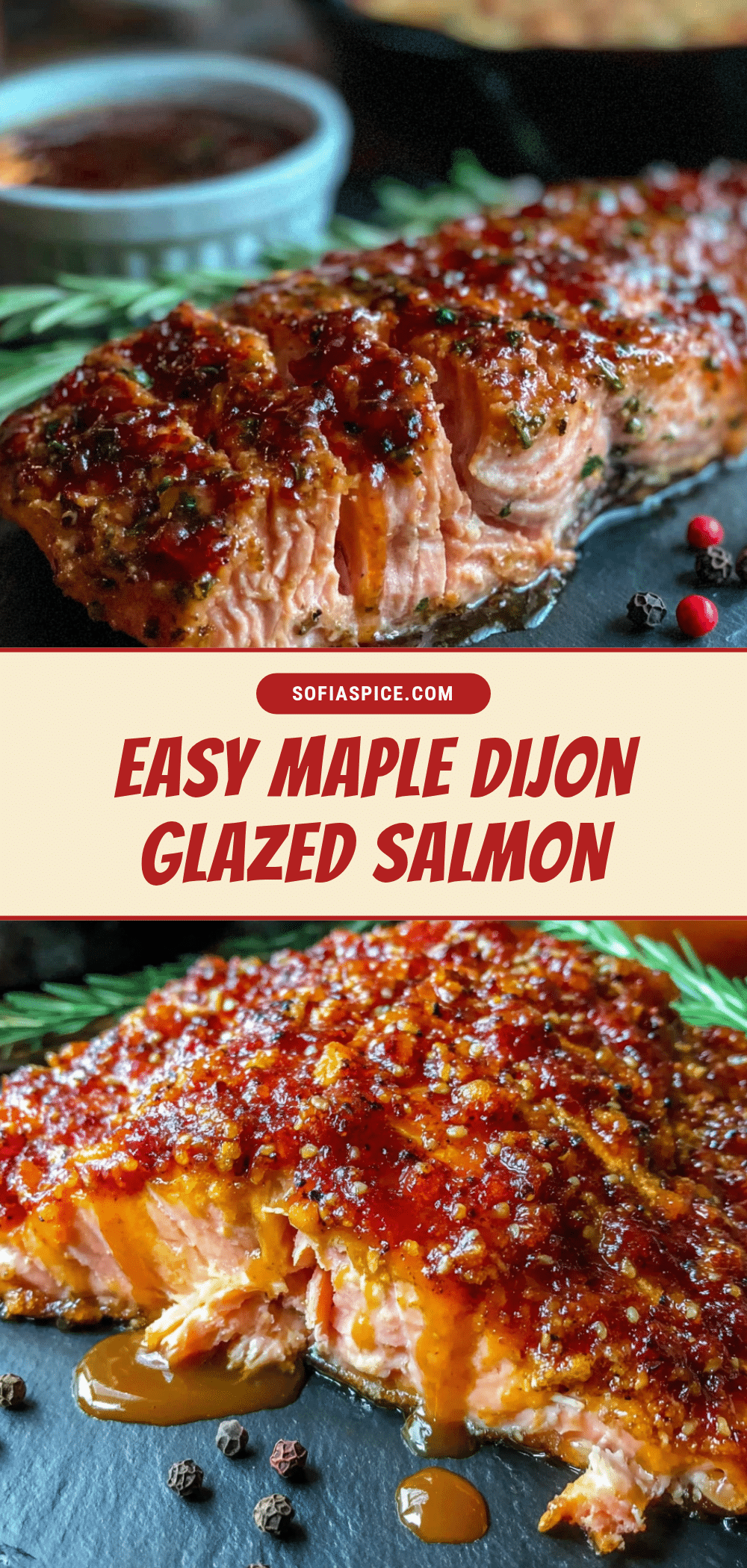
Easy Maple Dijon Glazed Salmon: Best 20-Minute Dinner
This Easy Maple Dijon Glazed Salmon is a quick, healthy dinner that tastes like something special. The glaze caramelizes into a sticky, sweet-savory crust while the salmon stays buttery and tender underneath, ready in just 20 minutes.
- Prep Time: 10 minutes
- Cook Time: 10 minutes
- Total Time: 20 minutes
- Yield: 4 servings 1x
- Category: Main Course
- Cuisine: American
Ingredients
- 4 salmon filets (6 oz each, skin on or off, about 170g each)
- 1 tablespoon olive oil
- ½ teaspoon kosher salt
- ¼ teaspoon freshly ground black pepper
- 3 tablespoons pure maple syrup
- 2 tablespoons Dijon mustard (recommend Grey Poupon)
- 1 tablespoon whole grain mustard (optional but recommended)
- 1 clove garlic (minced, about 1 teaspoon)
- 1 teaspoon apple cider vinegar
- Fresh parsley or dill (chopped, for garnish, optional)
- Lemon wedges (for serving, optional)
- Toasted sesame seeds (for garnish, optional)
Instructions
- Take salmon filets out of refrigerator 10-15 minutes before cooking. Pat each filet dry with paper towels. Season both sides generously with salt and pepper.
- In a small mixing bowl, whisk together maple syrup, Dijon mustard, whole grain mustard, minced garlic, and apple cider vinegar. Taste and adjust balance if needed.
- Place a large oven-safe skillet over medium-high heat and add olive oil. Wait until oil shimmers (about 2 minutes). Carefully place salmon filets in skillet, skin-side down if they have skin. Cook undisturbed for 3-4 minutes until edges turn opaque and bottom is golden brown.
- Preheat oven to 400°F (200°C). Flip salmon filets carefully using a fish spatula. Brush a generous layer of glaze over each filet, reserving about half for later. Transfer skillet to preheated oven and roast for 5-7 minutes, depending on thickness (internal temperature: 120°F for medium-rare, 125°F for medium).
- Remove skillet from oven. Brush remaining glaze over salmon filets. Tent loosely with aluminum foil and let rest for 3 minutes.
- Transfer salmon to plates or serving platter. Spoon any extra glaze from pan over top. Sprinkle with fresh herbs and serve with lemon wedges.
Notes
Don’t skip the sear—it creates essential flavor. Watch oven time closely; salmon can go from perfectly cooked to dry in about 60 seconds. Let salmon come to room temperature before cooking for even searing. Double glaze for maximum flavor: apply before and after roasting. Resist moving salmon while searing to develop a good crust. For best results, use an instant-read thermometer.
Nutrition
- Serving Size: 1 salmon filet
- Calories: 385
- Sugar: 10
- Sodium: 520
- Fat: 18
- Saturated Fat: 3.5
- Carbohydrates: 12
- Protein: 35
Keywords: maple Dijon glazed salmon, easy salmon recipe, 20-minute dinner, weeknight dinner, healthy salmon, gluten-free salmon, dairy-free salmon