This was supposed to be a pan-seared salmon night. I had the cast iron skillet out, the butter measured, the lemon sliced. I was ready to stand over the stove, flipping and fussing, like I always did. But then my oven timer went off — I’d been roasting broccoli in there — and I grabbed the wrong tray. The salmon fillets, already patted dry and seasoned, ended up in the air fryer basket instead. I stood there for a solid ten seconds, staring at the basket like it had betrayed me. My husband peeked over and said, “Well, I guess we’re trying something new.”
Let me tell you, I was not optimistic. Air fryers are great for fries and chicken wings, but salmon? I was sure it would come out dry and sad, like a piece of rubber you’d find on a forgotten plate at a buffet. I set the timer for ten minutes, braced for disappointment, and started mentally composing an apology dinner. But when I opened that basket, the smell hit me first — rich, buttery, with that little tang of lemon. The skin was crackling, golden, practically singing. I pulled a piece apart with a fork, and it flaked like a dream. Honestly, I almost cried. Not from the relief of not ruining dinner, but from the sheer shock that this accidental swap had made the best salmon of my life.
I’ve made it every week since then. The air fryer gives you this perfect crispy skin without any of the splatter or smoke of a skillet. The flesh stays tender, almost buttery on its own, and the lemon butter sauce pools around it in this way that feels fancy but takes zero effort. If you’ve been burned by dry, overcooked salmon before — maybe you’ve had one too many sad lunch salads — this recipe is your redemption. It’s the kind of meal that makes you feel like you’ve got it together, even when you started the whole thing by grabbing the wrong appliance.
Why You’ll Love This Recipe
I’ve tested this recipe more times than I care to admit — different thicknesses of fillets, different marinades, different temperatures. I wanted to make sure it wasn’t a fluke. And honestly, it’s not. This method is bulletproof. Here’s why it works so well:
- Quick & Easy: From start to finish, this comes together in about 15 minutes. No preheating a giant oven, no standing over a sputtering skillet. Just season, air fry, and eat.
- Simple Ingredients: You probably have everything in your fridge and pantry right now. Salmon, butter, lemon, garlic, salt, pepper. That’s it. No trips to a specialty store.
- Perfect for Busy Weeknights: This is my go-to when I’ve had a long day and need dinner on the table fast. It feels special enough for a Friday night but easy enough for a Tuesday.
- Crowd-Pleaser: I’ve served this to friends who swore they didn’t like salmon, and they asked for seconds. The crispy skin and bright lemon butter win over even the skeptics.
- Unbelievably Delicious: The texture is what gets me every time. The skin gets shatteringly crisp, like a potato chip, while the fish stays moist and flaky. The lemon butter sauce seeps into every bite.
What makes this different from every other salmon recipe out there? It’s the air fryer. That rapid hot air circulation creates a crust that a skillet just can’t match without a ton of oil. And because you’re not flipping the fish, you don’t risk breaking those beautiful flakes apart. It’s the best version of crispy salmon I’ve ever made, and I’ve made a lot of salmon.
This is the kind of recipe that makes you close your eyes after the first bite. It’s comfort food that happens to be healthy — rich, satisfying, and deeply soothing. Perfect for a quiet night in when you need something warm and delicious without the stress.
What Ingredients You Will Need
This recipe uses simple, wholesome ingredients to deliver bold flavor and satisfying texture without the fuss. Most of these are pantry staples, which makes this dish incredibly accessible.
- Salmon Fillets (4 fillets, about 6 oz each): Look for fillets that are similar in thickness so they cook evenly. I prefer center-cut fillets for the best texture. Skin-on is non-negotiable here — that skin is what gets crispy and delicious. If you can, buy wild-caught salmon for better flavor and sustainability, but farm-raised works perfectly too.
- Unsalted Butter (3 tablespoons, melted): Butter adds richness and helps the seasoning stick. I use unsalted so I can control the salt level. If you only have salted butter, just reduce the added salt slightly.
- Fresh Lemon Juice (2 tablespoons): Fresh is absolutely worth it here. Bottled lemon juice has a flat, almost metallic taste that won’t do your salmon any favors. You’ll also want lemon slices for serving.
- Garlic (3 cloves, minced): Fresh garlic gives a punchy, aromatic flavor that complements the salmon beautifully. Garlic powder works in a pinch, but fresh is better.
- Olive Oil (1 tablespoon): A little oil helps the skin crisp up and prevents sticking. I use extra virgin olive oil, but avocado oil works great too.
- Salt (1 teaspoon, or to taste): I use kosher salt for its clean flavor and easy pinch-ability. Don’t skimp here — salt brings out the salmon’s natural richness.
- Black Pepper (1/2 teaspoon, freshly ground): Freshly ground pepper adds a subtle warmth. Pre-ground pepper is fine, but it won’t have the same pop.
- Paprika (1/2 teaspoon): This is optional, but it adds a lovely color and a hint of smokiness. Smoked paprika is even better if you have it.
- Dried Dill (1/2 teaspoon) or Fresh Dill (1 tablespoon, chopped): Dill and salmon are a classic pairing. The herbaceous notes cut through the richness of the fish and butter. If you don’t have dill, parsley or chives work well too.
- Lemon Slices (for serving): Extra lemon brightens up the dish and adds a fresh pop of flavor right before eating.
- Fresh Parsley (optional, for garnish): A sprinkle of fresh parsley makes the dish look restaurant-ready.
I personally recommend using wild-caught sockeye salmon when it’s in season — it has a firmer texture and a richer flavor that holds up beautifully in the air fryer. But honestly, I’ve made this with frozen-thawed farmed salmon from the grocery store and it was still fantastic. Just make sure to pat the fillets very dry with paper towels before seasoning. That step is crucial for crispy skin.
For the butter, I love using Kerrygold or another high-quality European butter. It has a higher fat content, which means more flavor and a creamier sauce. But any unsalted butter will do the job.
Equipment Needed
You don’t need a lot of fancy tools for this recipe, which is part of its charm.
- Air Fryer: Any air fryer will work — basket style or oven style. I use a 6-quart Cosori basket model, and it fits four fillets perfectly. If yours is smaller, cook the salmon in batches. Don’t overcrowd the basket, or the skin won’t crisp up properly.
- Tongs: Silicone-tipped tongs are great for gently placing the salmon in the basket and removing it without tearing the skin. Metal tongs can scratch the non-stick coating.
- Small Bowl: For mixing the melted butter, lemon juice, garlic, and seasonings.
- Pastry Brush (or Spoon): A silicone pastry brush is ideal for spreading the butter mixture evenly over the fillets. If you don’t have one, just use the back of a spoon.
- Paper Towels: Absolutely essential for patting the salmon dry. This is the secret to crispy skin.
- Cutting Board and Knife: For mincing garlic and slicing lemons. A sharp chef’s knife makes quick work of it.
- Instant-Read Thermometer (optional but recommended): If you’re nervous about overcooking, a thermometer takes the guesswork out. Salmon is done at 125°F to 130°F for medium (my preference) or 135°F for well-done.
I bought my air fryer on a whim during a Black Friday sale, and honestly, it was one of the best kitchen investments I’ve made. It’s not just for frozen foods — it’s a legitimate cooking tool. If you don’t have one yet, this recipe alone might convince you.
Preparation Method
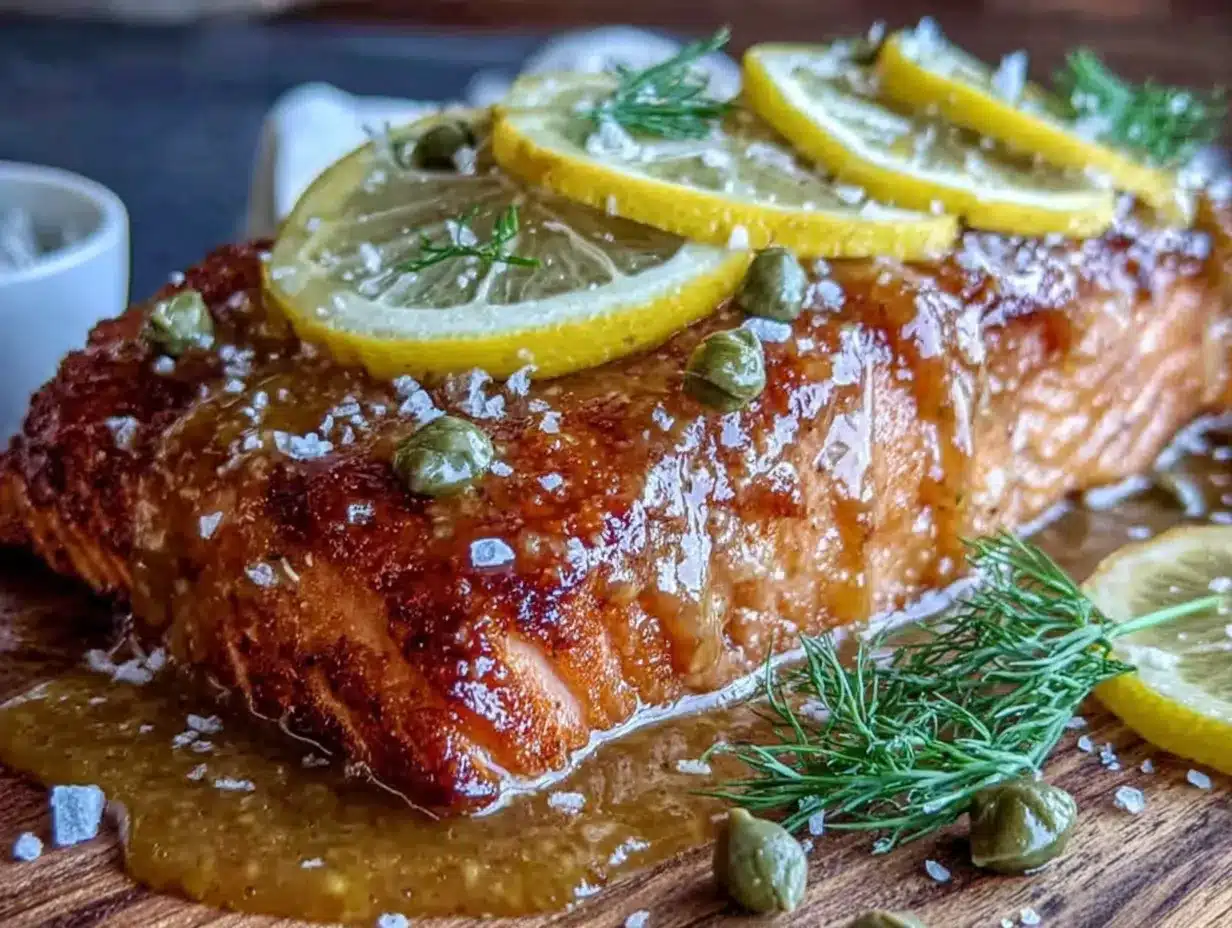
- Prep the salmon: Start by taking your salmon fillets out of the fridge. Let them sit at room temperature for about 10 minutes — this helps them cook more evenly. Meanwhile, pat each fillet very dry with paper towels. Don’t skip this step. Moisture is the enemy of crispy skin. If the fillets feel even slightly damp, keep blotting.
- Make the lemon butter mixture: In a small bowl, combine the 3 tablespoons of melted unsalted butter, 2 tablespoons of fresh lemon juice, 3 minced garlic cloves, 1 tablespoon of olive oil, 1 teaspoon of kosher salt, 1/2 teaspoon of black pepper, 1/2 teaspoon of paprika, and 1/2 teaspoon of dried dill (or 1 tablespoon fresh dill). Whisk it all together with a fork. It should look like a glossy, fragrant emulsion. Taste it — it should be bright and salty. Adjust if needed.
- Season the salmon: Place the dry fillets on a plate or cutting board. Using a pastry brush, generously brush the lemon butter mixture all over the flesh side of each fillet. Don’t forget the sides. Reserve about a tablespoon of the mixture for brushing on after cooking. If you don’t have a brush, just spoon it over and spread it with the back of the spoon.
- Preheat the air fryer: Set your air fryer to 400°F (200°C) and let it preheat for 3 minutes. Preheating ensures the salmon starts cooking immediately, which helps the skin crisp up. If your air fryer doesn’t have a preheat function, just run it empty for 3 minutes.
- Arrange the fillets: Place the seasoned salmon fillets in the air fryer basket, skin-side down. Make sure they’re not touching — leave a little space between each fillet for air to circulate. If they’re crowded, they’ll steam instead of crisp. Cook in batches if needed.
- Air fry: Cook at 400°F for 8 to 10 minutes, depending on the thickness of your fillets. For fillets that are about 1 inch thick, 8 minutes gives you a medium-rare center (still slightly translucent in the middle). For well-done, go to 10 minutes. I usually check at 7 minutes and go from there. The skin should look golden and crispy, and the flesh should flake easily with a fork.
- Check for doneness: If you’re using a thermometer, insert it into the thickest part of the fillet. 125°F is medium-rare, 130°F is medium, and 135°F is well-done. The salmon will continue to cook a tiny bit as it rests, so pull it out a degree or two early.
- Finish with reserved butter: Carefully remove the fillets from the air fryer basket using tongs. Place them on a serving plate. Brush the reserved lemon butter mixture over the hot fillets. This final brush adds a fresh hit of garlic and lemon that hasn’t been dulled by cooking.
- Rest and serve: Let the salmon rest for 2 minutes. This lets the juices redistribute, so every bite is moist. Serve immediately with lemon slices on the side and a sprinkle of fresh parsley if you’re feeling fancy.
One thing I learned the hard way: don’t flip the salmon. I tried it once because I thought the top needed more color, and the skin stuck to the basket and tore off. The air fryer’s hot air circulates around the food, so the top cooks just fine without flipping. Keep it skin-side down the whole time.
Cooking Tips & Techniques
After making this recipe probably twenty times, I’ve collected a few tricks that make a real difference.
Dry the skin thoroughly. This is the number one tip. I use three or four paper towels per fillet and press firmly. If the skin is even a little damp, it will steam instead of crisp. I’ve made this mistake more than once, and the result is a sad, chewy skin that you’ll end up peeling off. Pat dry like your dinner depends on it.
Don’t skip the oil. The olive oil in the butter mixture isn’t just for flavor — it raises the smoke point of the butter, so the butter doesn’t burn in the air fryer. Pure butter alone can scorch at high temperatures, but the oil stabilizes it. This is a pro tip I picked up from a chef friend, and it works every time.
Mind the thickness. Salmon fillets are rarely uniform. If you have one thick piece and one thin piece, they’ll cook at different rates. I either buy fillets that look similar in size, or I cut a large fillet into equal portions myself. If you can’t avoid uneven pieces, check the thinner one at 6 minutes and remove it early while the thick one keeps cooking.
Let the salmon come to room temperature. I know it’s tempting to cook it straight from the fridge, but cold salmon cooks unevenly. The outside will be done while the center is still cold and raw. Ten minutes on the counter makes a noticeable difference.
Use a thermometer. I used to guess doneness by pressing on the fish or looking at the white albumin (that white stuff that sometimes oozes out). A thermometer is more reliable. Once you hit 125°F, you’re in the sweet spot. Overcooked salmon is dry and crumbly, and it’s such a waste of good fish.
I once forgot to pat the salmon dry and ended up with a soggy, sad dinner. My husband ate it without complaint, but I knew. I knew. That mistake taught me to never rush the drying step. It’s a five-second task that changes everything.
Variations & Adaptations
This recipe is a great base, and it’s easy to adapt based on what you have or what you’re craving.
Spicy Cajun Salmon: Skip the dill and paprika, and use 1 teaspoon of Cajun seasoning instead. Add a pinch of cayenne if you like heat. The smoky, spicy crust is incredible with the lemon butter. I made this for a Mardi Gras party, and it was gone in minutes.
Herb Crusted Salmon: After brushing on the lemon butter, press a mixture of fresh chopped parsley, dill, and chives onto the flesh side. The herbs get slightly crispy in the air fryer and add a fresh, aromatic layer. This is my go-to when I have leftover herbs from the farmer’s market.
Gluten-Free and Low-Carb: This recipe is naturally gluten-free and low-carb, so no adaptations needed. It’s perfect for keto or paleo diets. Serve it with roasted vegetables or a big green salad to keep it low-carb.
Dairy-Free Version: Substitute the butter with a good quality vegan butter or use all olive oil (about 3 tablespoons). The flavor will be slightly different — less rich, more fruity — but still delicious. I’ve used Miyoko’s vegan butter with great results.
Sweet and Tangy Glaze: Add 1 tablespoon of honey or maple syrup to the lemon butter mixture. The sugar will caramelize in the air fryer, creating a beautiful sticky glaze. Be careful not to let it burn — check the salmon a minute or two early. My kids love this version.
Air Fryer vs. Oven: If you don’t have an air fryer, you can bake the salmon in a 425°F oven for 12 to 15 minutes. Place the fillets on a parchment-lined baking sheet. You won’t get the same level of crispiness on the skin, but it will still be tender and flavorful. For extra crispiness, broil for the last 2 minutes.
I tried the honey version on a whim when I was out of dill, and it was a happy accident. The sweetness balanced the lemon so well that it’s now my second favorite way to make this. It goes beautifully with a side of steamed green beans.
Serving & Storage Suggestions
This salmon is best served immediately, right out of the air fryer, when the skin is at its crispiest. But it’s versatile enough to work in different settings.
Serving Temperature: Serve hot, straight from the air fryer. The lemon butter should be warm and glossy. If it cools down, the butter will solidify and lose that luscious texture.
Presentation: Place the fillets on a platter with lemon slices tucked between them. Sprinkle with fresh parsley or dill. A few cracks of black pepper on top make it look polished. I like to serve it on a wooden board for a rustic feel, but a simple white plate works beautifully too.
What to Serve With It: This salmon pairs wonderfully with light, fresh sides. Try it with a simple arugula salad dressed with lemon vinaigrette, roasted asparagus, or steamed rice. For a low-carb option, serve it over cauliflower rice or with sautéed zucchini noodles. A side of crusty bread is great for sopping up the extra lemon butter sauce.
Storage: Leftover salmon can be stored in an airtight container in the refrigerator for up to 3 days. The skin will lose its crispiness, unfortunately, but the fish is still delicious. I like to flake it cold over salads or reheat it gently.
Reheating: To reheat, place the salmon in the air fryer at 350°F for 3 to 4 minutes. This will help revive some of the crispiness. You can also reheat it in a skillet over medium heat for 2 minutes per side. Avoid the microwave — it will make the fish rubbery and dry.
How Flavors Develop: The lemon and garlic flavors mellow as the salmon sits, so leftovers are a bit more subtle. That’s not a bad thing — the salmon becomes more about the fish itself. I love making extra just to have cold salmon for lunch the next day. It’s fantastic flaked over a bowl of mixed greens with a simple vinaigrette.
Nutritional Information & Benefits
This recipe is not only delicious but also packed with nutrients. Here’s an approximate breakdown per serving (one fillet with sauce):
| Nutrient | Amount |
|---|---|
| Calories | 380 |
| Protein | 35g |
| Fat | 25g |
| Saturated Fat | 10g |
| Carbohydrates | 2g |
| Fiber | 0g |
| Sugar | 1g |
| Sodium | 650mg |
| Omega-3 Fatty Acids | 2.5g |
Salmon is one of the best sources of omega-3 fatty acids, which are essential for heart and brain health. It’s also rich in high-quality protein, B vitamins, and selenium. The lemon and garlic add antioxidants and anti-inflammatory properties. This meal is naturally gluten-free, low-carb, and keto-friendly.
Potential allergens include fish and dairy (butter). For a dairy-free option, use olive oil instead of butter.
I love that this recipe feels indulgent — thanks to the butter and crispy skin — but is actually a nutritional powerhouse. It’s the kind of meal that makes you feel good from the inside out. You’re treating yourself without any guilt.
Conclusion
This crispy air fryer salmon with lemon butter has become a staple in my kitchen, and I think it deserves a spot in yours too. It started as a mistake — a moment of distraction that turned into something wonderful. That’s the kind of cooking I love: forgiving, adaptable, and full of happy surprises.
I hope you give this recipe a try, whether you’re a seasoned cook or someone who’s a little nervous about making fish at home. The air fryer does most of the work, and the result is genuinely restaurant-quality. Feel free to play with the seasonings, swap in different herbs, or add a little heat. This recipe is a starting point, not a rulebook.
I’d love to hear how it turns out for you. Did you try a variation? Did you serve it with something unexpected? Drop a comment below and let me know. And if you share it on social media, tag me — I want to see your crispy, golden, beautiful salmon. Happy cooking, friends. You’ve got this.
Frequently Asked Questions
Can I use frozen salmon in the air fryer?
Yes, you can, but you need to thaw it completely first and pat it very dry. Frozen salmon releases a lot of water as it cooks, which will prevent the skin from crisping. Thaw it in the refrigerator overnight for best results. If you’re in a hurry, you can thaw it under cold running water for about 15 minutes.
How do I know when the salmon is done without a thermometer?
Look for visual cues. The flesh should be opaque and flake easily when you gently press it with a fork. If the center still looks translucent or feels very soft, it needs more time. The white albumin (a protein that oozes out) will appear on the surface when it’s close to done — but if there’s a lot of it, you’ve probably overcooked it.
Why is my salmon skin not crispy?
Most likely, the skin wasn’t dry enough before cooking. Pat it thoroughly with paper towels — even press down to absorb hidden moisture. Also, make sure you’re not overcrowding the air fryer basket. The fillets need space for hot air to circulate. If the basket is too full, the salmon steams instead of crisps.
Can I make this recipe without an air fryer?
Absolutely. Bake the salmon in a 425°F oven for 12 to 15 minutes on a parchment-lined baking sheet. For extra crispiness, you can broil it for the last 2 minutes. The texture won’t be exactly the same as air-fried, but it will still be delicious and tender. You can also pan-sear it in a cast iron skillet for a crispy skin.
How long does leftover salmon last, and can I freeze it?
Leftover salmon keeps in the refrigerator for up to 3 days in an airtight container. Yes, you can freeze it for up to 3 months. Wrap each fillet tightly in plastic wrap and then in foil. Thaw in the refrigerator overnight before reheating. Note that the skin will lose its crispiness after freezing and reheating, so it’s best used in salads or flaked into pasta.
Pin This Recipe!
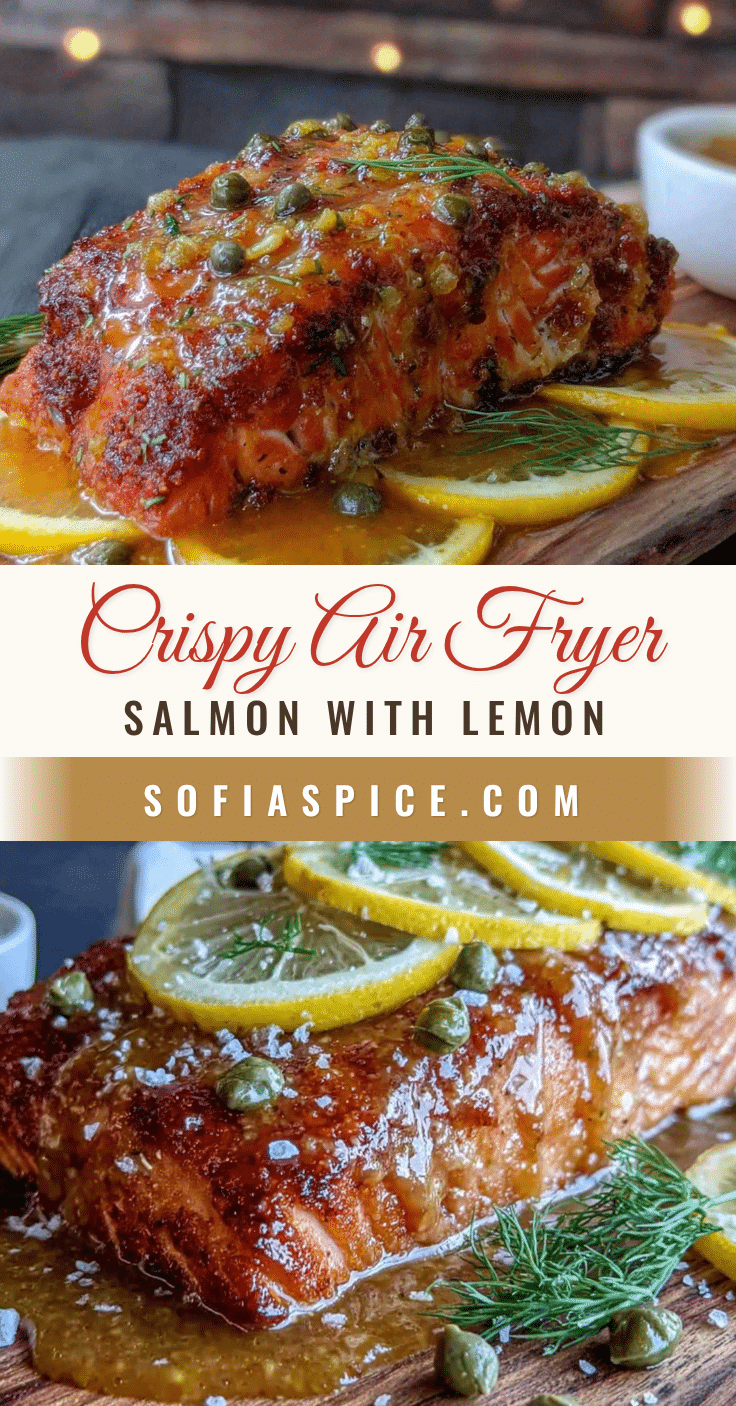
Crispy Air Fryer Salmon with Lemon Butter

This crispy air fryer salmon with lemon butter is a quick and easy 15-minute dinner that delivers perfectly crispy skin and tender, flaky fish. A happy accident turned into a weekly staple, this recipe is simple, delicious, and perfect for busy weeknights.
- Prep Time: 5 minutes
- Cook Time: 10 minutes
- Total Time: 15 minutes
- Yield: 4 servings 1x
- Category: Main Course
- Cuisine: American
Ingredients
- 4 salmon fillets (about 6 oz each), skin-on
- 3 tablespoons unsalted butter, melted
- 2 tablespoons fresh lemon juice
- 3 cloves garlic, minced
- 1 tablespoon olive oil
- 1 teaspoon kosher salt
- 1/2 teaspoon black pepper, freshly ground
- 1/2 teaspoon paprika (optional)
- 1/2 teaspoon dried dill (or 1 tablespoon fresh dill, chopped)
- Lemon slices (for serving)
- Fresh parsley (optional, for garnish)
Instructions
- Prep the salmon: Let salmon fillets sit at room temperature for 10 minutes. Pat each fillet very dry with paper towels.
- Make the lemon butter mixture: In a small bowl, combine melted butter, lemon juice, minced garlic, olive oil, salt, pepper, paprika, and dill. Whisk together.
- Season the salmon: Brush the lemon butter mixture generously over the flesh side of each fillet. Reserve about 1 tablespoon for later.
- Preheat the air fryer to 400°F (200°C) for 3 minutes.
- Arrange the fillets in the air fryer basket, skin-side down, without touching. Cook in batches if needed.
- Air fry at 400°F for 8 to 10 minutes, depending on thickness. For 1-inch thick fillets, 8 minutes for medium-rare, 10 minutes for well-done.
- Check for doneness: Use an instant-read thermometer (125°F for medium-rare, 130°F for medium, 135°F for well-done) or flake with a fork.
- Remove fillets with tongs and brush with reserved lemon butter mixture.
- Let rest for 2 minutes. Serve immediately with lemon slices and fresh parsley if desired.
Notes
Pat the salmon very dry for crispy skin. Don’t flip the salmon during cooking. For even cooking, use fillets of similar thickness. Let salmon come to room temperature before cooking. For dairy-free, substitute butter with olive oil or vegan butter.
Nutrition
- Serving Size: 1 fillet with sauce
- Calories: 380
- Sugar: 1
- Sodium: 650
- Fat: 25
- Saturated Fat: 10
- Carbohydrates: 2
- Protein: 35
Keywords: air fryer salmon, crispy salmon, lemon butter salmon, quick salmon dinner, healthy salmon recipe, easy weeknight dinner, gluten-free salmon, keto salmon