I had been looking for a mashed potato recipe that actually tasted like something, not just a vehicle for gravy. For a while, I just accepted that mashed potatoes were a blank canvas—necessary, comforting, but rarely memorable on their own. You know that moment at a holiday table where you take a bite of the potatoes and they’re fine, but you immediately reach for the salt or a pool of jus to give them a pulse? That was my reality for years. I tried adding extra butter. I tried roasting the garlic first. I even tried using heavy cream instead of milk. They got creamier, sure, but they never felt like the star of the plate. They were always the supporting actor, and honestly, I got tired of that.
Then one rainy Sunday afternoon—the kind where you just want to stay in the kitchen and let something good happen—I was browning butter for a batch of cookies and the smell hit me. That nutty, toasty, almost caramelized aroma filled the whole house. And I thought, why has no one done this to potatoes? It felt like one of those obvious-in-retrospect ideas, but I had never actually seen it done right. So I grabbed a few russets, a bunch of fresh sage from the farmer’s market, and started experimenting. The first batch was good. The second batch was better. The third batch—the one where I let the sage leaves get crispy in that foaming butter before folding them into the mash—that was the one that stuck. It wasn’t loud or complicated. It was just quietly, undeniably the best mashed potato I had ever made. And I knew I wasn’t going back.
These Creamy Brown Butter Sage Mashed Potatoes aren’t trying to reinvent the wheel. They’re just finally giving the wheel some flavor of its own.
Why You’ll Love This Recipe
Let’s be real for a second. Most mashed potato recipes are fine. They do the job. But this one? This one has a personality. The brown butter brings this deep, toasty richness that you just can’t get from regular melted butter, and the sage adds this earthy, almost peppery note that cuts through the creaminess perfectly. It’s the kind of side dish that makes people stop and ask, “What did you do to these potatoes?”
- Deep, Nutty Flavor: Browning the butter is a five-minute step that transforms the entire dish. It adds complexity without any extra effort.
- Simple Ingredients: You probably already have potatoes, butter, and sage in your kitchen right now. No fancy grocery store runs required.
- Perfect for Holidays & Weeknights: It feels special enough for Thanksgiving but simple enough to whip up on a Tuesday night alongside some perfect baked salmon with lemon butter sauce.
- Crowd-Pleaser: I’ve served these at dinner parties and family gatherings, and they disappear every single time. Kids love the creamy texture, adults love the sophisticated flavor.
- Unbelievably Creamy: The secret is a combination of Yukon Gold potatoes (which are naturally buttery) and a splash of warm heavy cream. No lumps, no gluey texture—just silky, smooth perfection.
What makes this recipe different from the dozens of others out there? It’s the way the brown butter and sage work together. It’s not just a garnish—it’s the foundation of the flavor. I’ve tested this with russets, red potatoes, and even sweet potatoes, and Yukon Golds win every time for that perfect balance of starch and creaminess. And honestly? It’s the kind of dish that makes you close your eyes after the first bite. It’s comfort food reimagined—richer, more aromatic, but with the same soul-soothing satisfaction you expect from a bowl of mashed potatoes.
What Ingredients You Will Need
This recipe uses simple, wholesome ingredients to deliver bold flavor and satisfying texture without the fuss. Most of these are pantry staples, but a few key choices make all the difference.
- Yukon Gold Potatoes (2 pounds, peeled and quartered): These are my go-to for mashed potatoes. They have a naturally buttery flavor and a waxy-yet-starchy texture that mashes up silky smooth without getting gluey. Russets work in a pinch, but they tend to be fluffier and less creamy.
- Unsalted Butter (6 tablespoons, divided): We’re using unsalted so we can control the salt level. Four tablespoons go into browning with the sage, and the remaining two get stirred in at the end for extra richness. I personally use Kerrygold here—the higher butterfat content makes for a deeper brown butter flavor.
- Fresh Sage Leaves (10-12 leaves): Fresh is non-negotiable for this one. Dried sage just doesn’t have the same aromatic punch, and it won’t crisp up in the butter the same way. Look for leaves that are vibrant green and fragrant—avoid any that look wilted or brown.
- Heavy Cream (1/2 cup, warmed): Warm cream incorporates into the potatoes much better than cold cream, which can seize the starches and make the mash lumpy. You can substitute half-and-half for a lighter version, but the texture won’t be as luxurious.
- Whole Milk (1/4 cup, warmed): This thins the potatoes out just enough to make them scoopable without being runny. If you want extra-rich potatoes, swap this for more heavy cream.
- Salt (1 1/2 teaspoons, plus more to taste): I use fine sea salt for the cooking water and flaky sea salt for finishing. The potatoes absorb salt best while they’re hot, so don’t skip seasoning the water.
- Black Pepper (1/2 teaspoon, freshly ground): Freshly ground pepper makes a difference here. Pre-ground pepper tends to be dusty and flat, while fresh cracks add little bursts of warmth.
- Garlic (2 cloves, smashed, optional): I sometimes toss a couple of smashed garlic cloves into the boiling water with the potatoes. It infuses them with a subtle garlic flavor without being overpowering. Totally optional, but I love it.
Ingredient Selection Tips: When choosing sage, look for leaves that are firm and not slimy. Store them wrapped in a damp paper towel in the fridge for up to a week. For the potatoes, avoid any with green spots or sprouts—those can taste bitter. And if you’re using salted butter, just reduce the added salt by about 1/4 teaspoon.
Equipment Needed
You don’t need a lot of fancy tools for this recipe, but a few key pieces make the process smoother.
- Large Pot (5-6 quart): For boiling the potatoes. Make sure it’s big enough that the potatoes have room to move around—crowding them leads to uneven cooking.
- Colander: For draining the potatoes. A fine-mesh colander works best if you have one.
- Potato Masher or Ricer: I prefer a ricer for the smoothest texture, but a good old-fashioned masher works perfectly too. Avoid using a food processor or blender—they’ll turn the potatoes into glue.
- Small Skillet: For browning the butter and sage. A light-colored skillet (like stainless steel) helps you see when the butter turns that perfect amber color.
- Wooden Spoon or Silicone Spatula: For stirring the butter as it browns. Wooden spoons are great because they don’t conduct heat and give you good control.
- Measuring Cups and Spoons: Accuracy matters, especially with the cream and butter.
- Sharp Knife and Cutting Board: For peeling and quartering the potatoes.
Budget-Friendly Options: Don’t have a ricer? No problem. A potato masher from the dollar store works just fine—just be careful not to over-mash. You can also use a fork in a pinch, but it takes a little more elbow grease. And if you don’t have a small skillet for the brown butter, a small saucepan works just as well.
Preparation Method
- Prep the Potatoes (10 minutes): Peel the Yukon Gold potatoes and cut them into evenly sized quarters—about 1 1/2 inches each. This ensures they cook at the same rate. Rinse them under cold water to remove excess starch, which helps prevent them from becoming gluey.
- Boil the Potatoes (20-25 minutes): Place the quartered potatoes in a large pot and cover them with cold water by about an inch. Add 1 1/2 teaspoons of salt and the smashed garlic cloves (if using). Bring to a boil over high heat, then reduce to a medium simmer. Cook until the potatoes are fork-tender—a knife should slide through with no resistance. Don’t let them get so soft that they start falling apart, or they’ll absorb too much water.
- Drain and Dry (5 minutes): Drain the potatoes in a colander and let them sit for a minute or two to steam off excess moisture. This is a crucial step—extra water will make your potatoes watery instead of creamy. Return them to the pot (off the heat) and let them sit for another minute, shaking the pot occasionally to evaporate any remaining moisture.
- Brown the Butter (5 minutes): While the potatoes are draining, melt 4 tablespoons of unsalted butter in a small skillet over medium heat. Add the fresh sage leaves. Swirl the pan occasionally as the butter melts, foams, and then starts to turn a golden amber color. You’ll smell a nutty, toasty aroma—that’s your cue. Watch carefully, because brown butter can go from perfect to burnt in seconds. Once the butter is amber and the sage leaves are crispy (about 3-4 minutes), remove from heat immediately.
- Mash the Potatoes (5 minutes): Use a potato masher or ricer to mash the potatoes directly in the pot. If using a ricer, rice them into a large bowl. Don’t over-mash—you want them smooth but not pasty. A few small lumps are totally fine and actually add a nice rustic texture.
- Add the Cream and Milk (3 minutes): Pour the warmed heavy cream and whole milk over the mashed potatoes. Stir gently with a wooden spoon until combined. The potatoes will look a little loose at first, but they’ll tighten up as they sit.
- Fold in the Brown Butter and Sage (2 minutes): Drizzle the brown butter (with the crispy sage leaves) over the potatoes. Reserve a few sage leaves for garnish if you want to get fancy. Fold everything together gently until the butter is fully incorporated. Taste and adjust salt and pepper as needed.
- Finish with Remaining Butter (1 minute): Stir in the remaining 2 tablespoons of unsalted butter until melted and glossy. This gives the potatoes that extra sheen and richness.
- Serve Immediately (or Keep Warm): Transfer to a serving bowl, garnish with the reserved crispy sage leaves and a crack of fresh black pepper. If you need to keep them warm for a bit, cover the bowl with foil and set it over a pot of simmering water (or use a slow cooker on warm).
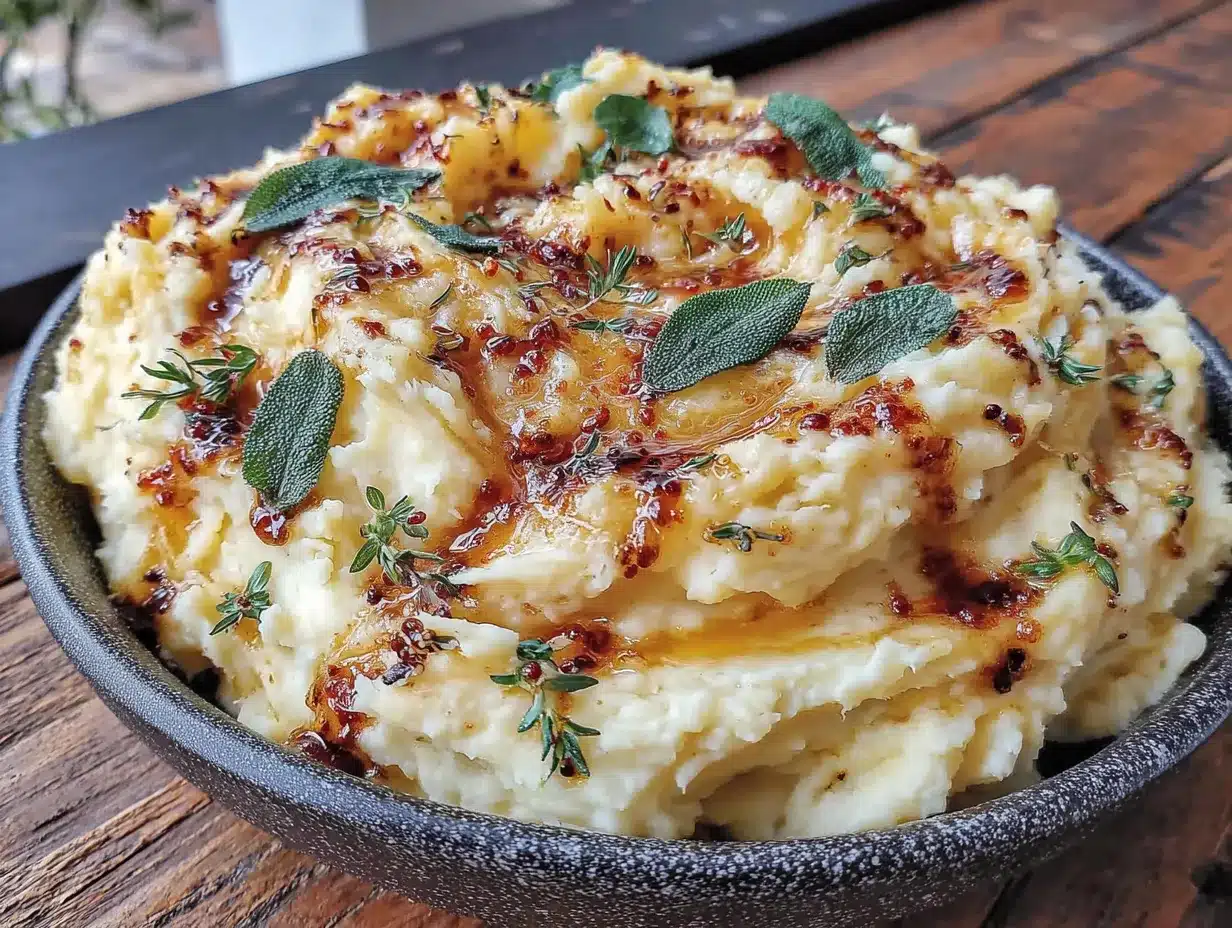
Sensory Cues: When the butter is browning, you’re looking for a deep amber color and a nutty aroma—think toasted hazelnuts. The sage leaves should be crisp enough to crumble between your fingers. When you fold the butter into the potatoes, you should see streaks of golden brown running through the creamy white mash—that’s the visual promise of what you’re about to taste.
Cooking Tips & Techniques
I’ve made this recipe more times than I can count, and I’ve definitely made my share of mistakes along the way. Here’s what I’ve learned so you don’t have to learn the hard way.
Don’t Overwork the Potatoes: This is the number one mistake people make. When you mash potatoes too aggressively, you break down the starches and release too much gluten, which turns them into a gluey, sticky mess. Use a gentle hand—mash just until they’re smooth, then stop. If you’re using a ricer, you don’t have to worry about this as much.
Warm Your Dairy: Cold cream or milk will shock the hot potatoes and make them seize up, resulting in a lumpy texture. Microwave your cream and milk together for about 30 seconds before adding them. You want them warm to the touch, not boiling.
Watch the Brown Butter Like a Hawk: Brown butter goes from perfect to burnt in about 15 seconds. The moment you see it turn a deep amber color and smell that nutty aroma, pull it off the heat immediately. I’ve ruined more than a few batches by getting distracted. If you do burn it, toss it and start over—burnt butter tastes bitter and acrid.
Salt the Water Generously: This is your only chance to season the potatoes from the inside out. The water should taste like the sea—salty but not overwhelming. If you undersalt the water, no amount of post-mash seasoning will fix it.
Use a Potato Ricer for the Smoothest Texture: If you have one, a ricer is worth the extra step. It produces a texture that’s impossibly smooth and fluffy, without any lumps. A food mill works too. But honestly, a good old-fashioned masher gets the job done just fine—I use mine most of the time because I’m too lazy to dig out the ricer.
Timing and Multitasking: Start browning the butter while the potatoes are draining. That way, everything comes together at the same time. If you’re making these for a holiday meal, you can boil and mash the potatoes up to an hour ahead, then reheat them gently with a splash of warm cream before serving.
Variations & Adaptations
One of the best things about this recipe is how easy it is to tweak. Here are a few variations I’ve tried and loved.
- Vegan Version: Swap the butter for a high-quality vegan butter (I like Miyoko’s) and use full-fat oat milk or unsweetened cashew cream instead of heavy cream. The brown butter effect won’t be quite the same, but the sage still adds a lovely aromatic quality.
- Garlic Lover’s Twist: Roast a whole head of garlic in the oven (wrap it in foil with a drizzle of olive oil and roast at 400°F for 40 minutes) and squeeze the soft cloves into the potatoes before mashing. The sweet, mellow garlic pairs beautifully with the brown butter and sage.
- Cheesy Upgrade: Stir in 1/2 cup of grated Parmesan or pecorino Romano after adding the cream. The salty, nutty cheese adds another layer of umami that complements the brown butter perfectly. I’ve also tried it with crumbled goat cheese, and it was incredible.
- Herb Swap: Not a sage fan? Try rosemary or thyme instead. Rosemary is more piney and bold, while thyme is more subtle and earthy. Both work beautifully with brown butter.
- Low-Carb Option: Swap the Yukon Golds for cauliflower. Steam a head of cauliflower until tender, then mash it with the brown butter and sage. It won’t be as creamy, but it’s a solid low-carb alternative that still delivers on flavor.
Personal Variation: I once made these with a splash of white truffle oil stirred in at the end, and it was absolutely decadent. It’s not an everyday thing, but for a special occasion dinner, it’s a showstopper. Just be careful—truffle oil can be overpowering, so start with a teaspoon and taste as you go.
Serving & Storage Suggestions
These mashed potatoes are best served hot, straight from the pot, but they’re also surprisingly forgiving if you need to make them ahead.
Serving Temperature: Serve them piping hot in a warmed bowl. The brown butter and sage flavor really shine when the potatoes are steaming. If you’re plating individually, use a large spoon or an ice cream scoop to create a nice mound, then garnish with a crispy sage leaf and a crack of black pepper.
Complementary Dishes: These potatoes are incredibly versatile. They’re a natural alongside roasted meats like best smothered pork chops with rich onion gravy or a juicy roast chicken. They also pair beautifully with a simple green salad dressed with lemon vinaigrette to cut through the richness. For a holiday table, serve them next to maple brown sugar roasted sweet potatoes for a beautiful contrast of flavors.
Storage Instructions: Store leftovers in an airtight container in the refrigerator for up to 4 days. The potatoes will firm up as they cool, but they’ll reheat beautifully.
Reheating Methods: The best way to reheat mashed potatoes is on the stovetop over low heat. Add a splash of warm cream or milk and stir gently until heated through. You can also microwave them in 30-second bursts, stirring in between, but the texture won’t be quite as good. Avoid reheating them in the oven unless you’re planning to spread them in a baking dish and top them with cheese—that’s a whole different dish.
Flavor Development: Honestly, these potatoes taste even better the next day. The brown butter and sage flavors have time to meld and deepen, so don’t be afraid to make them a day ahead. Just reheat gently and stir in a little extra butter before serving.
Freezing: You can freeze mashed potatoes for up to 3 months. Spoon them into a freezer-safe bag, flatten them out, and seal tightly. To thaw, place the bag in the refrigerator overnight, then reheat on the stovetop with a splash of cream.
Nutritional Information & Benefits
These Creamy Brown Butter Sage Mashed Potatoes are a comfort food indulgence, but they do offer some nutritional perks too.
Estimated Nutritional Values (per serving, based on 6 servings):
- Calories: 310
- Fat: 19g
- Saturated Fat: 12g
- Carbohydrates: 32g
- Fiber: 3g
- Sugar: 2g
- Protein: 4g
- Sodium: 410mg
Health Benefits of Key Ingredients:
- Potatoes: They get a bad rap, but potatoes are actually a good source of vitamin C, potassium, and vitamin B6. The skin (if you leave it on) contains most of the fiber, but for this recipe, we’re going peeled for that silky texture.
- Sage: This herb is packed with antioxidants and has anti-inflammatory properties. It’s also been used traditionally to aid digestion—a nice bonus when you’re eating a rich, buttery dish.
- Butter: In moderation, butter provides fat-soluble vitamins like A, D, and E. And let’s be real—it makes everything taste better.
Dietary Considerations: This recipe is gluten-free and vegetarian. For a vegan version, see the variations section above. It contains dairy (butter, cream, milk) so it’s not suitable for those with dairy allergies.
Potential Allergens: Dairy (butter, cream, milk).
Personal Wellness Perspective: I’m a firm believer that food should be enjoyed without guilt. These potatoes are rich, yes, but they’re made with real, whole ingredients. A serving is perfectly reasonable as part of a balanced meal, especially if you’re pairing them with lean protein and vegetables. Life’s too short for sad, flavorless mashed potatoes.
Conclusion
These Creamy Brown Butter Sage Mashed Potatoes are proof that a few simple ingredients, treated with a little care, can create something truly special. The nutty brown butter, the crispy sage, the silky smooth potatoes—it’s a combination that feels both familiar and exciting at the same time. Whether you’re making them for a holiday feast, a cozy Sunday dinner, or just because you deserve a really good side dish, I promise you won’t regret it.
I’d love to hear how they turn out for you. Did you add a twist of your own? Serve them with something unexpected? Drop a comment below and let me know—I read every single one. And if you snap a photo, tag me on social media so I can see your beautiful creation. Trust me, once you make these, you’ll never look at mashed potatoes the same way again.
Happy cooking, friends. You’ve got this.
Frequently Asked Questions
Can I use dried sage instead of fresh?
You can, but I really don’t recommend it. Dried sage has a much more muted, almost musty flavor, and it won’t crisp up in the brown butter the way fresh leaves do. If you’re in a pinch, use about 1 teaspoon of dried sage and crumble it into the butter as it browns, but skip the crispy garnish.
Why did my potatoes turn out gluey?
This usually happens from over-mashing or using a food processor. The starches get overworked and turn into a sticky paste. Next time, use a potato ricer or a gentle hand with the masher, and stop as soon as the potatoes are smooth. Also, make sure you’re using Yukon Golds—russets are more prone to getting gluey.
Can I make these potatoes ahead of time?
Absolutely. You can make them up to a day ahead. Let them cool completely, then store them in an airtight container in the fridge. To reheat, warm them gently on the stovetop with a splash of cream or milk, stirring until heated through. You might want to add a little extra butter to refresh the richness.
What if I don’t have heavy cream?
No problem. You can use half-and-half, whole milk, or even a combination of milk and a tablespoon of melted butter to mimic the fat content. The texture will be slightly less luxurious, but they’ll still be delicious. Just make sure whatever you use is warmed before adding it to the potatoes.
Can I freeze these mashed potatoes?
Yes, they freeze well for up to 3 months. Spoon them into a freezer-safe bag, flatten them out, and seal tightly. To thaw, place the bag in the refrigerator overnight. Reheat on the stovetop with a splash of cream, and give them a good stir to bring back the creamy texture. They might need a little extra butter to revive the flavor.
Pin This Recipe!
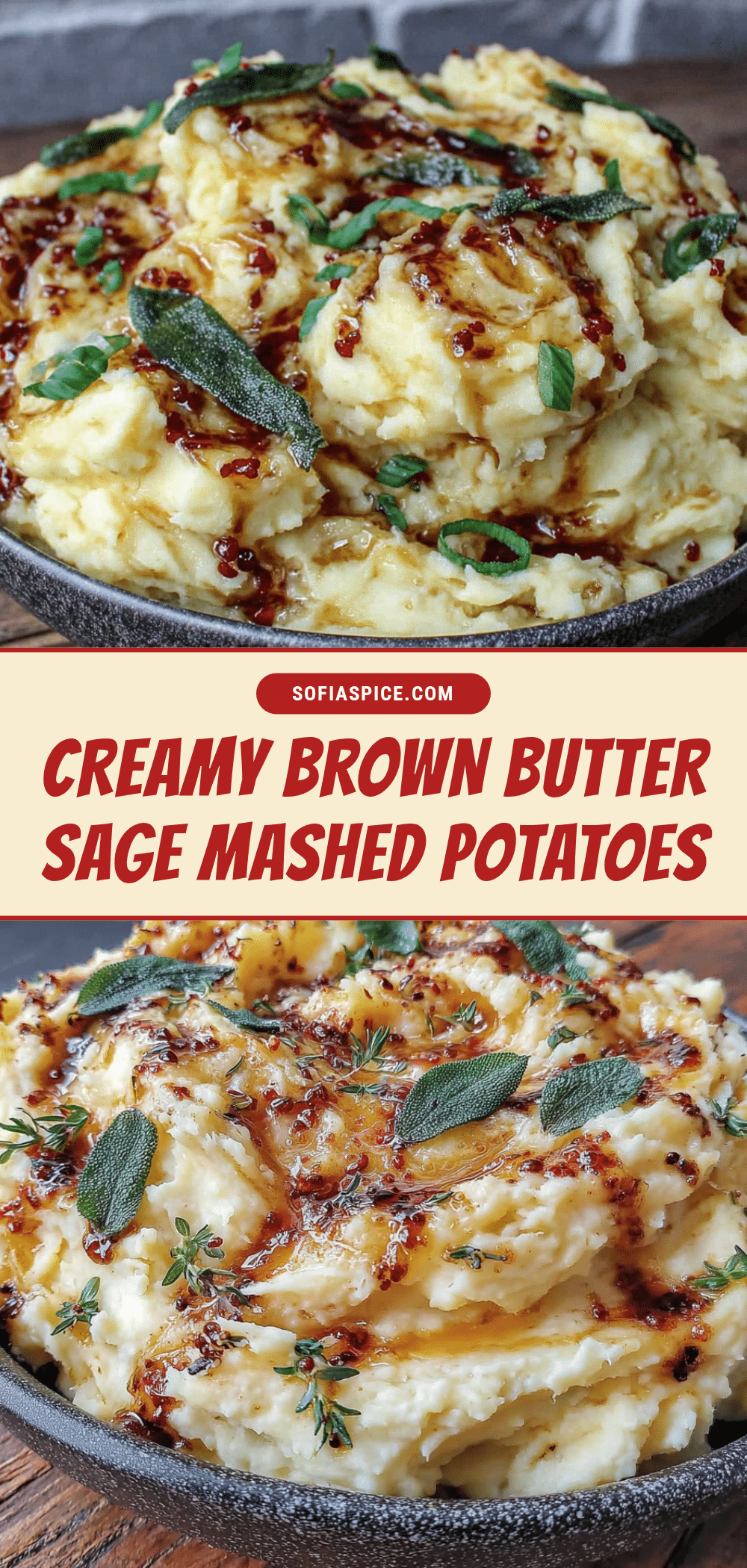
Creamy Brown Butter Sage Mashed Potatoes Recipe

These creamy mashed potatoes are elevated with nutty brown butter and crispy sage, transforming a classic side dish into a flavorful standout. Perfect for holidays or weeknight dinners, they’re rich, aromatic, and utterly satisfying.
- Prep Time: 15 minutes
- Cook Time: 30 minutes
- Total Time: 45 minutes
- Yield: 6 servings 1x
- Category: Side Dish
- Cuisine: American
Ingredients
- 2 pounds Yukon Gold potatoes, peeled and quartered
- 6 tablespoons unsalted butter, divided
- 10–12 fresh sage leaves
- 1/2 cup heavy cream, warmed
- 1/4 cup whole milk, warmed
- 1 1/2 teaspoons fine sea salt, plus more to taste
- 1/2 teaspoon freshly ground black pepper
- 2 cloves garlic, smashed (optional)
Instructions
- Prep the Potatoes: Peel the Yukon Gold potatoes and cut them into evenly sized quarters (about 1 1/2 inches each). Rinse under cold water to remove excess starch.
- Boil the Potatoes: Place the quartered potatoes in a large pot and cover with cold water by about an inch. Add 1 1/2 teaspoons of salt and the smashed garlic cloves (if using). Bring to a boil over high heat, then reduce to a medium simmer. Cook until fork-tender, about 20-25 minutes.
- Drain and Dry: Drain the potatoes in a colander and let them sit for a minute or two to steam off excess moisture. Return them to the pot (off the heat) and let them sit for another minute, shaking occasionally to evaporate remaining moisture.
- Brown the Butter: While the potatoes are draining, melt 4 tablespoons of unsalted butter in a small skillet over medium heat. Add the fresh sage leaves. Swirl the pan occasionally as the butter melts, foams, and turns a golden amber color (about 3-4 minutes). Remove from heat immediately once the butter is amber and the sage leaves are crispy.
- Mash the Potatoes: Use a potato masher or ricer to mash the potatoes directly in the pot. Mash just until smooth—do not over-mash.
- Add the Cream and Milk: Pour the warmed heavy cream and whole milk over the mashed potatoes. Stir gently with a wooden spoon until combined.
- Fold in the Brown Butter and Sage: Drizzle the brown butter (with the crispy sage leaves) over the potatoes. Reserve a few sage leaves for garnish if desired. Fold everything together gently until the butter is fully incorporated. Taste and adjust salt and pepper as needed.
- Finish with Remaining Butter: Stir in the remaining 2 tablespoons of unsalted butter until melted and glossy.
- Serve Immediately: Transfer to a serving bowl, garnish with the reserved crispy sage leaves and a crack of fresh black pepper. If keeping warm, cover the bowl with foil and set over a pot of simmering water or use a slow cooker on warm.
Notes
Don’t overwork the potatoes to avoid a gluey texture. Warm your dairy before adding to prevent lumps. Watch the brown butter carefully—it can burn in seconds. Salt the boiling water generously for best flavor. For the smoothest texture, use a potato ricer.
Nutrition
- Serving Size: 1 serving
- Calories: 310
- Sugar: 2
- Sodium: 410
- Fat: 19
- Saturated Fat: 12
- Carbohydrates: 32
- Fiber: 3
- Protein: 4
Keywords: mashed potatoes, brown butter, sage, creamy, side dish, holiday, Thanksgiving, comfort food