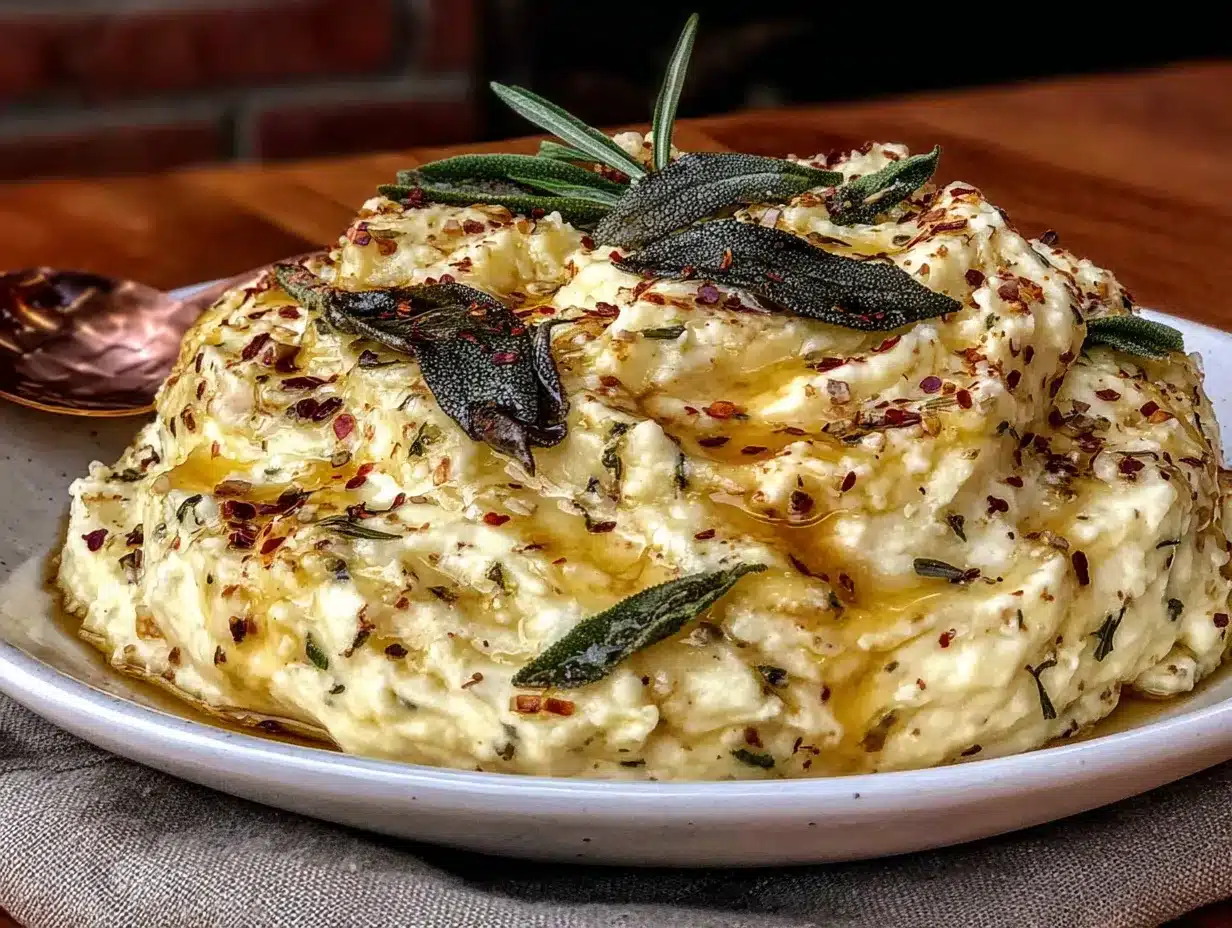
Third time in five days I’d made these Creamy Brown Butter Sage Mashed Potatoes, and I was standing over the stove watching butter foam and sputter in the pan, waiting for those little brown specks to appear. My kitchen smelled like toasted nuts and something almost caramel-like—but richer, deeper. The sage leaves were crackling at the edges, and I knew I was close. That exact moment, when the butter turns amber and the sage goes papery-crisp, is why I kept coming back to this recipe. It wasn’t planned. I had a bag of Yukon Golds that were starting to sprout and a bunch of sage I’d impulse-bought at the farmers market. But once I poured that brown butter over the mashed potatoes and stirred it in, watching it soak into every crevice, I couldn’t stop thinking about it. There’s something about the way the nutty butter wraps around the creamy potatoes, with those crispy sage leaves crumbling on top—it just works. And honestly, it’s ruined regular mashed potatoes for me forever.
Why You’ll Love This Recipe
These aren’t your average mashed potatoes. They’re the kind of side dish that steals the show, and I’ve tested this version enough times to know exactly what makes it work. Here’s why this recipe stands out:
- Restaurant-Quality at Home: The brown butter technique adds depth you just can’t get from regular melted butter. It’s a simple trick that professional chefs use, and it makes all the difference.
- Minimal Ingredients, Maximum Flavor: You only need a handful of pantry staples—potatoes, butter, sage, cream, salt, and pepper. No fancy shopping trips required.
- Perfect for Holiday Dinners: These potatoes are rich enough for Thanksgiving or Christmas, but simple enough for a Sunday roast. They pair beautifully with roasted meats, and I’ve served them alongside my smoky sausage and bell pepper skewers for a weeknight dinner that felt special.
- Make-Ahead Friendly: You can prep these potatoes in advance and reheat them without losing that creamy texture. Total lifesaver when you’re juggling multiple dishes.
- Customizable: Once you master the base recipe, you can tweak it endless ways—more garlic, different herbs, a splash of truffle oil. The possibilities are fun to play with.
I’ve made these potatoes for picky eaters, for my in-laws, and for a dinner party where someone actually asked for the recipe before dessert. They’re that good. And the best part? You don’t need any special skills. If you can brown butter and boil potatoes, you’ve got this.
What Ingredients You Will Need
This recipe uses simple, wholesome ingredients to deliver bold flavor and satisfying texture without the fuss. Most of these are probably already in your kitchen, and the ones that aren’t are easy to find at any grocery store.
- Yukon Gold Potatoes (2 pounds): These are my go-to for mashed potatoes. They have a naturally buttery flavor and creamy texture that works perfectly here. Russets will work too, but you’ll need a bit more cream. Look for potatoes that feel firm and heavy for their size.
- Unsalted Butter (½ cup, 1 stick): I use unsalted so I can control the salt level. Kerrygold is my favorite for brown butter because it has a higher fat content and browns more evenly, but any good-quality unsalted butter works.
- Fresh Sage Leaves (10-12 leaves): Fresh sage is non-negotiable here. Dried sage just won’t give you the same aromatic, slightly peppery flavor. Look for leaves that are bright green and not wilted. If your sage is looking sad, you can revive it by trimming the stems and putting them in water for an hour.
- Heavy Cream (½ cup): Warm the cream before adding it to the potatoes—cold cream will make them gummy. You can substitute half-and-half for a lighter version, but the texture won’t be as luxurious.
- Whole Milk (¼ cup): This thins the potatoes just enough without making them watery. I’ve used 2% milk in a pinch and it was fine, but whole milk gives the best results.
- Salt (1 teaspoon, plus more for the water): I use kosher salt for the cooking water and fine sea salt for finishing. The potato water should taste salty like the sea—that’s how you season potatoes from the inside out.
- Black Pepper (½ teaspoon, freshly ground): Freshly ground pepper makes a difference here. Pre-ground pepper just doesn’t have the same punch.
- Garlic (2 cloves, optional): I sometimes add a couple of garlic cloves to the boiling water for a subtle garlic flavor. It’s optional but lovely.
That’s it. Seven ingredients, and you’re on your way to the best mashed potatoes of your life. The magic is in the technique, not the grocery list.
Equipment Needed
You don’t need a lot of fancy equipment for this recipe, which is part of what makes it so approachable. Here’s what you’ll need:
- Large Pot (5-6 quart): For boiling the potatoes. Make sure it’s big enough to give them room to cook evenly.
- Colander: For draining the potatoes. Nothing fancy needed here.
- Potato Masher or Ricer: I prefer a ricer for the smoothest texture, but a good old-fashioned masher works beautifully too. If you use a masher, don’t overwork the potatoes or they’ll get gluey.
- Small Skillet or Saucepan: For browning the butter. A light-colored pan helps you see when the butter is properly browned.
- Wooden Spoon or Silicone Spatula: For stirring the butter as it browns. You want something that won’t scratch your pan.
- Measuring Cups and Spoons: For accuracy. I’ve eyeballed it before and regretted it.
- Chef’s Knife and Cutting Board: For prepping the potatoes and sage.
If you don’t have a ricer, don’t stress. I made these potatoes for years with just a masher, and they were still incredible. The key is to not over-mash—stop while there are still a few small lumps, then let the cream and butter smooth everything out.
Preparation Method
Let’s get cooking. This recipe comes together in about 45 minutes, and most of that is hands-off time while the potatoes boil.
- Prep the Potatoes: Peel the potatoes and cut them into evenly sized chunks, about 1½ inches. This ensures they cook at the same rate. Rinse the chunks in cold water to remove excess starch—this helps prevent gummy potatoes.
- Boil the Potatoes: Place the potato chunks in your large pot and cover them with cold water by about an inch. Add a generous tablespoon of salt to the water. Bring to a boil over high heat, then reduce to a simmer. Cook for 15-20 minutes, until the potatoes are fork-tender. You should be able to pierce them easily with a knife, but they shouldn’t be falling apart.
- Make the Brown Butter: While the potatoes are cooking, start your brown butter. Cut the butter into pieces and place it in your small skillet over medium heat. Let it melt completely, then continue cooking, swirling the pan occasionally. The butter will foam up, then subside, and you’ll see brown specks forming at the bottom. This takes about 5-7 minutes. Watch it carefully—brown butter can go from perfect to burnt in seconds.
- Crisp the Sage: When the butter is golden brown and smells nutty, drop in the sage leaves. They’ll sizzle and crisp up in about 30 seconds. Remove the sage leaves with a fork and set them on a paper towel to drain. Pour the brown butter into a heatproof bowl to stop the cooking process.
- Drain and Dry the Potatoes: Once the potatoes are tender, drain them in a colander. Return them to the pot and let them sit over low heat for a minute or two, shaking occasionally. This dries them out, which helps them absorb the cream and butter better.
- Mash the Potatoes: If using a ricer, rice the potatoes into a large bowl. If using a masher, mash them right in the pot. Don’t overwork them—you want them smooth but not pasty.
- Add the Warm Cream and Milk: Warm the cream and milk together in a small saucepan or in the microwave. Pour them over the mashed potatoes and stir gently with a wooden spoon until combined. The warm liquid incorporates more easily than cold.
- Pour in the Brown Butter: Drizzle the brown butter over the potatoes and fold it in gently. Save a tablespoon or two for drizzling on top at serving time. Taste and adjust salt and pepper.
- Serve Immediately: Transfer the potatoes to a serving bowl. Crumble the crispy sage leaves over the top and drizzle with the reserved brown butter. Serve hot.
A few things I’ve learned the hard way: don’t rush the browning process, and don’t skip drying the potatoes. Both steps make a noticeable difference in the final texture and flavor.
Cooking Tips & Techniques
After making these potatoes more times than I can count, I’ve picked up a few tricks that make the process smoother and the results more consistent.
The Brown Butter Window: Brown butter happens fast. Once the butter melts and starts foaming, you’ve got about 60 seconds before it goes from perfect to burnt. Swirl the pan constantly and look for those little brown specks. When you see them and smell that nutty aroma, pull it off the heat immediately. I’ve burned more batches than I’d like to admit while getting distracted by my phone.
Temperature Matters: Cold cream in hot potatoes is a recipe for gluey mash. Always warm your dairy before adding it. I pop mine in the microwave for 30 seconds while the potatoes are draining. It’s a small step that makes a big difference.
Don’t Over-Mash: Overworking potatoes releases too much starch and turns them into wallpaper paste. Use a gentle hand and stop as soon as everything is combined. A few small lumps are fine—they add character.
Salt Your Water Generously: The potato water should taste salty, almost like seawater. This seasons the potatoes from the inside out, and you’ll need less salt at the end. I learned this from a chef friend years ago, and it’s one of those tips that changes everything.
Make It Ahead: You can make these potatoes a day ahead. Prepare them through step 8, then let them cool and refrigerate in an oven-safe dish. To reheat, add a splash of warm cream or milk and bake at 350°F for 20-25 minutes, stirring halfway through. They won’t be quite as perfect as fresh, but they’ll still be delicious.
Variations & Adaptations
Once you’ve mastered the basic recipe, there are endless ways to make it your own. Here are a few variations I’ve tried and loved:
- Roasted Garlic Version: Roast a whole head of garlic in foil at 400°F for 40 minutes until soft and golden. Squeeze the cloves into the potatoes along with the brown butter. The sweetness of roasted garlic pairs beautifully with the nutty butter. This is my go-to for holiday dinners.
- Herb-Infused Brown Butter: Add a sprig of fresh rosemary or thyme to the butter as it browns. The herbs infuse the butter with their flavor, and you can remove them before adding the butter to the potatoes. I’ve also tried adding a bay leaf—subtle but lovely.
- Dairy-Free Option: Substitute the butter with a high-quality vegan butter (I like Miyoko’s) and use unsweetened oat milk or cashew cream instead of dairy. The brown butter effect won’t be quite the same, but it’s still tasty.
- Loaded Mashed Potatoes: Fold in crispy bacon bits, shredded sharp cheddar, and chopped chives before serving. It turns these elegant potatoes into a hearty side dish that disappears fast. I’ve served this version alongside my loaded buffalo chicken dip for a game day spread that was a hit.
- Lighter Version: Swap the heavy cream for half-and-half and reduce the butter to 6 tablespoons. The potatoes won’t be as rich, but they’ll still have that brown butter magic.
Serving & Storage Suggestions
These potatoes are best served hot, straight from the pot. I like to transfer them to a warmed serving bowl, drizzle with the reserved brown butter, and crumble the crispy sage leaves on top. The contrast between the creamy potatoes and the crispy sage is part of the magic.
They pair beautifully with roasted chicken, seared steak, or pork chops. I’ve also served them alongside my slow cooker pulled pork sliders for a comfort food feast that had everyone going back for seconds. For a vegetarian main, try them with roasted mushrooms and a green salad.
Storage: Leftover potatoes keep in an airtight container in the refrigerator for up to 4 days. The texture will firm up a bit, but they reheat beautifully.
Reheating: The best way to reheat is in a saucepan over low heat, stirring frequently and adding a splash of warm cream or milk to loosen them up. You can also reheat in the microwave in 30-second bursts, stirring between each. If they seem dry, add a little more warm cream.
Freezing: These potatoes freeze well for up to 3 months. Spoon them into a freezer-safe container, press a piece of parchment paper against the surface to prevent freezer burn, and seal. Thaw overnight in the refrigerator and reheat as directed. The texture won’t be quite as perfect as fresh, but they’re still a solid option for busy nights.
Nutritional Information & Benefits
Let’s be real—these are indulgent potatoes. But they’re made with whole ingredients, and there are some nutritional bright spots worth noting.
Estimated per serving (based on 6 servings):
– Calories: 320
– Fat: 22g
– Carbohydrates: 28g
– Protein: 4g
– Fiber: 3g
– Sodium: 380mg
Health Benefits: Potatoes get a bad rap, but they’re actually a good source of vitamin C, potassium, and fiber (especially if you leave the skins on). The sage in this recipe is packed with antioxidants and has anti-inflammatory properties. Brown butter… well, it’s butter. But it’s delicious, and a little goes a long way.
Dietary Considerations: This recipe is naturally gluten-free and vegetarian. For a dairy-free version, see the variations section above. If you’re watching your sodium, reduce the salt in the cooking water and adjust at the end.
I’m not a nutritionist, but I believe in balance. These potatoes are a treat, and that’s okay. Life’s too short to skip the brown butter.
Conclusion
These Creamy Brown Butter Sage Mashed Potatoes have become my go-to side dish for just about everything. They’re simple enough for a Tuesday night but special enough for Thanksgiving, and they never fail to get compliments. The nutty brown butter, the crispy sage, the creamy potatoes—it’s a combination that just works.
I’d love to hear how these turn out for you. Did you try a variation? Serve them with something unexpected? Drop a comment below and let me know. And if you’re looking for more comforting side dishes, check out my creamy tomato basil soup for another cozy option.
Happy cooking, friends. Go make some brown butter—you won’t regret it.
Frequently Asked Questions
Can I use russet potatoes instead of Yukon Golds?
Yes, you can. Russets will give you a fluffier, lighter texture, but they absorb less liquid, so you’ll need to reduce the cream and milk slightly. Yukon Golds are my preference for their natural buttery flavor and creamy texture, but russets work in a pinch.
How do I know when the brown butter is done?
Watch for the butter to stop foaming and start forming small brown specks at the bottom of the pan. You’ll also smell a nutty, toasty aroma. This usually takes about 5-7 minutes over medium heat. The moment you see those brown specks and smell that nutty scent, pull it off the heat immediately.
Can I make these potatoes ahead of time?
Absolutely. Prepare the potatoes through the final mixing step, then let them cool and refrigerate in an oven-safe dish. To reheat, add a splash of warm cream and bake at 350°F for 20-25 minutes, stirring halfway through. Add the crispy sage garnish just before serving.
What can I substitute for fresh sage?
Fresh sage is really best here, but if you can’t find it, try fresh thyme or rosemary instead. Dried sage won’t give you the same texture or flavor, so I don’t recommend it. If you’re in a pinch, just skip the sage altogether—the brown butter potatoes are still fantastic on their own.
How do I keep mashed potatoes from getting gluey?
The main culprits are over-mashing and using cold dairy. Use a gentle hand when mashing, stop as soon as everything is combined, and always warm your cream and milk before adding them. Also, make sure to dry the potatoes after draining by letting them sit in the hot pot for a minute or two.
Pin This Recipe!
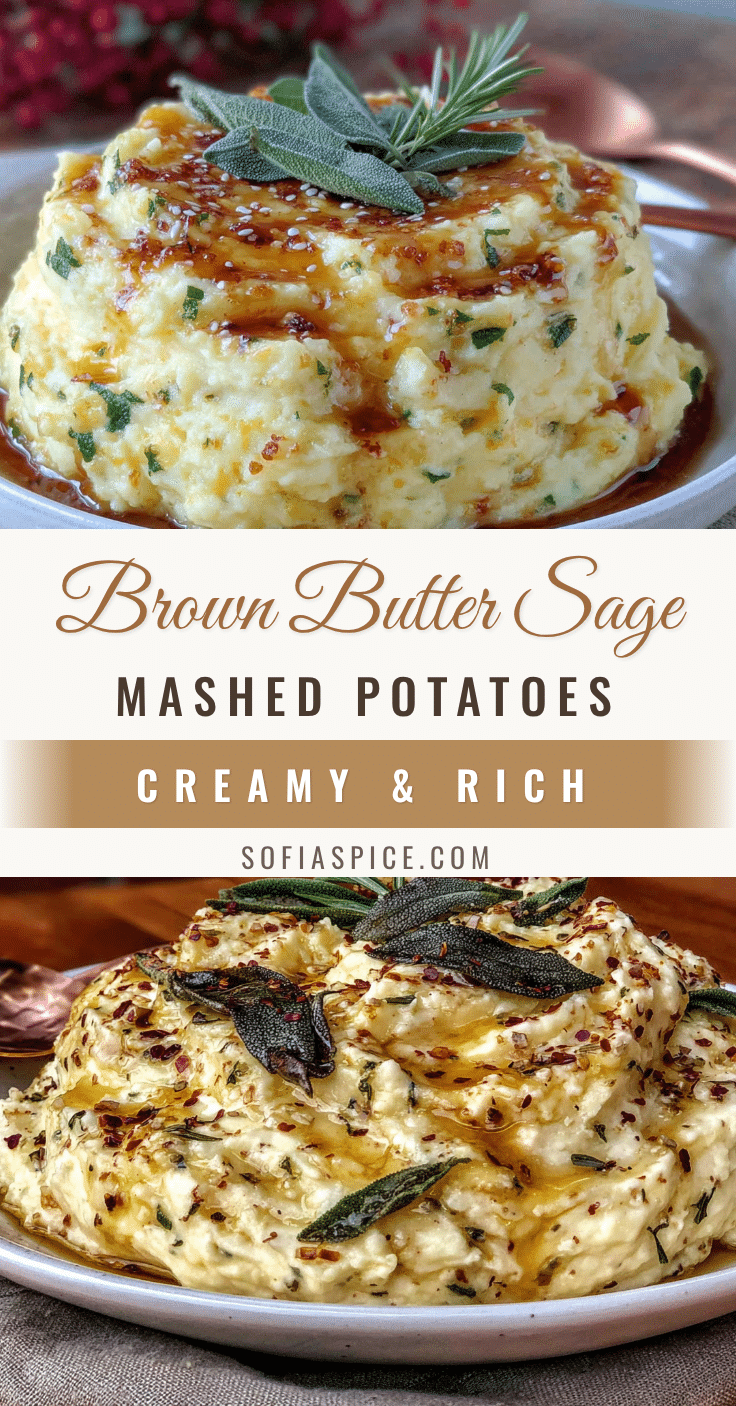
Creamy Brown Butter Sage Mashed Potatoes (Easy Side Dish)

These Creamy Brown Butter Sage Mashed Potatoes are a restaurant-quality side dish that’s simple enough for a weeknight but special enough for Thanksgiving. The nutty brown butter and crispy sage leaves elevate classic mashed potatoes into something unforgettable.
- Prep Time: 15 minutes
- Cook Time: 30 minutes
- Total Time: 45 minutes
- Yield: 6 servings 1x
- Category: Side Dish
- Cuisine: American
Ingredients
- 2 pounds Yukon Gold potatoes
- ½ cup (1 stick) unsalted butter
- 10–12 fresh sage leaves
- ½ cup heavy cream
- ¼ cup whole milk
- 1 teaspoon salt (plus more for the water)
- ½ teaspoon freshly ground black pepper
- 2 cloves garlic (optional)
Instructions
- Peel the potatoes and cut them into evenly sized chunks, about 1½ inches. Rinse the chunks in cold water to remove excess starch.
- Place the potato chunks in a large pot and cover them with cold water by about an inch. Add a generous tablespoon of salt to the water. Bring to a boil over high heat, then reduce to a simmer. Cook for 15-20 minutes, until the potatoes are fork-tender.
- While the potatoes are cooking, make the brown butter. Cut the butter into pieces and place it in a small skillet over medium heat. Let it melt completely, then continue cooking, swirling the pan occasionally. The butter will foam up, then subside, and you’ll see brown specks forming at the bottom. This takes about 5-7 minutes.
- When the butter is golden brown and smells nutty, drop in the sage leaves. They’ll sizzle and crisp up in about 30 seconds. Remove the sage leaves with a fork and set them on a paper towel to drain. Pour the brown butter into a heatproof bowl to stop the cooking process.
- Once the potatoes are tender, drain them in a colander. Return them to the pot and let them sit over low heat for a minute or two, shaking occasionally, to dry them out.
- If using a ricer, rice the potatoes into a large bowl. If using a masher, mash them right in the pot. Don’t overwork them—you want them smooth but not pasty.
- Warm the cream and milk together in a small saucepan or in the microwave. Pour them over the mashed potatoes and stir gently with a wooden spoon until combined.
- Drizzle the brown butter over the potatoes and fold it in gently. Save a tablespoon or two for drizzling on top at serving time. Taste and adjust salt and pepper.
- Transfer the potatoes to a serving bowl. Crumble the crispy sage leaves over the top and drizzle with the reserved brown butter. Serve hot.
Notes
Don’t rush the browning process, and don’t skip drying the potatoes. Both steps make a noticeable difference in the final texture and flavor. For make-ahead: prepare through step 8, cool, and refrigerate. Reheat with a splash of warm cream at 350°F for 20-25 minutes.
Nutrition
- Serving Size: 1 serving
- Calories: 320
- Sugar: 2
- Sodium: 380
- Fat: 22
- Saturated Fat: 14
- Carbohydrates: 28
- Fiber: 3
- Protein: 4
Keywords: mashed potatoes, brown butter, sage, side dish, Thanksgiving, holiday, creamy, easy