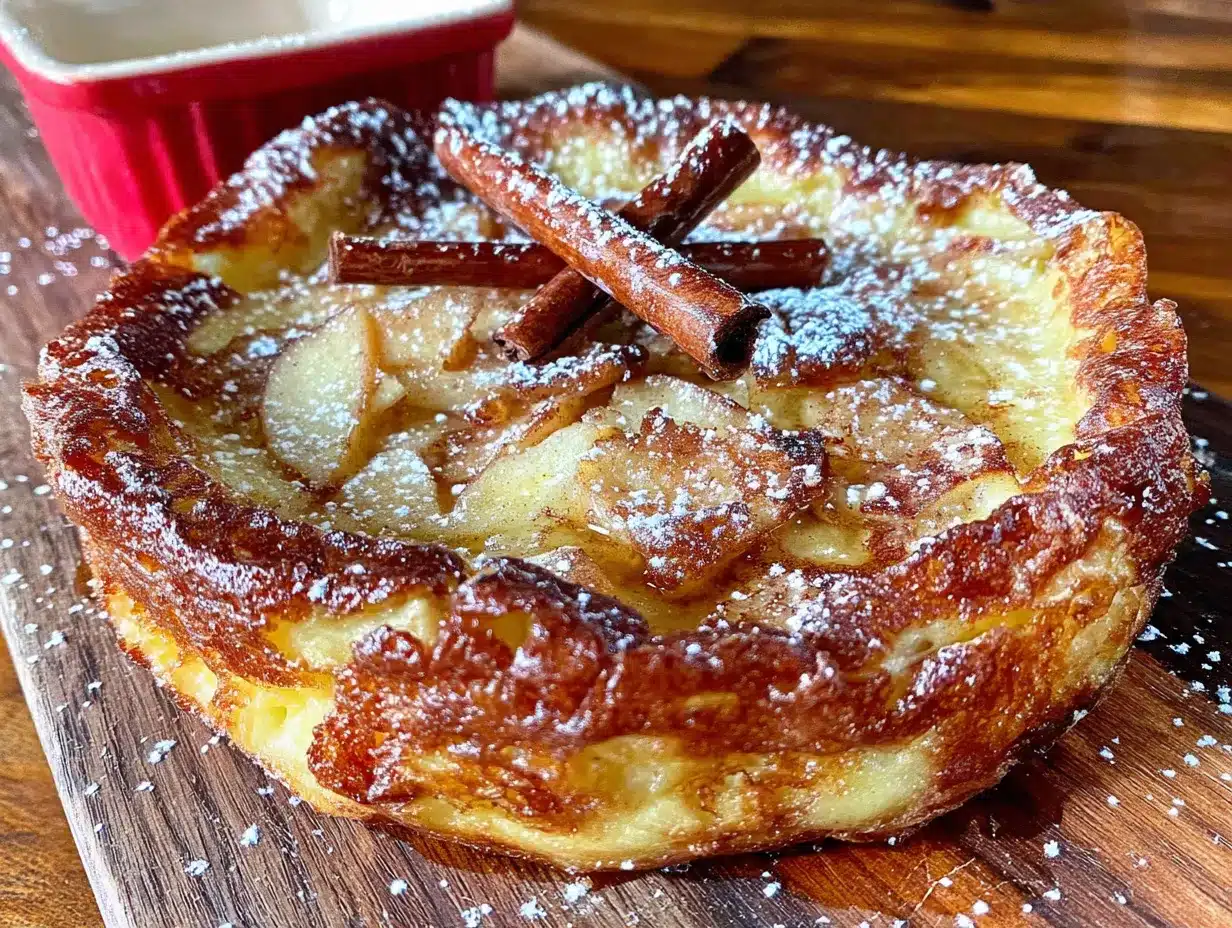
I swore I hated pancakes. For years. The whole fluffy stack situation just never did it for me—too sweet, too heavy, too much syrup swimming around like a sad little pool. I’d watch friends dig into towering piles at brunch and just sip my coffee, content in my pancake-free existence. Then last November, on a drizzly Tuesday that felt like it would never end, my neighbor Greta knocked on my door holding a cast iron skillet. Inside was this golden, puffy thing dusted with powdered sugar, with apple slices peeking out from the edges like they were trying to escape. “It’s not a pancake,” she said, catching my skeptical face. “It’s an Apfelpfannkuchen.” I took a bite while she was still standing there, and honestly? I almost cried. It was warm and custardy on the inside, crispy on the edges, with these tender caramelized apples that tasted like fall had decided to live in my mouth. I ate the whole thing standing at my kitchen counter, and Greta just smiled like she knew exactly what was happening. That’s the thing about this German apple pancake—it doesn’t announce itself. It just shows up, quietly changes your mind, and leaves you wondering why you wasted so many years being wrong.
Why You’ll Love This Recipe
Look, I’ve tested a lot of pancake-adjacent recipes in my kitchen. Some were rubbery. Some were too eggy. Some just felt like a lot of work for something that didn’t deliver. This cozy German apple pancake is different. It’s the kind of recipe that makes you feel like you’ve discovered a secret.
- Quick & Easy: Comes together in about 30 minutes, start to finish. No complicated techniques, no fancy equipment. Just a bowl, a whisk, and a hot skillet.
- Simple Ingredients: You probably have everything already—eggs, flour, milk, butter, apples, sugar. No trips to specialty stores required.
- Perfect for Cozy Mornings: This is the breakfast you make when the weather is gray and you need something warm to hold onto. It’s also fantastic for a low-key dessert or a weekend brunch that feels special without being stressful.
- Crowd-Pleaser: I’ve served this to pancake lovers and pancake skeptics alike. Everyone goes quiet after the first bite. That’s the sign.
- Unbelievably Delicious: The texture is what gets you—crispy, caramelized edges with a soft, almost custard-like center. The apples get tender and sweet, and the whole thing has this buttery richness that feels indulgent but not heavy.
What makes this version different? It’s the technique. Most recipes tell you to pour the batter over the apples and hope for the best. I’ve learned that letting the apples caramelize first in butter and sugar, then pouring the batter around them, creates a better crust and more even cooking. It’s a small shift, but it makes all the difference. This isn’t just another pancake recipe—it’s the one that converted me, and it might just convert you too.
What Ingredients You Will Need
This recipe uses simple, honest ingredients to create something that feels much more complex than it is. Most of these are pantry staples, which is part of the beauty—you can decide to make this on a whim without a shopping list.
- Apples: 2 medium apples (I prefer Honeycrisp or Gala for their sweetness and structure). You’ll peel, core, and slice them into thin wedges. The apple is the star here, so pick good ones. In late summer, I use fresh local varieties; in winter, I reach for whatever looks firm and fragrant at the store.
- Unsalted butter: 4 tablespoons, divided. You’ll use some for cooking the apples and some for the skillet before baking. I use Kerrygold when I’m feeling fancy, but any good unsalted butter works.
- Granulated sugar: 3 tablespoons, divided. Two tablespoons go with the apples for caramelization, and one tablespoon goes into the batter for a hint of sweetness.
- Large eggs: 3, at room temperature. They help the pancake puff up and give it that custardy interior. Cold eggs can shock the batter, so let them sit out for 15 minutes if you can.
- Whole milk: ½ cup (120 ml). Whole milk gives the best texture, but 2% works in a pinch. I wouldn’t go lower than that—the fat matters here.
- All-purpose flour: ½ cup (60 grams). Spoon and level it—don’t scoop directly from the bag or you’ll end up with too much.
- Vanilla extract: 1 teaspoon. Pure vanilla, not imitation. It rounds out the flavor beautifully.
- Salt: ¼ teaspoon. Just enough to balance the sweetness.
- Ground cinnamon: ½ teaspoon, for the apples. Optional but highly recommended.
- Powdered sugar: For dusting. This is non-negotiable in my book—it adds that finishing touch.
- Lemon juice: 1 teaspoon, to toss with the apples. Keeps them from browning and adds a tiny brightness.
If you want to swap the all-purpose flour for a gluten-free blend, you can—just make sure it’s a 1:1 baking blend. I’ve tried it with oat flour too, and it works, though the texture is slightly denser. For a dairy-free version, use a good plant-based butter and oat milk. The results won’t be identical, but they’ll still be delicious.
Equipment Needed
You don’t need much for this recipe, which is part of its charm. Here’s what you’ll want to have on hand:
- 10-inch cast iron skillet: This is my preferred pan for this recipe. It heats evenly, holds heat well, and creates that gorgeous crispy edge. If you don’t have cast iron, a 10-inch oven-safe nonstick skillet works too. Just make sure the handle is oven-safe—I learned that one the hard way.
- Mixing bowls: One medium bowl for the batter, one small bowl for the apple mixture.
- Whisk: A good whisk makes the batter smooth in about 30 seconds. A fork works in a pinch, but you’ll work harder.
- Chef’s knife and cutting board: For peeling and slicing the apples.
- Measuring cups and spoons: For accuracy. I’m usually a “by eye” cook, but this recipe benefits from precise measurements.
- Spatula: For serving. A thin metal spatula works best for lifting the pancake out of the skillet.
If you don’t have a cast iron skillet, you can buy a decent one for around $20. It’s worth the investment—it’ll last forever and makes everything taste better. Just season it properly and don’t wash it with soap.
Preparation Method
- Preheat your oven to 400°F (200°C) with a rack in the middle. Place your empty cast iron skillet inside while the oven heats. This step is crucial—the hot skillet is what gives the pancake its dramatic puff and crispy edges.
- Prepare the apples. Peel, core, and slice 2 medium apples into thin wedges, about ¼-inch thick. Toss them in a small bowl with 1 teaspoon lemon juice and ½ teaspoon cinnamon. Set aside.
- Make the batter. In a medium bowl, whisk together 3 large eggs and ½ cup whole milk until smooth. Add 1 tablespoon granulated sugar, 1 teaspoon vanilla extract, and ¼ teaspoon salt. Whisk again. Gradually add ½ cup all-purpose flour, whisking until the batter is smooth with no lumps. It should be thin, like heavy cream. Let it rest while you cook the apples—this gives the flour time to hydrate.
- Caramelize the apples. Carefully remove the hot skillet from the oven (use oven mitts—I’ve forgotten and it’s not fun). Place it on the stovetop over medium heat. Add 2 tablespoons butter and let it melt, swirling the pan. Add the apple slices and 2 tablespoons granulated sugar. Cook for 3-4 minutes, stirring occasionally, until the apples are softened and the sugar has turned into a golden syrup. The kitchen will smell like heaven at this point.
- Add more butter. Add the remaining 2 tablespoons butter to the skillet and let it melt, tilting the pan to coat the bottom and sides. This butter bath is what creates that crispy, puffy edge.
- Pour the batter. Pour the batter evenly over the apples. Don’t stir—just let it settle. Immediately transfer the skillet to the oven.
- Bake for 15-18 minutes. The pancake will puff up dramatically around the edges and turn golden brown. It’s done when the center is set and the edges are deep golden and crispy. Don’t open the oven door during baking—the puff needs steady heat.
- Serve immediately. Remove the skillet from the oven (again, oven mitts!). Dust generously with powdered sugar. Cut into wedges and serve warm. The pancake will deflate slightly as it cools—that’s normal and expected.
A few notes from my kitchen: If your apples release a lot of liquid during caramelization, that’s fine—just let it cook down until syrupy. If the batter seems too thin, don’t panic—it’s supposed to be. And if the pancake doesn’t puff as much as you hoped, it might be because the oven wasn’t hot enough or you opened the door. Next time, trust the process.
Cooking Tips & Techniques
The first time I made this, I forgot to preheat the skillet. The pancake came out flat and sad, more like a dense crepe than a puffy German wonder. Lesson learned. Here’s what I’ve figured out since then:
Hot skillet is non-negotiable. That initial blast of heat is what creates the dramatic puff. If your skillet isn’t screaming hot, the batter will just sit there and soak into the butter instead of instantly starting to set and rise. Give it a full 10 minutes in the oven before you start.
Room temperature eggs matter. Cold eggs can make the batter seize up slightly, leading to a denser texture. If you forgot to take them out ahead of time, place them in a bowl of warm water for 5 minutes. It works.
Don’t overmix the batter. A few small lumps are fine. Overmixing develops gluten, which can make the pancake tough instead of tender. Whisk just until the flour disappears.
Let the batter rest. That 5-minute rest while you cook the apples isn’t just for show. It allows the flour to fully absorb the liquid, which gives you a smoother, more even texture. I’ve skipped it in a rush, and the pancake was noticeably less tender.
Watch the oven, not the clock. Ovens vary wildly. Your pancake might be done at 15 minutes or need the full 18. Look for deep golden edges and a center that’s set but still slightly jiggly. It will continue to set as it cools.
My biggest failure? I once tried to double the recipe in a 12-inch skillet. The pancake was too thick in the middle and never fully cooked through. Stick to a 10-inch pan for the proportions here. If you need to serve more people, make two batches. It’s worth the extra effort.
Variations & Adaptations
This recipe is forgiving in the best way. Here are some ways I’ve played with it:
Seasonal fruit swap. In summer, I use ripe peaches or plums instead of apples. The technique is the same—just slice them thin and caramelize in butter and sugar. Pears work beautifully in fall too, especially Bosc or Anjou.
Spiced variation. Add ¼ teaspoon nutmeg and a pinch of cardamom to the batter along with the cinnamon. It gives the pancake a more complex, warming flavor that’s perfect for holiday mornings.
Savory-sweet twist. Reduce the sugar in the batter to 1 teaspoon and skip the cinnamon. Add a pinch of black pepper to the apples and serve the finished pancake with a drizzle of honey and a sprinkle of flaky sea salt. The salt cuts through the sweetness and makes everything sing.
Gluten-free version. I’ve made this with a 1:1 gluten-free baking blend (the one with xanthan gum) and it worked beautifully. The texture was slightly less puffy but still tender and delicious. Avoid using almond flour or coconut flour—they don’t have the structure to hold the puff.
Dairy-free adaptation. Use a good plant-based butter (I like Miyoko’s) and oat milk. The flavor will be slightly different, but the texture holds up surprisingly well. Just make sure the butter is unsalted.
My personal favorite variation? I add a handful of fresh raspberries to the skillet right after pouring the batter. They burst during baking and create little pockets of tartness that balance the sweet apples. It’s messy and beautiful and absolutely worth trying.
Serving & Storage Suggestions
This pancake is best served warm, straight from the skillet, with a generous dusting of powdered sugar. I like to cut it into wedges and let everyone grab a piece—it’s a communal dish, meant to be shared.
For a complete meal, serve it alongside crispy bacon or breakfast sausage. The salty, savory contrast is perfect. A dollop of Greek yogurt or crème fraîche adds a tangy note that cuts through the sweetness. If you’re feeling extra indulgent, a drizzle of maple syrup over the top is never a bad idea.
As a dessert, it’s wonderful with a scoop of vanilla ice cream or a spoonful of lightly whipped cream. The warm pancake melts the cream slightly, and the cold cream balances the warm apples. Honestly, it might be better as dessert than breakfast.
Storage: Leftovers keep in the refrigerator for up to 2 days in an airtight container. The pancake will deflate and lose its puff, but the flavor remains. To reheat, place slices in a 350°F oven for 5-7 minutes, or until warmed through. The microwave works in a pinch but will make the edges soggy.
Freezing: You can freeze the baked pancake whole or in slices. Wrap tightly in plastic wrap and then foil, and freeze for up to 1 month. Reheat directly from frozen in a 350°F oven for about 10 minutes. It won’t puff again, but it will taste just as good.
One thing I’ve noticed—the flavor actually deepens after a day in the fridge. The apples continue to infuse the pancake, and the sweetness becomes more mellow. It’s not better than fresh, but it’s different, and sometimes that’s exactly what you want.
Nutritional Information & Benefits
Per serving (based on 4 servings): Approximately 280 calories, 12g fat, 35g carbohydrates, 8g protein, 3g fiber, 18g sugar. These are estimates and will vary based on your specific ingredients.
This pancake offers more than just comfort. The apples provide a good dose of fiber and vitamin C, especially if you leave the peel on (though I prefer it peeled for texture). Eggs contribute high-quality protein and choline, which supports brain health. The milk adds calcium and vitamin D.
If you’re watching your sugar intake, you can reduce the sugar in the batter to 1 teaspoon and skip the powdered sugar dusting. The natural sweetness of the apples will still shine through. For a lower-carb option, try using a low-carb baking mix in place of the flour—I’ve tested it with Carbalose flour and the results were surprisingly good.
This recipe is vegetarian and can be made gluten-free and dairy-free with the substitutions mentioned above. It contains eggs, milk, and wheat in its standard form, so keep that in mind for allergies.
I don’t pretend this is health food—it’s comfort food, plain and simple. But knowing that it has some redeeming qualities makes that second slice a little easier to justify.
Conclusion
This cozy German apple pancake changed something in me. It made me rethink everything I thought I knew about pancakes, about breakfast, about the kinds of food that can make you feel truly taken care of. It’s not fancy or complicated. It’s just warm, buttery apples and a custardy puff that rises in the oven like a little miracle.
I hope you make it on a day when you need something good. Maybe it’s raining. Maybe you’ve had a rough week. Maybe you just want to eat something that feels like a hug. This pancake delivers on all fronts.
If you give it a try, I’d love to hear how it goes. Did you use honeycrisp apples or gala? Did you add the raspberries? Did you eat it for breakfast or dessert? Drop a comment below and let me know. And if you loved it, share it with someone who needs a little warmth in their life. That’s what this recipe is really about.
Go make some magic in your kitchen. You’ve got this.
Frequently Asked Questions
Can I make this pancake ahead of time?
You can bake it up to 2 days ahead and reheat it in the oven. It won’t puff again, but the flavor holds up beautifully. I wouldn’t recommend making the batter ahead of time—it deflates and loses its structure.
Why didn’t my pancake puff up?
Most likely the skillet wasn’t hot enough, or you opened the oven door during baking. Make sure the skillet is fully preheated in the oven for at least 10 minutes before adding the batter. Also, check that your eggs are at room temperature—cold eggs can inhibit the puff.
Can I use a different type of apple?
Absolutely. Honeycrisp, Gala, Fuji, and Braeburn all work well. Avoid Granny Smith—they’re too tart and don’t soften enough during the short cooking time. If you only have Granny Smith, add an extra tablespoon of sugar to balance the tartness.
Can I make this without a cast iron skillet?
Yes. Use a 10-inch oven-safe nonstick skillet or a ceramic baking dish. Just make sure it’s oven-safe up to 400°F. The results won’t be quite as crispy on the edges, but they’ll still be delicious.
Is this pancake supposed to be eggy?
It has a custard-like texture, similar to a Dutch baby or a Yorkshire pudding. The eggs are what create that soft, tender interior. If you find it too eggy, you can reduce the eggs to 2 and add an extra 2 tablespoons of milk, but the texture will be less puffy and more dense.
Pin This Recipe!
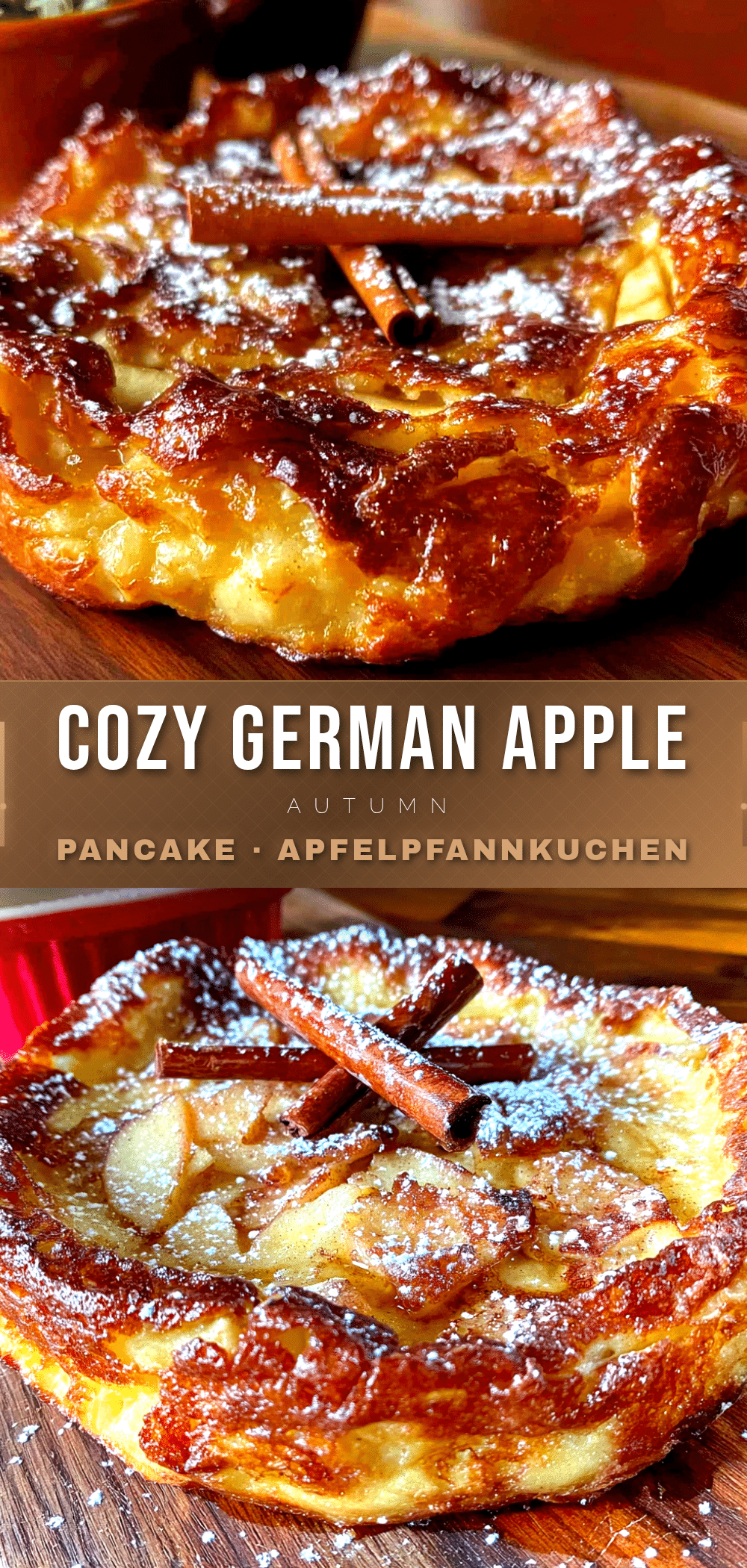
Cozy German Apple Pancake – Easy Apfelpfannkuchen Recipe
This cozy German apple pancake is a warm, custardy puff with crispy edges and tender caramelized apples. It’s quick, easy, and perfect for a cozy morning or a low-key dessert.
- Prep Time: 10 minutes
- Cook Time: 20 minutes
- Total Time: 30 minutes
- Yield: 4 servings 1x
- Category: Breakfast
- Cuisine: German
Ingredients
- 2 medium apples (Honeycrisp or Gala), peeled, cored, and sliced into thin wedges
- 4 tablespoons unsalted butter, divided
- 3 tablespoons granulated sugar, divided
- 3 large eggs, at room temperature
- ½ cup whole milk (120 ml)
- ½ cup all-purpose flour (60 grams), spooned and leveled
- 1 teaspoon vanilla extract
- ¼ teaspoon salt
- ½ teaspoon ground cinnamon
- 1 teaspoon lemon juice
- Powdered sugar, for dusting
Instructions
- Preheat your oven to 400°F (200°C) with a rack in the middle. Place your empty 10-inch cast iron skillet inside while the oven heats.
- Prepare the apples: Peel, core, and slice 2 medium apples into thin wedges, about ¼-inch thick. Toss them in a small bowl with 1 teaspoon lemon juice and ½ teaspoon cinnamon. Set aside.
- Make the batter: In a medium bowl, whisk together 3 large eggs and ½ cup whole milk until smooth. Add 1 tablespoon granulated sugar, 1 teaspoon vanilla extract, and ¼ teaspoon salt. Whisk again. Gradually add ½ cup all-purpose flour, whisking until the batter is smooth with no lumps. Let it rest while you cook the apples.
- Caramelize the apples: Carefully remove the hot skillet from the oven (use oven mitts). Place it on the stovetop over medium heat. Add 2 tablespoons butter and let it melt, swirling the pan. Add the apple slices and 2 tablespoons granulated sugar. Cook for 3-4 minutes, stirring occasionally, until the apples are softened and the sugar has turned into a golden syrup.
- Add more butter: Add the remaining 2 tablespoons butter to the skillet and let it melt, tilting the pan to coat the bottom and sides.
- Pour the batter: Pour the batter evenly over the apples. Don’t stir—just let it settle. Immediately transfer the skillet to the oven.
- Bake for 15-18 minutes. The pancake will puff up dramatically around the edges and turn golden brown. It’s done when the center is set and the edges are deep golden and crispy. Don’t open the oven door during baking.
- Serve immediately: Remove the skillet from the oven (use oven mitts!). Dust generously with powdered sugar. Cut into wedges and serve warm.
Notes
Hot skillet is non-negotiable for puff. Room temperature eggs matter. Don’t overmix the batter. Let the batter rest for 5 minutes. Watch the oven, not the clock. Stick to a 10-inch pan for best results.
Nutrition
- Serving Size: 1 wedge (1/4 of panc
- Calories: 280
- Sugar: 18
- Sodium: 200
- Fat: 12
- Saturated Fat: 7
- Carbohydrates: 35
- Fiber: 3
- Protein: 8
Keywords: German apple pancake, Apfelpfannkuchen, apple pancake, easy pancake recipe, German breakfast, cast iron skillet pancake