My daughter asked why I couldn’t just throw the apples in with the squash while it roasted. I started to explain why that wouldn’t work — something about different cooking times and flavors getting muddled. Then I stopped. Honestly, I had no good reason. I just assumed that’s not how you do it.
So I tried it. I chopped a Honeycrisp apple into chunks, tossed it on the sheet pan next to the butternut squash, and roasted them together until everything was soft and caramelized. The result? That single decision changed my soup forever. The apple softened right alongside the squash, picking up the same roasty edges, and when I blended it all together, the sweetness was different — brighter, more complex, like fall in a bowl.
I remember standing there with the immersion blender, thinking about all the times I’d made butternut squash soup before. It was always good, but this was better. My kid, who had suggested the whole thing, ate two bowls without being asked. That’s the moment this recipe became a regular in our fall dinner rotation. Maybe you’ve been there — when the simplest idea from the smallest person in the kitchen ends up teaching you something new. This soup is proof that sometimes the best cooking advice comes from someone who doesn’t know the rules yet.
Why You’ll Love This Recipe
This butternut squash apple soup has become my go-to for those busy fall evenings when I need something warm and satisfying without spending hours in the kitchen. I’ve tested this recipe more times than I can count, tweaking the ratios until it was just right — creamy enough to feel indulgent but light enough for a regular weeknight meal.
- Quick & Easy: From start to finish, this soup comes together in about 45 minutes. Most of that time is hands-off roasting, so you can get other things done while it cooks.
- Simple Ingredients: You’ll find everything at your regular grocery store. No fancy ingredients or specialty items required.
- Perfect for Family Dinners: This is the kind of soup that pleases everyone — picky kids, hungry teenagers, and adults who appreciate real flavor without pretension.
- Crowd-Pleaser: I’ve served this at casual dinners and holiday gatherings alike. It always gets asked for seconds, and nobody guesses how simple it is to make.
- Unbelievably Delicious: The combination of roasted squash and apple creates a sweetness that’s deep and natural, with a velvety texture that feels like comfort in every spoonful.
What sets this recipe apart is the roasting method. Instead of boiling the squash, we roast it alongside the apple, which concentrates the natural sugars and adds a subtle caramelized flavor you just can’t get any other way. The apple doesn’t just add sweetness — it brings a gentle tang that balances the richness of the coconut milk. This isn’t just another squash soup. It’s the one I keep coming back to, and I think you will too.
What Ingredients You Will Need
This recipe uses simple, wholesome ingredients that work together to create something genuinely special. Most of these are pantry staples or easy to find at any grocery store, which makes this soup perfect for those days when you need dinner to come together without a lot of fuss.
- Butternut squash, peeled and cubed (about 4 cups): Look for a squash that feels heavy for its size with firm, unblemished skin. Pre-cut cubes work fine if you’re short on time, though I find whole squash tends to be fresher. (roasts up beautifully)
- Apple, peeled and chopped (1 large or 2 small): Honeycrisp or Fuji are my go-to choices here. They hold their shape during roasting and add just the right amount of sweetness. Granny Smith works too if you prefer a tarter flavor. (adds natural sweetness and tang)
- Yellow onion, chopped (1 medium): Any onion variety works, but yellow has the best balance of flavor for this soup. (adds savory depth)
- Garlic cloves, smashed (3-4): Fresh garlic makes a difference here. I’ve tried jarred in a pinch, but the roasted flavor isn’t quite the same. (adds warmth)
- Olive oil (2 tablespoons): A good quality extra virgin olive oil is fine, but regular olive oil works perfectly too. (for roasting)
- Vegetable broth (4 cups): Low-sodium is best so you can control the salt level. I like Pacific Foods or Swanson brands for consistent flavor. (forms the base)
- Canned coconut milk (1 cup): Full-fat gives the creamiest texture, but light coconut milk works if you’re watching calories. Shake the can well before opening. (adds creaminess)
- Maple syrup (1 tablespoon): Pure maple syrup is ideal, but honey makes a fine substitute. (enhances sweetness)
- Ground cinnamon (1 teaspoon): Fresh spices make a difference. If yours has been sitting in the cabinet for years, it might be time to replace it. (adds warmth)
- Ground nutmeg (½ teaspoon): Freshly grated is amazing if you have it, but pre-ground works well. (adds depth)
- Salt and black pepper to taste: I use fine sea salt and freshly ground black pepper. Start with less — you can always add more. (seasoning)
- Optional toppings: Toasted pumpkin seeds, a drizzle of coconut milk, fresh thyme, or a sprinkle of cinnamon. (for serving)
Equipment Needed
You don’t need a fancy kitchen to make this soup. Here’s what you’ll actually use:
- Large baking sheet: A rimmed sheet pan works best to catch any juices from the roasting vegetables. I use a half-sheet pan that fits everything in a single layer.
- Parchment paper or silicone baking mat: Makes cleanup so much easier. I’ve roasted directly on the pan too, and it works fine — just a bit more scrubbing.
- Large pot or Dutch oven: A 5-6 quart pot is perfect. I use my enameled Dutch oven because it holds heat well and looks nice for serving.
- Immersion blender: This is my preferred tool for smooth soups. It’s easier to clean than a countertop blender and lets you blend right in the pot. If you don’t have one, a regular blender works — just work in batches and be careful with hot liquid.
- Chef’s knife and cutting board: A sharp knife makes peeling and cubing squash much safer and faster. I learned that lesson the hard way.
- Measuring cups and spoons: For accuracy, though honestly, I eyeball most of the spices now.
Preparation Method

- Preheat your oven to 400°F (200°C). While it’s heating, line a large baking sheet with parchment paper or a silicone mat. This makes cleanup almost effortless.
- Prepare the squash and apple. Peel the butternut squash, cut it in half lengthwise, and scoop out the seeds. Cut it into roughly 1-inch cubes. Peel and core the apple, then chop it into similar-sized pieces. Don’t worry about being too precise — they’ll all roast together just fine.
- Season and roast. Spread the squash cubes, chopped apple, and smashed garlic cloves on the prepared baking sheet. Drizzle with 2 tablespoons of olive oil, then sprinkle with salt and pepper. Toss everything with your hands to coat evenly. Spread in a single layer — if things are crowded, they’ll steam instead of roast. Roast for 25-30 minutes, flipping halfway through, until the squash is fork-tender and the edges are starting to caramelize. The kitchen will smell incredible at this point.
- Sauté the onion. While the squash roasts, heat a splash of olive oil in your large pot over medium heat. Add the chopped onion and cook for 5-7 minutes, stirring occasionally, until it’s soft and translucent. Don’t rush this step — properly cooked onion adds a lot of flavor to the final soup.
- Combine and simmer. Once the squash and apple are done roasting, add them to the pot with the onions. Pour in the vegetable broth, maple syrup, cinnamon, and nutmeg. Stir everything together, scraping up any browned bits from the bottom of the pot. Bring to a gentle boil, then reduce the heat and let it simmer for 10 minutes. This lets all the flavors meld together.
- Blend until smooth. Remove the pot from the heat. If you’re using an immersion blender, carefully blend the soup directly in the pot until it’s completely smooth. If using a countertop blender, work in batches — fill the blender no more than halfway, hold the lid firmly with a towel, and blend until smooth. Return the blended soup to the pot.
- Add the coconut milk. Stir in the coconut milk until it’s fully incorporated. Taste and adjust the seasoning — you might want more salt, a pinch more cinnamon, or a drizzle of maple syrup. Heat gently over low heat until everything is warmed through. Don’t let it boil after adding the coconut milk, or it might separate.
- Serve and enjoy. Ladle the soup into bowls and add your favorite toppings. I love a sprinkle of toasted pumpkin seeds for crunch and a swirl of extra coconut milk for presentation. Fresh thyme leaves add a nice touch too.
Cooking Tips & Techniques
I’ve made this soup more times than I can count, and I’ve learned a few things along the way. Here are the tips that make a real difference:
Don’t skip the roasting step. I know it’s tempting to just boil everything on the stovetop to save time, but roasting is what gives this soup its deep, caramelized flavor. The high heat concentrates the natural sugars in both the squash and the apple, creating a sweetness that boiling just can’t replicate. Trust me on this one — I tried the shortcut version once, and the difference was noticeable.
Cut your squash and apple into similar sizes. This ensures they cook evenly. I learned this after one batch where some pieces were mushy and others were still firm. Aim for 1-inch cubes, and they’ll all be done at the same time.
Watch your liquid level. Start with 4 cups of broth, but feel free to add more if you prefer a thinner soup. Some squashes release more water than others, so the consistency can vary. I usually add an extra ½ cup of broth if the soup seems too thick after blending.
Blend carefully with hot liquid. If you’re using a countertop blender, never fill it more than halfway with hot soup. The steam expands and can blow the lid off — I’ve had that happen, and it’s not fun to clean up. Let the soup cool for a few minutes before blending, and always hold the lid down with a kitchen towel.
Season in layers. Add salt at the beginning when roasting, then again after blending. Flavors change as the soup cooks, so tasting and adjusting at the end is crucial. I’ve ruined soups by oversalting early, only to have them become inedible after the liquid reduced.
Variations & Adaptations
This soup is flexible, and I’ve tried several variations depending on what I have on hand or who I’m feeding:
Dairy-free and vegan: This recipe is already dairy-free and vegan as written, thanks to the coconut milk. If you’re not a fan of coconut flavor, use a plain unsweetened cashew or oat milk instead. The texture will be slightly different, but still delicious.
Make it heartier: Add a can of drained and rinsed chickpeas or white beans when you add the broth. They blend right in and add protein and fiber, making the soup more filling for hungry teenagers or active adults.
Spice it up: For a warming kick, add ½ teaspoon of ground ginger or a pinch of cayenne pepper along with the cinnamon. I do this when I’m serving adults only, or when I want a little extra warmth on a cold evening.
Roasted carrot addition: Toss a couple of peeled carrots on the baking sheet with the squash and apple. They add natural sweetness and a lovely orange color. I’ve done this when I had carrots that needed using up, and it worked beautifully.
Slow cooker version: If you want to set it and forget it, roast the squash and apple as directed, then transfer everything to a slow cooker with the broth and spices. Cook on low for 4-6 hours, then blend and stir in the coconut milk before serving. It’s perfect for busy days.
Serving & Storage Suggestions
This soup is wonderful served hot, with a few toppings to add texture and color. I like to set up a little topping bar so everyone can customize their bowl. Toasted pumpkin seeds, a swirl of coconut milk, fresh thyme leaves, and a sprinkle of cinnamon are all excellent choices. A crusty piece of bread or a simple green salad makes it a complete meal.
The flavors actually deepen after a day in the fridge, so this is a great make-ahead option. Store the soup in an airtight container in the refrigerator for up to 5 days. When reheating, warm it gently on the stovetop over medium-low heat, stirring occasionally. You might need to add a splash of broth or water to thin it out, as it thickens as it sits.
This soup freezes beautifully. Let it cool completely, then transfer to freezer-safe containers or zip-top bags. It will keep for up to 3 months. Thaw overnight in the refrigerator before reheating. I often make a double batch and freeze half for those nights when I need dinner in a hurry.
One thing I’ve noticed — the soup might separate slightly after freezing. Just give it a good stir while reheating, and it will come back together. The texture might be slightly different, but the flavor stays wonderful.
Nutritional Information & Benefits
This soup is packed with nutrients that make it a smart choice for family meals. Butternut squash is rich in vitamin A, which supports eye health and immune function. Apples add fiber and vitamin C, while the coconut milk provides healthy fats that help your body absorb the fat-soluble vitamins from the squash.
Per serving (about 1.5 cups), this soup contains approximately:
- Calories: 220
- Total Fat: 10g
- Saturated Fat: 6g
- Carbohydrates: 32g
- Fiber: 6g
- Sugar: 14g (naturally occurring)
- Protein: 4g
- Sodium: 480mg (varies based on broth and added salt)
This soup is naturally gluten-free, dairy-free, and vegan. It’s also relatively low in calories while being very satisfying, thanks to the fiber and healthy fats. For a lower-carb option, reduce the apple to half and add an extra cup of squash.
I love that this soup feels indulgent but is actually quite wholesome. It’s the kind of meal that nourishes your body while also comforting your soul — and that’s exactly what fall dinners should be.
Conclusion
This butternut squash apple soup has become more than just a recipe in my kitchen — it’s a reminder that sometimes the best ideas come from the most unexpected places. That simple suggestion from my daughter changed how I think about combining ingredients, and now I can’t imagine making squash soup any other way.
I hope you give this soup a try, and I hope it becomes a favorite in your home too. Don’t be afraid to play with the spices or swap in whatever apples you have on hand. Cooking should feel flexible and forgiving, not rigid and stressful. If your family loves it, that’s all that matters.
I’d love to hear how it turns out for you. Leave a comment below and let me know what toppings your family loved, or if you tried any fun variations. And if you snap a photo, tag me — I always enjoy seeing your creations. Happy cooking, friends!
Frequently Asked Questions
Can I use frozen butternut squash instead of fresh?
Absolutely. Frozen cubed squash works well in this recipe. Since it’s already peeled and cut, it saves you prep time. Just spread it on the baking sheet while still frozen and add a few extra minutes to the roasting time. The texture might be slightly softer, but the flavor will still be delicious.
What type of apple works best for this soup?
I prefer Honeycrisp or Fuji for their balance of sweetness and firmness during roasting. Granny Smith apples add a pleasant tartness if you want to cut through the sweetness. Avoid Red Delicious or very soft apples, as they can become mushy and won’t add as much flavor.
Can I make this soup ahead of time?
Yes, and I actually recommend it. The flavors deepen overnight, making it even better the next day. Store it in an airtight container in the refrigerator for up to 5 days. Reheat gently on the stovetop, adding a splash of broth if needed to thin it out.
How can I make this soup thicker or thinner?
For a thicker soup, use less broth — start with 3 cups and add more as needed. You can also let it simmer longer after blending to reduce the liquid. For a thinner soup, simply stir in additional broth or water until it reaches your desired consistency.
Is this soup suitable for babies and toddlers?
Yes, this soup is great for little ones. It’s smooth, easy to swallow, and packed with nutrients. Just be sure to let it cool to a safe temperature before serving. You might want to skip the salt or use low-sodium broth for younger babies. The natural sweetness from the squash and apple usually makes it a hit with kids.
Pin This Recipe!
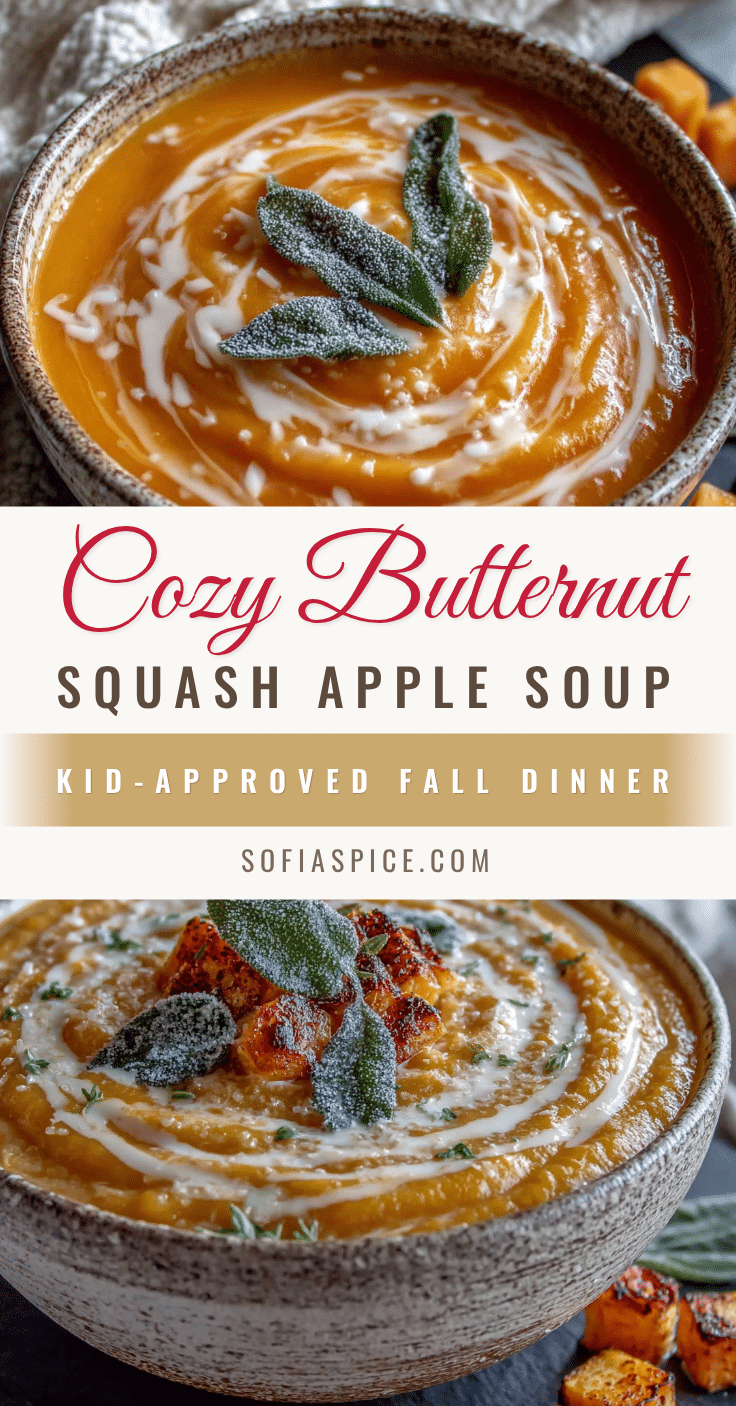
Cozy Butternut Squash Apple Soup – Easy Fall Dinner

This creamy, velvety butternut squash apple soup is roasted to caramelized perfection, blending natural sweetness with warm spices for a comforting fall dinner that comes together in about 45 minutes.
- Prep Time: 15 minutes
- Cook Time: 30 minutes
- Total Time: 45 minutes
- Yield: 4 servings
- Category: Main Course
- Cuisine: American
Ingredients
- Butternut squash, peeled and cubed (about 4 cups)
- Apple, peeled and chopped (1 large or 2 small, Honeycrisp or Fuji recommended)
- Yellow onion, chopped (1 medium)
- Garlic cloves, smashed (3-4)
- Olive oil (2 tablespoons)
- Vegetable broth, low-sodium (4 cups)
- Canned coconut milk, full-fat (1 cup)
- Maple syrup (1 tablespoon)
- Ground cinnamon (1 teaspoon)
- Ground nutmeg (½ teaspoon)
- Salt and black pepper to taste
- Optional toppings: toasted pumpkin seeds, extra coconut milk, fresh thyme, cinnamon
Instructions
- Preheat your oven to 400°F (200°C). Line a large baking sheet with parchment paper or a silicone mat.
- Peel the butternut squash, cut in half lengthwise, scoop out seeds, and cut into 1-inch cubes. Peel and core the apple, then chop into similar-sized pieces.
- Spread the squash cubes, chopped apple, and smashed garlic cloves on the prepared baking sheet. Drizzle with 2 tablespoons olive oil, sprinkle with salt and pepper, and toss to coat. Spread in a single layer. Roast for 25-30 minutes, flipping halfway, until squash is fork-tender and edges are caramelized.
- While the squash roasts, heat a splash of olive oil in a large pot over medium heat. Add the chopped onion and cook for 5-7 minutes, stirring occasionally, until soft and translucent.
- Once the squash and apple are done roasting, add them to the pot with the onions. Pour in the vegetable broth, maple syrup, cinnamon, and nutmeg. Stir, scraping up any browned bits. Bring to a gentle boil, then reduce heat and simmer for 10 minutes.
- Remove the pot from heat. Using an immersion blender, blend the soup directly in the pot until smooth. If using a countertop blender, work in batches, filling no more than halfway, and blend carefully with a towel over the lid.
- Stir in the coconut milk until fully incorporated. Taste and adjust seasoning (salt, cinnamon, or maple syrup). Heat gently over low heat until warmed through; do not let it boil.
- Ladle into bowls and top with desired toppings such as toasted pumpkin seeds, a swirl of coconut milk, fresh thyme, or a sprinkle of cinnamon.
Notes
Don’t skip the roasting step—it concentrates natural sugars for deeper flavor. Cut squash and apple into similar sizes for even cooking. Start with 4 cups broth and adjust for desired thickness. Blend hot liquid carefully to avoid splatters. Season in layers, tasting at the end. Soup thickens as it sits; add broth when reheating. Freezes well for up to 3 months.
Nutrition
- Serving Size: 1.5 cups
- Calories: 220
- Sugar: 14
- Sodium: 480
- Fat: 10
- Saturated Fat: 6
- Carbohydrates: 32
- Fiber: 6
- Protein: 4
Keywords: butternut squash soup, apple soup, fall soup, vegan soup, gluten-free soup, easy dinner, roasted squash soup