“These are so good I almost licked the skillet.” That’s what my brother said last fall, fork still hovering over the pan like he was waiting for permission to go back in. I had just pulled these apple cider braised pork chops off the stove, and honestly, I was too busy wiping the pan sauce off my chin to respond.
It started on a random Tuesday in October. I had a pack of thick-cut pork chops thawing on the counter and a half-gallon of apple cider in the fridge that I bought on a whim at the farmers market. You know those days when you just want something warm and savory-sweet, something that fills the kitchen with that fall smell but doesn’t require three hours of babysitting? That was the mood. I wanted cozy, but I also wanted dinner on the table before 7 p.m.
So I grabbed my trusty cast iron skillet, threw in some shallots, and just started winging it. The cider went in, then some fresh thyme I had sitting in a cup of water on the windowsill, and before I knew it, the whole apartment smelled like a candle store but better—because you could eat it. These pork chops turned out tender in a way that surprised me, the sauce reducing down to this silky, tangy-sweet glaze that coats every bite. It felt like a hug in a pan, and I haven’t stopped making them since.
That’s the thing about this recipe. It doesn’t try hard. It just works.
Why You’ll Love This Recipe
I’ve tested this one more times than I care to admit, and every single time, it delivers. Here’s why this recipe stands out from the hundreds of pork chop recipes out there:
- One Skillet, Zero Fuss : Everything happens in one pan. Sear the chops, build the sauce, braise it low and slow. Less cleanup, more flavor.
- Simple Everyday Ingredients : You probably have apple cider in your fridge right now, and the rest is pantry basics. No trips to a specialty store required.
- Perfect for Fall Evenings : This is the kind of meal that makes a Tuesday night feel special. It’s cozy enough for a quiet dinner but impressive enough for company.
- Tender, Not Tough : Pork chops get a bad rap for drying out, but the braising method here keeps them juicy and fork-tender every time.
- That Sauce, Though : The apple cider reduction with a touch of Dijon and fresh herbs creates this glossy, deeply flavorful sauce that you’ll want to put on everything. Trust me, you’ll be sopping it up with bread.
What makes this different from other pork chop recipes is the balance. The apple cider brings a natural sweetness that’s not cloying, thanks to the savory counterpunch from the Dijon mustard and fresh thyme. It’s not just another smothered pork chop situation—this one has layers. And if you love a good skillet dinner, you might also enjoy these easy one-pan cheesy beef and rice skillet for another weeknight win.
Honestly, the first time I made these, I closed my eyes after the first bite. That’s the kind of recipe this is.
What Ingredients You Will Need
This recipe leans on simple, wholesome ingredients that work together to create something bigger than the sum of their parts. Most of these are pantry staples, especially if you cook seasonally.
- Thick-cut bone-in pork chops (4, about 1-inch thick) : Bone-in chops stay juicier during braising. Look for chops with good marbling. I prefer Berkshire or heritage breed when I can find them, but standard grocery store chops work beautifully too.
- Apple cider (1 ½ cups, unsweetened) : This is the star. Fresh-pressed cider is ideal, but any good quality unsweetened apple cider works. Don’t use apple juice—it’s too sweet and thin. The cider needs to be able to reduce into that syrupy glaze.
- Chicken broth (½ cup, low sodium) : Adds depth without making the sauce too sweet. You can substitute vegetable broth if that’s what you have.
- Shallots (2 large, thinly sliced) : Shallots melt into the sauce and add a gentle onion sweetness. Yellow onion works in a pinch, but shallots are worth the swap.
- Garlic (4 cloves, minced) : Because garlic makes everything better. Fresh is non-negotiable here.
- Dijon mustard (2 tablespoons) : This cuts through the sweetness and adds a tangy complexity. I recommend Maille or Grey Poupon for the best flavor.
- Fresh thyme (6 sprigs, plus more for garnish) : Thyme and apple cider are best friends. Don’t use dried here—fresh thyme holds up to braising and adds that earthy, aromatic note.
- Unsalted butter (3 tablespoons, divided) : We use some for searing and some for finishing the sauce. It adds richness and helps the sauce emulsify.
- Olive oil (2 tablespoons) : For searing the pork chops. Use a good quality extra virgin olive oil or avocado oil.
- Salt and black pepper (to taste) : Don’t be shy with the salt. It seasons the meat and balances the sweetness of the cider.
- All-purpose flour (2 tablespoons) : This helps thicken the sauce slightly. For a gluten-free option, use arrowroot powder or cornstarch mixed with cold water.
Equipment Needed
You don’t need a fancy kitchen for this recipe. Here’s what you’ll need:
- Large cast iron skillet (12-inch) : This is my go-to for braising. Cast iron holds heat beautifully and gives you that perfect sear. If you don’t have one, a heavy-bottomed stainless steel skillet works great too. I’ve used both, and honestly, the cast iron gives a slightly better crust.
- Sharp chef’s knife : For slicing shallots and mincing garlic. A dull knife makes this step miserable.
- Cutting board : Preferably wood or plastic with a non-slip base.
- Tongs : For flipping the pork chops without piercing them. Silicone-tipped tongs won’t scratch your skillet.
- Wooden spoon or spatula : For scraping up the browned bits (the fond) from the bottom of the pan. That’s where the flavor lives.
- Measuring cups and spoons : Accurate measurements matter for the braising liquid balance.
- Instant-read thermometer : This is the best way to guarantee perfectly cooked pork chops. I use a Thermapen, but any reliable digital thermometer works.
If you’re using a non-stick skillet, just be careful not to heat it too high for searing. Non-stick pans can’t take the same high heat as cast iron.
Preparation Method
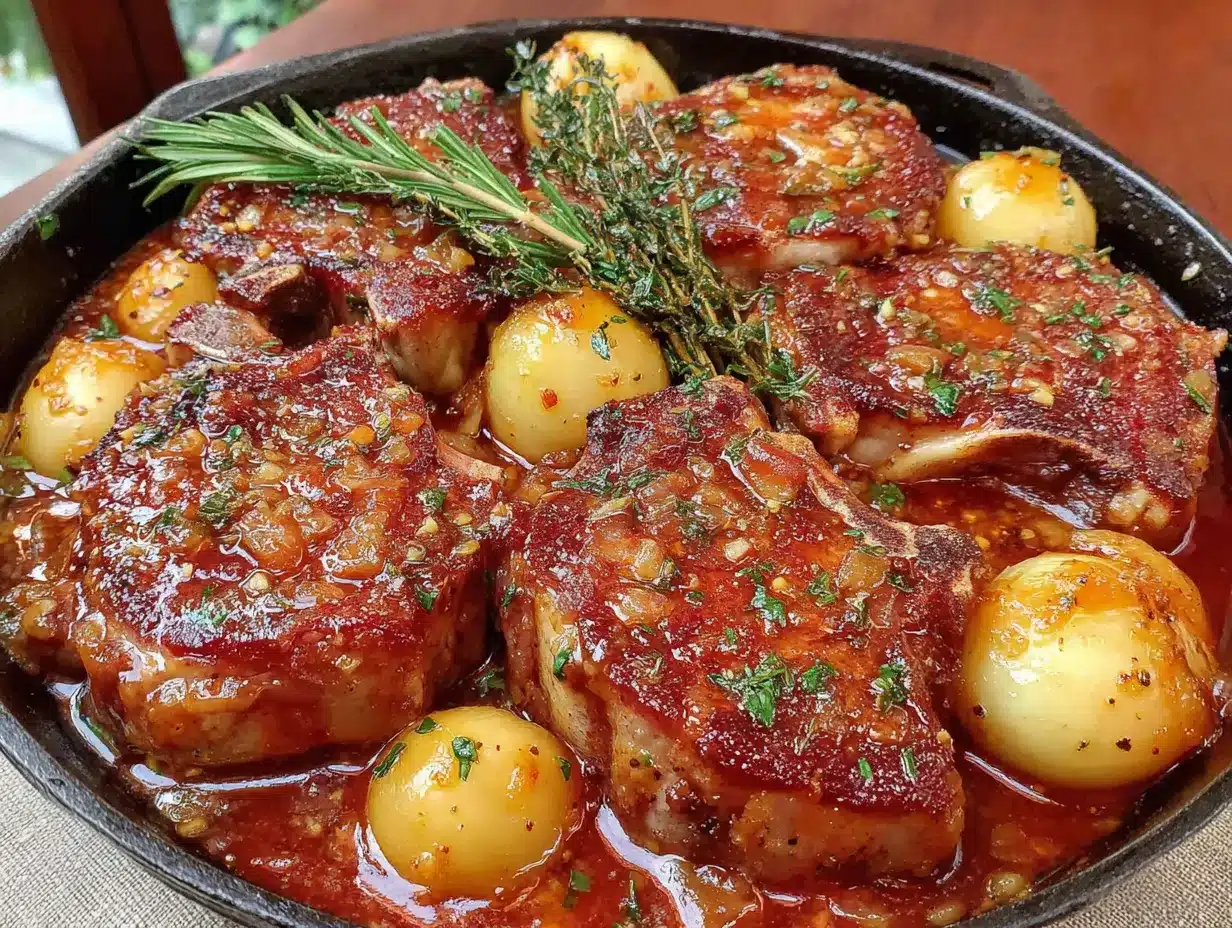
Let’s get cooking. This comes together in about 40 minutes, and most of that is hands-off braising time.
- Pat the pork chops dry and season generously. Use paper towels to remove any moisture. Season both sides with salt and black pepper. Let them sit at room temperature for 15 minutes. This helps the meat cook more evenly.
- Heat the skillet over medium-high heat. Add 1 tablespoon of olive oil and 1 tablespoon of butter. Swirl to coat the pan. Wait until the butter stops foaming and just starts to brown—that’s your signal that the pan is hot enough.
- Sear the pork chops. Place them in the skillet, making sure not to crowd the pan (work in batches if needed). Sear for 3-4 minutes per side, until deep golden brown. Don’t move them around while they sear. Let the crust develop. Transfer the chops to a plate and tent loosely with foil.
- Cook the shallots. Lower the heat to medium. Add the sliced shallots to the pan. Cook for 2-3 minutes, stirring occasionally, until they soften and start to turn golden. Scrape up any browned bits from the bottom of the pan—that’s pure flavor.
- Add the garlic and flour. Stir in the minced garlic and cook for 30 seconds until fragrant. Sprinkle the flour over the shallots and stir constantly for 1 minute. This cooks out the raw flour taste.
- Deglaze with apple cider. Pour in the apple cider and chicken broth, stirring vigorously with your wooden spoon. The liquid will sizzle and steam. Keep stirring until the flour is fully incorporated and the sauce starts to thicken slightly, about 2 minutes.
- Add the Dijon mustard and thyme. Whisk in the Dijon mustard until smooth. Drop in the fresh thyme sprigs. Bring the sauce to a gentle simmer.
- Return the pork chops to the skillet. Nestle them back into the sauce, including any juices that accumulated on the plate. The liquid should come about halfway up the sides of the chops. If it doesn’t, add a splash more broth or cider.
- Braise low and slow. Reduce the heat to low, cover the skillet with a lid, and let it simmer gently for 15-20 minutes. The sauce should be at a soft bubble, not a rolling boil. After 15 minutes, check the internal temperature of the thickest chop—it should read 145°F on your instant-read thermometer.
- Finish the sauce. Remove the pork chops to a clean plate and tent with foil. Increase the heat to medium-high and let the sauce simmer uncovered for 3-5 minutes, until it thickens to a glossy, syrupy consistency. Stir in the remaining 2 tablespoons of butter until melted and smooth. Taste and adjust seasoning with salt and pepper.
- Serve immediately. Spoon the sauce over the pork chops, garnish with fresh thyme leaves, and dig in while it’s hot.
Cooking Tips & Techniques
I’ve made this recipe about a dozen times now, and I’ve learned a few things the hard way. Let me save you the trouble.
Don’t skip the sear. That deep golden crust isn’t just for looks. It adds a layer of savory flavor that balances the sweet cider. If you rush this step, you’ll miss out. I once got distracted by my phone and only seared for 2 minutes per side. The pork chops were still tasty, but they lacked that deep, caramelized richness.
Watch your heat during braising. The braising liquid should be at a gentle simmer, not a vigorous boil. Boiling will make the pork chops tough and stringy. If you see bubbles breaking aggressively, turn the heat down. Low and slow is the mantra here.
Use a thermometer. Pork chops are done at 145°F, and they’ll continue to cook a few degrees after you remove them from the heat. Overcooking is the number one mistake people make with pork. I learned this after serving dry pork chops to guests once—never again. A $15 instant-read thermometer is the best investment you can make.
Let the sauce rest. That final reduction step is crucial. The sauce needs to thicken enough to coat the back of a spoon. If you serve it too thin, it’ll run off the pork chops and pool on the plate. Give it those extra 3-5 minutes. Your patience will be rewarded.
Multitask wisely. While the pork chops are braising, you can whip up a quick side dish. I like to make a simple creamy dill cucumber salad or some roasted sweet potatoes. The braising time is your window to get everything else ready.
Variations & Adaptations
This recipe is flexible, and I’ve tried a few different versions over the past few months. Here are some of my favorites:
- Apple Cider Bourbon Pork Chops : Replace ¼ cup of the apple cider with bourbon. Add it at the same time you deglaze the pan. The bourbon adds a smoky warmth that pairs beautifully with the cider. I tried this on a whim one Friday night, and it’s now my go-to for dinner parties.
- Slow Cooker Version : Sear the pork chops and cook the shallots in a skillet first, then transfer everything to a slow cooker. Cook on low for 4-5 hours or on high for 2-3 hours. Thicken the sauce on the stovetop before serving. This is perfect for busy days when you want dinner ready when you walk in the door.
- Gluten-Free Adaptation : Replace the all-purpose flour with 1 tablespoon of cornstarch or arrowroot powder mixed with 2 tablespoons of cold water. Stir it into the sauce during the final reduction step. The texture will be slightly glossier but just as delicious.
- Dairy-Free Version : Use olive oil or avocado oil instead of butter. The sauce won’t be quite as rich, but it’s still fantastic. I’ve made this for a friend with a dairy allergy, and she went back for seconds.
- Herb Variations : Swap the fresh thyme for 2 sprigs of fresh rosemary or 3 fresh sage leaves. Rosemary adds a piney, aromatic note, while sage brings an earthy, slightly peppery flavor. Both work beautifully with apple cider.
Serving & Storage Suggestions
These pork chops are best served hot, straight from the skillet. I like to spoon the sauce over the top and garnish with fresh thyme leaves. A sprinkle of flaky sea salt right before serving adds a nice crunch and brightens the flavors.
What to serve alongside:
- Mashed potatoes or creamy polenta (perfect for soaking up that sauce)
- Roasted Brussels sprouts or maple brown sugar roasted sweet potatoes
- Steamed green beans with a squeeze of lemon
- Crusty bread for sopping up every last drop of the pan sauce
- A simple arugula salad with shaved Parmesan and a lemon vinaigrette
Storage: Store leftover pork chops in an airtight container in the refrigerator for up to 3 days. The flavors actually deepen overnight as the sauce melds with the meat. Reheat gently in a covered skillet over low heat with a splash of broth or cider to loosen the sauce. You can also reheat in the microwave, but the texture won’t be as good.
Freezing: These pork chops freeze well for up to 2 months. Place cooled pork chops and sauce in a freezer-safe container or zip-top bag. Thaw overnight in the refrigerator before reheating. I’ve done this twice now, and the pork chops remain tender and flavorful.
Nutritional Information & Benefits
Here’s an approximate nutritional breakdown per serving (based on 4 servings):
- Calories: 420
- Protein: 38g
- Fat: 22g
- Carbohydrates: 18g
- Fiber: 1g
- Sugar: 12g
- Sodium: 580mg
Pork chops are an excellent source of high-quality protein, B vitamins (especially B6 and B12), and selenium. Apple cider contains antioxidants and small amounts of vitamin C. The shallots and garlic add prebiotic fiber that supports gut health. This recipe is naturally gluten-free if you use the cornstarch option, and it’s relatively low in carbs compared to many comfort food dishes.
That said, this is a treat-yourself meal. It’s not diet food, and it shouldn’t be. It’s the kind of dinner that makes you feel taken care of, and sometimes that’s exactly what you need.
Conclusion
These one-skillet apple cider braised pork chops have become my fall signature dish, and I don’t say that lightly. They’re the recipe I turn to when I want something that feels special but doesn’t require a culinary degree or a sink full of dirty dishes. The pork comes out tender every time, the sauce is good enough to drink, and the whole thing comes together in one pan.
I love that this recipe leaves room for your own touch. Swap the herbs, add a splash of bourbon, or serve it over creamy polenta—it’s forgiving and adaptable. That’s the mark of a great recipe, honestly. It works as written, but it also invites you to make it your own.
If you try these pork chops, I’d love to hear how they turn out. Drop a comment below and tell me what sides you paired them with, or if you tried one of the variations. And if you’re looking for another cozy skillet dinner, check out these best smothered pork chops with rich onion gravy for a different take on a classic.
Now go make yourself something delicious. You deserve it.
Frequently Asked Questions
Can I use boneless pork chops for this recipe?
Yes, you can, but reduce the braising time to 10-12 minutes. Boneless chops cook faster and can dry out more easily. Use an instant-read thermometer to check for doneness at 145°F.
What if I don’t have apple cider?
You can substitute with apple juice mixed with 1 tablespoon of apple cider vinegar. The vinegar adds the tang that apple juice lacks. Alternatively, use hard apple cider for a slightly different flavor profile.
Can I make this recipe ahead of time?
Absolutely. The pork chops reheat beautifully. Make them a day ahead, store in the refrigerator, and reheat gently in a covered skillet over low heat. The flavors meld together even more overnight.
How do I prevent the pork chops from becoming tough?
Don’t skip the low and slow braising step. High heat will make the meat tough. Also, use an instant-read thermometer to avoid overcooking. Pull the chops at 145°F and let them rest for 5 minutes before serving.
Can I add vegetables to the skillet?
Yes! Sliced apples, quartered Brussels sprouts, or chunks of butternut squash work beautifully. Add them to the skillet after searing the pork chops and before adding the liquid. They’ll braise alongside the meat and soak up all that flavor.
Pin This Recipe!

Best One-Skillet Apple Cider Braised Pork Chops Recipe

Tender, juicy pork chops braised in a silky apple cider sauce with Dijon mustard and fresh thyme. This one-skillet fall dinner is cozy enough for a weeknight but impressive enough for company.
- Prep Time: 15 minutes
- Cook Time: 30 minutes
- Total Time: 45 minutes
- Yield: 4 servings 1x
- Category: Main Course
- Cuisine: American
Ingredients
- 4 thick-cut bone-in pork chops (about 1-inch thick)
- 1 ½ cups unsweetened apple cider
- ½ cup low sodium chicken broth
- 2 large shallots, thinly sliced
- 4 cloves garlic, minced
- 2 tablespoons Dijon mustard
- 6 sprigs fresh thyme, plus more for garnish
- 3 tablespoons unsalted butter, divided
- 2 tablespoons olive oil
- Salt and black pepper to taste
- 2 tablespoons all-purpose flour
Instructions
- Pat the pork chops dry and season generously with salt and black pepper. Let them sit at room temperature for 15 minutes.
- Heat the skillet over medium-high heat. Add 1 tablespoon of olive oil and 1 tablespoon of butter. Swirl to coat the pan. Wait until the butter stops foaming and just starts to brown.
- Sear the pork chops for 3-4 minutes per side, until deep golden brown. Transfer the chops to a plate and tent loosely with foil.
- Lower the heat to medium. Add the sliced shallots to the pan. Cook for 2-3 minutes, stirring occasionally, until they soften and start to turn golden. Scrape up any browned bits from the bottom of the pan.
- Stir in the minced garlic and cook for 30 seconds until fragrant. Sprinkle the flour over the shallots and stir constantly for 1 minute.
- Pour in the apple cider and chicken broth, stirring vigorously with a wooden spoon. Keep stirring until the flour is fully incorporated and the sauce starts to thicken slightly, about 2 minutes.
- Whisk in the Dijon mustard until smooth. Drop in the fresh thyme sprigs. Bring the sauce to a gentle simmer.
- Return the pork chops to the skillet, nestling them back into the sauce including any accumulated juices. The liquid should come about halfway up the sides of the chops.
- Reduce the heat to low, cover the skillet with a lid, and let it simmer gently for 15-20 minutes. The internal temperature should read 145°F.
- Remove the pork chops to a clean plate and tent with foil. Increase the heat to medium-high and let the sauce simmer uncovered for 3-5 minutes, until it thickens to a glossy, syrupy consistency. Stir in the remaining 2 tablespoons of butter until melted and smooth. Taste and adjust seasoning with salt and pepper.
- Serve immediately. Spoon the sauce over the pork chops, garnish with fresh thyme leaves.
Notes
Don’t skip the sear—it adds deep savory flavor. Watch your heat during braising; keep at a gentle simmer, not a boil. Use an instant-read thermometer to avoid overcooking (145°F). Let the sauce reduce for 3-5 minutes at the end for a syrupy consistency. For gluten-free, substitute flour with 1 tablespoon cornstarch mixed with 2 tablespoons cold water.
Nutrition
- Serving Size: 1 pork chop with sau
- Calories: 420
- Sugar: 12
- Sodium: 580
- Fat: 22
- Saturated Fat: 8
- Carbohydrates: 18
- Fiber: 1
- Protein: 38
Keywords: apple cider pork chops, one-skillet pork chops, braised pork chops, fall dinner recipe, easy pork chop recipe, cast iron skillet pork chops