That sharp, clean scent of lemon zest hitting warm butter—the kind that cuts through everything else in the kitchen and makes you stop mid-conversation—still takes me straight to my grandmother’s tiny galley kitchen on the Oregon coast. She wasn’t much for fancy techniques or complicated sauces. Her cooking philosophy was simple: if it didn’t come together in the time it took to set the table, it wasn’t worth the fuss. This lemon dill butter salmon was her go-to for busy weeknights when she wanted something that felt special but didn’t demand hours of attention.
I remember standing on a wobbly stool beside her, watching as she slid a fillet into a hot pan. The butter would sizzle and foam, and she’d toss in a handful of fresh dill straight from the pot on her windowsill. She never measured anything—just a squeeze of lemon here, a pinch of salt there. And somehow, it always turned out perfect. Flaky, tender, with that buttery sauce pooling around the edges. I’ve spent years trying to recreate that exact feeling, that effortless magic in a pan. And honestly? This is the closest I’ve ever come.
This recipe isn’t complicated. It’s built on a handful of good ingredients and a little patience. The kind of dinner that looks like you tried way harder than you actually did. It’s the meal you make when you want to impress someone without breaking a sweat, or when you just need something comforting and bright on a Tuesday night. That first bite—the way the lemon cuts through the richness of the butter, the way the dill whispers in the background—it tastes like a memory. And that’s exactly what I wanted to capture here.
Why You’ll Love This Recipe
I’ve tested this lemon dill butter salmon more times than I can count. Through trial and error—and a few sad, overcooked fillets—I’ve landed on a method that works every single time. Here’s why this one stands out:
- Quick & Easy : From start to finish, this dish is on the table in under 20 minutes. Perfect for those nights when you need dinner fast but still want something that feels like a real meal.
- Simple Ingredients : You probably already have butter, lemons, and garlic in your kitchen. A bunch of fresh dill is the only thing you might need to grab, and it’s worth every penny.
- Perfect for Weeknight Dinners : It feels fancy enough for a date night but is easy enough for a regular Tuesday. Serve it with rice, a simple salad, or some roasted veggies.
- Crowd-Pleaser : Even folks who claim they don’t love fish go back for seconds. The buttery sauce wins everyone over.
- Unbelievably Flaky : The key is cooking it just right so the salmon practically falls apart at the touch of a fork. The texture is next-level comfort food.
What makes this recipe different from all the other salmon recipes out there? It’s the technique. Instead of just searing the fish, you finish it with a generous spoonful of that lemon-dill compound butter right in the pan. The butter melts slowly, basting the salmon as it cooks, infusing every bite with flavor. It’s not just another version—it’s the best version I’ve ever made.
This is the kind of meal that makes you close your eyes after the first bite. It’s comfort food reimagined—lighter, brighter, but with the same soul-soothing satisfaction. Perfect for impressing dinner guests without the stress, or turning a simple weeknight into something memorable.
What Ingredients You Will Need
This recipe uses simple, wholesome ingredients to deliver bold flavor and satisfying texture without the fuss. Everything here is easy to find and probably already in your fridge or pantry.
- Salmon Fillets (4 fillets, about 6 oz each): Look for fillets that are similar in thickness so they cook evenly. I prefer wild-caught when I can find it, but good-quality farmed salmon works beautifully too. Pat them dry with paper towels before cooking—this helps get that perfect golden crust.
- Unsalted Butter (4 tablespoons, softened): The base of our sauce. Using unsalted butter lets you control the salt level. Let it come to room temperature so it blends easily with the other ingredients.
- Fresh Dill (2 tablespoons, finely chopped): Fresh dill is non-negotiable here. Dried dill just doesn’t have the same bright, grassy flavor. If you have extra, throw some on top as a garnish.
- Lemon (1 large lemon): You’ll need both the zest and the juice. Zest the lemon before you juice it—it’s much easier. The zest adds a concentrated citrus aroma that the juice alone can’t match.
- Garlic (2 cloves, minced): Fresh garlic is best. It mellows out as it cooks in the butter, adding a warm, savory note without being overpowering.
- Olive Oil (1 tablespoon): For searing the salmon. It has a higher smoke point than butter, so it helps get that nice crust without burning.
- Salt and Black Pepper (to taste): Simple seasonings that let the salmon and butter shine. I use flaky sea salt for finishing.
- Optional Garnishes: Extra fresh dill sprigs, lemon slices, and a pinch of flaky sea salt right before serving. It makes the dish look restaurant-worthy.
For the best texture, I recommend getting salmon with the skin on. The skin gets beautifully crispy in the pan, and it helps keep the fish moist. If you prefer skinless fillets, just reduce the cooking time by a minute or two.
Equipment Needed
You don’t need anything fancy for this recipe. Just a few basic kitchen tools:
- Large Non-Stick or Cast Iron Skillet: A 12-inch skillet works best. Non-stick makes cleanup a breeze, but cast iron gives you an amazing sear. I’ve used both, and honestly, I prefer cast iron for that extra crispy skin.
- Fish Spatula: This thin, slotted spatula is perfect for flipping delicate fillets without breaking them. If you don’t have one, a regular thin spatula will work—just be gentle.
- Small Bowl: For mixing your compound butter. Any small bowl will do.
- Microplane or Zester: For zesting the lemon. A box grater works in a pinch, but a microplane gives you that fine, fluffy zest that melts right into the butter.
- Sharp Knife and Cutting Board: For chopping dill and mincing garlic. A sharp knife makes all the difference.
- Tongs: For flipping the salmon and handling the fillets. They give you more control than a fork.
If you don’t have a cast iron skillet, don’t worry. A good non-stick pan will give you excellent results. Just make sure it’s large enough that the fillets aren’t crowded—crowding leads to steaming instead of searing.
Preparation Method
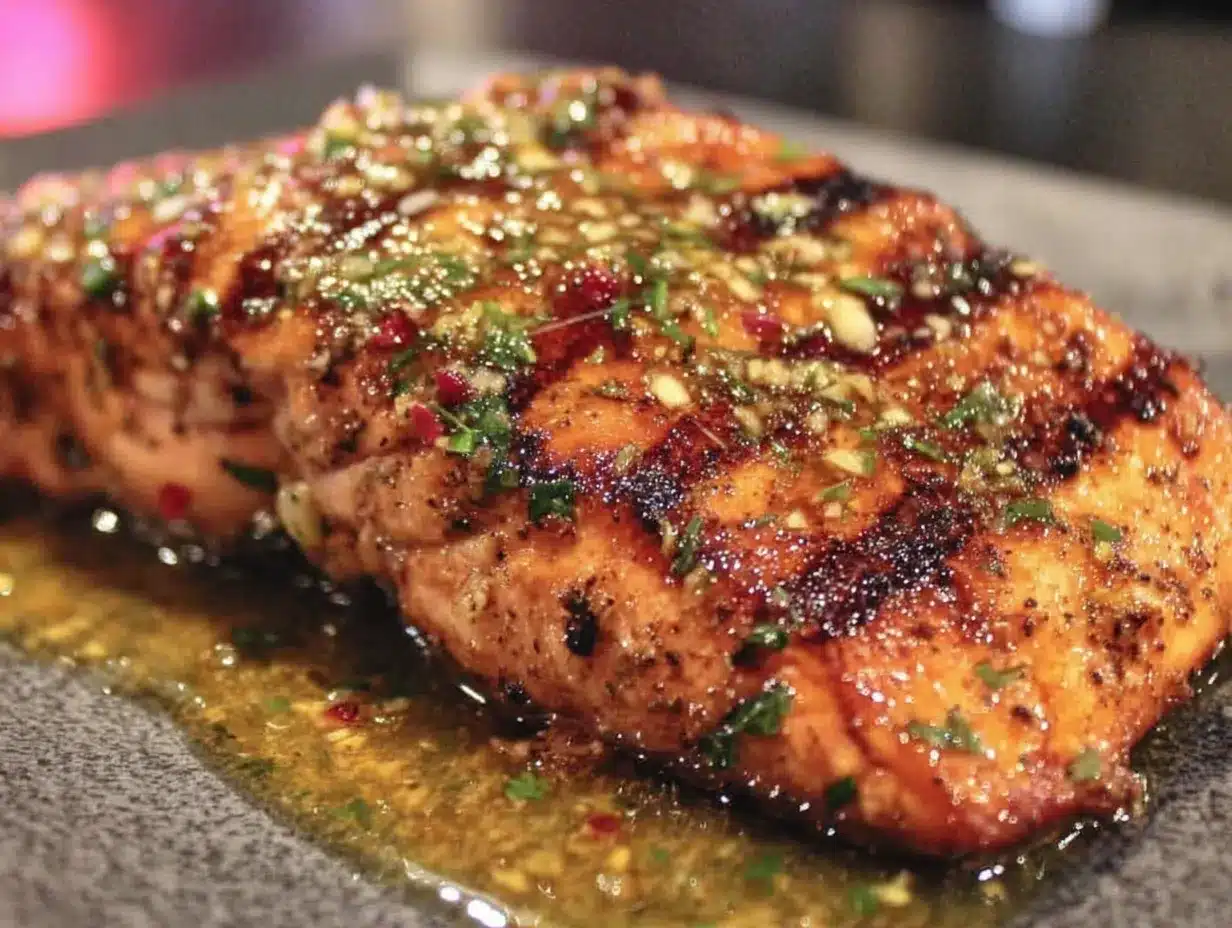
Let’s get cooking. This comes together fast, so have everything prepped and ready before you turn on the heat.
- Make the compound butter: In a small bowl, combine 4 tablespoons of softened unsalted butter, 2 tablespoons of finely chopped fresh dill, the zest of 1 lemon, 1 tablespoon of fresh lemon juice, and 2 minced garlic cloves. Mash everything together with a fork until it’s well combined. Set it aside. You can make this a day ahead and keep it in the fridge—just let it come to room temperature before using.
- Prep the salmon: Pat your 4 salmon fillets dry with paper towels. This is crucial for getting a good sear. Season both sides generously with salt and black pepper. Let them sit at room temperature for about 10 minutes while you heat the pan.
- Heat the pan: Place your skillet over medium-high heat. Add 1 tablespoon of olive oil and let it get hot—you should see it shimmer. To test if it’s ready, flick a drop of water in the pan; if it sizzles immediately, you’re good to go.
- Sear the salmon: Place the fillets skin-side down in the hot pan. Be careful not to crowd them—if your pan is too small, cook in batches. Press down gently on each fillet with a spatula for a few seconds to ensure even contact with the pan. Cook for 4-5 minutes without moving them. You’ll see the edges turn opaque and the skin get golden and crispy.
- Flip and add butter: Carefully flip the fillets using your fish spatula. They should release easily from the pan. If they stick, give them another 30 seconds. Once flipped, add the compound butter to the pan, placing a spoonful on top of each fillet. Let it melt and start to bubble.
- Baste the salmon: Tilt the pan slightly so the melted butter pools at one side. Use a spoon to scoop up the butter and drizzle it over the tops of the fillets. Do this for about 2-3 minutes. The salmon should be just cooked through—it will flake easily with a fork but still look slightly translucent in the center (it will continue cooking off the heat).
- Finish with lemon: Squeeze a little extra fresh lemon juice over the fillets right before you take them off the heat. This brightens everything up.
- Rest and serve: Transfer the salmon to a serving plate. Spoon any remaining butter from the pan over the top. Let it rest for 2 minutes—this lets the juices redistribute. Garnish with fresh dill sprigs and lemon slices.
The total cooking time is usually around 7-9 minutes for 1-inch thick fillets. If your fillets are thinner, reduce the time by a minute per side. Thicker fillets might need an extra minute. Trust your eyes and a fork more than the clock.
Cooking Tips & Techniques
I’ve made this lemon dill butter salmon more times than I can count, and I’ve learned a few things along the way. Here are the tips that make the biggest difference:
Pat the salmon dry. I know I said it already, but it’s worth repeating. Moisture is the enemy of a good sear. If the salmon is wet, it will steam instead of sear, and you’ll lose that beautiful golden crust. Take the extra 30 seconds to really dry those fillets.
Don’t move the fish too early. When you first put the salmon in the pan, leave it alone. It needs time to develop that crust. If you try to flip it and it sticks, it’s not ready yet. Give it another 30-45 seconds and try again. Patience pays off here.
Use room temperature butter. Cold butter won’t blend well with the dill and lemon zest. Let it sit out for 30 minutes before you start. If you forget, you can microwave it in 5-second bursts—just be careful not to melt it.
Watch the heat. Medium-high is perfect for searing, but once you add the butter, you might need to reduce the heat to medium. Butter can burn quickly if the pan is too hot. If you see the butter turning brown too fast, lower the heat immediately.
Trust the fork test. The best way to tell if salmon is done is to gently press on it with a fork. If it flakes easily and looks opaque, it’s ready. I used to overcook salmon out of fear of undercooking it. Once I learned to trust the fork test, everything changed.
One mistake I made early on? I used dried dill because I thought it was close enough. It’s not. Fresh dill has a delicate, almost anise-like flavor that dried dill just can’t replicate. Don’t skip it.
Variations & Adaptations
This recipe is wonderfully flexible. Here are a few ways to change it up:
- Herb Swap: If you don’t have dill, try fresh parsley, chives, or tarragon. Tarragon adds a lovely licorice note that pairs beautifully with lemon and butter. I’ve made it with a mix of parsley and chives, and it was fantastic.
- Garlic Lovers: Add an extra clove of garlic or use roasted garlic for a sweeter, mellower flavor. Roast a whole head of garlic ahead of time and mash it into the butter.
- Spicy Kick: Add a pinch of red pepper flakes to the compound butter. The heat cuts through the richness and adds a nice little surprise.
- Dairy-Free: Use a high-quality vegan butter or ghee (which is lactose-free). Coconut oil works in a pinch, but the flavor will be different.
- Different Fish: This method works beautifully with other firm fish like trout, arctic char, or even thick white fish like cod. Adjust cooking times based on thickness.
- Oven Method: If you prefer not to pan-sear, you can bake the salmon. Place the fillets on a lined baking sheet, top with the compound butter, and bake at 400°F for 12-15 minutes. You won’t get the crispy skin, but the flavor is still amazing.
I once made this with a mix of dill and fresh mint from my garden. It was a gamble, but the mint added a surprising freshness that worked really well. Don’t be afraid to experiment.
Serving & Storage Suggestions
This lemon dill butter salmon is best served hot, straight from the pan. But here’s how to make the most of it:
Serving: Place the fillets on a warm plate and spoon the pan butter over the top. I love serving this with creamy mashed potatoes to soak up all that buttery sauce. A simple side of roasted asparagus or a crisp green salad with lemon vinaigrette rounds out the meal perfectly. For a lighter option, serve it over a bed of mixed greens with cherry tomatoes and cucumber.
Storage: Leftover salmon keeps in an airtight container in the refrigerator for up to 3 days. The flavor actually mellows and deepens overnight, making it great for lunch the next day.
Reheating: The best way to reheat is gently. Place the salmon in a skillet over low heat with a splash of water or lemon juice, cover, and warm for 2-3 minutes. You can also microwave it on 50% power in 30-second bursts, but be careful not to overcook it. I don’t recommend reheating in the oven—it tends to dry out the fish.
Cold leftovers: Flake the cold salmon over a salad or mix it into pasta with a little olive oil and fresh herbs. It’s also fantastic on toast with a smear of cream cheese for a quick lunch.
Nutritional Information & Benefits
Salmon is one of the healthiest proteins you can eat, and this recipe keeps it light and wholesome. Here’s a rough estimate per serving (based on 4 servings):
- Calories: ~380
- Protein: 35g
- Fat: 24g (mostly healthy fats from salmon and butter)
- Carbohydrates: 2g
- Fiber: 0g
- Sugar: 0g
Salmon is packed with omega-3 fatty acids, which are great for heart health and reducing inflammation. It’s also an excellent source of high-quality protein, B vitamins, and selenium. The lemon and dill add antioxidants and vitamin C without any extra calories. This dish is naturally low-carb and gluten-free, making it a great option for a variety of dietary needs.
I feel good serving this to my family because it’s both delicious and genuinely nourishing. It’s the kind of meal that leaves you satisfied without feeling heavy.
Frequently Asked Questions
Can I use frozen salmon for this recipe?
Yes, absolutely. Just thaw it completely in the refrigerator overnight and pat it very dry before cooking. Frozen salmon tends to release more water, so drying it thoroughly is even more important.
How do I know when the salmon is fully cooked?
The easiest way is the fork test. Gently press the thickest part of the fillet with a fork. If it flakes easily and looks opaque all the way through, it’s done. The internal temperature should reach 145°F if you want to use a thermometer.
Can I make the compound butter ahead of time?
Yes! You can make it up to 3 days in advance. Wrap it tightly in plastic wrap or store it in an airtight container in the fridge. Let it come to room temperature for about 15 minutes before using so it spreads easily.
What can I substitute for fresh dill?
Fresh parsley is the best substitute. Chives, tarragon, or a mix of fresh herbs also work well. Just avoid dried dill—it has a very different flavor and texture.
Can I grill this salmon instead?
Absolutely. Preheat your grill to medium-high and oil the grates well. Cook the salmon skin-side down for 4-5 minutes, then flip and cook for another 2-3 minutes. Add the compound butter right after you flip it, letting it melt over the fish. The smoky flavor from the grill is amazing.
Conclusion
This lemon dill butter salmon is more than just a recipe—it’s a reminder that the best meals don’t need to be complicated. With a handful of fresh ingredients and a little bit of attention, you can create something that feels genuinely special. It’s the kind of dish that brings people to the table, makes them slow down, and reminds them why cooking from scratch is worth it.
I hope you make this your own. Swap in your favorite herbs, adjust the lemon to your taste, or try it with a different fish. That’s the beauty of simple recipes—they leave room for you. And if you do make it, I’d love to hear how it turned out. Drop a comment below or tag me in your photos. Happy cooking!
Pin This Recipe!
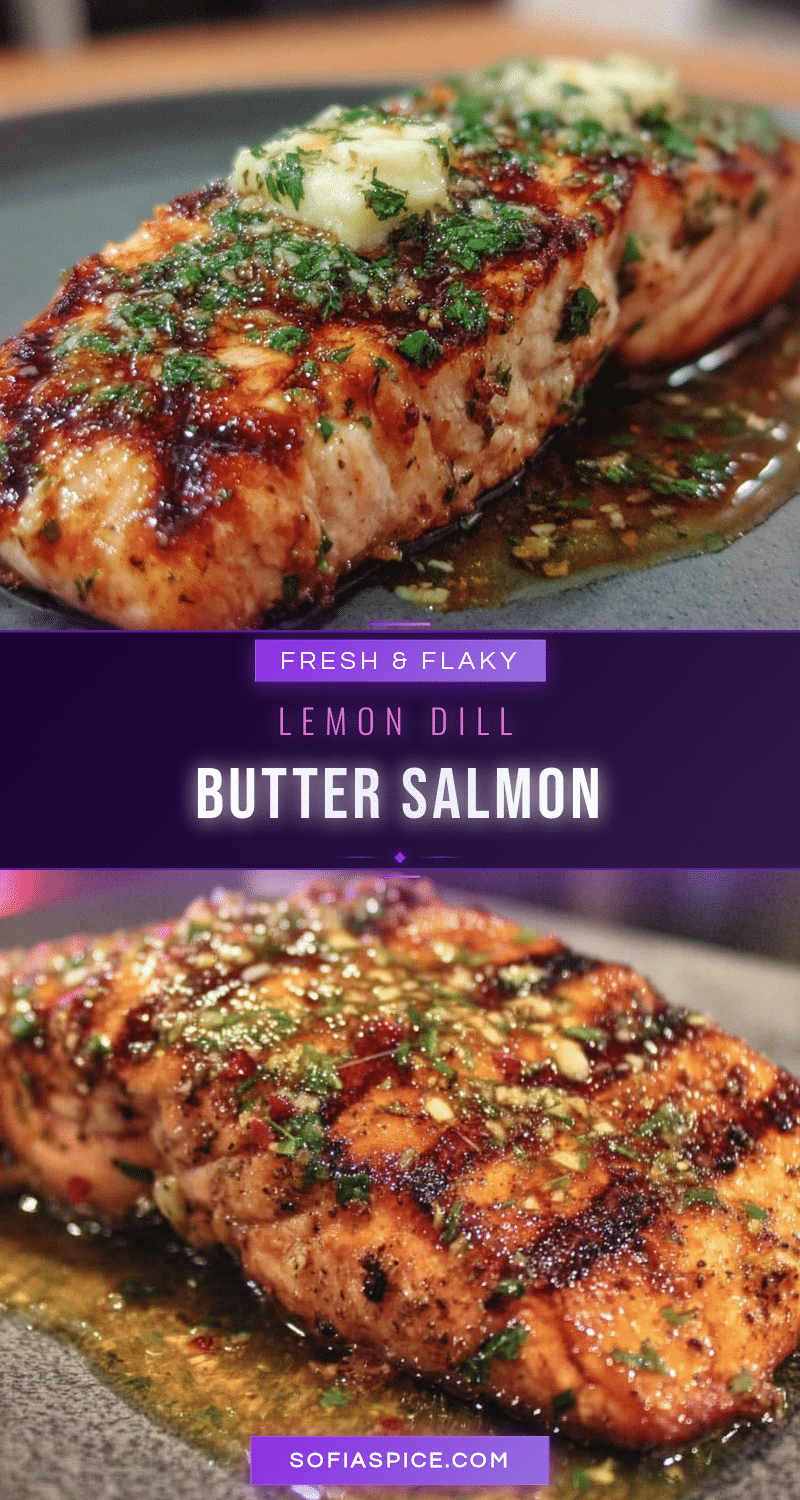
Best Flaky Lemon Dill Butter Salmon Recipe
This lemon dill butter salmon is a quick and easy weeknight dinner that feels special. With a buttery, herb-infused sauce and perfectly flaky fish, it’s a crowd-pleaser that comes together in under 20 minutes.
- Prep Time: 10 minutes
- Cook Time: 9 minutes
- Total Time: 19 minutes
- Yield: 4 servings 1x
- Category: Main Course
- Cuisine: American
Ingredients
- 4 salmon fillets (about 6 oz each)
- 4 tablespoons unsalted butter, softened
- 2 tablespoons fresh dill, finely chopped
- 1 large lemon (zest and juice)
- 2 cloves garlic, minced
- 1 tablespoon olive oil
- Salt and black pepper to taste
- Optional: extra fresh dill sprigs, lemon slices, flaky sea salt for garnish
Instructions
- Make the compound butter: In a small bowl, combine 4 tablespoons softened unsalted butter, 2 tablespoons finely chopped fresh dill, zest of 1 lemon, 1 tablespoon fresh lemon juice, and 2 minced garlic cloves. Mash together with a fork until well combined. Set aside.
- Prep the salmon: Pat 4 salmon fillets dry with paper towels. Season both sides generously with salt and black pepper. Let sit at room temperature for about 10 minutes.
- Heat the pan: Place a large non-stick or cast iron skillet over medium-high heat. Add 1 tablespoon olive oil and let it get hot until shimmering.
- Sear the salmon: Place fillets skin-side down in the hot pan. Cook for 4-5 minutes without moving them, until the skin is golden and crispy.
- Flip and add butter: Carefully flip the fillets using a fish spatula. Add the compound butter to the pan, placing a spoonful on top of each fillet. Let it melt and bubble.
- Baste the salmon: Tilt the pan slightly and spoon the melted butter over the tops of the fillets for 2-3 minutes, until just cooked through.
- Finish with lemon: Squeeze a little extra fresh lemon juice over the fillets right before removing from heat.
- Rest and serve: Transfer salmon to a serving plate. Spoon remaining butter from the pan over the top. Let rest for 2 minutes. Garnish with fresh dill sprigs and lemon slices.
Notes
Pat the salmon dry for a good sear. Don’t move the fish too early; let it develop a crust. Use room temperature butter for easy mixing. Watch the heat to prevent butter from burning. Trust the fork test for doneness. Fresh dill is essential; dried dill won’t work as well.
Nutrition
- Serving Size: 1 fillet
- Calories: 380
- Sodium: 350
- Fat: 24
- Saturated Fat: 10
- Carbohydrates: 2
- Protein: 35
Keywords: salmon, lemon dill butter salmon, easy salmon recipe, weeknight dinner, healthy salmon, flaky salmon, butter salmon