I figured making a small batch of hot sauce would be a quick, straightforward project—chop a few things, simmer, and blend. It took about one whiff of the fumes from sautéing habaneros for that assumption to fall apart completely. The kitchen smelled like a controlled burn, and I was pretty sure I’d accidentally pepper-sprayed myself. But I kept going, because the idea of a sweet, fruity mango cutting through that aggressive heat felt like a challenge I had to see through.
The first batch was a little thin. The second was too sweet. The third? That one had me standing over the blender with a spoon, trying to convince myself to save some for bottling. This recipe isn’t about making a massive gallon of sauce that sits in your fridge for a year. It’s about a small batch habanero mango hot sauce that you’ll actually use up, share, and feel proud of. It’s the kind of sauce that makes you reconsider what “hot sauce” can be—less about punishment, more about flavor that lingers.
Honestly, the best part of this recipe is how forgiving it is. You don’t need a culinary degree or a special permit to handle hot peppers. You just need a little patience and a willingness to trust your own taste buds. If you’ve ever been burned by a store-bought bottle that’s all vinegar and no soul, this is your reset.
Why You’ll Love This Recipe
This isn’t just another hot sauce recipe you’ll find floating around the internet. I’ve tested this exact method about seven times, tweaking the ratio of mango to habanero until it hit that sweet spot where the fruit does the heavy lifting and the pepper just adds a warm, building glow. It’s a small batch, which means you’re not committing to a year’s supply of something you might not love. You can make it, taste it, and adjust the next batch immediately.
- Quick & Easy : From cutting board to bottle in about 30 minutes. No fermenting, no waiting weeks for flavors to develop.
- Simple Ingredients : Mango, habanero, onion, garlic, vinegar, and lime. That’s it. You probably have most of this in your kitchen right now.
- Perfect for Gifting : A small jar of this stuff makes a better gift than anything you can buy at the store. It’s personal, handmade, and impressive.
- Crowd-Pleaser : People who “don’t like spicy food” will still go for this because the mango and lime balance the heat so well.
- Unbelievably Delicious : The texture is silky, the color is a brilliant sunset orange, and the flavor is complex without being complicated.
What sets this apart from other mango hot sauces? The caramelization. Most recipes just dump everything in a pot and boil it. I take an extra two minutes to sear the mango and onion before adding the liquid, which gives the final sauce a deeper, almost roasted sweetness that you just can’t get from a raw blend. It’s a small step that makes a massive difference.
This is the kind of sauce that makes you close your eyes after the first bite—not because it’s painfully hot, but because the flavor hits you in waves. It’s comfort food for your tacos. It’s the thing that makes eggs exciting again. And honestly, it’s the recipe that made me stop buying hot sauce altogether.
What Ingredients You Will Need
This recipe uses a short list of fresh, whole ingredients to build layers of flavor without any weird additives or preservatives. The magic is in the balance, not the number of ingredients.
- 2 ripe mangoes, peeled and diced – You want mangoes that are soft and sweet but not mushy. Ataulfo (honey) mangoes work best here because they’re less fibrous and have a creamier texture. If your mangoes are a little tart, that’s okay—just add a teaspoon of honey or agave at the end to balance it.
- 2 to 3 habanero peppers, stems removed – This is where you control the heat. For a milder sauce, use 2 peppers and remove all the seeds and white membrane. For a hotter sauce, use 3 peppers and leave some seeds in. Always wear gloves when handling these—trust me on this one.
- 1/2 small yellow onion, roughly chopped – Yellow onion adds a savory backbone that keeps the sauce from tasting like a fruit smoothie. You can use white onion in a pinch, but yellow gives a slightly sweeter, more mellow result.
- 2 cloves garlic, smashed – Fresh garlic is non-negotiable here. The powdered stuff will give you a flat, dusty flavor. Smash the cloves with the side of your knife to release the oils before chopping.
- 1/3 cup apple cider vinegar – This provides the acidity and helps preserve the sauce. I prefer Bragg’s for its unfiltered, raw quality, but any good apple cider vinegar works. You can substitute white distilled vinegar for a cleaner, sharper tang.
- 1/4 cup fresh lime juice – About 2 limes. Fresh is absolutely necessary—bottled lime juice tastes metallic and flat in this recipe. The lime brightens the mango and cuts through the heat.
- 1/4 cup water – Helps thin the sauce to the right consistency for blending. You can add more if you prefer a thinner sauce.
- 1/2 teaspoon salt – Use fine sea salt. Salt is crucial here—it doesn’t just season the sauce, it actually helps the flavors meld together and reduces the perception of bitterness from the peppers.
- Optional: 1 teaspoon honey or agave – Only add this if your mangoes are on the tart side. The natural sweetness of ripe mango is usually enough, but a little extra sweetness can balance an especially fiery batch of peppers.
I recommend using organic mangoes if you can find them—the flavor is noticeably brighter. For the habaneros, look for peppers that are firm and bright orange or red. Avoid any that are soft or have dark spots.
Equipment Needed
You don’t need a professional kitchen setup to make this sauce. Here’s what you’ll need:
- Chef’s knife and cutting board – A sharp knife makes dicing mangoes much less frustrating. A dull knife is a danger to your fingers.
- Medium saucepan or skillet – A 2-quart saucepan works perfectly. You want something with a heavy bottom to prevent scorching the fruit.
- Wooden spoon or silicone spatula – For stirring the mixture as it cooks.
- Blender or immersion blender – A countertop blender will give you the smoothest, silkiest texture. An immersion blender works but may leave some small chunks unless you blend for a full 60 seconds.
- Fine-mesh strainer (optional) – If you want an ultra-smooth sauce with no fiber bits, strain it after blending. I usually skip this step because I like a little texture.
- Glass jars or bottles – Mason jars work great. Make sure they’re sterilized by running them through the dishwasher or boiling them for 5 minutes. This sauce makes about 1 cup, so a 8-ounce jar is perfect.
- Rubber gloves – Not optional. You will regret not wearing them. I learned this lesson the hard way after rubbing my eye an hour after chopping habaneros.
If you don’t have a blender, you can use a food processor, but the texture will be slightly chunkier. A potato masher won’t work—you need something that can fully emulsify the fruit and vinegar.
Preparation Method
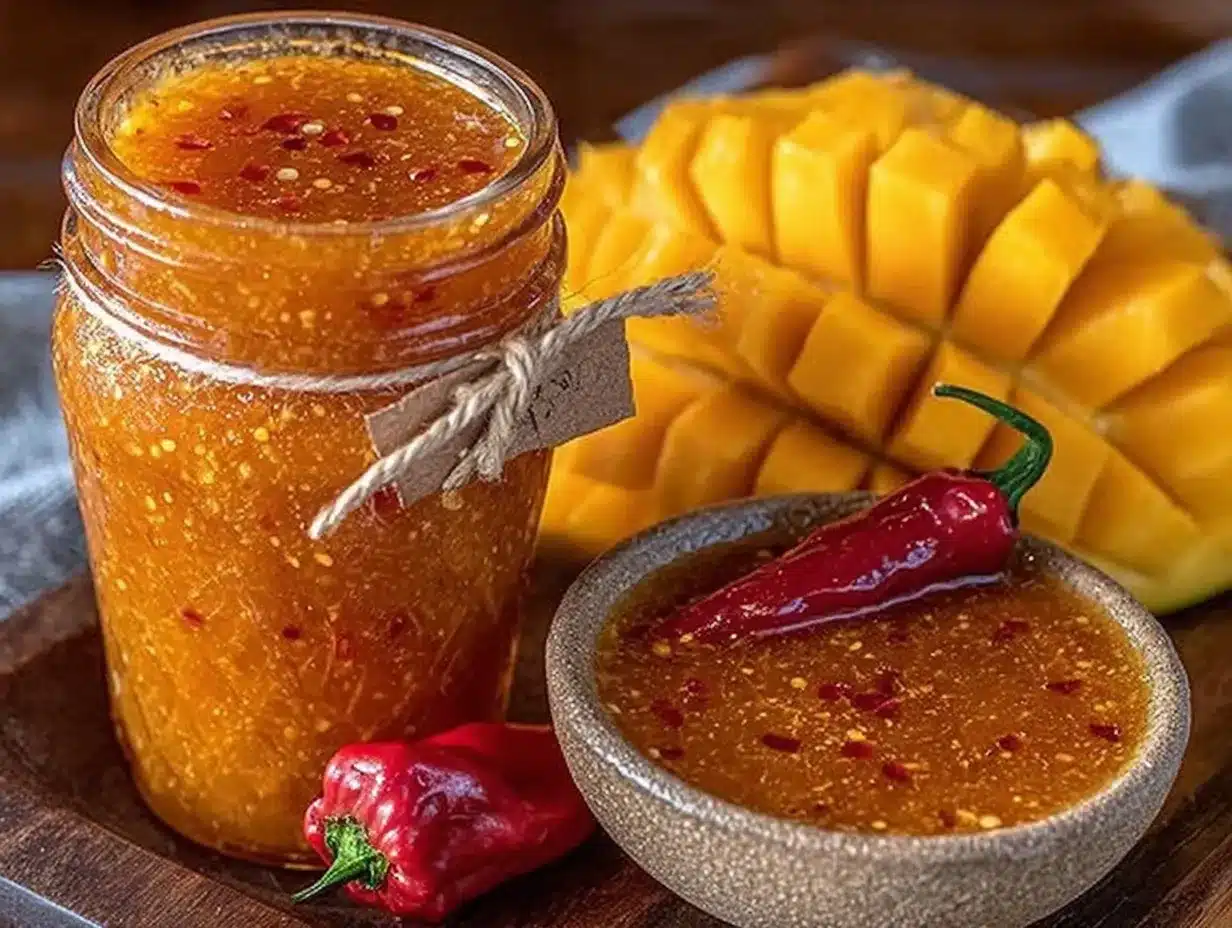
This whole process takes about 25 to 30 minutes from start to finish. The actual hands-on time is even less—most of it is just simmering and blending.
- Prep your ingredients. Put on your gloves. Dice the mangoes into roughly 1-inch cubes. Chop the onion into similar-sized pieces. Smash and roughly chop the garlic. Remove the stems from the habaneros. If you want less heat, slice the peppers open and scrape out the seeds and white pith with the tip of your knife. Leave the seeds in if you want maximum fire.
- Sear the mango and onion. Heat your saucepan over medium-high heat. Add a tiny splash of oil—just enough to coat the bottom. Add the diced mango and onion in a single layer. Let them sit undisturbed for about 2 minutes, until you see some browning on the edges. Stir once and let them cook for another minute. This caramelization step is what gives the sauce its deep, almost roasted sweetness. Don’t skip it.
- Add the garlic and habaneros. Toss in the smashed garlic and the whole habanero peppers. Stir constantly for about 30 seconds until the garlic is fragrant. The fumes at this point will be intense—turn on your exhaust fan or open a window.
- Add the liquids. Pour in the apple cider vinegar, lime juice, and water. Stir everything together, scraping up any browned bits from the bottom of the pan. Those browned bits are pure flavor.
- Simmer. Bring the mixture to a gentle boil, then reduce the heat to low. Let it simmer uncovered for 10 to 12 minutes. The mango should be very soft and the liquid should have reduced slightly. The color will deepen to a rich golden orange. If the liquid evaporates too quickly and the pan looks dry, add another tablespoon of water.
- Cool slightly. Remove the pan from the heat and let the mixture cool for about 5 minutes. This is important—blending hot liquid can cause the blender lid to pop off and spray sauce everywhere. I’ve cleaned mango-habanero puree off my ceiling before. It’s not fun.
- Blend until smooth. Carefully transfer the mixture to your blender. Start on low speed and gradually increase to high. Blend for 45 to 60 seconds, until the sauce is completely smooth and silky. If it’s too thick for your liking, add a tablespoon of water at a time and blend again until you reach the desired consistency.
- Taste and adjust. Dip a clean spoon in and taste it. The heat should hit you first, then the sweetness of the mango, then the tangy finish from the lime and vinegar. If it’s too spicy, add a teaspoon of honey or a splash more lime juice. If it’s too sweet, add a pinch more salt. If it’s too thick, add water. Trust your palate here—you’re the chef.
- Strain (optional). If you want an ultra-smooth sauce, pour the blended mixture through a fine-mesh strainer into a bowl, pressing on the solids with a spatula. I usually skip this because the fiber from the mango adds nice body, but it’s your call.
- Bottle and store. Pour the finished sauce into your sterilized jar or bottle. Let it cool completely before putting the lid on. Store it in the refrigerator.
One thing I’ve learned the hard way: label your jar. This sauce looks deceptively like a sweet mango puree, and someone in your house (probably you, late at night) might mistake it for a smoothie ingredient. It will not end well.
Cooking Tips & Techniques
Let me save you some of the trouble I went through. The first time I made this, I used unripe mangoes because that’s all the store had. The sauce came out sour and thin, and I tried to fix it by adding sugar, which just made it taste like spicy candy. Ripe mangoes are non-negotiable. If you can only find unripe ones, let them sit on your counter for a few days until they yield slightly to pressure and smell fragrant at the stem.
Another mistake I made early on? Not wearing gloves. I thought I was careful. I washed my hands three times. And then I touched my face. The burning didn’t start until an hour later, and it lasted for about six hours. Do not skip the gloves. Also, avoid touching any metal surfaces after handling habaneros—the capsaicin can transfer and linger.
For the best texture, don’t overfill your blender. Hot liquids expand when blended, so fill the blender no more than halfway. Hold the lid down with a folded kitchen towel while you blend. This is one of those tips that sounds paranoid until you’ve had a blender explosion. After that, you never skip it.
If you want a smokier flavor, try roasting the habaneros and onion under the broiler for 5 minutes before adding them to the pan. It adds a charred, almost barbecue-like depth that pairs beautifully with the mango. I did this once for a batch I was giving as a gift, and the recipient asked me for the recipe three times.
Timing-wise, this sauce comes together fast. I like to prep all my ingredients before I turn on the stove. Once you start cooking, things move quickly—you don’t want to be scrambling to chop a mango while your garlic is burning.
Variations & Adaptations
This recipe is a starting point, not a rigid set of rules. Here are some ways I’ve adapted it depending on what I had in the kitchen or who I was cooking for:
- Milder Version : Swap the habaneros for a single jalapeño or serrano pepper. You’ll lose some of the fruity, floral notes of the habanero, but you’ll still get a mild kick with plenty of mango flavor.
- Fruit Swap : Use ripe pineapple or papaya instead of mango. Pineapple makes a brighter, tangier sauce that’s incredible on fish tacos. Papaya gives a creamier, milder result.
- Smoky Habanero Mango : Add 1/2 teaspoon of smoked paprika or chipotle powder to the blender. It gives the sauce a subtle campfire smokiness that pairs perfectly with grilled meats and crispy cheesy quesadillas.
- Herb-Infused : Add a small handful of fresh cilantro or a few sprigs of mint to the blender at the end. It adds a fresh, green note that cuts through the richness.
- Garlic Lovers : Roast a whole head of garlic, squeeze out the soft cloves, and blend them into the sauce. Roasted garlic adds a sweet, nutty depth that’s completely different from raw garlic.
- No-Vinegar Option : Replace the apple cider vinegar with an equal amount of fresh lime juice. The sauce will be brighter and more citrus-forward, but it won’t keep as long in the fridge—use it within a week.
I once made a version with roasted pineapple and a touch of ginger that was so good I used it as a marinade for chicken thighs. It was the kind of happy accident that makes you want to experiment more. Don’t be afraid to play around with this recipe—it’s very forgiving.
Serving & Storage Suggestions
This sauce is best served at room temperature or slightly chilled. The flavors are most vibrant when it’s not straight out of the fridge. I usually let it sit on the counter for about 15 minutes before serving.
It’s incredible on practically anything that needs a hit of sweet heat. Try it on:
- Breakfast tacos or scrambled eggs
- Grilled chicken, fish, or shrimp
- Turkey taco lettuce wraps with avocado crema
- Roasted vegetables like sweet potatoes or cauliflower
- Rice bowls with black beans and corn
- Quesadillas, nachos, or creamy hatch chili chicken soup
- Burgers and sandwiches—it’s especially good on a black bean burger
For storage, keep the sauce in a sealed glass jar in the refrigerator. It will stay fresh for up to 3 weeks. The flavor actually deepens and melds after the first day or two, so don’t be alarmed if it tastes even better on day three. You can also freeze it in small ice cube trays, then pop the cubes into a freezer bag. Each cube is about 1 tablespoon, perfect for adding to soups or marinades.
One thing to note: the color will naturally fade from bright orange to a more muted amber over time. That’s totally normal and doesn’t affect the flavor. If you want to preserve the bright color, add a squeeze of fresh lime juice right before serving.
To reheat frozen sauce, just thaw a cube in the microwave for 15 seconds or let it sit at room temperature for 20 minutes. Don’t boil it—high heat can dull the fresh mango flavor.
Nutritional Information & Benefits
This is a relatively low-calorie condiment with some surprising health benefits. A 1-tablespoon serving contains approximately:
| Nutrient | Amount per Tbsp |
|---|---|
| Calories | 15-20 |
| Carbohydrates | 4g |
| Sugar | 3g |
| Fiber | 0.5g |
| Vitamin C | 15% DV |
| Vitamin A | 10% DV |
Mangoes are packed with vitamin C and beta-carotene, which support immune function and skin health. Habaneros contain capsaicin, a compound that’s been studied for its metabolism-boosting and anti-inflammatory properties. The apple cider vinegar adds gut-friendly probiotics if you use the raw, unfiltered kind. This sauce is naturally gluten-free, dairy-free, vegan, and paleo-friendly. The only potential allergen is the fruit itself, which is rare.
I like to think of this sauce as a way to add a ton of flavor without adding a ton of calories or processed ingredients. It’s a small step toward eating more whole foods, and honestly, it makes vegetables taste so good that you’ll actually want to eat them.
Conclusion
This small batch habanero mango hot sauce is one of those recipes that feels like a secret weapon. It’s quick enough for a weeknight project, impressive enough to gift, and versatile enough to use on almost everything. The balance of sweet, tangy, and spicy is something you just can’t find in a store-bought bottle—it’s personal, it’s handmade, and it’s yours.
I love this recipe because it taught me that hot sauce doesn’t have to be one-dimensional. It can be bright and fruity and complex. It can be the thing that makes a simple bowl of black beans and rice feel like a celebration. And the best part? You can tweak it endlessly. More mango, less heat. More lime, more garlic. It bends to your taste.
I’d love to hear how yours turns out. Did you go hotter or milder? Did you try a fruit swap? Drop a comment below and tell me about your version—I’m always looking for new ideas to try. And if you share it on social media, tag me so I can see your beautiful jars of sunshine. Happy cooking!
Frequently Asked Questions
Can I use frozen mango for this recipe?
Yes, you can. Thaw the mango first and drain off any excess liquid before searing. Frozen mango tends to be a little softer and may break down faster, which actually works fine for this sauce. Just be aware that the caramelization step won’t work as well since frozen mango releases more water.
How long does this hot sauce last in the fridge?
Stored in a sterilized, sealed glass jar, this sauce will stay fresh for up to 3 weeks. The acidity from the vinegar and lime acts as a natural preservative. If you see any mold or the color turns brown, toss it. Always use a clean spoon to scoop it out to avoid introducing bacteria.
Can I make this sauce without a blender?
Technically, yes, but the texture won’t be as smooth. You can mash the cooked mango and peppers through a fine-mesh strainer using the back of a spoon. It takes more elbow grease and the result will be more of a chunky salsa than a silky sauce. A blender really is the best tool here.
How can I make this sauce less spicy?
Use only 1 habanero pepper and remove all the seeds and white membrane. You can also add an extra half mango to dilute the heat. Another trick is to add a tablespoon of plain yogurt or coconut milk at the end—dairy and coconut fat help neutralize capsaicin. Just note that adding dairy will change the shelf life, so use it within a week.
Can I can this hot sauce for long-term storage?
This recipe is not designed for water-bath canning because the pH level may not be acidic enough for safe shelf storage. For long-term storage, freeze it in small portions or refrigerate and use within 3 weeks. If you want a shelf-stable version, you’d need to follow a tested canning recipe with precise acidity measurements.
Pin This Recipe!
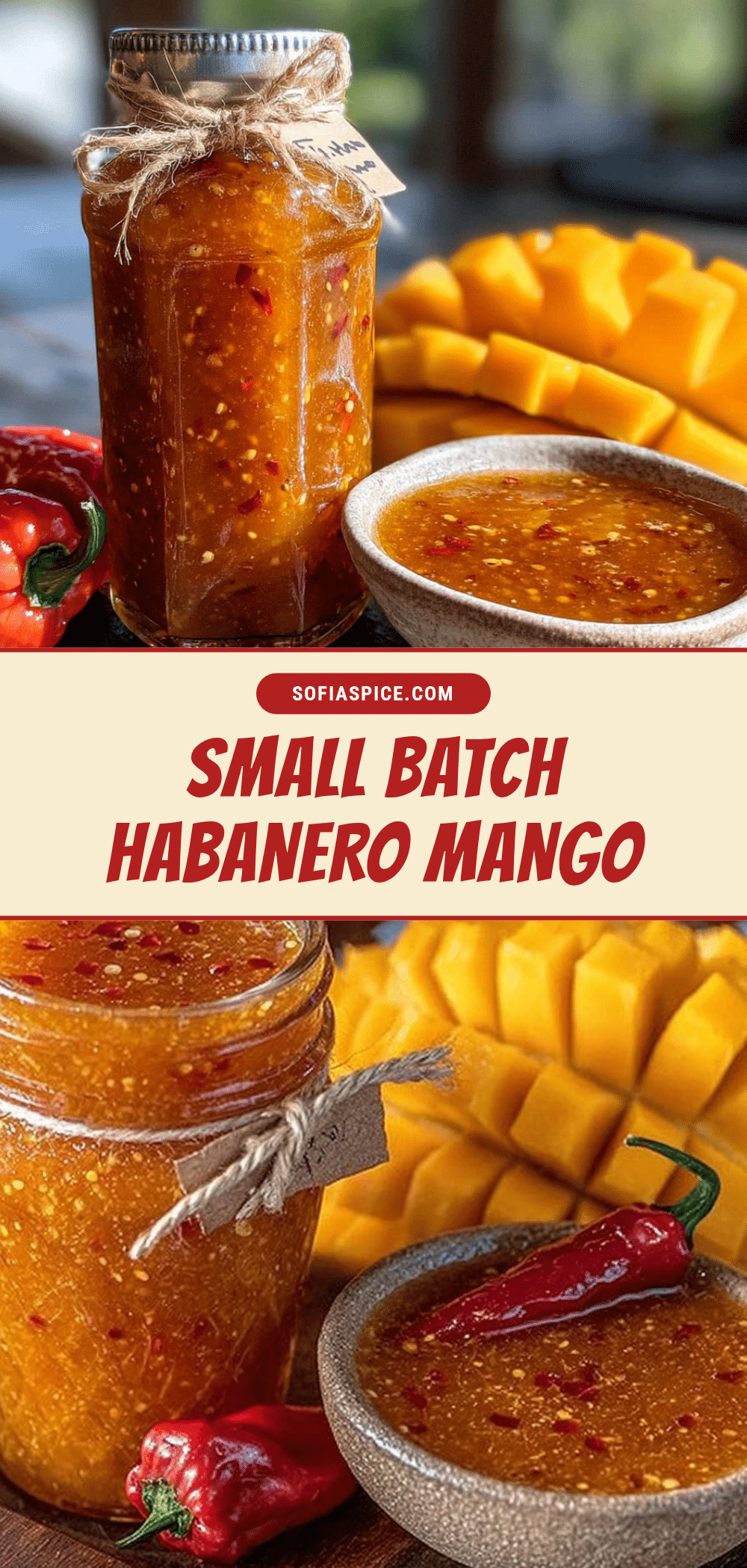
Small Batch Habanero Mango Hot Sauce
A quick and easy small batch habanero mango hot sauce that balances sweet, tangy, and spicy flavors. Perfect for tacos, eggs, and more, this sauce comes together in about 30 minutes with simple ingredients.
- Prep Time: 10 minutes
- Cook Time: 15 minutes
- Total Time: 25 minutes
- Yield: 1 cup (about 16 servings) 1x
- Category: Condiment
- Cuisine: Mexican-inspired
Ingredients
- 2 ripe mangoes, peeled and diced
- 2 to 3 habanero peppers, stems removed
- 1/2 small yellow onion, roughly chopped
- 2 cloves garlic, smashed
- 1/3 cup apple cider vinegar
- 1/4 cup fresh lime juice
- 1/4 cup water
- 1/2 teaspoon fine sea salt
- 1 teaspoon honey or agave (optional, if mangoes are tart)
Instructions
- Prep your ingredients. Put on gloves. Dice mangoes into 1-inch cubes. Chop onion into similar-sized pieces. Smash and roughly chop garlic. Remove stems from habaneros; for less heat, remove seeds and white pith.
- Sear the mango and onion. Heat saucepan over medium-high heat with a splash of oil. Add mango and onion in a single layer. Let sit undisturbed for 2 minutes until edges brown. Stir and cook another minute.
- Add garlic and habaneros. Toss in garlic and whole habaneros. Stir constantly for 30 seconds until fragrant. Turn on exhaust fan or open window.
- Add liquids. Pour in apple cider vinegar, lime juice, and water. Stir, scraping up browned bits from pan bottom.
- Simmer. Bring to a gentle boil, then reduce heat to low. Simmer uncovered for 10-12 minutes until mango is soft and liquid reduces slightly. Add water if pan looks dry.
- Cool slightly. Remove from heat and let cool for 5 minutes.
- Blend until smooth. Transfer to blender. Start on low, increase to high. Blend 45-60 seconds until smooth. Add water 1 tablespoon at a time if too thick.
- Taste and adjust. If too spicy, add honey or lime juice. If too sweet, add salt. If too thick, add water.
- Strain (optional). Pour through fine-mesh strainer for ultra-smooth sauce. Skip for more texture.
- Bottle and store. Pour into sterilized jar. Cool completely before sealing. Refrigerate.
Notes
Wear gloves when handling habaneros. For milder sauce, use 1 pepper and remove seeds. For smokier flavor, roast habaneros and onion under broiler for 5 minutes before cooking. Sauce keeps up to 3 weeks in refrigerator. Can be frozen in ice cube trays for longer storage.
Nutrition
- Serving Size: 1 tablespoon
- Calories: 1520
- Sugar: 3
- Sodium: 75
- Carbohydrates: 4
- Fiber: 0.5
Keywords: habanero mango hot sauce, small batch hot sauce, homemade hot sauce, mango hot sauce, spicy condiment, easy hot sauce recipe