“You know, I never thought I’d be the type to sneak veggies into my tomato sauce,” I muttered under my breath one hectic evening. The kitchen was a mess, the clock was ticking, and dinner was nowhere near ready. Honestly, the idea of chopping endless veggies seemed like a dealbreaker. But somehow, this Healthy Hidden Vegetable Tomato Sauce from Scratch was born out of that exact exhaustion — a desperate attempt to get dinner on the table without sacrificing nutrition or flavor.
My picky eater at home usually spots anything green from a mile away, and heaven forbid I try to slip in extra vegetables. So, I started experimenting with blending various veggies right into the sauce, making it smooth enough to disappear but still packed with vitamins. The first time I served it, I braced for a fuss—but instead, I got surprised silence and a clean plate. That quiet moment made me realize this sauce wasn’t just a hack; it became a staple for our family dinners.
Since then, I’ve been making this sauce over and over — sometimes on a lazy Sunday, other times on a rushed weekday. It’s not just about hiding vegetables; it’s about savoring a sauce that tastes rich, fresh, and just a little bit different from the usual jarred stuff. The way the flavors meld after simmering slowly? It’s a small comfort in a busy life, and honestly, it’s my secret weapon for quick meals like those spicy cajun shrimp dishes I love to whip up.
This recipe stuck around because it’s real food, made easy and tasty without any fuss. And hey, who wouldn’t want a sauce that’s as healthy as it is delicious — perfect for when you want to feel good about what you’re putting on your plate?
Why You’ll Love This Recipe
When it comes to a tomato sauce that’s both nourishing and simple, this healthy hidden vegetable tomato sauce stands out for plenty of reasons. I’ve tested this recipe countless times in my kitchen, tweaking it to find that sweet spot between flavor and nutrition — and trust me, it delivers every time.
- Quick & Easy: You can have this sauce ready in about 45 minutes, making it great for busy nights when you want homemade without the wait.
- Simple Ingredients: No need for exotic items—mostly pantry staples and fresh veggies that you can swap depending on what’s in season.
- Perfect for Families & Meal Prep: The hidden veggies make it kid-friendly, and it freezes beautifully for future meals.
- Crowd-Pleaser: I’ve brought this to potlucks and casual dinners, and it always gets compliments—even from those who swear they don’t like “healthy” food.
- Unbelievably Delicious: The slow simmer brings out a rich, velvety texture that feels like comfort food, but with a subtle veggie boost you’ll barely notice.
What really makes this tomato sauce different? It’s the way the vegetables are finely blended, creating a silky texture that integrates seamlessly with the tomatoes. Plus, I like to add a hint of fresh herbs and a splash of balsamic vinegar to deepen the flavor — small touches that make a big difference.
This isn’t just another tomato sauce recipe; it’s a way to enjoy your favorites guilt-free without compromising on taste. It’s the kind of sauce that makes you pause mid-bite and think, “Hey, I’m eating something good for me.” Whether you’re pairing it with homemade pasta or a simple garlic butter shrimp with zucchini noodles, it’s a recipe that delivers on all fronts.
What Ingredients You Will Need
This recipe uses simple, wholesome ingredients to deliver bold flavor and a smooth, satisfying texture without the fuss. Most are pantry staples or fresh vegetables that you can easily find at any grocery store. Plus, I include a few tips on picking the best produce and easy swaps if you want to customize.
- For the sauce base:
- Olive oil, 2 tablespoons (adds richness and depth)
- Yellow onion, 1 medium, finely chopped
- Garlic cloves, 3 large, minced (the heart of the flavor)
- For the hidden vegetables:
- Carrots, 2 medium, peeled and chopped (natural sweetness)
- Zucchini, 1 medium, chopped (adds moisture and subtle flavor)
- Red bell pepper, 1 large, chopped (for a mild sweetness and color)
- Spinach or kale, 1 cup tightly packed, roughly chopped (boost of greens)
- Tomato ingredients:
- Canned crushed tomatoes, 28 oz (800 g) – I prefer San Marzano style for authenticity
- Tomato paste, 2 tablespoons (for concentrated flavor)
- Seasonings & extras:
- Dried oregano, 1 teaspoon
- Dried basil, 1 teaspoon
- Red pepper flakes, ¼ teaspoon (optional, for a mild kick)
- Salt and freshly ground black pepper, to taste
- Balsamic vinegar, 1 tablespoon (deepens flavor and balances acidity)
- Fresh basil leaves, a handful, chopped (added at the end for freshness)
- Water or vegetable broth, ½ cup (120 ml) – to adjust sauce consistency
If you want to keep it dairy-free or vegan, this sauce is naturally so. For a gluten-free option, just pair it with gluten-free pasta or dishes like the one-pot Mediterranean chicken and quinoa bowl. When selecting your vegetables, look for firm carrots and zucchini without soft spots, and fresh, vibrant greens. If fresh spinach isn’t available, frozen can work fine—just thaw and squeeze out excess water before blending.
Equipment Needed
For this sauce, you don’t need anything fancy—just the essentials found in most kitchens. Here’s what I use and recommend:
- Large skillet or saucepan with a lid – a heavy-bottomed pan works best for even cooking.
- Sharp chef’s knife and cutting board – for prepping all those veggies quickly.
- Blender or immersion blender – crucial for turning the cooked vegetables into a smooth sauce. I personally prefer an immersion blender because it’s less messy and easy to control.
- Wooden spoon or heat-resistant spatula – for stirring without scratching your cookware.
- Measuring spoons and cups – for accurate seasoning and liquid amounts.
If a blender isn’t on hand, you can finely grate the vegetables instead of chopping and cook them longer to soften, but the texture won’t be quite as smooth. For a budget-friendly option, many stores sell affordable handheld blenders that clean up quickly and last for years. Keeping your knife sharp really speeds up prep, and I like to keep a small brush handy to clean vegetable scraps off the board as I work.
Preparation Method
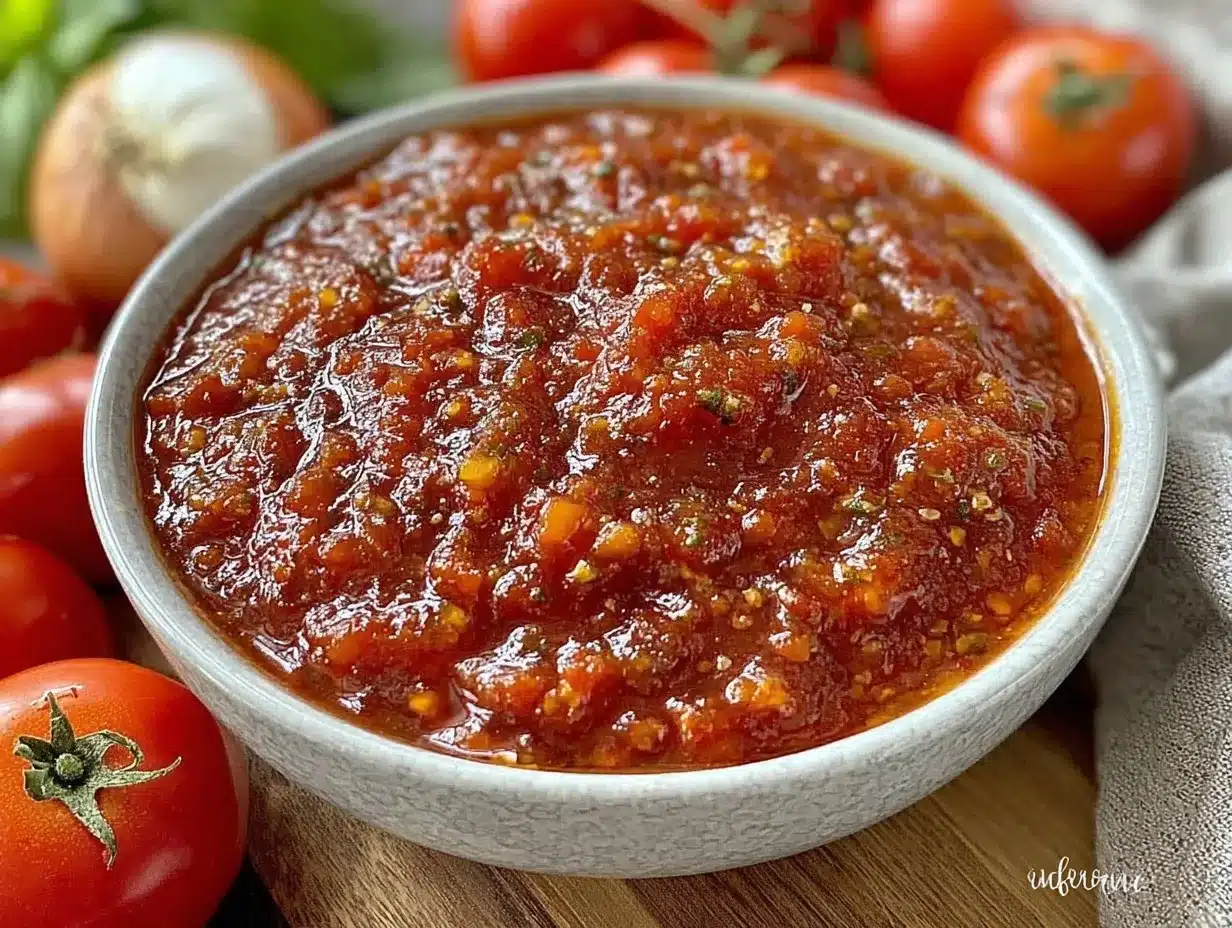
- Prep your vegetables: Rinse and chop the onion, carrots, zucchini, and red bell pepper into small, even pieces (about ½-inch chunks). Roughly chop the spinach or kale and set aside. This step should take about 10 minutes.
- Sauté the aromatics: Heat 2 tablespoons of olive oil over medium heat in your large skillet. Add the onion and cook for 4–5 minutes until softened and translucent, stirring occasionally. Add the minced garlic and cook for another 1–2 minutes, until fragrant but not browned.
- Add the chopped vegetables: Toss in the carrots, zucchini, and red bell pepper. Stir to coat them in the oil and cook for 7–8 minutes, stirring often, until veggies start to soften and smell sweet. If you notice any sticking, add a splash of water or broth to keep things moving.
- Combine tomato ingredients and seasonings: Stir in the crushed tomatoes, tomato paste, dried oregano, dried basil, red pepper flakes (if using), salt, and pepper. Add the water or vegetable broth to loosen the sauce a bit. Bring the mixture to a gentle simmer.
- Simmer and blend: Cover the pan partially and let the sauce simmer on low for 20 minutes, stirring now and then. Once the veggies are tender, carefully transfer the sauce to a blender or use your immersion blender to puree until smooth and velvety. If the sauce feels too thick, add a little more broth or water to reach your desired consistency.
- Finish with greens and vinegar: Return the blended sauce to the pan, stir in the chopped spinach or kale, and cook for another 5 minutes until the greens wilt. Add the balsamic vinegar and adjust salt and pepper to taste.
- Final touch: Right before serving, stir in fresh basil leaves for a burst of bright flavor. Taste once more—if it feels a little flat, a pinch of sugar can balance acidity, but I usually find the balsamic does the trick.
Pro tip: If you’re short on time, you can prep the veggies ahead and even freeze the blended sauce in portions. That way, dinner comes together in a snap. Just thaw and reheat gently. The fresh basil is best added last to keep its aroma alive.
Cooking Tips & Techniques
Cooking this Healthy Hidden Vegetable Tomato Sauce from Scratch taught me a few things that help keep it tasting fresh and vibrant every time.
- Don’t rush the sauté: Letting the onions and garlic soften slowly builds a sweeter, richer base. I’ve made the mistake of cranking the heat too high, which burns the garlic and gives a bitter edge.
- Blend for texture: Using an immersion blender lets you control how smooth the sauce gets. I like mine silky but still with a little body—perfect for clinging to pasta or spooning over grilled salmon like in this garlic butter salmon with asparagus recipe.
- Season gradually: Add salt in stages, tasting as you go. Sometimes the veggies bring natural sweetness that balances acidity, so you don’t want to over-salt at the start.
- Simmer low and slow: A gentle simmer keeps flavors mellow and allows the sauce to thicken naturally without burning. I usually set a timer for 20 minutes, but if you’re multitasking, a half hour is fine too.
- Use fresh herbs at the end: Adding basil right before serving keeps the flavor fresh and green, which contrasts nicely with the cooked-down sweetness.
One time I tried skipping the balsamic vinegar — big mistake. The sauce tasted flat, missing that subtle tang that makes all the flavors pop. Also, blending the veggies raw resulted in a grassy, raw flavor that nobody loved, so cook them first to bring out their natural sweetness. Trust me on this one!
Variations & Adaptations
This tomato sauce is incredibly versatile and easy to adapt. Here are some ways I’ve personalized it to fit different tastes and dietary needs:
- Low-carb & veggie-packed: Swap out the carrots for more zucchini and add mushrooms for an earthy twist. Serve over spiralized veggies or cauliflower rice.
- Spicy version: Add extra red pepper flakes or a dash of smoked paprika for a smoky heat that pairs beautifully with shrimp dishes, similar to the spicy cajun shrimp and sausage sheet pan meal.
- Seasonal swap: In cooler months, try adding roasted butternut squash or sweet potatoes to the veggie blend for a richer, sweeter sauce.
- Allergy-friendly: This recipe is naturally gluten-free and vegan. For nut allergies, just avoid adding any nuts as a garnish or side. You can also swap vegetable broth with homemade chicken broth if preferred.
- Chunky style: Blend only half the sauce for a smoother base and leave the rest chunky for texture.
Personally, I’ve found adding a splash of red wine during the simmer stage adds a lovely depth, but I save that for special occasions. Feel free to experiment — this sauce is forgiving and friendly to tweaks.
Serving & Storage Suggestions
This sauce tastes best warm and fresh, spooned generously over pasta, roasted vegetables, or as a dip for garlic bread. It also pairs wonderfully with grilled proteins like chicken or fish, making weeknight dinners feel a little more special.
You can refrigerate leftover sauce in an airtight container for up to 4 days. For longer storage, freeze in portion-sized containers or freezer bags for up to 3 months. When reheating, warm gently over low heat, stirring occasionally to prevent sticking.
Flavors tend to deepen and mellow after a day or two in the fridge, so sometimes leftovers taste even better. For a quick meal, toss the sauce with some cooked pasta and sprinkle with fresh herbs and Parmesan cheese.
If you want to keep things light, serve with a simple side salad or steamed greens. For a heartier meal, this sauce is a perfect match for dishes like the one-pot Mediterranean chicken and quinoa bowl, making it a smart, delicious choice for balanced eating.
Nutritional Information & Benefits
This tomato sauce is a nutrient powerhouse thanks to the hidden vegetables and fresh ingredients. An approximate serving (½ cup or 120 ml) contains:
| Calories | 70-90 kcal |
|---|---|
| Carbohydrates | 12-15 g |
| Fiber | 3-4 g |
| Protein | 2 g |
| Fat | 4-5 g (mostly from olive oil) |
Key health benefits come from lycopene in tomatoes, a powerful antioxidant linked to heart health, and beta-carotene from carrots and red peppers. The fiber from the veggies helps digestion, and the olive oil provides heart-healthy fats. This sauce is naturally gluten-free, vegan, and low in added sugars, making it a great fit for many dietary preferences.
From my experience as a health-conscious but realistic eater, recipes like this make it easier to eat well without feeling deprived or overwhelmed. It’s a small step that adds up to better meals and more energy.
Conclusion
This Healthy Hidden Vegetable Tomato Sauce from Scratch is one of those recipes that quietly earns its place in your cooking rotation. It’s easy, adaptable, and actually tastes like something you’d want to eat again and again. The hidden veggies give it a nutritious boost without sacrificing that classic tomato sauce comfort.
I love how it bridges the gap between wholesome eating and the kind of food that feels like a hug after a long day. Whether you’re a seasoned cook or just getting started, I hope this sauce becomes your go-to for quick, healthy meals that don’t skimp on flavor.
If you try it, I’d love to hear how you make it your own — maybe with different veggies or a special herb twist. Sharing your kitchen wins is the best part of this whole food blogging journey.
Happy cooking!
FAQs
Can I use fresh tomatoes instead of canned for this sauce?
Yes, you can! Use about 2 pounds (900 g) of ripe tomatoes, peel and chop them before cooking. It will take a bit longer to cook down, but fresh tomatoes add a bright flavor.
How do I store leftover sauce properly?
Store leftover sauce in an airtight container in the fridge for up to 4 days or freeze it in portions for up to 3 months. Reheat gently on the stove or microwave, stirring occasionally.
Is this sauce suitable for freezing?
Absolutely! It freezes very well. Just cool completely before transferring to freezer-safe containers or bags. Thaw overnight in the fridge before reheating.
Can I add other vegetables to this sauce?
Definitely. Mushrooms, eggplant, or even roasted sweet potatoes can be blended in depending on your preference. Just adjust cooking times to ensure everything softens well.
What dishes pair best with this hidden vegetable tomato sauce?
This sauce is versatile—try it with pasta, grilled meats, or even as a base for homemade pizza. It’s also great spooned over roasted veggies or mixed into grain bowls like the Mediterranean chicken and quinoa bowl.
Pin This Recipe!
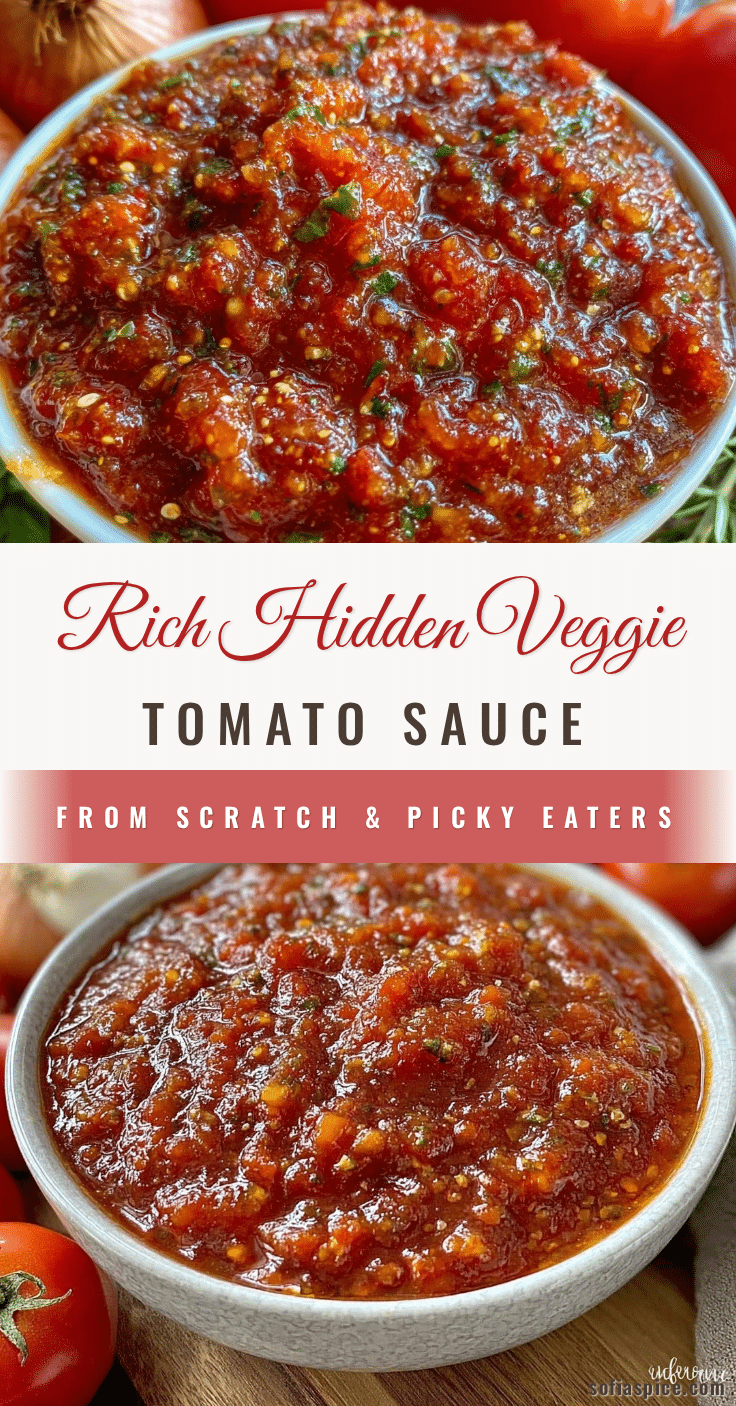
Healthy Hidden Vegetable Tomato Sauce From Scratch Easy Homemade Recipe
A nourishing and flavorful tomato sauce that cleverly hides vegetables for a smooth, velvety texture. Perfect for quick, healthy meals and picky eaters.
- Prep Time: 10 minutes
- Cook Time: 35 minutes
- Total Time: 45 minutes
- Yield: 6 servings 1x
- Category: Sauce
- Cuisine: Italian
Ingredients
- 2 tablespoons olive oil
- 1 medium yellow onion, finely chopped
- 3 large garlic cloves, minced
- 2 medium carrots, peeled and chopped
- 1 medium zucchini, chopped
- 1 large red bell pepper, chopped
- 1 cup tightly packed spinach or kale, roughly chopped
- 28 oz (800 g) canned crushed tomatoes (preferably San Marzano style)
- 2 tablespoons tomato paste
- 1 teaspoon dried oregano
- 1 teaspoon dried basil
- 1/4 teaspoon red pepper flakes (optional)
- Salt and freshly ground black pepper, to taste
- 1 tablespoon balsamic vinegar
- A handful fresh basil leaves, chopped
- 1/2 cup (120 ml) water or vegetable broth
Instructions
- Rinse and chop the onion, carrots, zucchini, and red bell pepper into small, even pieces (about ½-inch chunks). Roughly chop the spinach or kale and set aside. This should take about 10 minutes.
- Heat 2 tablespoons of olive oil over medium heat in a large skillet. Add the onion and cook for 4–5 minutes until softened and translucent, stirring occasionally. Add the minced garlic and cook for another 1–2 minutes until fragrant but not browned.
- Add the carrots, zucchini, and red bell pepper. Stir to coat in oil and cook for 7–8 minutes, stirring often, until veggies start to soften and smell sweet. Add a splash of water or broth if sticking occurs.
- Stir in the crushed tomatoes, tomato paste, dried oregano, dried basil, red pepper flakes (if using), salt, and pepper. Add water or vegetable broth to loosen the sauce. Bring to a gentle simmer.
- Partially cover the pan and simmer on low for 20 minutes, stirring occasionally. Once veggies are tender, transfer the sauce to a blender or use an immersion blender to puree until smooth and velvety. Add more broth or water if sauce is too thick.
- Return the blended sauce to the pan, stir in the chopped spinach or kale, and cook for another 5 minutes until greens wilt. Add balsamic vinegar and adjust salt and pepper to taste.
- Just before serving, stir in fresh basil leaves for bright flavor. Optionally, add a pinch of sugar to balance acidity if needed.
Notes
Do not rush sautéing onions and garlic to avoid bitterness. Blend cooked vegetables for best flavor and texture. Add fresh basil at the end to preserve aroma. Sauce freezes well in portions for up to 3 months. Optionally add a pinch of sugar to balance acidity.
Nutrition
- Serving Size: ½ cup (120 ml)
- Calories: 80
- Sugar: 6
- Sodium: 250
- Fat: 4.5
- Saturated Fat: 0.6
- Carbohydrates: 13.5
- Fiber: 3.5
- Protein: 2
Keywords: healthy tomato sauce, hidden vegetables, homemade tomato sauce, easy tomato sauce, vegetable sauce, vegan tomato sauce, gluten-free tomato sauce