I had sworn off holiday ham for years. Honestly, a decade at least. It always showed up to the party looking like a glossy, pineapple-ringed centerpiece, but the texture was either shoe-leather dry or weirdly spongy, and the sweetness felt artificial—like candy that forgot it was supposed to be meat. I’d politely take a sliver, push it around my plate, and load up on mashed potatoes instead. So when my brother announced he was hosting Christmas dinner last year and proudly declared he was making “the ham,” I braced myself. I even brought a backup protein—a small roast chicken—just in case.
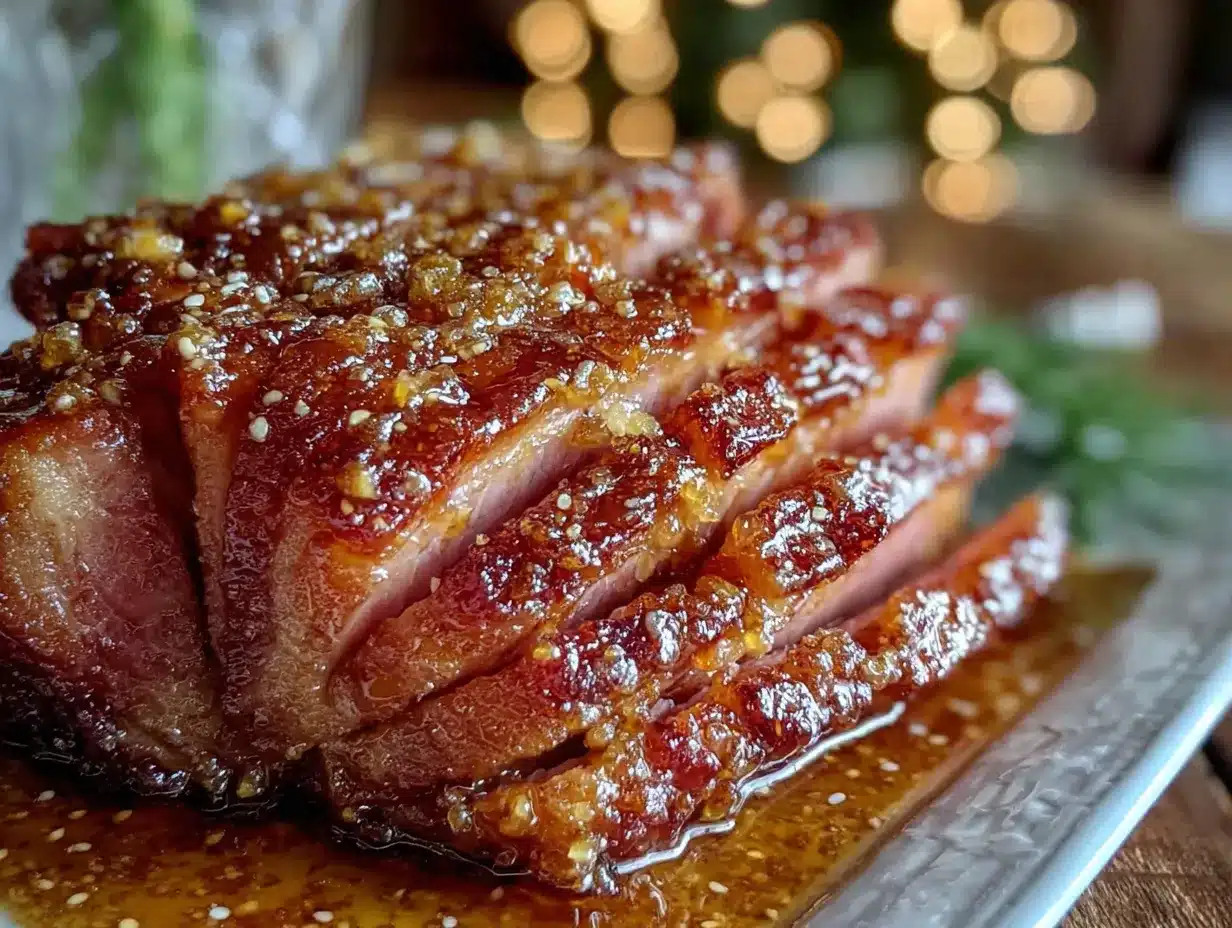
Then I walked into his kitchen an hour before dinner and caught him. There he was, standing at the counter with a paring knife, carving off a thin slice from the end of a glistening, mahogany-colored ham. He didn’t see me at first. He popped the slice into his mouth, closed his eyes for a second, and let out this tiny, involuntary hum of approval. That’s when I knew something was different. “Hand me a piece,” I said, and he jumped like I’d caught him stealing cookies. He handed me a slice, still warm, the edge sticky with a dark, caramelized glaze that looked nothing like the canned pineapple rings of my memory.
That first bite? It was quiet. No dramatic fanfare, just me standing there in my brother’s messy kitchen, chewing, and then reaching for another slice without saying a word. The glaze was complex—smoky and sweet with a warm, boozy kick that didn’t hit you over the head. The meat was tender and juicy, not dry at all. I asked him what he’d done, and he just shrugged and said, “Brown sugar, bourbon, a little mustard. Small batch. Easy.” I mean, I was annoyed, honestly. He’d made me eat my words with a fork. Maybe you’ve been there—when someone casually proves you wrong about a food you’ve been smug about hating for years. That ham became the reason I now look forward to the holiday spread, and this is the exact recipe he used. It’s the one that finally, quietly, turned me around.
Why You’ll Love This Recipe
This isn’t just another ham recipe that promises the world and delivers a dry, flavorless slab. This Perfect Brown Sugar Bourbon Glazed Ham (Small Batch) is the one that changes minds—I’ve seen it happen. It’s designed for the cook who wants to impress without spending all day in the kitchen, especially for a smaller gathering where a full-sized ham would be ridiculous overkill.
- Small Batch, Big Impact: This recipe uses a 3-4 pound ham, perfect for 4-6 people. No leftovers for weeks, no massive roasting pan to wash. It’s the ideal centerpiece for an intimate dinner party or a small holiday table.
- Simple Ingredients, Complex Flavor: You don’t need a specialty grocery store. Brown sugar, bourbon (use a decent one, not the expensive stuff), Dijon mustard, and a few pantry staples create a glaze that tastes like you spent hours on it.
- Stress-Free for Hosting: The prep is minimal, and the oven does most of the work. This frees you up to focus on your guests, your side dishes, or—let’s be real—your cocktail.
- Guaranteed Crowd-Pleaser: The sweet-savory-smoky profile is universally loved. Even the ham skeptics (like I used to be) will be reaching for seconds. It has that “close your eyes after the first bite” quality that makes a meal memorable.
- Foolproof Technique: The method of scoring the fat, applying the glaze in stages, and finishing with a high-heat blast ensures a sticky, caramelized crust with perfectly tender meat every single time.
What Ingredients You Will Need
This recipe relies on a handful of high-quality ingredients to build layers of flavor without any fuss. Most of these are likely already in your pantry or bar cart, which makes this an incredibly accessible dish for a last-minute gathering.
- For the Ham:
- 1 (3-4 pound) fully cooked, bone-in spiral-cut ham – A smaller ham is key for the “small batch” concept. I prefer a spiral-cut ham because it’s pre-sliced, making serving a breeze and allowing the glaze to seep into every crevice. Look for one labeled “ham in natural juices” for the best flavor and texture. Avoid hams that are pre-glazed or have a lot of added water.
- Whole cloves (optional, about 20-30) – These are for studding the ham before baking. They add a subtle, warm aromatic note that pairs beautifully with the brown sugar and bourbon. It’s a classic touch, but feel free to skip it if you don’t have cloves on hand.
- For the Brown Sugar Bourbon Glaze:
- 1 cup packed light brown sugar – This is the backbone of the glaze. Light brown sugar has a delicate molasses flavor that doesn’t overpower the bourbon. Dark brown sugar will work, but it will result in a much deeper, more molasses-forward glaze.
- 1/3 cup bourbon – Use one you’d be happy to sip. You don’t need a top-shelf bottle, but avoid anything labeled “cooking bourbon” or the really cheap stuff. A good mid-range bourbon like Maker’s Mark or Bulleit adds a lovely vanilla and oak note. The alcohol mostly cooks off, leaving behind a rich, warm complexity.
- 2 tablespoons Dijon mustard – This is the secret weapon. It cuts through the sweetness of the brown sugar and the richness of the ham, adding a tangy, savory depth that balances the entire dish. Don’t use yellow mustard here—it’s not the same.
- 2 tablespoons unsalted butter – Adds a silky richness and helps the glaze caramelize beautifully on the ham’s surface.
- 1 tablespoon apple cider vinegar – A splash of acidity brightens all the flavors and prevents the glaze from being cloyingly sweet.
- 1/2 teaspoon ground cinnamon – A warm spice that complements the bourbon and brown sugar. It’s subtle, but you’d miss it if it were gone.
- 1/4 teaspoon ground nutmeg – Freshly grated is best, but pre-ground works just fine. Another warm spice that adds complexity.
- 1/4 teaspoon ground cloves (optional) – If you’re not studding the ham with whole cloves, add a pinch of ground cloves to the glaze for that same aromatic note.
- Pinch of salt – Just a tiny one. It enhances all the other flavors.
Equipment Needed
You don’t need a professional kitchen to pull this off. Most of this equipment is standard, and I’ve included some budget-friendly alternatives for the specialized stuff.
- Roasting pan with a rack – A small roasting pan is ideal for a 3-4 pound ham. The rack lifts the ham off the bottom of the pan, allowing hot air to circulate evenly and preventing the bottom from sitting in the rendered fat. If you don’t have a roasting pan, a 9×13-inch baking dish will work, just place the ham on a few carrot or celery stalks to act as a makeshift rack.
- Small saucepan – For making the glaze. A 1-quart saucepan is perfect.
- Basting brush – A silicone basting brush is my favorite because it’s easy to clean and doesn’t shed bristles. A pastry brush works too.
- Chef’s knife – For scoring the ham if it isn’t pre-scored.
- Instant-read thermometer – This is non-negotiable for perfectly cooked ham. Even though the ham is fully cooked, you’re reheating it to a safe internal temperature, and a thermometer ensures you don’t overcook it and dry it out.
- Aluminum foil – For tenting the ham during the first part of baking.
- Meat fork or tongs – For handling the hot ham.
Preparation Method
Let’s get to the good part. This method is straightforward, but paying attention to the details makes all the difference between a good ham and a “people-asking-for-the-recipe” ham.
- Prep the Ham and Oven: Take your ham out of the refrigerator about 30 minutes before you start. This allows it to come to room temperature slightly, which helps it heat more evenly. Preheat your oven to 325°F (163°C). Position a rack in the lower third of the oven.
- Score the Ham (If Needed): If your ham isn’t pre-scored, use a sharp chef’s knife to make shallow cuts in a diamond pattern across the entire surface of the ham, about 1/4-inch deep. This allows the fat to render and creates little pockets for the glaze to pool. If it’s pre-scored, you’re all set.
- Stud with Cloves (Optional): If you’re using whole cloves, press one into the center of each diamond of the scored fat. It’s a bit of a patience game, but the visual result is classic and lovely. Don’t worry about being perfectly precise—just get them evenly spaced.
- Initial Bake (Tented): Place the ham cut-side down on the rack in your roasting pan. Add about 1/2 cup of water to the bottom of the pan—this creates steam and prevents the pan from burning. Tightly cover the entire pan with aluminum foil. Bake for about 10 minutes per pound, so for a 3-pound ham, that’s 30 minutes; for a 4-pound ham, 40 minutes. This gentle, covered initial heating helps the ham warm through without drying out.
- Make the Glaze: While the ham is in its first bake, make the glaze. In a small saucepan over medium heat, combine the brown sugar, bourbon, Dijon mustard, butter, apple cider vinegar, cinnamon, nutmeg, ground cloves (if using), and salt. Whisk constantly until the butter is melted and the sugar is fully dissolved. Bring the mixture to a gentle simmer, then reduce the heat to low and let it cook for 2-3 minutes, until it thickens slightly and becomes syrupy. Remove from heat and set aside. It will continue to thicken as it cools.
- Apply the First Glaze Layer: After the initial baking time, remove the ham from the oven. Carefully remove the foil (watch out for the steam!). Using a basting brush, generously brush about one-third of the glaze all over the surface of the ham, making sure to get it into the scored cuts. Don’t brush it on the cut sides of the spiral slices—just the top and sides.
- Second Bake (Uncovered): Return the ham to the oven, uncovered. Bake for another 20 minutes at 325°F (163°C).
- Apply Second Glaze Layer: After 20 minutes, remove the ham from the oven again. Brush on another third of the glaze. By now, the first layer should be starting to set and become tacky.
- Final High-Heat Blast: Increase the oven temperature to 425°F (218°C). Return the ham to the oven, uncovered, and bake for another 10-15 minutes. Keep a close eye on it—you want the glaze to bubble, darken, and caramelize, but not burn. It should look like a shiny, deep amber crust.
- Check Temperature and Rest: Insert an instant-read thermometer into the thickest part of the ham, away from the bone. The internal temperature should be at least 140°F (60°C) for a fully cooked ham. If it’s not there yet, give it a few more minutes. Once it’s ready, remove the ham from the oven and let it rest for 15-20 minutes. This is crucial—the rest allows the juices to redistribute throughout the meat. While it rests, brush on that remaining third of the glaze for a final, glossy coat.
- Carve and Serve: If you used a spiral-cut ham, you can simply slice along the pre-cut lines. If it’s not spiral-cut, carve thin slices against the grain. Spoon any pan juices over the slices before serving.
Cooking Tips & Techniques
I’ve made this ham a handful of times now, and each time I learn something new. Here are the tips I wish I’d known from the start.
- Don’t Overcook It: This is the biggest mistake people make. Since the ham is already fully cooked, you’re just reheating it and building the glaze. Overcooking dries it out. Trust your thermometer and pull it at 140°F (60°C). The carryover cooking during the rest will bring it up a degree or two.
- Glaze in Stages for a Reason: I know it’s tempting to dump all the glaze on at once. Don’t. Applying it in layers and baking between each layer allows the sugar to concentrate and caramelize, creating that thick, sticky, almost candied crust. One big application just slides off and pools in the pan.
- Watch the High-Heat Finish: The jump to 425°F is where the magic happens, but it’s also where things can go wrong. The high sugar content in the glaze can burn quickly. I set a timer for 8 minutes and then start checking every 2 minutes. You’re looking for a deep, glossy brown, not black.
- Use the Pan Juices: After the ham is done and resting, there will be a glorious mixture of caramelized glaze and rendered fat in the bottom of the pan. Don’t pour it down the drain! Spoon a little over the sliced ham when you serve it. It’s liquid gold.
- Make-Ahead Tip for Hosts: You can make the glaze up to three days in advance and store it in the refrigerator. Let it come to room temperature before using, or gently warm it on the stovetop to loosen it up. This is a huge time-saver when you’re trying to get a dinner party on the table.
Variations & Adaptations
This recipe is a fantastic base, and it’s easy to tweak it to suit your taste or dietary needs. Here are a few variations I’ve tried and loved.
- Spicy Brown Sugar Bourbon Glaze: Add 1-2 teaspoons of chipotle powder or a minced chipotle pepper in adobo sauce to the glaze along with the other ingredients. The smoky heat is a phenomenal counterpoint to the sweet bourbon. I made this for a friend’s New Year’s Eve party, and it was gone in 20 minutes.
- Maple Bourbon Glaze: Swap the brown sugar for 3/4 cup of pure maple syrup. The flavor is a little more delicate and less molasses-forward, with a beautiful, woodsy sweetness. You might need to simmer the glaze for an extra minute or two to thicken it, as maple syrup is thinner than brown sugar.
- Honey Bourbon Glaze: Replace the brown sugar with 3/4 cup of honey. Honey caramelizes beautifully and adds a floral note. This version is excellent if you want a slightly less complex, more straightforward sweet glaze.
- Gluten-Free Adaptation: This recipe is naturally gluten-free as written! Just double-check your Dijon mustard and bourbon labels to ensure they don’t contain any hidden gluten (most don’t).
- For a Larger Crowd: This recipe scales up easily. For an 8-10 pound ham, simply double all the glaze ingredients. The baking times will increase—plan for about 15 minutes per pound for the initial covered bake, then follow the same glazing and high-heat steps.
Serving & Storage Suggestions
This ham is the star of the show, so give it a supporting cast that lets it shine. Here’s how to serve and store it.
- Serving Temperature: Serve the ham warm, right after its 15-20 minute rest. It’s also delicious at room temperature, making it perfect for a buffet-style dinner party where guests can graze.
- Presentation: Transfer the rested ham to a large cutting board or a beautiful serving platter. Garnish with fresh rosemary sprigs, orange slices, or a handful of pomegranate arils for a pop of color against the dark, glossy glaze. It’s a showstopper.
- What to Serve Alongside: The sweet-savory ham pairs beautifully with classic sides. Think creamy mashed potatoes or roasted sweet potatoes, a tangy green salad with a vinaigrette (the acidity cuts the richness), roasted asparagus or green beans, and some warm, buttery dinner rolls. For a drink, the same bourbon you used in the glaze makes a perfect Old Fashioned or Manhattan.
- Storage: Leftover ham keeps beautifully. Store it in an airtight container in the refrigerator for up to 5 days. The flavor actually deepens overnight as the glaze continues to meld with the meat.
- Reheating: The best way to reheat sliced ham is in a skillet over medium-low heat with a splash of water or apple juice. Cover the skillet and let it steam for 2-3 minutes until just warmed through. You can also reheat it in a 300°F (150°C) oven, covered with foil, for about 10-15 minutes. Avoid the microwave if you can—it tends to dry out the meat and make the glaze rubbery.
- Leftover Ideas: Don’t let that beautiful ham go to waste! Use it in ham and cheese sliders, chop it up for a breakfast hash with eggs and potatoes, add it to a creamy pea and ham pasta, or slice it for the best sandwiches of your life with some sharp cheddar and a smear of Dijon mustard.
Nutritional Information & Benefits
While this is a celebratory dish, it’s good to have a general idea of what’s on the plate. The values below are estimates for a 4-ounce serving of ham with glaze.
| Nutrient | Approximate Value |
|---|---|
| Calories | 350-400 |
| Protein | 25-30g |
| Fat | 15-20g |
| Saturated Fat | 6-8g |
| Carbohydrates | 20-25g |
| Sugar | 18-22g |
| Sodium | 1000-1200mg |
Pin This Recipe!
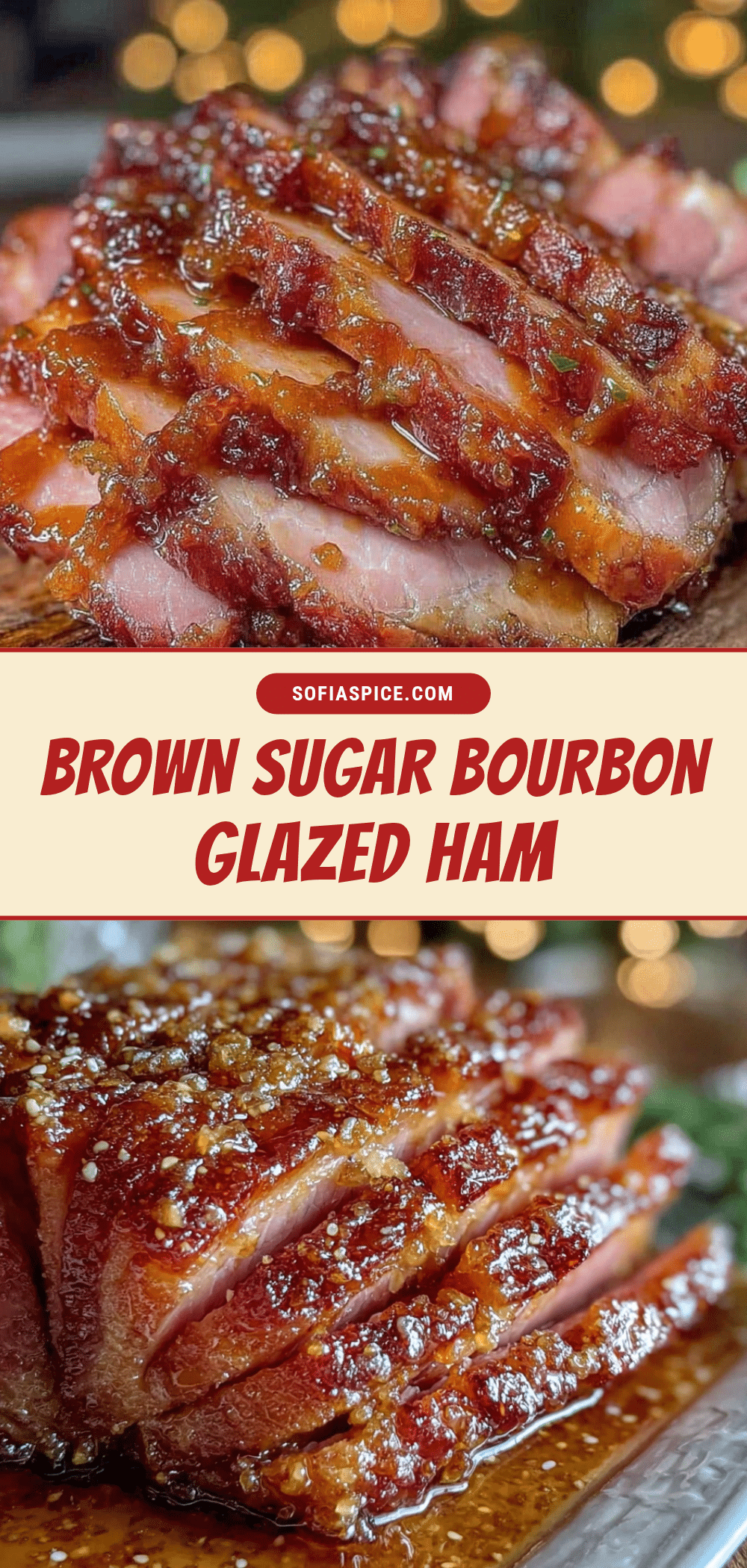
Perfect Brown Sugar Bourbon Glazed Ham Easy Small Batch Recipe
This small batch brown sugar bourbon glazed ham is the perfect centerpiece for an intimate holiday dinner. With a sticky, caramelized crust and tender, juicy meat, it’s a foolproof recipe that will convert even the biggest ham skeptics.
- Prep Time: 15 minutes
- Cook Time: 1 hour 10 minutes
- Total Time: 1 hour 25 minutes
- Yield: 4-6 servings 1x
- Category: Main Course
- Cuisine: American
Ingredients
- 1 (3-4 pound) fully cooked, bone-in spiral-cut ham
- Whole cloves (optional, about 20-30)
- 1 cup packed light brown sugar
- 1/3 cup bourbon
- 2 tablespoons Dijon mustard
- 2 tablespoons unsalted butter
- 1 tablespoon apple cider vinegar
- 1/2 teaspoon ground cinnamon
- 1/4 teaspoon ground nutmeg
- 1/4 teaspoon ground cloves (optional)
- Pinch of salt
Instructions
- Take the ham out of the refrigerator about 30 minutes before starting. Preheat the oven to 325°F (163°C). Position a rack in the lower third of the oven.
- If the ham isn’t pre-scored, use a sharp chef’s knife to make shallow cuts in a diamond pattern across the entire surface, about 1/4-inch deep.
- If using whole cloves, press one into the center of each diamond of the scored fat.
- Place the ham cut-side down on a rack in a roasting pan. Add about 1/2 cup of water to the bottom of the pan. Tightly cover the entire pan with aluminum foil. Bake for about 10 minutes per pound (30 minutes for a 3-pound ham, 40 minutes for a 4-pound ham).
- While the ham bakes, make the glaze. In a small saucepan over medium heat, combine the brown sugar, bourbon, Dijon mustard, butter, apple cider vinegar, cinnamon, nutmeg, ground cloves (if using), and salt. Whisk constantly until the butter is melted and the sugar is dissolved. Bring to a gentle simmer, then reduce heat to low and cook for 2-3 minutes until slightly thickened. Remove from heat.
- After the initial baking, remove the ham from the oven and carefully remove the foil. Brush about one-third of the glaze all over the surface of the ham, getting it into the scored cuts.
- Return the ham to the oven, uncovered, and bake for another 20 minutes at 325°F (163°C).
- Remove the ham from the oven and brush on another third of the glaze.
- Increase the oven temperature to 425°F (218°C). Return the ham to the oven, uncovered, and bake for another 10-15 minutes, watching closely to prevent burning, until the glaze is bubbly, dark, and caramelized.
- Insert an instant-read thermometer into the thickest part of the ham away from the bone. The internal temperature should be at least 140°F (60°C). Remove from the oven and let rest for 15-20 minutes. Brush on the remaining third of the glaze.
- If using a spiral-cut ham, slice along the pre-cut lines. If not, carve thin slices against the grain. Spoon pan juices over the slices before serving.
Notes
Don’t overcook the ham; since it’s fully cooked, you’re just reheating it. Glaze in stages for a thick, caramelized crust. Watch the high-heat finish closely to prevent burning. Use the pan juices to spoon over sliced ham. The glaze can be made up to 3 days in advance.
Nutrition
- Serving Size: 4 ounces
- Calories: 375
- Sugar: 20
- Sodium: 1100
- Fat: 17.5
- Saturated Fat: 7
- Carbohydrates: 22.5
- Protein: 27.5
Keywords: brown sugar bourbon glazed ham, small batch ham, holiday ham, Easter ham, Christmas ham, glazed ham recipe