Introduction
It was 11:47 PM on a random Tuesday in mid-October, and I was staring into the fridge like it held the secrets to the universe. The craving hit me out of nowhere — not for candy, not for something sweet, but for something savory and ridiculous. I wanted pizza, but not just any pizza. I wanted a pizza that looked like it crawled out of a haunted house. The problem? I didn’t have any fancy Halloween cookie cutters or special food coloring. But I had pizza dough, a block of mozzarella, and a bag of pepperoni that was dangerously close to its expiration date. And then it hit me — what if the pepperoni became the spider legs?
Honestly, I almost talked myself out of it. It was late, I was tired, and the idea felt a little unhinged. But something about the late-night quiet made me bold. I grabbed the dough, stretched it out on my slightly warped baking sheet (the one that’s been through three moves), and started arranging pepperoni slices in a pattern I’d never tried before. My kitchen looked like a crime scene of flour and cheese by the time I was done, but when I pulled that pizza out of the oven at 12:34 AM, I let out a laugh that probably woke my neighbor’s dog.
The spiderweb had formed perfectly — a delicate lattice of melted cheese stretching between pepperoni legs. It was creepy, it was delicious, and it was mine. I stood there eating a slice over the sink (don’t judge, you’ve been there), and I knew this wasn’t just a one-off experiment. This was the Halloween dinner I’d been looking for — something that actually makes kids (and adults) do a double-take before taking a bite. Maybe you’ve had that moment where a recipe feels like a discovery rather than a repeat. That’s this pizza for me.
Why You’ll Love This Recipe
Let me tell you why this spooky spiderweb pizza has become my go-to Halloween dish — and why it’ll become yours too. I’ve tested this recipe four times now, tweaking the cheese ratio and the pepperoni placement until it was just right. The first attempt? The web collapsed into a cheese puddle. The second? Too much sauce, not enough structure. But by the third try, I had it dialed in. This is the version that works every single time.
- Quick & Easy: From fridge to table in under 30 minutes. Perfect for those chaotic Halloween evenings when you’re juggling costumes, candy bowls, and excited kids.
- Simple Ingredients: You probably already have everything in your kitchen. No special Halloween-themed products needed — just good old pizza staples.
- Perfect for Halloween Parties: Whether it’s a school party, a neighborhood gathering, or just a spooky movie night at home, this pizza gets more “wows” than any store-bought treat.
- Crowd-Pleaser: I’ve served this to kids who normally pick off the pepperoni and adults who claim they’re “not into themed food.” Everyone eats it. Everyone loves it.
- Unbelievably Delicious: Here’s the thing — it’s not just a gimmick. The way the pepperoni crisps up around the edges while the cheese web gets those perfect browned spots? That’s real flavor chemistry happening.
What makes this recipe different from every other Halloween pizza out there is the technique. Instead of using string cheese or pre-made webs that fall apart, we’re building the spiderweb directly into the cheese layer during baking. The pepperoni legs aren’t just decoration — they actually create little pockets of crispy, salty goodness that contrast with the gooey cheese. It’s not just a pretty face; it’s structurally sound pizza engineering.
This is the kind of recipe that makes you close your eyes after the first bite. It’s comfort food with a spooky twist — familiar enough for picky eaters, but surprising enough to feel special. Perfect for impressing Halloween guests without spending hours in the kitchen, or turning a simple weeknight dinner into something your family will talk about for weeks.
What Ingredients You Will Need
This recipe uses simple, honest ingredients to create something that looks complicated but isn’t. The magic is all in the arrangement, not in fancy components. Here’s what you’ll need to gather:
For the Pizza Base
- 1 pound store-bought pizza dough (I prefer Trader Joe’s or Whole Foods brand for consistent results), at room temperature
- 1/2 cup pizza sauce (Rao’s is my go-to for its rich flavor, but any good-quality brand works)
- 2 cups shredded low-moisture mozzarella cheese (Sargento or Kraft both melt beautifully)
- 1/4 cup grated Parmesan cheese (adds that salty, nutty depth)
- 1 tablespoon olive oil (for brushing the crust)
- 1/2 teaspoon garlic powder
- 1/2 teaspoon dried oregano
For the Spiderweb Design
- 20-24 slices of pepperoni (look for larger slices if possible — they make better “spider bodies”)
- 1/4 cup additional shredded mozzarella (for creating the web strands)
- 2 tablespoons of shredded mozzarella, separated into thin strands (this is your “web material”)
For the Spider Decoration
- 2 whole black olives (for the spider bodies on top)
- 8 thin strips of black olive (for the spider legs — these are optional but add a nice touch)
Ingredient Tips from My Kitchen: If you’re using homemade pizza dough, make sure it’s had time to come to room temperature — cold dough is impossible to stretch without tearing. I learned this the hard way at 1 AM when my dough kept snapping back like a rubber band. For the cheese, skip the pre-shredded bags if you can; they contain anti-caking agents that prevent proper melting. Shred your own mozzarella from a block — it makes a noticeable difference in how the web forms.
For a gluten-free version, use your favorite gluten-free pizza dough blend. I’ve had good results with Caputo Fioreglut flour blend. For dairy-free, substitute with Violife or Miyoko’s mozzarella shreds — just note that the web effect won’t be as dramatic since dairy-free cheese melts differently.
If pepperoni isn’t your thing (though honestly, why wouldn’t it be?), you can use slices of salami or even thin rounds of zucchini for a vegetarian option. The key is having something round that can act as the “spider body” at the center of each web section.
Equipment Needed

You don’t need much for this recipe, and I’ve found workarounds for almost everything. Here’s what I use:
- Baking sheet or pizza pan: A standard 12×17-inch baking sheet works perfectly. If you have a pizza stone, even better — it’ll give you a crispier bottom crust.
- Parchment paper: Absolute lifesaver for transferring the pizza and for easy cleanup. Trust me on this one.
- Rolling pin: Or a wine bottle in a pinch. I’ve used both.
- Pizza cutter or sharp knife: For cutting the finished pizza without disturbing the web design.
- Small offset spatula: Great for spreading sauce evenly without tearing the dough. A regular spoon works too, just be gentle.
- Kitchen shears: For snipping the olive strips into spider legs. Regular scissors work if they’re clean.
I picked up my baking sheet at a restaurant supply store for about $12, and it’s been through dozens of pizzas. If you’re just starting out, any rimmed baking sheet will do — just don’t use a non-stick one at high heat, as the coating can degrade. And honestly? That warped sheet I mentioned earlier? It still works fine. Equipment doesn’t have to be perfect.
Preparation Method
Alright, let’s make some pizza magic. I’ve broken this down into steps that even a midnight-snack-craving zombie could follow.
- Preheat your oven to 475°F (245°C). Place a rack in the lower third of the oven. If you have a pizza stone, put it in now to heat up. This high heat is crucial for getting that crispy crust and properly melted cheese web.
- Prepare your work surface. Lightly flour a large piece of parchment paper. Place your pizza dough in the center and let it rest for 5 minutes if it’s fighting you (dough gets stubborn when it’s cold).
- Stretch the dough. Using your fingertips, gently press the dough into a rough circle or rectangle — whatever shape your baking sheet is. Then use a rolling pin to roll it out to about 1/4-inch thickness. Don’t worry if it’s not perfectly round; spiderwebs aren’t perfect either. Aim for a size that fits your baking sheet with a little extra for the crust.
- Transfer to baking sheet. Slide the parchment paper with the dough onto your baking sheet. If you’re using a pizza stone, skip the sheet and slide the parchment directly onto the hot stone.
- Create the crust edge. Fold the outer edge of the dough over itself to create a thicker rim, about 1 inch wide. Pinch it gently to seal. This rim will hold everything in and give you that satisfying crunch.
- Add the sauce. Spread the pizza sauce evenly over the dough, leaving the rim bare. Use the back of a spoon or your offset spatula. You want a thin, even layer — too much sauce will make the pizza soggy and the web won’t form properly.
- Layer the cheese. Sprinkle the shredded mozzarella evenly over the sauce. Don’t go too heavy here — you want to see hints of sauce through the cheese. This is where the web will form.
- Arrange the pepperoni spiders. Place 6-8 pepperoni slices around the pizza in a ring, about 2 inches from the edge. Space them evenly. These will be your “spider bodies.” Place another ring of pepperoni slices closer to the center, staggering them between the outer ring. Leave the very center empty — that’s where your main spider will go.
- Create the web strands. Here’s the trick: take small pinches of the extra mozzarella and gently stretch them into thin strands. Lay these strands from the center of the pizza outward, connecting to each pepperoni slice. Create 6-8 strands that radiate out like spokes on a wheel. Then, create curved connecting strands between the pepperoni slices, mimicking the spiral pattern of a spiderweb. Don’t overthink this — organic, slightly messy webs look more authentic.
- Season and oil. Brush the exposed crust with olive oil. Sprinkle the garlic powder and dried oregano over the entire pizza, including the cheese web.
- Bake for 12-15 minutes. The pizza is done when the crust is golden brown, the cheese is bubbly and browned in spots, and the pepperoni has crispy edges. The web strands should be visibly darker and slightly crispy.
- Add the finishing touches. While the pizza is still hot, place the black olive “spiders” on top. For each spider, use half an olive for the body and arrange 4 thin olive strips on each side for legs. I like to place one large spider in the center and smaller ones on the pepperoni “bodies.”
- Let it rest for 3 minutes. I know it’s hard, but cutting into it immediately will make the cheese slide off. Those 3 minutes allow the structure to set.
- Cut and serve. Use a sharp pizza cutter to slice between the pepperoni spiders, preserving the web design in each slice. Serve warm and watch everyone’s faces light up.
Cooking Tips & Techniques
Let me save you from the mistakes I made. The first time I tried this, I used too much cheese and the web just melted into a blob — looked more like a cheese flood than a spiderweb. The key is restraint. You want enough cheese to cover the sauce, but not so much that the web strands disappear into a sea of mozzarella.
Another thing I learned the hard way: don’t open the oven door during the first 10 minutes of baking. That blast of cold air can cause the cheese to seize up and the web structure to collapse. Let the heat do its work. If you’re worried about burning, use the oven light to check progress.
The pepperoni placement matters more than you’d think. If you put them too close together, they’ll merge into one giant pepperoni mass during baking. Leave at least an inch between each slice. And here’s a pro tip: slightly overlap the edges of the pepperoni with the cheese web strands. As they bake, they’ll fuse together, creating those beautiful crispy connections.
For the crispiest crust, I’ve started preheating my baking sheet in the oven for 5 minutes before sliding the pizza onto it. That initial burst of heat from the bottom creates a restaurant-quality crunch. Just be careful — that sheet is hot. Use oven mitts.
One more thing: if your web strands aren’t showing up as clearly as you’d like after baking, try using a mix of mozzarella and provolone. Provolone browns faster and creates more visible web lines. I discovered this by accident when I ran out of mozzarella and had to improvise. Happy accidents, right?
Variations & Adaptations
This recipe is surprisingly flexible. Here are some ways I’ve adapted it for different occasions and dietary needs:
Vegetarian Spiderweb Pizza: Skip the pepperoni and use thick slices of portobello mushroom or roasted red pepper as the “spider bodies.” The mushroom version has this earthy, meaty texture that even pepperoni lovers will enjoy. I made this for my vegetarian friend Sarah, and she asked for the recipe twice.
Spicy Version: Use spicy pepperoni and add red pepper flakes to the sauce. For an extra kick, drizzle sriracha in a web pattern over the cheese before baking. My brother-in-law requests this version every Halloween — he says it “bites back.”
White Pizza Spiderweb: Skip the red sauce entirely and use a base of ricotta mixed with garlic and herbs. The white-on-white look is actually more striking for the web effect. I tried this last year and it was a surprise hit — the ricotta base makes the web strands stand out even more.
Dessert Spiderweb Pizza: Yes, really. Use a sweet pizza dough, spread with Nutella, and create the web with a cream cheese and powdered sugar mixture. Use strawberry slices for the spider bodies. It’s ridiculous and wonderful. I made this for a Halloween brunch and the kids lost their minds.
Gluten-Free Adaptation: Use a gluten-free pizza dough mix. I’ve found that the web effect works best with a slightly thicker dough since gluten-free crusts tend to be more delicate. Add an extra minute or two to the baking time.
Serving & Storage Suggestions
This pizza is best served fresh from the oven, when the cheese web is still perfectly defined and the pepperoni is at its crispiest. I like to serve it on a black platter or a wooden board — the contrast makes the spiderweb pop. Cut it into wedges between the pepperoni spiders so each slice has one complete “web section” with a spider in the corner.
For a Halloween party spread, pair this pizza with a bowl of “witches’ brew” punch (lime sherbet and ginger ale), some “mummy” hot dogs (wrapped in crescent roll strips), and a plate of “ghost” bananas (banana halves with mini chocolate chip eyes). The theme carries through the whole meal without being overwhelming.
If you have leftovers (which honestly, rarely happens in my house), store them in an airtight container in the refrigerator for up to 3 days. The web will soften, but the flavor is still fantastic. To reheat, I recommend using a skillet over medium heat for 3-4 minutes — this re-crisps the bottom crust without making the cheese rubbery. The microwave works in a pinch, but the crust will be chewy rather than crispy.
Here’s a secret: cold pizza the next morning is actually amazing. The flavors have melded together, and the pepperoni has this incredible texture. I may or may not have eaten leftover spiderweb pizza for breakfast more than once. No regrets.
Nutritional Information & Benefits
Let’s be real — this is pizza, not a salad. But it’s not as bad as you might think. Here’s the estimated breakdown for one slice (based on 8 slices total):
- Calories: 320-350
- Protein: 15-18 grams
- Carbohydrates: 32-36 grams
- Fat: 14-17 grams
- Fiber: 2-3 grams
- Sodium: 680-720 mg
The mozzarella provides a good amount of calcium and protein, while the tomato sauce offers lycopene — an antioxidant linked to heart health. The olive oil adds healthy monounsaturated fats. And honestly? The mental health benefits of eating something this fun are probably worth more than any nutritional downside.
If you’re watching your sodium, look for low-sodium pepperoni and use a reduced-sodium pizza sauce. For a lower-carb option, use a cauliflower pizza crust — just note that the web effect works best with a sturdier base. I’ve tried it with a thin cauliflower crust and the web held up, but the crust was a bit fragile for lifting.
This recipe contains gluten and dairy. For allergen-friendly versions, see the variations section above.
Conclusion
Look, I know Halloween can be overwhelming. Between the costume planning, the candy buying, and the pressure to make everything “spooktacular,” it’s easy to lose sight of what matters — having fun and sharing good food with people you love. This spiderweb pizza cuts through all that noise. It’s simple enough to make on a Tuesday night when you’re tired and craving something ridiculous. It’s impressive enough to serve at a party where everyone’s taking photos for Instagram. And it’s delicious enough that people will ask for the recipe before they even finish their first slice.
I’ve made this pizza for my nephew’s Halloween party, for a potluck with friends, and for myself at midnight when I couldn’t sleep. Each time, it delivers. There’s something deeply satisfying about pulling a pizza out of the oven that looks like it belongs in a haunted forest. And the best part? You made that. With your hands. In your kitchen.
So go ahead — give it a try. Customize it with your favorite toppings, mess up the web pattern, make it your own. I’d love to hear how it turns out. Drop a comment below and tell me about your spiderweb pizza adventures. Did the kids love it? Did you add extra spiders? Did you, like me, eat a slice over the sink at midnight? Share your stories — I’m genuinely curious.
Until next time, keep your ovens hot and your spirits spooky.
Frequently Asked Questions
Can I make this pizza ahead of time for a party?
You can prepare the dough and have all your ingredients ready ahead of time, but I recommend baking the pizza just before serving. The spiderweb effect is most dramatic when fresh from the oven. If you absolutely need to make it in advance, bake it, let it cool completely, and reheat in a 350°F oven for 5-7 minutes.
Why didn’t my cheese web form properly?
The most common reasons are using too much cheese (which causes everything to melt into one blob), not stretching the web strands thin enough, or opening the oven door too early. Try using less cheese overall and making your strands as thin as possible — think spider silk, not spider rope.
Can I use pre-shredded cheese?
You can, but the results won’t be as good. Pre-shredded cheese contains anti-caking agents like cellulose or starch that prevent it from melting smoothly. For the best web effect, shred your own cheese from a block of low-moisture mozzarella. It takes two extra minutes and makes a noticeable difference.
How do I make the spider legs look realistic?
Use thin strips of black olive for the legs — about 1/8 inch wide and 1 inch long. Arrange four on each side of the olive body, slightly curving them to look like spider legs. If you want extra creepiness, use kitchen shears to create tiny “joints” in the olive strips. It’s a small detail that makes a big impact.
Can I freeze this pizza?
Yes! Bake the pizza completely, let it cool, then wrap it tightly in plastic wrap and aluminum foil. Freeze for up to 2 months. To reheat, place the frozen pizza directly on a baking sheet in a 375°F oven for 12-15 minutes. The web won’t be as crisp as fresh, but the flavor will still be fantastic. I’ve done this for last-minute Halloween emergencies and it works beautifully.
Pin This Recipe!
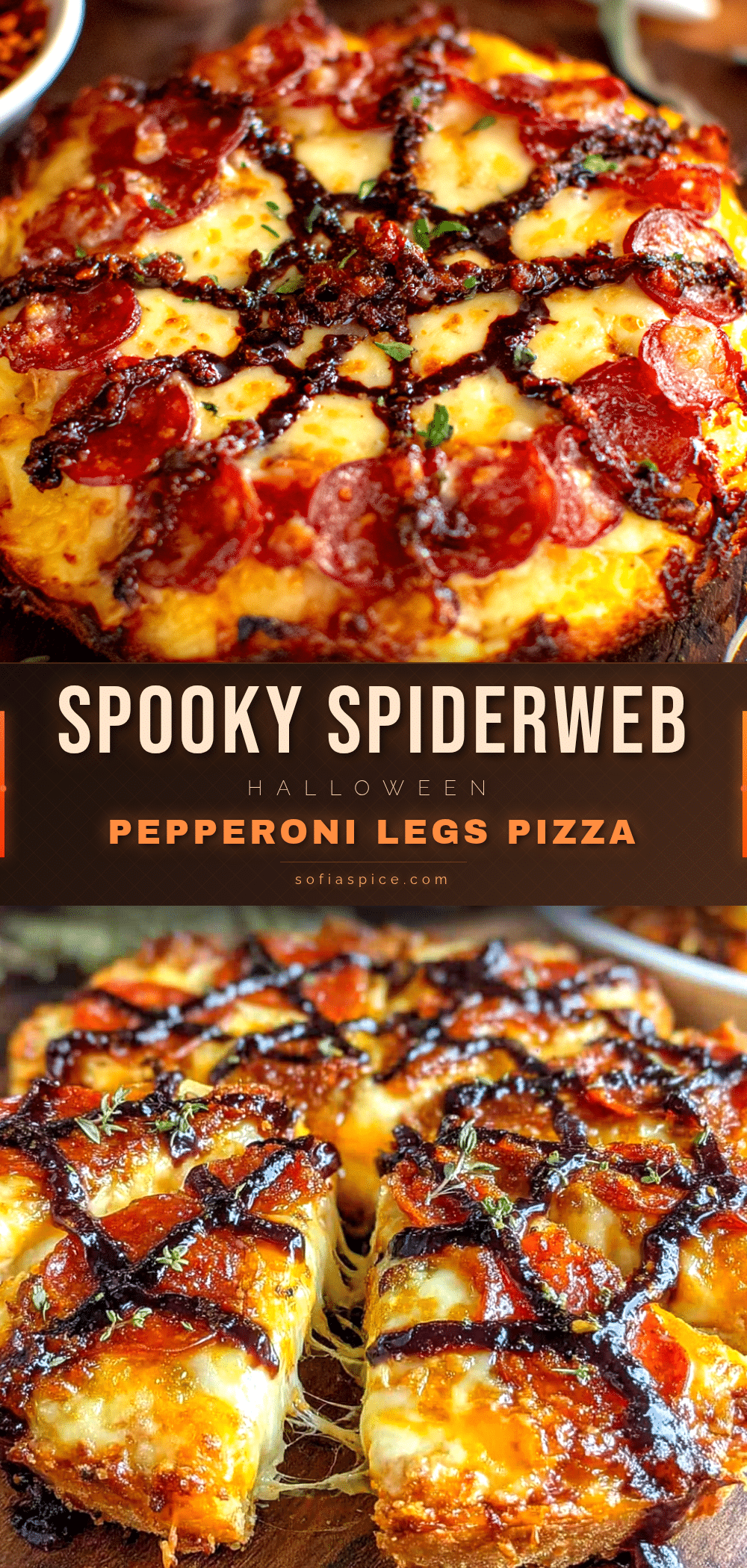
Spooky Spiderweb Pizza: Easy Pepperoni Legs for Halloween
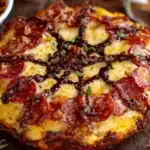
A fun and delicious Halloween pizza featuring a spiderweb design made from cheese and pepperoni legs. Quick to prepare with simple ingredients, it’s perfect for parties and weeknight dinners.
- Prep Time: 15 minutes
- Cook Time: 15 minutes
- Total Time: 30 minutes
- Yield: 8 servings 1x
- Category: Main Course
- Cuisine: American
Ingredients
- 1 pound store-bought pizza dough, at room temperature
- 1/2 cup pizza sauce
- 2 cups shredded low-moisture mozzarella cheese
- 1/4 cup grated Parmesan cheese
- 1 tablespoon olive oil
- 1/2 teaspoon garlic powder
- 1/2 teaspoon dried oregano
- 20–24 slices pepperoni
- 1/4 cup additional shredded mozzarella (for web strands)
- 2 tablespoons shredded mozzarella, separated into thin strands
- 2 whole black olives (for spider bodies)
- 8 thin strips of black olive (for spider legs)
Instructions
- Preheat oven to 475°F (245°C). Place rack in lower third of oven.
- Lightly flour a large piece of parchment paper. Place pizza dough in center and let rest 5 minutes if needed.
- Stretch dough into a rough circle or rectangle about 1/4-inch thick.
- Transfer parchment with dough onto a baking sheet.
- Fold outer edge of dough over to create a 1-inch rim.
- Spread pizza sauce evenly over dough, leaving rim bare.
- Sprinkle shredded mozzarella evenly over sauce.
- Arrange 6-8 pepperoni slices in a ring about 2 inches from edge. Place another ring closer to center, staggering them. Leave center empty.
- Take small pinches of extra mozzarella and stretch into thin strands. Lay strands from center outward to each pepperoni slice, creating 6-8 spokes. Add curved connecting strands between pepperoni slices.
- Brush crust with olive oil. Sprinkle garlic powder and oregano over entire pizza.
- Bake for 12-15 minutes until crust is golden, cheese is bubbly, and pepperoni is crispy.
- While hot, place black olive spiders on top: half olive for body, 4 thin strips on each side for legs.
- Let rest 3 minutes before cutting.
- Cut between pepperoni spiders to preserve web design. Serve warm.
Notes
For best results, shred your own mozzarella from a block. Avoid opening oven door during first 10 minutes of baking. Let pizza rest 3 minutes before cutting to allow structure to set.
Nutrition
- Serving Size: 1 slice
- Calories: 335
- Sugar: 3
- Sodium: 700
- Fat: 15.5
- Saturated Fat: 6
- Carbohydrates: 34
- Fiber: 2.5
- Protein: 16.5
Keywords: Halloween pizza, spiderweb pizza, pepperoni pizza, spooky pizza, easy Halloween recipe