“You’re making that again?” my husband asked, peeking over my shoulder at the brisket sitting on the counter. It wasn’t a complaint—more like a happy observation. And he was right. This slow cooker corned beef and cabbage had become our March tradition, even when March felt like a million miles away.
I first made this recipe on a whim. I’d grabbed a corned beef brisket on sale after St. Patrick’s Day, feeling slightly ridiculous buying discounted holiday meat. But something about that brined, pink slab of beef felt like a challenge. Could I actually make it taste as good as the stuff from the old Irish pub downtown? The one with the dark wood booths and waitresses who called you “hon”?
The first attempt was, honestly, a little dry. The second was better. By the third try, I had it dialed in. The secret? Low and slow in the slow cooker, with just enough liquid to keep things moist without drowning the meat. And the cabbage? You don’t add it until the very end. That was my lightbulb moment—mushy cabbage is a tragedy, and I was done committing it.
Now, this tender slow cooker corned beef with cabbage and carrots is the recipe I turn to when I need something that feels special but requires almost no effort. It fills the house with that warm, peppery aroma that says someone is taking care of dinner. And honestly, that’s the best kind of cooking.
Why You’ll Love This Recipe
This isn’t just another corned beef recipe. I’ve tested this method more times than I care to count, tweaking the liquid ratio, the spice packet timing, and the vegetable placement until everything clicked. Here’s why this version stands out:
- Set It and Forget It : The slow cooker does all the heavy lifting. You get that fall-apart tender meat without hovering over a pot all day.
- Perfect Texture Every Time : The beef cooks low and slow for hours, then the cabbage and carrots go in during the last hour. They stay tender-crisp, not limp and sad.
- Simple Ingredients : A corned beef brisket, a spice packet, some mustard, brown sugar, and basic veggies. Nothing fancy, nothing hard to find.
- Company-Worthy : This looks impressive on a platter, but it’s secretly one of the easiest things you can make. Perfect for St. Patrick’s Day or a cozy Sunday dinner.
- Leftovers Are Magic : Cold corned beef sandwiches the next day? Yes, please. And the cabbage reheats beautifully, too.
What makes this recipe different is the balance. The brown sugar and mustard create a subtle glaze that contrasts the salty, peppery beef. The vegetables cook in the seasoned liquid, absorbing all that flavor without turning to mush. It’s comfort food that actually works—not just a nostalgic idea that falls flat on the plate.
What Ingredients You Will Need
This recipe relies on a short list of ingredients, each playing a specific role. Here’s what you need and why each one matters.
- Corned beef brisket (3-4 pounds) — Look for a flat-cut brisket for even cooking. The point cut is fattier and works too, but flat-cut slices more neatly. I usually grab whatever brand is on sale, but I’ve had good luck with the store-brand briskets, honestly.
- Spice packet (included with brisket) — Most corned beef comes with a little packet of pickling spices. Use it. It’s perfectly calibrated for the meat. If yours doesn’t come with one, you can use about 2 tablespoons of store-bought pickling spice.
- Yellow mustard (2 tablespoons) — This isn’t for flavor dominance. It helps the brown sugar and spices stick to the meat and adds a subtle tang that cuts through the richness.
- Brown sugar (¼ cup, packed) — Just enough sweetness to balance the saltiness of the brine. Light or dark brown sugar both work; dark gives a slightly deeper flavor.
- Beef broth (1 cup) — Adds moisture and depth. You can use water in a pinch, but broth gives the meat and veggies more flavor.
- Garlic cloves (4-5, smashed) — They soften and mellow as they cook, infusing the liquid with gentle garlic flavor.
- Bay leaves (2) — A subtle herbal note that complements the pickling spices.
- Whole black peppercorns (1 teaspoon) — Adds a mild heat that builds as the meat cooks.
- Small red potatoes (1.5 pounds) — Waxy potatoes hold their shape better than starchy ones. Halve or quarter them so they cook evenly.
- Carrots (1 pound, peeled and cut into 2-inch chunks) — Thick enough to stay firm, thin enough to absorb the seasoned broth.
- Green cabbage (1 medium head, cut into 6-8 wedges) — Keep the core intact on each wedge so the leaves stay together during cooking.
Ingredient Tips: If you want to go low-sodium, look for a “low-sodium” corned beef brisket, though they’re harder to find. For a gluten-free version, double-check your spice packet—some brands use fillers. Most are fine, but it’s worth a look. And if you’re avoiding sugar, swap the brown sugar for coconut sugar or a sugar-free brown sugar alternative.
Equipment Needed
You don’t need much for this recipe, which is part of its charm.
- Slow cooker (6-quart or larger) — A 6-quart model fits a 3-4 pound brisket with room for the vegetables. If yours is smaller, you might need to cook the veggies separately.
- Cutting board and sharp knife — For trimming the brisket (if needed) and cutting the vegetables. A chef’s knife works great.
- Measuring cups and spoons — For the broth, mustard, and brown sugar.
- Tongs — For flipping the meat and removing it from the slow cooker without it falling apart.
- Fork — For testing doneness. The meat should shred easily.
- Large platter or serving dish — For presenting the sliced beef and vegetables.
If you don’t have a slow cooker, you can make this in a Dutch oven at 300°F for about 3-4 hours. The timing changes, but the result is similar. I’ve done both, and honestly, the slow cooker is easier for busy days.
Preparation Method
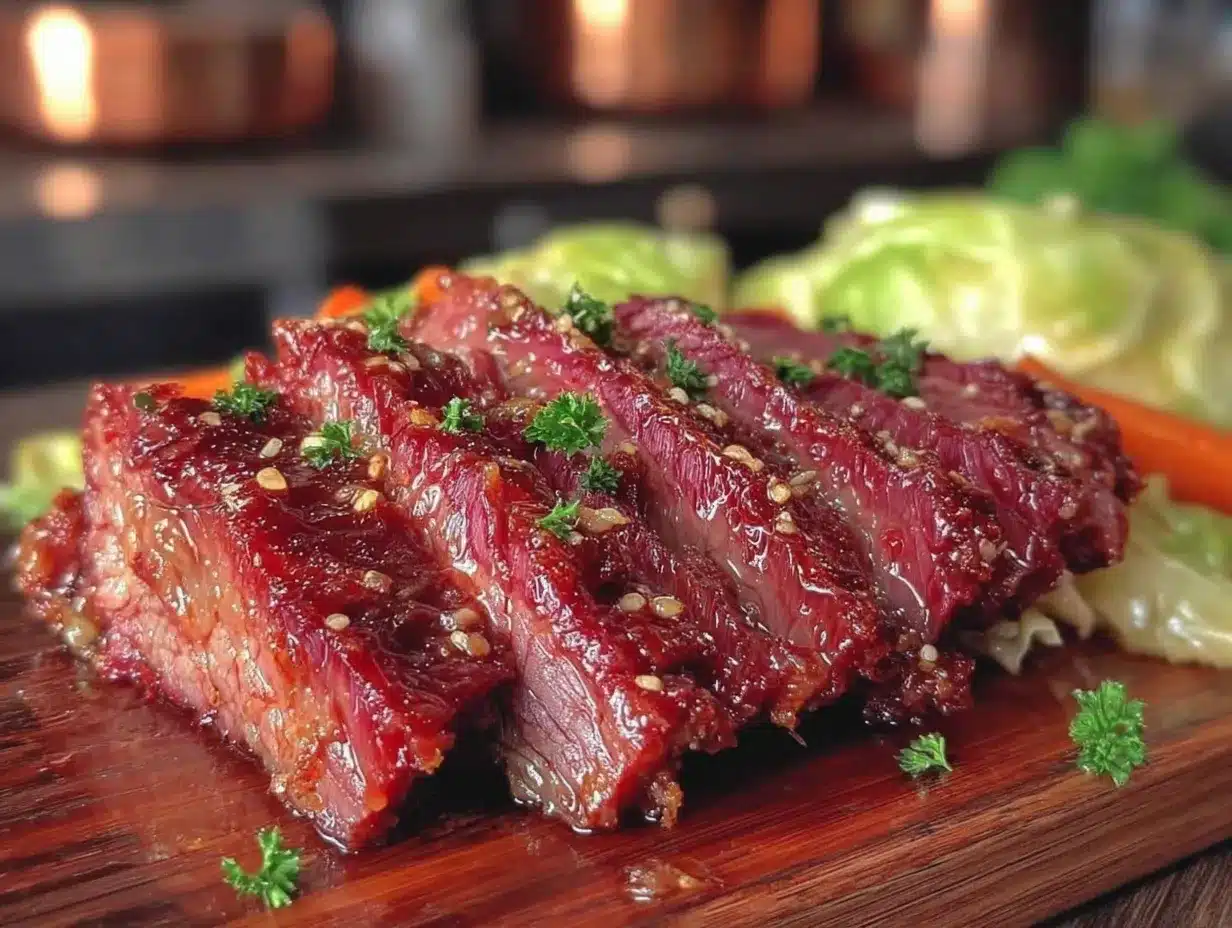
Let’s walk through this step by step. The active time is about 20 minutes, then the slow cooker does the rest.
- Rinse and pat dry the brisket. Take the corned beef out of its packaging and rinse it under cool water. This removes some of the surface salt. Pat it dry with paper towels. If there’s a thick fat cap, you can trim it to about ¼ inch, but I usually leave it—it adds flavor and moisture as it renders.
- Mix the rub. In a small bowl, combine the brown sugar, the contents of the spice packet, and the yellow mustard. Stir until it forms a thick paste. It won’t be perfectly smooth, and that’s fine.
- Coat the brisket. Place the brisket fat-side up on your cutting board. Spread the brown sugar-mustard mixture all over the top and sides. Don’t worry about the bottom—the fat cap will render and carry the flavor down. Use your hands or a spatula; hands are easier.
- Layer the aromatics. Place the smashed garlic cloves, bay leaves, and whole peppercorns in the bottom of the slow cooker. Set the seasoned brisket on top, fat-side up. Pour the beef broth around the sides, not directly over the rub, so you don’t wash it off.
- Cook low and slow. Cover and cook on LOW for 8-10 hours, or on HIGH for 4-5 hours. Low is better for tenderness. The meat is ready when it’s fork-tender and easily pulls apart. Don’t rush this step—low and slow is the whole point.
- Add the potatoes and carrots. About 1.5 hours before serving, add the potato chunks and carrot pieces to the slow cooker. Nestle them around the brisket, submerging them in the liquid as much as possible. Cover and continue cooking.
- Add the cabbage. About 45 minutes before serving, add the cabbage wedges to the slow cooker. Tuck them in around the meat and veggies. The cabbage will steam and soften, absorbing the seasoned broth. Don’t stir too much—you want the wedges to stay intact.
- Rest and slice. When everything is tender, carefully transfer the brisket to a cutting board. Let it rest for 10-15 minutes. This lets the juices redistribute. Slice against the grain into ¼-inch thick slices. If it starts to fall apart, that’s a good sign—it means it’s perfectly tender.
- Serve. Arrange the sliced beef on a platter with the potatoes, carrots, and cabbage wedges. Spoon a little of the cooking liquid over the top for extra moisture and flavor. Serve with your favorite mustard or horseradish on the side.
Sensory Cue: When the meat is done, it should feel like butter when you press it with a fork. The cabbage should be tender but still hold its shape—think al dente pasta, not mush. The potatoes should yield easily to a fork without falling apart.
Cooking Tips & Techniques
I’ve made this recipe enough times to know where things can go wrong. Here’s what I’ve learned:
- Don’t skip the rinse. That brining liquid is salty. If you don’t rinse the brisket, your final dish can be overwhelmingly salty. A quick rinse under cool water makes a huge difference.
- Fat-side up is non-negotiable. As the fat renders, it bastes the meat. If you cook it fat-side down, the meat can dry out. Trust me on this one—I learned the hard way.
- Low and slow wins. High heat can make the meat tough. Cooking on LOW for 8-10 hours gives the connective tissue time to break down, resulting in that melt-in-your-mouth texture.
- Add cabbage late. This is the most common mistake. Cabbage only needs about 45 minutes to cook. If you add it at the beginning, you’ll end up with gray, mushy cabbage that nobody wants.
- Slice against the grain. Look at the lines running through the meat—that’s the grain. Slice perpendicular to those lines. If you slice with the grain, the meat will be chewy, no matter how tender it is.
- Use the liquid wisely. The cooking liquid is gold. Spoon it over the sliced meat before serving, or save it to moisten leftovers. You can even use it as a base for soup the next day.
Personal Failure: The first time I made this, I forgot to add the cabbage entirely. I served the beef and potatoes, then realized the cabbage was still sitting on the counter. I threw it in the microwave and served it steamed. It was fine, but not great. Now I set a timer on my phone for 45 minutes before serving so I never forget again.
Variations & Adaptations
This recipe is flexible. Here are some ways to change it up:
- Low-Carb/Keto : Skip the potatoes and add extra cabbage or turnips instead. The turnips absorb the broth flavor beautifully and have a similar texture to potatoes.
- Spicy Version : Add a teaspoon of red pepper flakes or a diced jalapeño to the cooking liquid. The heat pairs surprisingly well with the salty, savory beef.
- Beer-Braised : Replace the beef broth with a dark beer like Guinness or a stout. The beer adds depth and a slight bitterness that balances the sweetness of the brown sugar.
- Herb-Infused : Add a few sprigs of fresh thyme or rosemary to the slow cooker along with the garlic. The herbs add a layer of complexity that’s subtle but noticeable.
- Mustard-Lovers : Increase the yellow mustard to 3 tablespoons and add a tablespoon of whole-grain mustard to the rub. The mustard seeds add texture and a pop of flavor.
- Instant Pot Adaptation : Cook on high pressure for 90 minutes with a natural release. Add the potatoes and carrots for the last 10 minutes of pressure cooking, then quick-release and add the cabbage for 5 minutes on sauté mode.
I’ve tried the beer-braised version a few times, and it’s become my go-to for St. Patrick’s Day. The Guinness gives the broth a richness that plain broth just can’t match. If you’re serving a crowd, that’s the version to make.
Serving & Storage Suggestions
This dish is best served warm, straight from the slow cooker. Here’s how to make the most of it:
- Serving Temperature : Serve the beef and vegetables hot, with a little of the cooking liquid spooned over the top. A side of whole-grain mustard or creamy horseradish sauce is a classic pairing.
- Presentation : Arrange the sliced beef down the center of a large platter, with the potatoes, carrots, and cabbage wedges grouped around it. Sprinkle with fresh parsley for color.
- Complementary Dishes : This pairs beautifully with crusty bread (try this no-knead focaccia for dipping), a simple green salad, or a bowl of creamy tomato basil soup if you want a full spread.
- Storage : Store leftovers in an airtight container in the refrigerator for up to 4 days. The flavors actually meld and deepen overnight, so leftovers can taste even better the next day.
- Reheating : Reheat gently on the stovetop or in the microwave with a splash of the reserved cooking liquid or beef broth. Avoid high heat, which can dry out the meat.
- Freezing : The cooked beef freezes well for up to 3 months. Slice it first, then wrap tightly in plastic wrap and foil. The vegetables don’t freeze as well—they get mushy—so I usually freeze just the meat and make fresh veggies later.
Leftover Idea: Cold corned beef sandwiches on rye bread with Swiss cheese and Russian dressing are a classic for a reason. Or chop the beef and cabbage and fry it up with potatoes for a hash. Breakfast of champions.
Nutritional Information & Benefits
This is comfort food, but it has some surprising nutritional upsides. Here’s the estimated breakdown per serving (based on 8 servings):
| Nutrient | Amount Per Serving |
|---|---|
| Calories | 420 |
| Protein | 32g |
| Fat | 18g |
| Saturated Fat | 6g |
| Carbohydrates | 35g |
| Fiber | 6g |
| Sugar | 12g |
| Sodium | 1200mg |
Health Benefits: Corned beef is a good source of protein, iron, and B vitamins, especially B12. The cabbage is packed with vitamin C, vitamin K, and fiber. Carrots add beta-carotene and antioxidants. Potatoes provide potassium and vitamin C. It’s not a health food, but it’s a balanced meal with real nutritional value.
Dietary Considerations: This recipe is naturally gluten-free if you check your spice packet. It’s also dairy-free and nut-free. The main concern is sodium—the brining process makes corned beef naturally high in salt. If you’re watching your sodium, rinse the brisket well and consider using low-sodium broth.
Conclusion
This slow cooker corned beef with cabbage and carrots is the kind of recipe that makes you look like a hero without breaking a sweat. It’s forgiving, flexible, and consistently delicious. Whether you’re making it for St. Patrick’s Day, a family dinner, or just because you found a brisket on sale, it delivers.
What I love most about this recipe is how it fills the house with that warm, savory aroma that says someone is taking care of things. It’s the smell of a meal that’s been simmering all day, waiting for you to sit down and enjoy it. And when you take that first bite—tender, salty, slightly sweet, with that hint of spice—you’ll know it was worth every minute of the wait.
I’d love to hear how yours turns out! Drop a comment below and let me know if you tried any variations, or share a photo of your finished dish. And if you’re looking for more easy, comforting meals, check out this slow cooker butternut squash apple soup for another set-it-and-forget-it favorite.
Frequently Asked Questions
Can I use a different cut of beef for this recipe?
Corned beef is specifically a brined brisket. You can use a different cut if you brine it yourself, but for this recipe, stick with the pre-brined brisket. It’s what gives the dish its signature flavor and texture.
How do I know when the corned beef is done?
The meat should be fork-tender. Insert a fork into the thickest part—it should go in easily and the meat should start to pull apart. If it resists, it needs more time. On LOW, that’s usually 8-10 hours.
Can I cook this on HIGH instead of LOW?
Yes, but the texture won’t be as tender. High heat can make the meat tough. If you’re short on time, cook on HIGH for 4-5 hours, but LOW is always better for this cut of meat.
Why is my corned beef too salty?
You probably didn’t rinse it enough before cooking. The brining liquid is very salty. Rinse the brisket under cool water for at least 30 seconds, and pat it dry. If it’s still too salty, you can soak it in cold water for an hour before cooking.
Can I make this recipe in advance?
Absolutely. Cook the beef and vegetables as directed, then cool and refrigerate. Reheat gently on the stovetop or in the microwave with a splash of broth. The flavors actually improve overnight. Just don’t add the cabbage until you’re reheating—it gets mushy if it sits in the liquid too long.
Pin This Recipe!
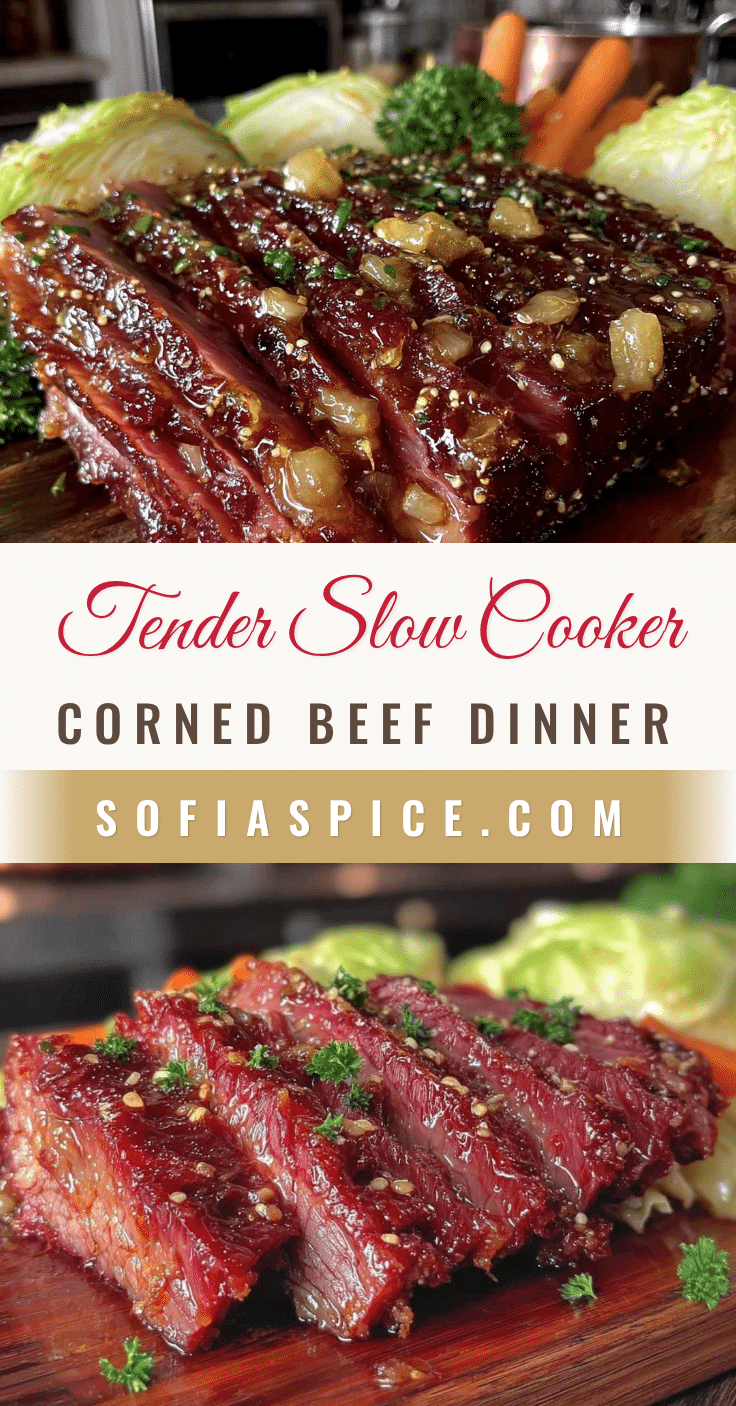
Best Slow Cooker Corned Beef & Cabbage Recipe
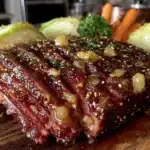
This tender slow cooker corned beef with cabbage and carrots is the recipe I turn to when I need something that feels special but requires almost no effort. It fills the house with that warm, peppery aroma that says someone is taking care of dinner.
- Prep Time: 20 minutes
- Cook Time: 8-10 hours (LOW) or 4-5 hours (HIGH)
- Total Time: 8 hours 20 minutes to 10 hours 20 minutes
- Yield: 8 servings
- Category: Main Course
- Cuisine: Irish-American
Ingredients
- Corned beef brisket (3-4 pounds)
- Spice packet (included with brisket)
- Yellow mustard (2 tablespoons)
- Brown sugar (¼ cup, packed)
- Beef broth (1 cup)
- Garlic cloves (4-5, smashed)
- Bay leaves (2)
- Whole black peppercorns (1 teaspoon)
- Small red potatoes (1.5 pounds)
- Carrots (1 pound, peeled and cut into 2-inch chunks)
- Green cabbage (1 medium head, cut into 6-8 wedges)
Instructions
- Rinse and pat dry the brisket. Take the corned beef out of its packaging and rinse it under cool water. This removes some of the surface salt. Pat it dry with paper towels. If there’s a thick fat cap, you can trim it to about ¼ inch, but I usually leave it—it adds flavor and moisture as it renders.
- Mix the rub. In a small bowl, combine the brown sugar, the contents of the spice packet, and the yellow mustard. Stir until it forms a thick paste. It won’t be perfectly smooth, and that’s fine.
- Coat the brisket. Place the brisket fat-side up on your cutting board. Spread the brown sugar-mustard mixture all over the top and sides. Don’t worry about the bottom—the fat cap will render and carry the flavor down. Use your hands or a spatula; hands are easier.
- Layer the aromatics. Place the smashed garlic cloves, bay leaves, and whole peppercorns in the bottom of the slow cooker. Set the seasoned brisket on top, fat-side up. Pour the beef broth around the sides, not directly over the rub, so you don’t wash it off.
- Cook low and slow. Cover and cook on LOW for 8-10 hours, or on HIGH for 4-5 hours. Low is better for tenderness. The meat is ready when it’s fork-tender and easily pulls apart. Don’t rush this step—low and slow is the whole point.
- Add the potatoes and carrots. About 1.5 hours before serving, add the potato chunks and carrot pieces to the slow cooker. Nestle them around the brisket, submerging them in the liquid as much as possible. Cover and continue cooking.
- Add the cabbage. About 45 minutes before serving, add the cabbage wedges to the slow cooker. Tuck them in around the meat and veggies. The cabbage will steam and soften, absorbing the seasoned broth. Don’t stir too much—you want the wedges to stay intact.
- Rest and slice. When everything is tender, carefully transfer the brisket to a cutting board. Let it rest for 10-15 minutes. This lets the juices redistribute. Slice against the grain into ¼-inch thick slices. If it starts to fall apart, that’s a good sign—it means it’s perfectly tender.
- Serve. Arrange the sliced beef on a platter with the potatoes, carrots, and cabbage wedges. Spoon a little of the cooking liquid over the top for extra moisture and flavor. Serve with your favorite mustard or horseradish on the side.
Notes
Don’t skip rinsing the brisket to reduce saltiness. Cook fat-side up for best results. Add cabbage late to avoid mushiness. Slice against the grain for tenderness. The cooking liquid can be used to moisten leftovers or as a soup base.
Nutrition
- Serving Size: 1 serving (approxima
- Calories: 420
- Sugar: 12
- Sodium: 1200
- Fat: 18
- Saturated Fat: 6
- Carbohydrates: 35
- Fiber: 6
- Protein: 32
Keywords: slow cooker corned beef, corned beef and cabbage, St. Patrick's Day, Irish dinner, brisket, cabbage, carrots, potatoes, comfort food