My husband took one bite of this miso butter roasted kabocha squash and literally stopped mid-sentence. He just sat there, fork hovering, with this confused look on his face like he was trying to figure out why a squash could taste this good. I had to laugh, honestly. I’d been testing side dishes for our fall dinner rotation, and this one was supposed to be just another recipe attempt. But the way he went back for thirds, muttering something about “savory caramel” between bites, I knew I’d stumbled onto something special.
I first fell in love with kabocha squash at a tiny Japanese restaurant in my neighborhood. They served it as a simple side, glazed with something sweet and salty, and I couldn’t stop thinking about it. The texture was unlike any squash I’d had before, creamy and dense like a cross between a sweet potato and a chestnut. I spent weeks trying to recreate that flavor at home, and the answer turned out to be simpler than I expected, just two ingredients that somehow make magic together.
Miso and butter. That’s it. The combination sounds almost too basic to work, but the umami from the miso deepens as it roasts, and the butter helps everything get those gorgeous caramelized edges. The kabocha squash itself does most of the heavy lifting. Its natural sweetness intensifies in the oven, and the skin becomes tender enough to eat, which means less prep work for you. This is the kind of side dish that makes you wonder why you haven’t been eating squash every single night.
Why You’ll Love This Recipe
I’ve made this miso butter roasted kabocha squash at least a dozen times now, tweaking the ratios and testing different temperatures. Here’s why I keep coming back to it, and why I think you will too.
- Quick & Easy: This comes together in about 35 minutes total. Ten minutes of prep, twenty-five minutes in the oven. That’s it. No peeling, no complicated steps, no stress.
- Simple Ingredients: You probably already have butter and miso paste in your fridge. The kabocha squash is the only thing you might need to pick up, and it’s becoming easier to find at regular grocery stores these days.
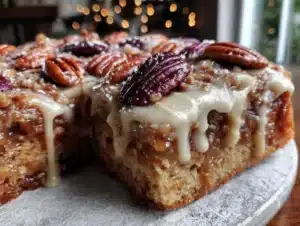
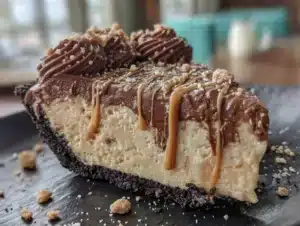
- Perfect for Fall Gatherings: This dish fits right in alongside a slow cooker butternut squash apple soup or a pumpkin pie cheesecake bar for dessert. It’s versatile enough for Thanksgiving or a random Tuesday.
- Crowd-Pleaser: I’ve served this to people who claimed they didn’t like squash. They changed their minds. The miso butter situation is that convincing.
- Unbelievably Delicious: The edges get all crispy and caramelized while the inside stays creamy and soft. The flavor is savory, slightly sweet, and deeply satisfying. It’s comfort food that happens to be pretty good for you.
What makes this recipe different from other roasted squash recipes is the technique. Instead of tossing everything together and hoping for the best, we brush the miso butter mixture onto the squash halfway through roasting. This lets the squash develop its own caramelized surface first, then the miso butter bakes into those crevices, creating layers of flavor you just can’t get from a simple toss.
Honestly, this recipe is the kind that makes you close your eyes after the first bite. It’s that good. And it’s so simple that you’ll find yourself making it on repeat, just like I do.
What Ingredients You Will Need
This recipe keeps things simple. You only need a handful of ingredients, and each one plays a specific role in creating that perfect balance of flavors. Let me walk you through what you’ll need and why each ingredient matters.
For the Squash:
- 1 medium kabocha squash (about 2 to 2.5 pounds) – Look for one that feels heavy for its size. The skin should be firm and free of soft spots. You don’t need to peel it, the skin becomes tender when roasted, and it adds a nice texture contrast.
- 2 tablespoons olive oil – This helps the squash roast evenly and get those golden edges. I use a good quality extra virgin here, but regular olive oil works fine too.
- Salt and pepper to taste – Keep it simple. A light sprinkle before roasting helps bring out the squash’s natural sweetness.
For the Miso Butter:
- 3 tablespoons unsalted butter, softened – I prefer unsalted so I can control the salt level. Let it sit at room temperature for about 15 minutes before you start.
- 2 tablespoons white miso paste – White miso (also called shiro miso) is milder and sweeter than red or brown miso. It blends beautifully with the butter without overpowering it. I like the Hikari brand, but any white miso will work.
- 1 tablespoon maple syrup – This adds a touch of sweetness that complements the miso’s saltiness. You can substitute honey if that’s what you have on hand.
- 1 teaspoon rice vinegar – A tiny splash of acid brightens everything up. Don’t skip this, it makes a difference.
- 1 clove garlic, minced – Fresh garlic adds a subtle punch that roasts into something mellow and sweet.
For Garnish (Optional but Recommended):
- Sesame seeds – Toasted white or black sesame seeds add a nice visual contrast and a nutty flavor.
- Thinly sliced green onions – A pop of color and freshness at the end.
- Flaky sea salt – A sprinkle right before serving adds a satisfying crunch.
If you don’t have white miso, you can use yellow miso, but start with a little less since it’s saltier. For a dairy-free version, use vegan butter or coconut oil. The texture will be slightly different, but the flavor will still be amazing. And if you can’t find kabocha squash, buttercup squash or even acorn squash work as substitutes. The cooking time might vary slightly, so keep an eye on them.
Equipment Needed
You don’t need any fancy equipment to make this miso butter roasted kabocha squash. Here’s what I use and what you can substitute if needed.
- Sharp chef’s knife – Kabocha squash is dense. A good sharp knife makes cutting it much safer and easier. I use an 8-inch chef’s knife, and it gets the job done without too much effort.
- Cutting board – A sturdy one that won’t slide around. Place a damp paper towel underneath to keep it steady.
- Large baking sheet – A rimmed baking sheet works best. The rim catches any miso butter that might drip off. I prefer a half-sheet pan for even roasting.
- Parchment paper or silicone baking mat – This makes cleanup so much easier. The miso butter can get sticky, and parchment paper prevents any burning on the pan.
- Small bowl – For mixing the miso butter. Any small bowl will do.
- Pastry brush or spoon – A pastry brush helps you spread the miso butter evenly, but you can also use the back of a spoon if you don’t have one.
- Measuring spoons – For accuracy, but honestly, I often eyeball the miso and butter now. You’ll get a feel for it.
If you don’t have a pastry brush, don’t worry. I’ve used a silicone spatula to spread the mixture, and it works just fine. The key is getting an even coating on each piece of squash.
Preparation Method
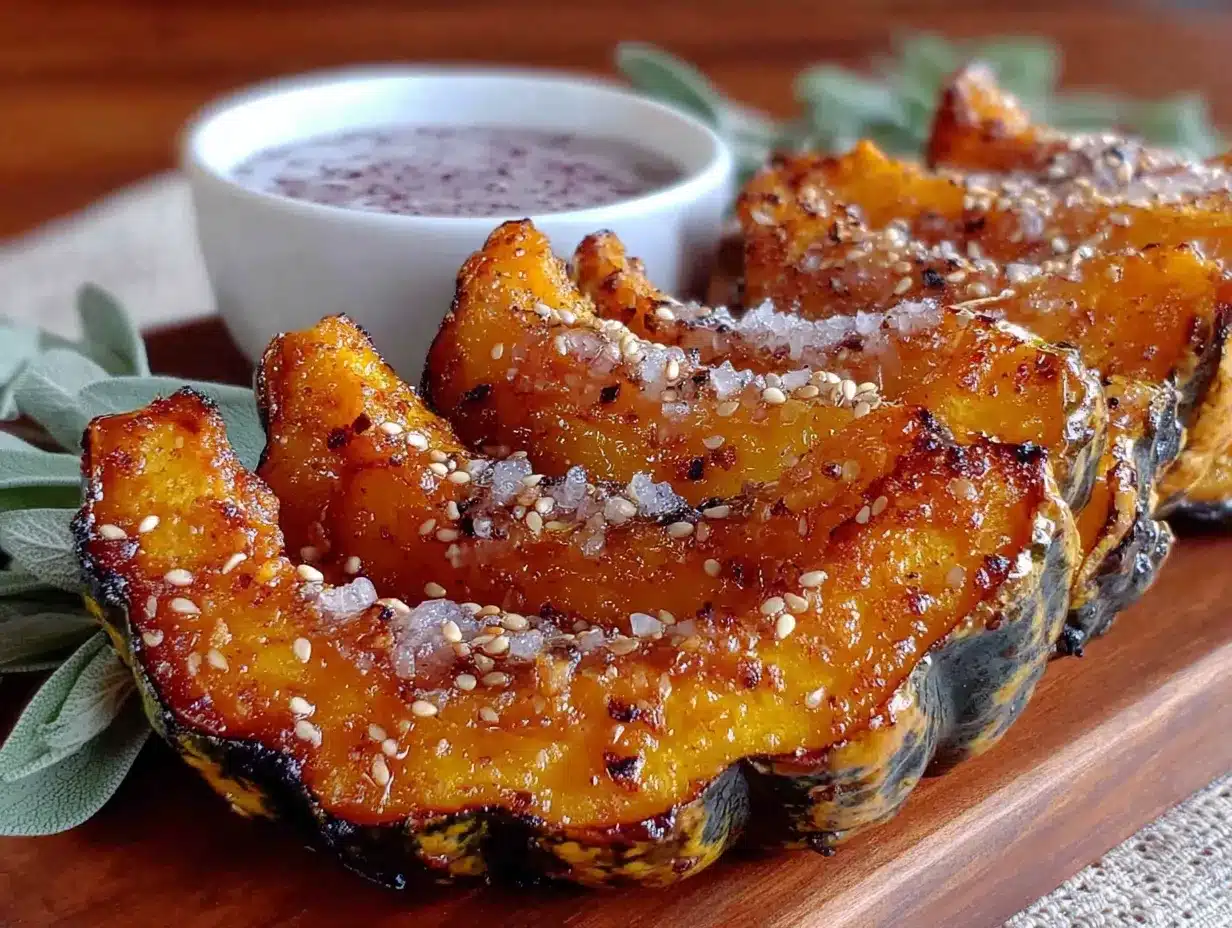
Let me walk you through this step by step. I’ve made this miso butter roasted kabocha squash enough times to know where things can go wrong, so I’ll share all my little tricks along the way.
- Preheat your oven to 400°F (200°C). Give it a good 15 minutes to come to temperature. A hot oven is crucial for getting those caramelized edges.
- Prepare the kabocha squash. Wash the outside of the squash well. You’re going to eat the skin, so you want it clean. Using your sharpest knife, carefully cut the squash in half from stem to bottom. This can take some effort, so go slowly and keep your fingers clear. Scoop out the seeds and stringy bits with a spoon. You can save the seeds to roast later if you want, they’re delicious.
- Slice the squash. Cut each half into 1-inch thick wedges. I like to cut them into crescent shapes, about 2 to 3 inches wide at the widest part. Try to keep them similar in size so they cook evenly. Don’t worry about being perfect, rustic is fine.
- Season the squash. Place the wedges on your prepared baking sheet. Drizzle with the olive oil and sprinkle with salt and pepper. Use your hands to toss everything gently, making sure each piece is coated. Arrange them in a single layer with some space between each piece. Crowding the pan will steam them instead of roasting them.
- Roast for 15 minutes. Pop the pan in the oven and set a timer. During this time, the squash will start to soften and the edges will begin to brown. The surface will look slightly dry, which is exactly what we want.
- Make the miso butter. While the squash roasts, combine the softened butter, white miso paste, maple syrup, rice vinegar, and minced garlic in a small bowl. Mash everything together with a fork until it forms a smooth, creamy paste. Taste it. It should be savory, slightly sweet, and a little salty. Adjust if needed.
- Brush on the miso butter. After 15 minutes, pull the pan out of the oven. Using your pastry brush or a spoon, spread a generous amount of the miso butter mixture over each piece of squash. Don’t be shy with it. The butter will melt into the crevices and create that amazing glaze. Flip each piece and brush the other side too.
- Roast for another 10 to 12 minutes. Return the pan to the oven and roast until the squash is tender when pierced with a fork and the edges are deeply caramelized. The miso butter will bubble and darken slightly, that’s good. Keep an eye on it toward the end so it doesn’t burn.
- Finish and serve. Remove the pan from the oven. Let the squash rest for 2 to 3 minutes. The miso butter will set slightly, making the glaze even more beautiful. Transfer to a serving platter and sprinkle with sesame seeds, sliced green onions, and a pinch of flaky sea salt if you’re using them.
A few things I’ve learned the hard way: If your squash is particularly large, it might need an extra 5 minutes. Check for doneness by piercing the thickest part with a fork. It should slide in easily with no resistance. And if the miso butter starts to smell too toasty before the squash is done, you can loosely tent the pan with foil for the last few minutes.
Cooking Tips & Techniques
I’ve made this miso butter roasted kabocha squash enough times to have a few mishaps along the way. Here are the tips I wish someone had told me before I started.
Don’t skip the first roast without miso butter. I made this mistake once. I brushed the miso butter on from the start, thinking it would save time. The butter burned before the squash was fully cooked. Giving the squash a head start allows it to develop its own caramelized surface, then the miso butter finishes it off without burning.
Cut the squash evenly. This sounds obvious, but I’ve definitely had pieces that were too thin (they burned) and pieces that were too thick (they were undercooked). Aim for 1-inch thick wedges. If you have some thinner pieces, keep an eye on them and pull them out early if needed.
Use room temperature butter. Cold butter won’t mix well with the miso paste. Let it sit out for 15 minutes before you start. If you forget, you can microwave it in 5-second bursts, but be careful not to melt it. You want it soft, not liquid.
Toast your sesame seeds. If you’re using sesame seeds, toast them in a dry pan over medium heat for about 2 minutes until they’re fragrant. It makes a huge difference in flavor. I learned this after years of using raw seeds and wondering why they tasted like nothing.
Multitask wisely. While the squash roasts, you can prep your garnish and make the miso butter. This recipe moves fast once it’s in the oven, so having everything ready makes the brushing step stress-free.
One more thing, don’t overcrowd the pan. I know it’s tempting to cram everything onto one sheet, but the squash needs space to roast properly. If it’s too crowded, it steams instead of caramelizes. Use two pans if you’re doubling the recipe.
Variations & Adaptations
This miso butter roasted kabocha squash is pretty perfect as is, but I’ve played around with it enough to offer some fun variations. Here are a few ways to switch things up.
Spicy Miso Version: Add 1 teaspoon of sriracha or gochujang to the miso butter mixture. The heat pairs beautifully with the sweet squash. I made this for a dinner party once, and it disappeared faster than the original.
Herb-Infused: Mix in 1 tablespoon of fresh thyme or rosemary leaves with the miso butter. The herbaceous notes cut through the richness and add a lovely aroma. This version is especially good in the winter months.
Citrus Twist: Swap the rice vinegar for fresh lemon juice and add 1 teaspoon of lemon zest to the miso butter. The brightness really makes the squash sing. I tried this on a whim and now it’s my go-to for spring.
Vegan Adaptation: Use vegan butter or coconut oil instead of regular butter. Coconut oil gives it a subtle tropical note that works surprisingly well. Just make sure your miso paste is also vegan, most are, but check the label.
Air Fryer Method: If you’re short on time, you can make this in an air fryer. Cut the squash into smaller 1/2-inch pieces, toss with olive oil, and air fry at 375°F for 10 minutes. Then brush with the miso butter and air fry for another 5 to 7 minutes. The texture is slightly crispier, which I actually love.
I’ve also tried adding a sprinkle of shichimi togarashi (Japanese seven spice) at the end for an extra kick. It’s not for everyone, but if you like a little heat and complexity, it’s worth a try.
Serving & Storage Suggestions
This miso butter roasted kabocha squash is best served warm, right after it comes out of the oven. The edges are crispy, the glaze is glossy, and the inside is perfectly creamy. I like to pile it onto a platter and let everyone grab what they want.
It pairs beautifully with so many things. I often serve it alongside a simple creamy tomato basil soup for a cozy fall lunch. It’s also amazing next to a smoky sausage and bell pepper skewer for a heartier dinner. For a vegetarian meal, I’ll add a grain like farro or quinoa and a handful of greens.
For drinks, a crisp white wine like Sauvignon Blanc or a light lager complements the savory miso flavors nicely. If you’re feeling fancy, a yuzu soda or ginger beer works too.
Storage: Leftovers keep well in an airtight container in the refrigerator for up to 4 days. The squash will soften slightly, but the flavor actually deepens overnight. I’ve been known to eat the leftovers cold, straight from the fridge, as a snack.
Reheating: The best way to reheat is in the oven at 350°F for about 5 to 7 minutes. This helps restore some of the crispiness. You can also use an air fryer at 350°F for 3 to 4 minutes. The microwave works in a pinch, but the texture will be softer.
Freezing: I don’t recommend freezing this dish. The texture of the squash changes too much after thawing, and the miso butter glaze can become watery. It’s best enjoyed fresh or within a few days.
One thing I love about this recipe is that the flavors continue to develop as it sits. The miso butter seeps into the squash, and by day two, every bite is infused with that savory goodness. It’s almost better the next day, honestly.
Nutritional Information & Benefits
This miso butter roasted kabocha squash isn’t just delicious, it’s also packed with good-for-you ingredients. Here’s a quick breakdown.
Estimated Nutrition per Serving (1/4 of recipe):
- Calories: 185
- Fat: 12g
- Carbohydrates: 18g
- Fiber: 3g
- Sugar: 8g
- Protein: 3g
- Sodium: 320mg
Kabocha squash is a nutritional powerhouse. It’s rich in beta-carotene, which your body converts into vitamin A for healthy vision and immune function. It’s also a good source of vitamin C, potassium, and fiber. The skin contains additional fiber and nutrients, which is why I love that you can eat it.
Miso paste is fermented and contains probiotics that support gut health. It also provides small amounts of protein, copper, and manganese. Plus, it’s low in calories but high in flavor, which makes it a great tool for healthy cooking.
Dietary Considerations: This recipe is naturally gluten-free (check your miso paste label to be sure) and can be made vegan with a simple swap. It’s also relatively low in sugar compared to many roasted squash recipes that rely on brown sugar or honey. The maple syrup adds just a touch of sweetness, but you can reduce it or leave it out entirely if you prefer.
As always, if you have specific dietary needs or allergies, check your ingredient labels. Some miso pastes contain barley or wheat, so look for a gluten-free variety if that’s a concern.
Conclusion
This miso butter roasted kabocha squash has become a staple in my kitchen for good reason. It’s simple enough for a weeknight but impressive enough for company. The combination of creamy squash, savory miso, and caramelized edges is honestly hard to beat. Every time I make it, I’m reminded that the best recipes don’t need a long list of ingredients or complicated techniques. They just need the right combination of flavors and a little bit of patience.
I hope you give this recipe a try. Play around with the variations, make it your own, and don’t be afraid to double the batch. Trust me, you’ll want leftovers. And if you come up with a version you love, I’d love to hear about it. Drop a comment below or tag me in your photos. Sharing food is one of the best parts of cooking, and I’m always inspired by what you all create.
Happy roasting, friends. Here’s to more cozy meals and squash-filled evenings.
Frequently Asked Questions
Can I use a different type of squash?
Absolutely. Buttercup squash or acorn squash work well as substitutes. The cooking time might vary slightly, so check for doneness with a fork. Butternut squash also works, but you’ll want to peel it first since the skin doesn’t become tender like kabocha skin does.
Do I have to eat the skin?
No, but I recommend trying it. Kabocha squash skin becomes tender and slightly chewy when roasted. It adds a nice texture contrast to the creamy flesh. If you’re not a fan, you can easily peel the wedges after roasting, the skin slips right off.
Can I make the miso butter ahead of time?
Yes, you can make the miso butter up to 3 days in advance. Store it in an airtight container in the refrigerator. Let it come to room temperature before using so it spreads easily. You can also freeze it for up to a month.
Is this recipe spicy?
No, the base recipe is not spicy at all. The miso adds a savory, slightly salty flavor without any heat. If you want to add spice, you can include sriracha or red pepper flakes in the miso butter mixture.
How do I know when the squash is fully cooked?
The squash is done when you can easily pierce the thickest part with a fork. It should slide in with no resistance. The edges should be deeply caramelized and the miso butter glaze should be bubbly and slightly darkened. If the fork meets resistance, give it another 3 to 5 minutes.
Pin This Recipe!
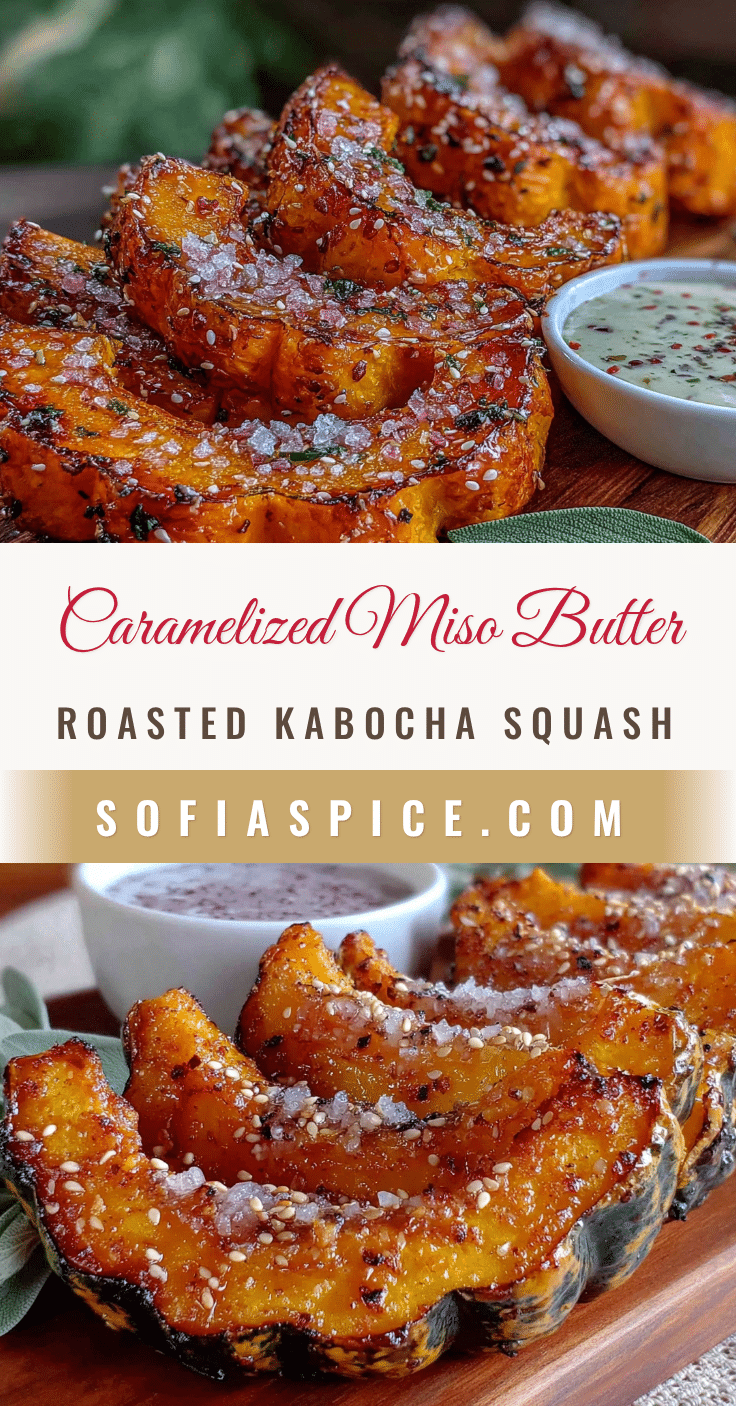
Perfect Miso Butter Roasted Kabocha Squash (Easy Side Dish)

This miso butter roasted kabocha squash is a simple yet stunning side dish with creamy, caramelized edges and a savory-sweet glaze. Ready in about 35 minutes, it’s perfect for fall gatherings or weeknight dinners.
- Prep Time: 10 minutes
- Cook Time: 25 minutes
- Total Time: 35 minutes
- Yield: 4 servings 1x
- Category: Side Dish
- Cuisine: Japanese
Ingredients
- 1 medium kabocha squash (about 2 to 2.5 pounds)
- 2 tablespoons olive oil
- Salt and pepper to taste
- 3 tablespoons unsalted butter, softened
- 2 tablespoons white miso paste
- 1 tablespoon maple syrup
- 1 teaspoon rice vinegar
- 1 clove garlic, minced
- Sesame seeds for garnish (optional)
- Thinly sliced green onions for garnish (optional)
- Flaky sea salt for garnish (optional)
Instructions
- Preheat your oven to 400°F (200°C).
- Wash the kabocha squash well. Carefully cut it in half from stem to bottom. Scoop out the seeds and stringy bits.
- Cut each half into 1-inch thick wedges (crescent shapes, about 2 to 3 inches wide).
- Place the wedges on a parchment-lined baking sheet. Drizzle with olive oil and sprinkle with salt and pepper. Toss gently to coat, then arrange in a single layer.
- Roast for 15 minutes.
- While the squash roasts, combine softened butter, white miso paste, maple syrup, rice vinegar, and minced garlic in a small bowl. Mash with a fork until smooth.
- After 15 minutes, remove the pan from the oven. Brush the miso butter mixture generously over each piece of squash, then flip and brush the other side.
- Return to the oven and roast for another 10 to 12 minutes, until the squash is tender when pierced with a fork and the edges are deeply caramelized.
- Remove from the oven and let rest for 2 to 3 minutes. Transfer to a serving platter and garnish with sesame seeds, green onions, and flaky sea salt if desired.
Notes
Don’t skip the first roast without miso butter to prevent burning. Cut squash evenly for uniform cooking. Use room temperature butter for easy mixing. Toast sesame seeds for better flavor. Avoid overcrowding the pan to ensure caramelization.
Nutrition
- Serving Size: 1/4 of recipe
- Calories: 185
- Sugar: 8
- Sodium: 320
- Fat: 12
- Saturated Fat: 6
- Carbohydrates: 18
- Fiber: 3
- Protein: 3
Keywords: miso butter roasted kabocha squash, easy side dish, roasted squash, miso butter, kabocha squash recipe, fall side dish, vegetarian, gluten-free