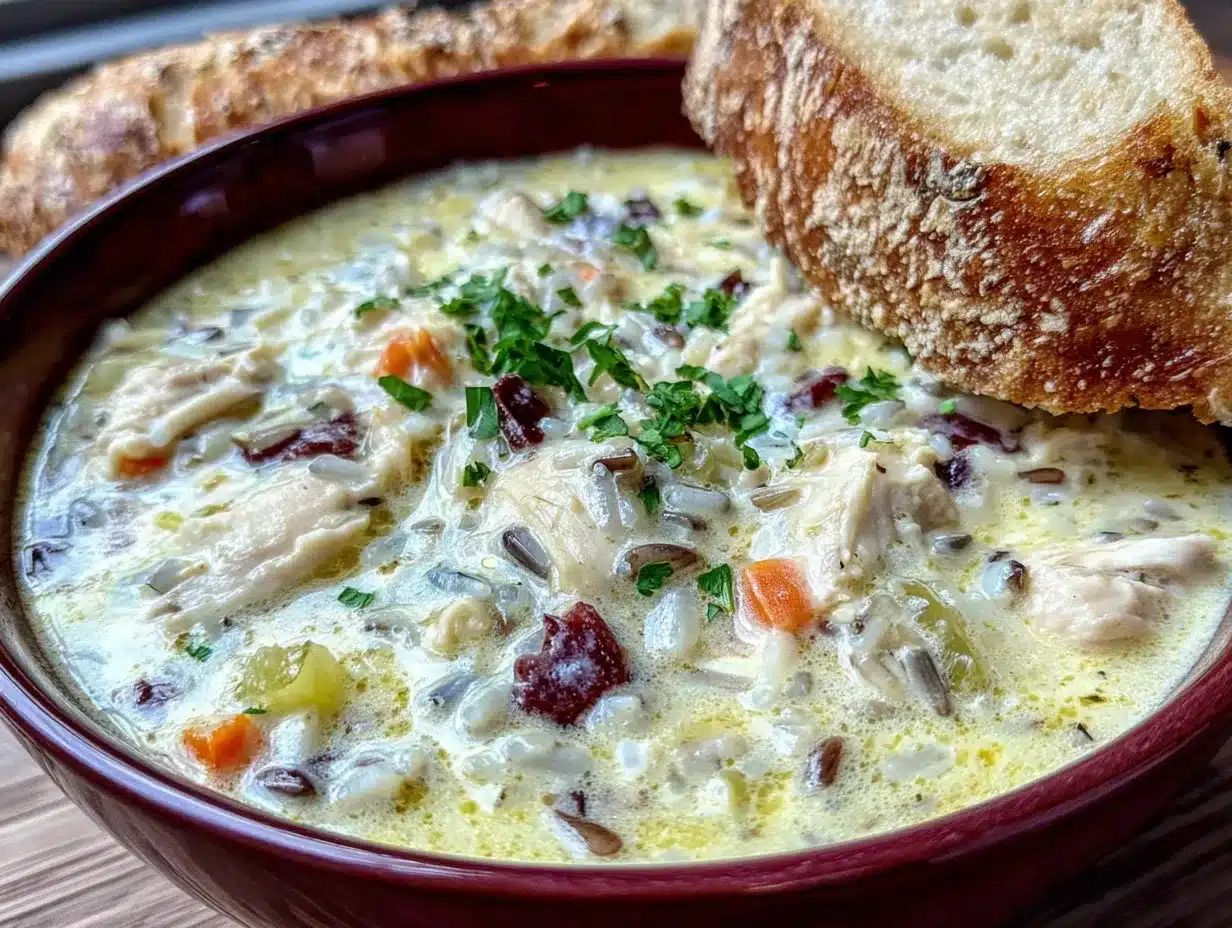
I did not trust wild rice in soup. There, I said it. For years, I passed over every wild rice soup recipe I came across, convinced the grains would stay stubbornly chewy while everything else turned to mush. It seemed like a texture disaster waiting to happen, and honestly, I had better things to do with a perfectly good chicken breast and a carton of heavy cream. Then my neighbor showed up at my door on a drizzly November afternoon holding a steaming thermos, saying she had made too much and her kids refused to eat it. I took it out of politeness, set it on the counter, and forgot about it until dinner time when I had nothing else ready. That first spoonful changed my mind completely. The rice had popped open into these tender little nuggets that somehow held their shape, the broth was velvety without being gluey, and the chicken just fell apart. I ate the whole thing standing at the kitchen island, and I have been making some version of this soup ever since. This cozy creamy chicken wild rice soup is the one I keep coming back to, the one that actually works without a dozen special ingredients or a complicated technique.
Why You’ll Love This Recipe
This soup has become my go-to for those days when you need something that feels like a hug in a bowl. It is the kind of meal that makes the whole kitchen smell good for hours, and honestly, that alone is worth the effort.
- One-Pot Wonder : Everything cooks in a single pot, which means less cleanup and more time curled up on the couch. No separate pans for sautéing vegetables or cooking rice.
- Simple Ingredients : You probably have most of these in your pantry right now. No trips to specialty stores or hunting down obscure spices.
- Perfect for Meal Prep : This soup actually gets better after a day or two in the fridge. The flavors meld together, and the rice soaks up even more of that creamy broth.
- Crowd-Pleaser : I have served this to picky kids, in-laws, and friends who claim they do not like soup. It disappears every single time.
- Unbelievably Comforting : There is something about the combination of tender chicken, nutty wild rice, and that silky broth that just hits different when the weather turns cold.
What sets this recipe apart from the dozens of others out there is the method. Instead of adding cream at the end and hoping it does not curdle, I use a small trick with flour and half-and-half that creates a stable, luscious base every single time. No separating, no tempering, no stress. It is a technique I learned after ruining more batches of soup than I care to admit, and it works like magic.
This is not just another soup recipe. It is the one you will text your friends about. The one you will make when you are feeling under the weather or when you just need something warm and reliable. It is comfort food that does not require a nap afterward, though honestly, you might want one anyway.
What Ingredients You Will Need
This recipe relies on simple, everyday ingredients that come together to create something far greater than the sum of their parts. Most of these are pantry staples, which makes this soup perfect for those days when you need dinner on the table without a trip to the store.
- Chicken breasts or thighs (1.5 pounds) – Boneless, skinless works best here. I prefer thighs for extra flavor and moisture, but breasts are perfectly fine. If using breasts, try to get the thicker ones so they do not overcook and dry out.
- Wild rice (1 cup, uncooked) – Look for genuine wild rice, not a blend. The real stuff has that distinctive dark color and takes about 45 minutes to cook. I have tried several brands, but I keep coming back to [brand name] because the grains consistently pop open without turning mushy.
- Yellow onion (1 medium, diced) – Adds that savory backbone. White onion works too, but yellow gives a slightly sweeter, more mellow flavor.
- Carrots (3 medium, diced) – For sweetness and color. I like to dice them small so they soften evenly with the celery.
- Celery stalks (3, diced) – Non-negotiable for that classic soup flavor. Do not skip these, even if you think you do not like celery. They melt into the background and add depth.
- Garlic cloves (4, minced) – Fresh garlic is worth the extra minute of prep. The jarred stuff just does not taste the same in this soup.
- Unsalted butter (4 tablespoons) – For sautéing the vegetables and building the roux. Salted butter works if you adjust the added salt later.
- All-purpose flour (¼ cup) – This is the secret to that stable, creamy texture. It thickens the broth without making it gluey.
- Chicken broth (6 cups) – Use low-sodium so you can control the salt level. Homemade broth is amazing here, but a good store-bought brand works perfectly fine.
- Half-and-half (1 cup) – Heavy cream works too, but half-and-half gives you that rich texture without being too heavy. I have tried milk, and it is just not the same. You need some fat content for the right mouthfeel.
- Dried thyme (1 teaspoon) – Earthy and slightly floral, thyme pairs beautifully with wild rice and chicken.
- Dried rosemary (½ teaspoon, crushed) – A little goes a long way. Rub it between your palms before adding to release the oils.
- Bay leaves (2) – These add an almost imperceptible depth that you will miss if you leave them out. Just remember to fish them out before serving.
- Salt and black pepper (to taste) – Start with a teaspoon of salt and half a teaspoon of pepper, then adjust at the end.
- Fresh parsley (¼ cup, chopped, for garnish) – Optional but nice for color and a fresh finish.
Equipment Needed
You do not need a fancy kitchen to make this soup. A few basic tools will get the job done, and I have included some alternatives in case you are working with limited equipment.
- Large Dutch oven or heavy-bottomed pot (6-quart or larger) – This is ideal because it distributes heat evenly and has a tight-fitting lid. If you do not have a Dutch oven, any large soup pot with a heavy bottom will work. I have made this in a cheap stockpot before, and it turned out fine. You just need to stir more often to prevent sticking.
- Sharp chef’s knife and cutting board – You will be doing a fair amount of chopping, so a sharp knife makes the process much more pleasant. A dull knife is not just frustrating; it is actually more dangerous.
- Wooden spoon or silicone spatula – For stirring the roux and scraping up any browned bits from the bottom of the pot. Metal spoons can scratch your Dutch oven if it is enameled.
- Measuring cups and spoons – Accuracy matters here, especially with the flour and liquid ratios.
- Ladle – For serving. A shallow ladle works better than a deep one for getting a good mix of broth and solids in each bowl.
- Fine-mesh strainer (optional) – If you want to rinse the wild rice before cooking. I usually skip this step because I buy pre-rinsed wild rice, but it is worth doing if your package does not say pre-rinsed.
One tip I learned the hard way: invest in a good Dutch oven if you make soup regularly. My first one was a cheap enameled pot from a discount store, and it developed a chip within six months. I saved up for a [brand name] Dutch oven, and it has lasted years without any issues. That said, a heavy-bottomed stainless steel pot works just as well and costs much less.
Preparation Method
This method looks like a lot of steps, but I promise it moves quickly once you get going. The key is to prep all your ingredients before you start cooking. Mise en place, as the fancy chefs say. It makes everything smoother.
- Prep your ingredients – Dice the onion, carrots, and celery into uniform pieces, about ¼-inch. Mince the garlic. Pat the chicken dry with paper towels and season both sides with salt and pepper. Measure out the wild rice and give it a quick rinse in a fine-mesh strainer if needed.
- Sear the chicken – Heat 1 tablespoon of butter in your Dutch oven over medium-high heat. Add the chicken breasts or thighs and cook for 4-5 minutes per side until golden brown. The chicken does not need to be cooked through at this point; you are just building flavor. Transfer the chicken to a plate and set aside. Do not skip this step. That browned crust adds so much depth to the final soup.
- Sauté the vegetables – Reduce the heat to medium and add the remaining 3 tablespoons of butter. Once it melts, add the diced onion, carrots, and celery. Cook for 6-8 minutes, stirring occasionally, until the vegetables have softened and the onion is translucent. The carrots should still have a little bite at this stage. Add the minced garlic and cook for one more minute until fragrant. If the garlic starts to brown, turn the heat down.
- Build the roux – Sprinkle the flour over the vegetables and stir constantly for 2 minutes. This cooks out the raw flour taste and creates the base for your creamy broth. The mixture will look thick and pasty. That is exactly what you want.
- Add the liquid – Slowly pour in the chicken broth while stirring continuously. This prevents lumps from forming. Scrape the bottom of the pot to release any browned bits from the searing step. Those bits are pure flavor.
- Add the rice and seasonings – Stir in the rinsed wild rice, dried thyme, crushed rosemary, and bay leaves. Bring the soup to a gentle boil, then reduce the heat to low. Nestle the seared chicken pieces back into the pot, making sure they are mostly submerged.
- Simmer – Cover the pot with the lid slightly ajar to allow some steam to escape. Let it simmer gently for 45-50 minutes. Check the rice at the 40-minute mark. It should be tender and starting to split open, but not mushy. If the rice is still too firm, let it go another 10 minutes.
- Shred the chicken – Once the rice is cooked, remove the chicken pieces to a cutting board. Use two forks to shred the meat into bite-sized pieces. Discard the bay leaves. Return the shredded chicken to the pot.
- Finish with cream – Reduce the heat to low and slowly stir in the half-and-half. Let it warm through for 2-3 minutes, but do not let it boil. Boiling could cause the cream to separate and give you a grainy texture. Taste and adjust salt and pepper. You will likely need more salt than you think, especially if you used low-sodium broth.
- Serve – Ladle the soup into bowls and garnish with fresh parsley. Serve immediately with crusty bread or crackers on the side.
One thing I have learned from making this soup dozens of times: the rice continues to absorb liquid as the soup sits. If you are making this ahead of time or planning to have leftovers, you might need to add a splash of broth or water when reheating to loosen it up. That is normal, and it does not mean you did anything wrong.
Cooking Tips & Techniques
I have made every mistake you can imagine with this soup. I have curdled the cream, undercooked the rice, and overseasoned the broth to the point of being inedible. Here is what I learned from those failures so you do not have to repeat them.
Do not rush the roux. That two minutes of stirring the flour and butter together might feel tedious, but it is the difference between a silky broth and one that tastes like raw flour. I once tried to shortcut this step by just dumping the flour into the broth without cooking it first. The soup had this weird, pasty texture that I could not fix. Learn from my impatience.
Watch your heat when adding the cream. This is the most common mistake people make. If you add cold half-and-half to a boiling hot soup, it will separate into little curds. I ruined an entire batch of soup for a dinner party this way. Now I always turn the heat down to low before adding the cream, and I let it warm up gradually. If you are nervous about it, you can temper the cream by whisking a ladleful of hot broth into it before adding it to the pot.
Check the rice early and often. Wild rice is not like white rice. It does not follow a set timeline. I have had batches that were perfectly tender at 40 minutes and others that took a full hour. The age of the rice, the altitude of your kitchen, and even the hardness of your water can affect cooking time. Start checking at 35 minutes and go from there.
Season in layers. Do not dump all the salt in at the beginning. Add a little when you sauté the vegetables, a little more with the broth, and then adjust at the end. This builds complexity rather than just making the soup salty. I learned this from a chef friend who said seasoning should be like building a house, not painting a wall.
Let it rest before serving. If you can wait 10-15 minutes after the soup is done, the flavors will meld together beautifully. The rice will absorb a bit more liquid, and the broth will thicken slightly. This is especially important if you are serving company. The soup tastes better, and you get a moment to breathe before sitting down.
Variations & Adaptations
This soup is forgiving enough to handle plenty of tweaks. Here are some variations I have tried and loved.
Vegetarian version – Skip the chicken and use vegetable broth instead of chicken broth. Add a can of drained chickpeas or white beans at the end for protein. The beans add a creamy texture that actually works really well with the wild rice. I made this for a vegetarian friend, and she asked for the recipe before she even finished her bowl.
Dairy-free adaptation – Replace the butter with olive oil or vegan butter, and use full-fat coconut milk instead of half-and-half. The coconut milk adds a subtle sweetness that complements the earthy wild rice. Just be aware that the soup will have a faint coconut flavor. I actually prefer this version in the summer because it feels lighter.
Extra vegetables – Add a cup of chopped mushrooms along with the other vegetables. They add an umami depth that makes the soup even more satisfying. I have also added diced zucchini and frozen corn at the end for a more vegetable-forward version. Just add the zucchini with the mushrooms and the corn during the last 5 minutes of simmering.
Spicy kick – Add a diced jalapeño or a teaspoon of red pepper flakes with the garlic. The heat cuts through the creaminess beautifully. I tried this on a whim during a cold snap, and it has become my husband’s favorite version.
Slow cooker method – Sauté the vegetables and sear the chicken on the stovetop first, then transfer everything except the cream to a slow cooker. Cook on low for 6-8 hours or high for 3-4 hours. Shred the chicken, stir in the cream, and serve. This works well for busy days when you want dinner ready when you walk in the door.
Serving & Storage Suggestions
This soup is best served hot, steaming, and in a deep bowl that you can wrap your hands around. I like to serve it with a side of crusty bread for dipping, but it is also wonderful with a simple green salad dressed with lemon vinaigrette to cut through the richness.
For serving – Ladle the soup into bowls and top with fresh parsley. A sprinkle of cracked black pepper adds a nice finish. If you want to go all out, serve it alongside a creamy tomato basil soup with crispy grilled cheese croutons for a soup-and-sandwich combo that feels like a restaurant meal. For a lighter option, this soup pairs beautifully with easy slow cooker butternut squash apple soup as a starter course for a fall dinner party.
For storing – Let the soup cool completely before transferring to airtight containers. It will keep in the refrigerator for 4-5 days. The rice will continue to absorb liquid, so do not be alarmed if the soup looks thicker on day two. Just add a splash of broth or water when reheating.
For freezing – This soup freezes surprisingly well. Portion it into freezer-safe containers, leaving about an inch of headspace for expansion. It will keep for up to 3 months. Thaw overnight in the refrigerator before reheating. One note: the cream can separate slightly after freezing, so give it a good stir while reheating and it will come back together.
For reheating – Reheat gently on the stovetop over medium-low heat, stirring occasionally. You can also microwave individual portions in 30-second bursts, stirring between each. Avoid boiling, which can cause the cream to separate.
I have found that this soup actually tastes better on day two. The flavors have time to meld, and the rice absorbs more of that creamy broth. If you can, make it a day ahead and reheat it for dinner. Your future self will thank you.
Nutritional Information & Benefits
This soup is hearty enough to be a meal on its own, but it is also packed with nutrients that make it a smart choice for cold-weather eating.
Per serving (approximate, based on 6 servings):
- Calories: 420
- Protein: 32g
- Carbohydrates: 35g
- Fat: 18g
- Fiber: 4g
- Sugar: 6g
- Sodium: 780mg
Wild rice is actually a grass, not a true rice, and it contains more protein and fiber than most grains. It is also a good source of B vitamins, magnesium, and zinc. The chicken provides lean protein that keeps you full and satisfied, while the carrots and celery add vitamins A and K along with antioxidants.
This soup is naturally gluten-free if you use a gluten-free flour blend or cornstarch instead of all-purpose flour. It is also relatively low in sugar and can be made lower in fat by using milk instead of half-and-half, though you will lose some creaminess.
I appreciate that this soup feels indulgent without being unhealthy. It is the kind of meal that nourishes you from the inside out, which is exactly what you need when the weather turns cold and your body craves warmth and comfort.
Conclusion
This cozy creamy chicken wild rice soup has earned a permanent spot in my winter rotation. It is the recipe I turn to when I need something reliable, something that makes the house smell like home, something that feeds both body and soul. The first time I made it after that neighbor dropped off her thermos, I called her to say thank you again. She laughed and said she knew I would come around eventually.
If you try this recipe, I want to hear about it. Did you add extra vegetables? Swap the chicken for something else? Serve it with your favorite bread? Drop a comment below and let me know how it turned out. Your adaptations might inspire someone else to make it their own.
And if you are looking for more cozy soup inspiration, do not miss our easy slow cooker butternut squash apple soup for another fall favorite, or the creamy tomato basil soup with crispy grilled cheese croutons for a classic pairing that never gets old.
Until next time, happy cooking. And remember, the best soups are the ones made with a little patience and a lot of love.
Frequently Asked Questions
Can I use a wild rice blend instead of pure wild rice?
Yes, but the cooking time will vary. Wild rice blends often include brown rice and other grains that cook faster. Check the package instructions and adjust your simmer time accordingly. You might need to add the blend later in the cooking process to prevent it from getting mushy.
Why is my soup too thick after refrigerating?
This is completely normal. The wild rice continues to absorb liquid as it sits, and the starch from the flour thickens further when cold. Simply add a splash of chicken broth or water when reheating and stir well. The soup will loosen up and return to its original consistency.
Can I make this soup in an Instant Pot?
Absolutely. Use the sauté function to sear the chicken and cook the vegetables. Add the broth, rice, and seasonings, then pressure cook on high for 20 minutes. Quick release the pressure, shred the chicken, and stir in the cream using the sauté function on low. The cooking time is much faster, though the flavor might not be quite as deep as the stovetop version.
How can I make this soup dairy-free without losing the creaminess?
Full-fat coconut milk is your best bet for a dairy-free version. It adds the same richness and body as half-and-half, though it does add a subtle coconut flavor. Cashew cream, made by blending soaked cashews with water, is another excellent option that is more neutral in taste.
Can I freeze this soup?
Yes, but with one caveat. The cream can separate slightly after freezing, so the texture might not be as smooth as fresh. To minimize this, let the soup cool completely before freezing, and thaw it slowly in the refrigerator. When reheating, stir vigorously to bring the cream back together. If you are planning to freeze the entire batch, consider adding the cream after thawing and reheating for the best results.
Pin This Recipe!

Cozy Creamy Chicken Wild Rice Soup – Easy One-Pot Recipe

This cozy creamy chicken wild rice soup is a one-pot wonder that combines tender chicken, nutty wild rice, and a velvety broth. It’s the perfect comfort food for cold days, made with simple ingredients and a foolproof technique for a stable, luscious base.
- Prep Time: 15 minutes
- Cook Time: 50 minutes
- Total Time: 1 hour 5 minutes
- Yield: 6 servings 1x
- Category: Main Course
- Cuisine: American
Ingredients
- 1.5 pounds boneless, skinless chicken breasts or thighs
- 1 cup uncooked wild rice
- 1 medium yellow onion, diced
- 3 medium carrots, diced
- 3 celery stalks, diced
- 4 garlic cloves, minced
- 4 tablespoons unsalted butter
- 1/4 cup all-purpose flour
- 6 cups low-sodium chicken broth
- 1 cup half-and-half
- 1 teaspoon dried thyme
- 1/2 teaspoon dried rosemary, crushed
- 2 bay leaves
- Salt and black pepper to taste
- 1/4 cup fresh parsley, chopped (for garnish)
Instructions
- Prep your ingredients: Dice the onion, carrots, and celery into uniform pieces, about 1/4-inch. Mince the garlic. Pat the chicken dry with paper towels and season both sides with salt and pepper. Rinse the wild rice in a fine-mesh strainer if needed.
- Sear the chicken: Heat 1 tablespoon of butter in a large Dutch oven over medium-high heat. Add the chicken and cook for 4-5 minutes per side until golden brown. Transfer the chicken to a plate and set aside.
- Sauté the vegetables: Reduce heat to medium and add the remaining 3 tablespoons of butter. Once melted, add the onion, carrots, and celery. Cook for 6-8 minutes, stirring occasionally, until softened. Add the garlic and cook for 1 minute until fragrant.
- Build the roux: Sprinkle the flour over the vegetables and stir constantly for 2 minutes until the mixture is thick and pasty.
- Add the liquid: Slowly pour in the chicken broth while stirring continuously to prevent lumps. Scrape the bottom of the pot to release any browned bits.
- Add the rice and seasonings: Stir in the wild rice, thyme, rosemary, and bay leaves. Bring to a gentle boil, then reduce heat to low. Nestle the seared chicken pieces back into the pot.
- Simmer: Cover the pot with the lid slightly ajar and simmer gently for 45-50 minutes, until the rice is tender and starting to split open.
- Shred the chicken: Remove the chicken pieces to a cutting board and shred with two forks. Discard the bay leaves. Return the shredded chicken to the pot.
- Finish with cream: Reduce heat to low and slowly stir in the half-and-half. Warm through for 2-3 minutes, but do not let it boil. Adjust salt and pepper to taste.
- Serve: Ladle the soup into bowls and garnish with fresh parsley. Serve immediately with crusty bread or crackers.
Notes
The rice continues to absorb liquid as the soup sits. If making ahead, add a splash of broth or water when reheating. For best results, let the soup rest 10-15 minutes before serving to allow flavors to meld.
Nutrition
- Serving Size: 1 bowl (about 1.5 cu
- Calories: 420
- Sugar: 6
- Sodium: 780
- Fat: 18
- Saturated Fat: 8
- Carbohydrates: 35
- Fiber: 4
- Protein: 32
Keywords: chicken wild rice soup, creamy soup, one-pot soup, comfort food, fall soup, winter soup