“You have to try this,” my friend texted me late one chilly evening. Honestly, I was skeptical. Ravioli from scratch? Brown butter and sage? Toasted pine nuts? My kitchen was already a mess from a failed attempt at a complicated dinner earlier that day, so the idea of tackling something so nuanced felt a little daunting. But the way she described it—simple, comforting, and just a little bit fancy—piqued my curiosity.
So, I found myself in the quiet of my kitchen much later that night, flour dusting the counter, trying out what would become my new obsession: savory brown butter sage ravioli with toasted pine nuts. The smell of the butter browning, the crispness of the fresh sage leaves, and the nutty crunch of the pine nuts all came together like a cozy fall hug. Honestly, it was one of those rare meals that felt effortlessly elegant but didn’t require me to summon my inner chef.
After making it a handful of times that week (yes, I was hooked), I realized this recipe wasn’t just good—it was the kind of dish that made me pause, close my eyes, and savor every bite. It’s the kind of meal that turns a hectic night into a quiet celebration for yourself. I’m sharing it here with that same quiet confidence, hoping it brings that little spark of joy to your dinner table too.
Why You’ll Love This Savory Brown Butter Sage Ravioli Recipe
After several kitchen trials and a bit of seasoning tweaking, this recipe became my go-to comfort food that feels special without the fuss. Here’s why this brown butter sage ravioli with toasted pine nuts stands out:
- Quick & Easy: From mixing the dough to plating, it takes just about an hour, perfect for busy weeknights or unexpected guests.
- Simple Ingredients: No need to hunt down exotic items—most are pantry staples, plus fresh sage and pine nuts that add the magic touch.
- Perfect for Cozy Dinners: Whether you’re winding down solo or hosting a small gathering, this dish feels both homey and a little fancy.
- Crowd-Pleaser: Kids, adults, picky eaters—everyone’s asking for seconds thanks to the rich, buttery sauce and subtle herb aroma.
- Unbelievably Delicious: The brown butter’s nutty depth paired with crispy sage and toasted pine nuts is next-level comfort food.
This isn’t your standard ravioli recipe. The trick is in the browned butter sauce that’s infused with fresh sage, creating a silky, aromatic coating. The pine nuts add a delightful crunch, balancing the soft pasta perfectly. Plus, making your own ravioli might sound intimidating, but this recipe breaks it down step-by-step, so even if you’re not a pasta pro, you’ll come out feeling like one. If you love dishes like Tuscan tortellini or crave the buttery richness of creamy baked mac and cheese with crispy bacon, this ravioli will fit right into your recipe rotation.
What Ingredients You Will Need
This recipe uses simple, wholesome ingredients to deliver bold flavor and satisfying texture without the fuss. Most are pantry staples, with just a few fresh items that really make the dish sing.
- For the Pasta Dough:
- All-purpose flour – about 2 cups (240g), sifted for smooth dough
- Large eggs – 2, at room temperature (helps with elasticity)
- Olive oil – 1 tablespoon (adds tenderness)
- Salt – ½ teaspoon (balances flavor)
- For the Filling:
- Ricotta cheese – 1 cup (250g), whole milk variety preferred for creaminess
- Parmesan cheese – ½ cup (50g), finely grated (for umami depth)
- Fresh sage leaves – 2 tablespoons, chopped (adds that signature herb note)
- Garlic – 1 clove, minced (optional, for subtle warmth)
- Salt & black pepper – to taste
- For the Brown Butter Sage Sauce:
- Unsalted butter – 6 tablespoons (85g), browned gently to nutty perfection
- Fresh sage leaves – 10-12 whole leaves (fried until crisp)
- Toasted pine nuts – ¼ cup (30g), for crunch and nuttiness
- Lemon zest – 1 teaspoon, finely grated (brightens the sauce)
- Salt & freshly cracked black pepper – to taste
Ingredient tips: Look for small-curd ricotta for the best texture in the filling. If you want a gluten-free version, try swapping the all-purpose flour with a gluten-free blend designed for pasta. For dairy-free options, use vegan ricotta and substitute butter with a quality plant-based alternative (the sage and pine nuts still shine through!).
Equipment Needed
- Pasta rolling pin or a pasta machine (a manual roller works well, but a machine speeds things up)
- Mixing bowls (one medium for dough, one for filling)
- Sharp knife or ravioli cutter (for clean edges)
- Rolling pin (if no pasta machine)
- Skillet or sauté pan (for browning butter and frying sage)
- Fine mesh sieve or slotted spoon (to remove sage leaves from butter)
- Measuring cups and spoons (accuracy matters for dough)
- Wooden spoon or spatula (for mixing)
If you don’t have a pasta machine, don’t worry! A rolling pin and a bit of elbow grease will do just fine. I remember my first time rolling dough by hand—it was messy but deeply satisfying. For budget-friendly options, simple silicone baking mats can help prevent sticking when rolling out the dough. And keeping your ravioli cutter sharp makes a huge difference in neat, even shapes.
Preparation Method
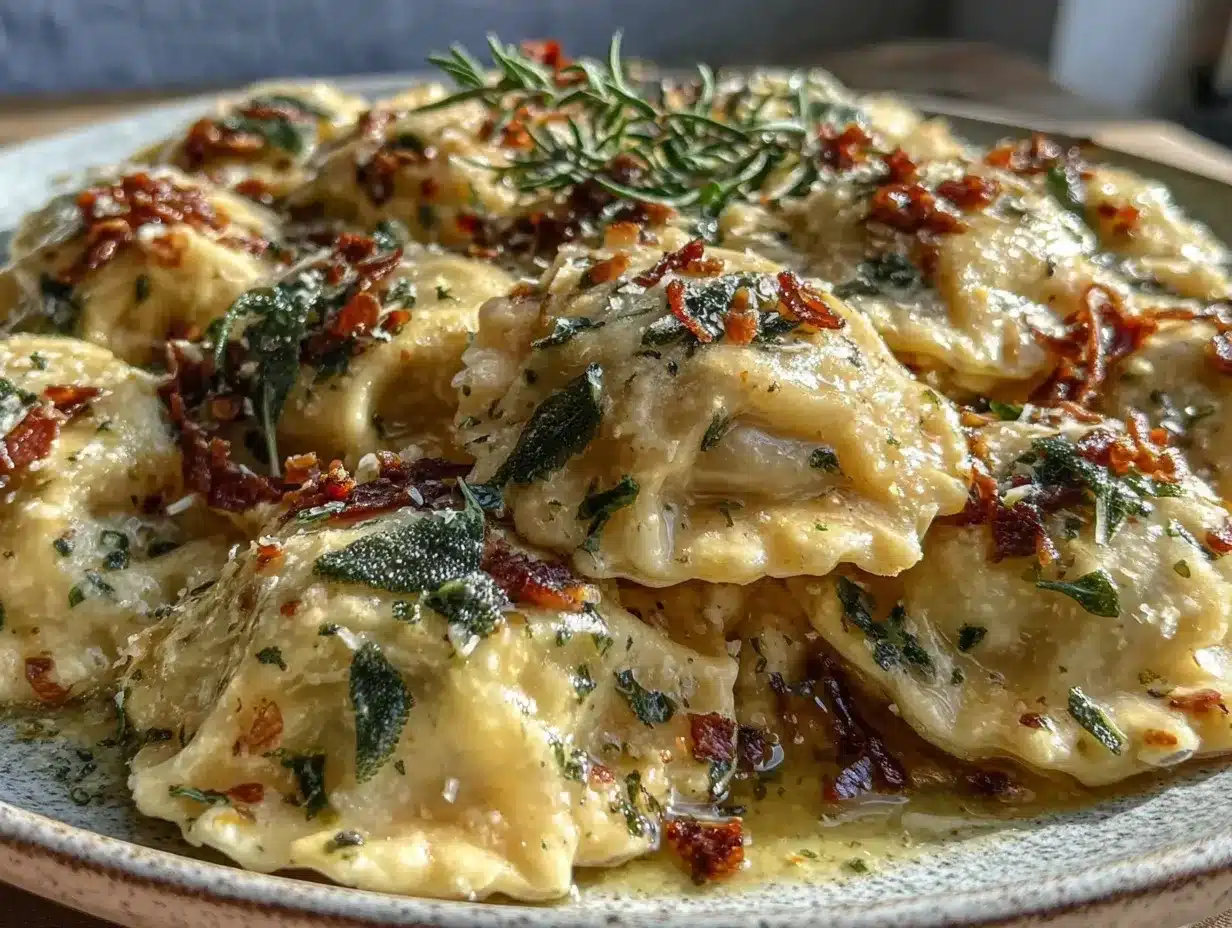
- Make the pasta dough: In a large bowl, combine 2 cups (240g) of sifted all-purpose flour and ½ teaspoon salt. Create a well in the center and crack in 2 large eggs along with 1 tablespoon olive oil. Using a fork, gently whisk the eggs, gradually incorporating flour until a rough dough forms. (This should take about 5 minutes.) Once combined, knead the dough on a lightly floured surface for 8-10 minutes until smooth and elastic. Wrap it tightly in plastic wrap and let rest at room temperature for 30 minutes.
- Prepare the filling: While the dough rests, mix 1 cup (250g) ricotta, ½ cup (50g) grated Parmesan, 2 tablespoons chopped fresh sage, and 1 minced garlic clove in a bowl. Season with salt and pepper to taste. The filling should be creamy but not runny—if too wet, add a tablespoon of Parmesan to firm it up. Set aside.
- Roll out the dough: Divide the rested dough into two equal parts. Roll one portion out on a floured surface into a thin rectangle, approximately 1/16 inch (1.5 mm) thick. If using a pasta machine, start on the widest setting and gradually reduce thickness. Keep the second portion covered to prevent drying.
- Assemble the ravioli: Place teaspoon-sized dollops of filling about 1.5 inches (4 cm) apart on the rolled dough sheet. Lightly brush around the filling with water to help seal. Carefully lay the second dough sheet over the top. Press down gently to remove air pockets and seal edges firmly around each mound. Use a ravioli cutter or knife to cut individual pieces. Press edges with a fork for a decorative seal (and extra security). (This step usually takes 15-20 minutes.)
- Cook the ravioli: Bring a large pot of salted water to a gentle boil. Add ravioli in batches, cooking for 3-4 minutes or until they float to the surface and are tender but still holding shape. Remove with a slotted spoon and drain well.
- Make the brown butter sage sauce: In a skillet over medium heat, melt 6 tablespoons (85g) unsalted butter. Continue cooking, swirling the pan occasionally, until the butter turns golden brown and smells nutty (about 4-5 minutes). Add 10-12 whole sage leaves and fry until crispy, about 1 minute. Remove leaves with a slotted spoon and set aside. Stir in toasted pine nuts and 1 teaspoon lemon zest, seasoning with salt and pepper.
- Serve: Gently toss cooked ravioli in the brown butter sage sauce. Plate and top with crispy sage leaves and extra toasted pine nuts for garnish.
Pro tip: Keep a close eye on the butter as it browns. Once it starts to smell nutty, act quickly to avoid burning. The difference between perfectly browned butter and burnt butter is seconds but affects flavor dramatically.
Cooking Tips & Techniques
Making ravioli from scratch can feel intimidating, but a few lessons I learned the hard way make it easier:
- Knead the dough thoroughly: The dough should be smooth and elastic, not sticky or crumbly. If it’s too dry, add water a teaspoon at a time; if too wet, sprinkle more flour.
- Rest the dough: Letting it rest for at least 30 minutes relaxes the gluten, making rolling easier and preventing shrinkage when cooking.
- Seal edges carefully: Air pockets will cause ravioli to burst in boiling water. Press firmly and wet edges with water to improve seal.
- Don’t overcrowd the pot: Cook ravioli in batches to avoid sticking and uneven cooking.
- Brown butter mastery: Use medium heat and a light hand. Butter can go from brown to burnt in seconds; swirl constantly and remove from heat immediately when desired color and smell appear.
- Toasting pine nuts: Toast pine nuts in a dry pan over medium-low heat, stirring frequently until golden and fragrant. They burn easily, so stay attentive.
From personal experience, the first time I made this, I rushed the dough resting and ended up with tough pasta. Lesson learned! Taking time with each step rewards you with silky, tender ravioli every time.
Variations & Adaptations
This brown butter sage ravioli recipe is quite adaptable. Here are a few ways to customize it:
- Cheese swap: Replace ricotta with goat cheese for a tangier filling, or add some shredded mozzarella for extra stretch.
- Vegetarian option: Add finely chopped sautéed mushrooms or spinach to the filling for earthiness and color.
- Gluten-free: Use a gluten-free pasta flour blend to make the dough. The texture will differ slightly but still delicious.
- Alternative nuts: If pine nuts are hard to find or cause allergies, toasted walnuts or almonds lend a nice crunch.
- Cooking method: Instead of boiling, you can pan-fry pre-cooked ravioli in browned butter for a crispier texture.
One variation I love is stirring in a pinch of nutmeg into the filling—it adds warmth that pairs wonderfully with the sage. If you enjoy rustic comfort food, you might also appreciate the cozy chicken pot pie that’s a great complement to this ravioli dish.
Serving & Storage Suggestions
Serve this ravioli immediately while warm to enjoy the full impact of the nutty brown butter sauce and crispy sage. Garnish with extra toasted pine nuts and a sprinkle of freshly grated Parmesan for a touch of elegance.
Pair it with something light and fresh, like a simple arugula salad with lemon vinaigrette, to balance the richness. A crisp white wine or sparkling water with lemon works nicely alongside.
Leftovers can be stored in an airtight container in the refrigerator for up to 2 days. Reheat gently in a skillet with a little butter to revive the crispy sage and pine nuts. Avoid microwaving as it can soften the pasta too much.
Flavors deepen beautifully if you make the filling ahead and refrigerate it overnight; the sage infuses the cheese mix with extra aroma. Just assemble and cook the ravioli fresh for best results.
Nutritional Information & Benefits
This recipe balances indulgence with wholesome ingredients. Each serving (about 6 ravioli) offers roughly:
| Calories | 360 |
|---|---|
| Protein | 14g |
| Fat | 22g |
| Carbohydrates | 28g |
| Fiber | 2g |
Ricotta and Parmesan provide quality protein and calcium, while fresh sage offers antioxidants and anti-inflammatory benefits. Pine nuts add healthy fats and a dose of vitamin E. Though rich, this dish fits nicely into a balanced diet when enjoyed in moderation.
For those watching gluten, consider the gluten-free flour option. If dairy is a concern, vegan cheese alternatives can keep the dish plant-based and still flavorful.
Conclusion
This savory brown butter sage ravioli with toasted pine nuts is a recipe worth making again and again. It delivers comfort and elegance with a handful of accessible ingredients and simple techniques. Whether you’re a pasta newbie or a seasoned cook, the process is rewarding and the results truly satisfying.
Feel free to adjust the filling or sauce based on your preferences—this recipe welcomes your personal touches. Honestly, it’s become one of my favorite ways to slow down and enjoy a quiet evening with food that feels a little special.
Give it a try, savor the aroma, and let me know how it turns out in the comments. Happy cooking!
Frequently Asked Questions About Savory Brown Butter Sage Ravioli
Can I make the ravioli dough ahead of time?
Yes! You can prepare the dough and refrigerate it, wrapped tightly in plastic, for up to 24 hours. Bring it to room temperature before rolling out.
What if I don’t have fresh sage?
Fresh sage is best for flavor and texture, but you can use dried sage in the filling (about 1 teaspoon). The crispy fried leaves are a nice touch, though, so fresh is recommended if possible.
How do I prevent ravioli from sticking together?
Lightly dust the ravioli with flour after cutting and place them on a floured tray in a single layer. Don’t overcrowd when cooking—boil in small batches.
Can I freeze the assembled ravioli?
Absolutely. Freeze ravioli on a baking sheet in a single layer until firm, then transfer to a freezer bag. Cook from frozen, adding 1-2 minutes to boiling time.
What wine pairs well with brown butter sage ravioli?
A dry white wine like Pinot Grigio or a light Chardonnay complements the nutty butter and herb flavors beautifully.
Pin This Recipe!
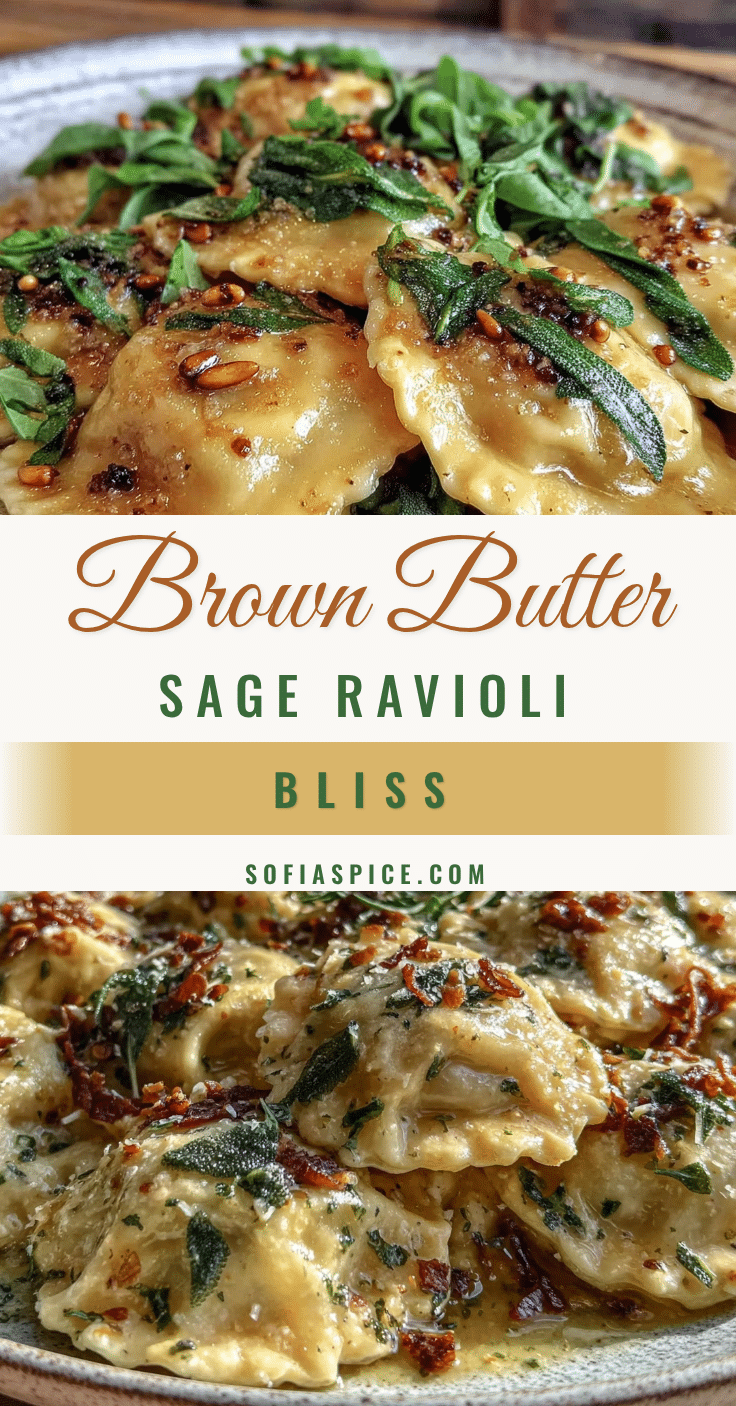
Savory Brown Butter Sage Ravioli Recipe with Toasted Pine Nuts
A comforting and elegant homemade ravioli recipe featuring a creamy ricotta filling, brown butter sage sauce, and crunchy toasted pine nuts. Perfect for cozy dinners and easy enough for beginners.
- Prep Time: 15 minutes
- Cook Time: 30 minutes
- Total Time: 45 minutes
- Yield: 4 servings 1x
- Category: Main Course
- Cuisine: Italian
Ingredients
- 2 cups (240g) all-purpose flour, sifted
- 2 large eggs, room temperature
- 1 tablespoon olive oil
- ½ teaspoon salt
- 1 cup (250g) ricotta cheese, whole milk variety
- ½ cup (50g) Parmesan cheese, finely grated
- 2 tablespoons fresh sage leaves, chopped
- 1 clove garlic, minced (optional)
- Salt and black pepper, to taste
- 6 tablespoons (85g) unsalted butter
- 10–12 whole fresh sage leaves
- ¼ cup (30g) toasted pine nuts
- 1 teaspoon lemon zest
- Salt and freshly cracked black pepper, to taste
Instructions
- Make the pasta dough: In a large bowl, combine sifted flour and salt. Create a well in the center and crack in eggs and olive oil. Whisk eggs gradually incorporating flour until rough dough forms (about 5 minutes). Knead dough on floured surface for 8-10 minutes until smooth and elastic. Wrap in plastic and rest at room temperature for 30 minutes.
- Prepare the filling: Mix ricotta, Parmesan, chopped sage, and minced garlic in a bowl. Season with salt and pepper. Adjust consistency if too wet by adding Parmesan. Set aside.
- Roll out the dough: Divide dough into two equal parts. Roll one portion into a thin rectangle about 1/16 inch (1.5 mm) thick. Keep second portion covered.
- Assemble ravioli: Place teaspoon-sized dollops of filling 1.5 inches (4 cm) apart on rolled dough. Brush around filling with water. Lay second dough sheet over top. Press to remove air pockets and seal edges. Cut individual ravioli with cutter or knife. Press edges with fork for seal and decoration.
- Cook ravioli: Boil salted water. Cook ravioli in batches for 3-4 minutes until they float and are tender. Remove with slotted spoon and drain.
- Make brown butter sage sauce: Melt butter in skillet over medium heat until golden brown and nutty (4-5 minutes). Add whole sage leaves and fry until crisp (about 1 minute). Remove leaves. Stir in toasted pine nuts and lemon zest. Season with salt and pepper.
- Serve: Toss cooked ravioli gently in brown butter sage sauce. Plate and garnish with crispy sage leaves and extra toasted pine nuts.
Notes
Keep a close eye on the butter as it browns to avoid burning. Rest dough for at least 30 minutes for easier rolling and better texture. Seal ravioli edges carefully to prevent bursting. Cook ravioli in batches to avoid sticking. Toast pine nuts carefully to avoid burning. Dough can be refrigerated for up to 24 hours before rolling. Ravioli can be frozen before cooking.
Nutrition
- Serving Size: About 6 ravioli per
- Calories: 360
- Fat: 22
- Carbohydrates: 28
- Fiber: 2
- Protein: 14
Keywords: ravioli, brown butter, sage, toasted pine nuts, homemade pasta, comfort food, easy dinner, Italian recipe