“You really don’t need to flip it a hundred times,” my friend said, eyeing my frantic attempts to cook a ribeye steak just right. Honestly, I was skeptical. Ribeye is one of those beasts that seemed intimidating—the kind of steak you’d only order out, not make at home. But that night, armed with a trusty thermometer and a hunch, I tried the reverse-seared ribeye method for the first time. I put the steak low and slow into the oven, then finished it off with a quick sear on the stovetop before slapping on a generous dollop of compound herb butter.
The aroma was intoxicating, the crust perfectly caramelized, and the inside? Juicy and tender beyond what I’d expected. That simple herb butter—packed with fresh parsley, thyme, and a little garlic—felt like the final secret handshake to this easy, foolproof steak. I ended up making it three times that week, each time tweaking the butter a bit or trying different herbs. It became more than dinner—it was a quiet moment of satisfaction after hectic days, a small way to treat myself without fuss.
Now, I don’t hesitate when ribeye’s on the menu. This perfect reverse-seared ribeye with compound herb butter is no longer a special-occasion-only dish; it’s a go-to that reliably impresses, whether it’s a solo dinner or a last-minute guest. There’s something about that buttery, herbal finish that makes you pause and savor—and that’s why I keep coming back to it.
Why You’ll Love This Recipe
After countless tries in my kitchen, this perfect reverse-seared ribeye recipe has proven itself time and again. Here’s why I trust it and think you will too:
- Quick & Easy: The hands-on time is minimal. You can have a mouthwatering steak ready in about 45 minutes, perfect when you want a little indulgence without a big time commitment.
- Simple Ingredients: No weird spices or specialty items here. Just a high-quality ribeye, butter, herbs, garlic, and salt and pepper. Most of these you likely have in your kitchen right now.
- Perfect for Any Occasion: Whether you’re firing up for a cozy dinner or need a classy main for a casual gathering, this steak fits right in. It’s fancy enough to impress but easy enough to make anytime.
- Crowd-Pleaser: This recipe gets raves from everyone—meat lovers, picky eaters, and even the folks who usually prefer their steak medium-well.
- Unbelievably Delicious: The reverse sear technique locks in juices while the compound herb butter adds a fresh, savory punch. The crust has just the right amount of crunch with a melt-in-your-mouth interior.
What makes this ribeye different? It’s the slow oven approach that avoids that overcooked edge, combined with the quick pan sear for that iconic crust. Plus, the compound butter isn’t just a topping—it’s a flavor boost that seeps into every bite. This isn’t just steak; it’s steak with a little soul and a lot of love.
Honestly, it’s the kind of recipe that lets me savor moments—those quiet dinners or even the occasional celebration—without stress but with a serious wow factor.
What Ingredients You Will Need
This perfect reverse-seared ribeye recipe uses straightforward, wholesome ingredients to deliver bold flavor without fuss. Most come from pantry staples, with fresh herbs adding that special touch. Here’s everything you’ll need:
- Ribeye steak: 1 thick-cut ribeye (about 1.5 to 2 inches thick, 12-16 ounces / 340-450 grams). Choose well-marbled beef from a trusted butcher or brand for best flavor and tenderness.
- Salt: Kosher salt or sea salt, for seasoning. Coarse salt helps develop a great crust.
- Freshly ground black pepper: To taste, added right before searing.
- Unsalted butter: 4 tablespoons (about 60 grams), softened. Use a quality butter like Kerrygold for richness.
- Fresh parsley: 1 tablespoon, finely chopped (adds bright earthiness).
- Fresh thyme: 1 teaspoon, finely chopped (offers a subtle woodsy aroma).
- Garlic: 1 clove, minced (for that essential garlicky warmth).
- Lemon zest: Optional, 1/2 teaspoon (adds a gentle citrus brightness).
- Olive oil or high-smoke-point oil: 1 tablespoon, for searing (helps achieve that perfect crust without burning).
If fresh herbs aren’t handy, dried herbs can work in a pinch—just use about one-third of the fresh amount. For a dairy-free twist, swap butter with a plant-based spread that handles heat well. You could also experiment with adding rosemary or chives to the compound butter for different flavor notes.
Equipment Needed
- Oven-safe wire rack and baking sheet: The wire rack lets air circulate under the steak for even cooking during the slow oven stage.
- Meat thermometer: An instant-read thermometer is a game changer here; it helps nail the perfect doneness.
- Heavy skillet or cast iron pan: For searing. Cast iron is ideal because it holds heat well and creates a beautiful crust.
- Mixing bowl and spoon: To combine the compound herb butter.
- Knife and cutting board: For herb prep and slicing the steak.
Don’t have a wire rack? You can use a rimmed baking sheet lined with parchment paper but keep an eye on the underside of the steak. A meat thermometer is worth investing in, even a budget-friendly model, because guessing steak temperature is a recipe for disappointment. I’ve tried cheaper pans before, but a well-seasoned cast iron skillet gives the best sear and flavor.
Preparation Method
- Bring the steak to room temperature: About 30-45 minutes before cooking, take your ribeye out of the fridge. This step helps the steak cook evenly.
- Preheat oven to 250°F (120°C): Low and slow is key here to gently bring the steak up to temperature without overcooking the edges.
- Season the steak generously: Pat the ribeye dry with paper towels, then sprinkle kosher salt evenly on all sides. Let it rest on a wire rack set over a baking sheet.
- Cook in the oven: Place the steak on the wire rack and insert a meat thermometer probe if you have one. Bake until the internal temperature reaches about 115°F (46°C) for medium-rare, around 30-45 minutes depending on thickness.
- Prepare the compound herb butter: While the steak cooks, combine softened butter, chopped parsley, thyme, garlic, and lemon zest in a bowl. Mix well and chill until firm.
- Heat your skillet: When the steak reaches the target temperature, heat a cast iron skillet with olive oil over high heat until shimmering and just smoking.
- Sear the steak: Place the ribeye in the hot pan. Sear for about 1-2 minutes per side, including the edges, until a deep brown crust forms. Sprinkle freshly ground black pepper on during this step.
- Rest the steak: Transfer the steak to a plate and let it rest for 5-10 minutes. This helps juices redistribute for a tender bite.
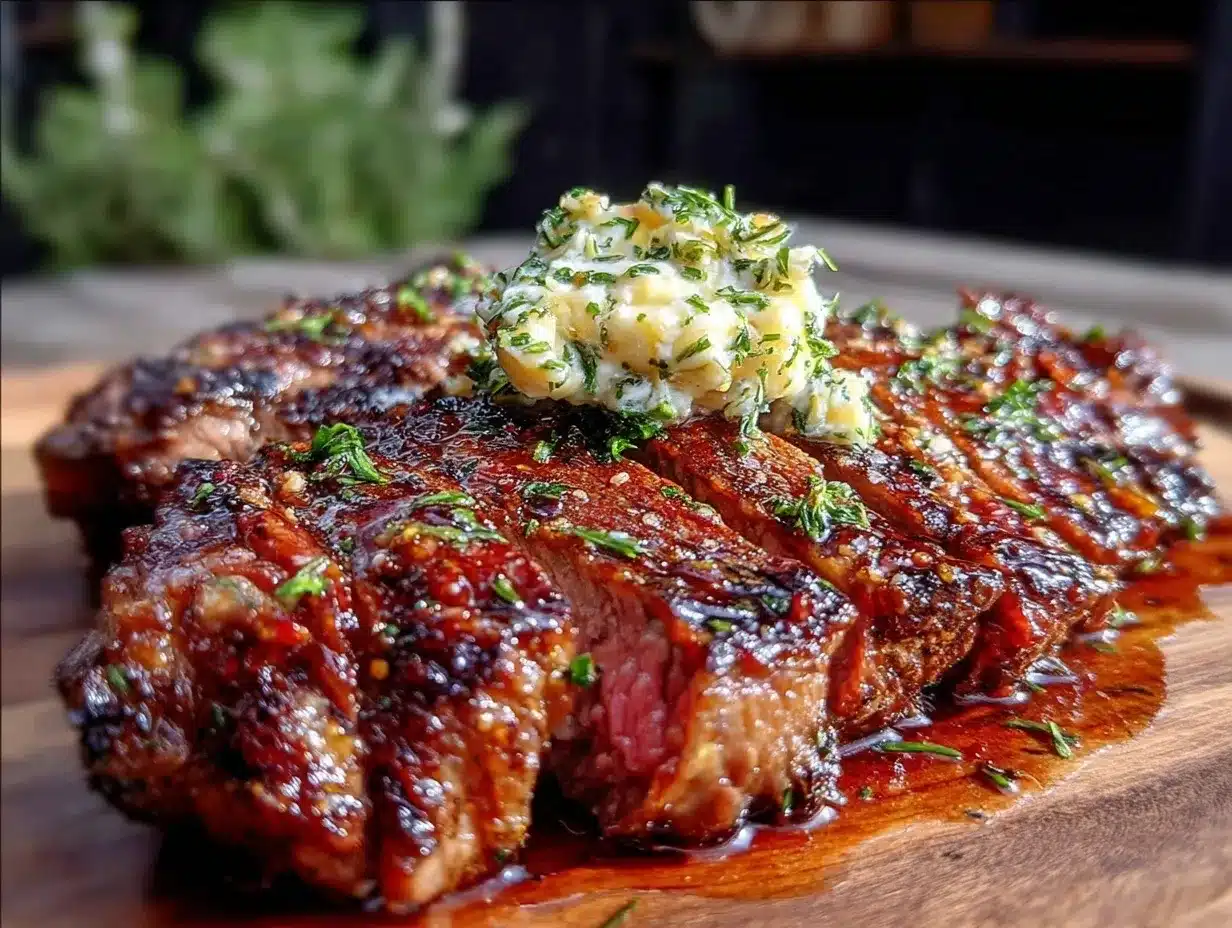
- Top with compound herb butter: Add a generous dollop on top while the steak is still warm so it melts luxuriously.
- Slice and serve: Cut against the grain and enjoy the juicy, herb-kissed perfection.
One trick I learned is to keep the pan hot but not smoking too much—too hot and the butter burns before melting nicely. Also, don’t rush the resting step; it’s worth those extra minutes.
Cooking Tips & Techniques
The reverse sear may sound fancy, but once you get the hang of it, it’s surprisingly foolproof. Here are some tips I picked up along the way:
- Use a meat thermometer: It’s the single best tool to avoid over- or undercooking. For medium-rare, pull the steak at 115°F (46°C) and let it rest to reach 130-135°F (54-57°C).
- Pat dry for crust: Moisture on the surface kills crust formation. I usually pat my steaks dry twice: once before seasoning and once just before searing.
- Don’t overcrowd the pan: Searing requires space. If you have multiple steaks, sear one at a time for that perfect crust.
- Butter last: Adding herb butter after searing keeps flavors fresh and prevents burning garlic or herbs in the pan.
- Rest is non-negotiable: Resting lets the meat fibers relax and juices settle. Skipping this results in dry steak.
I once tried skipping the oven part and just searing thick ribeyes, but they ended up charred outside and raw inside. Reverse searing fixed that inconsistency completely.
Variations & Adaptations
This recipe is super flexible, so feel free to tweak it to your taste or dietary needs:
- Herb Butter Variations: Swap thyme and parsley for rosemary and chives, or add a pinch of smoked paprika or crushed red pepper for a little kick.
- Cooking Methods: If you don’t want to use the oven, try sous vide for precise temperature control, then sear as usual. For grill lovers, finish the steak on a hot grill instead of the pan.
- Dietary Adjustments: For dairy-free, substitute butter with a vegan spread mixed with herbs. For a lower-fat option, use a light olive oil herb drizzle instead of butter.
- Seasonal Twists: In fall or winter, add fresh sage or tarragon for deeper flavors. Summer? Try fresh basil and lemon zest for a bright profile.
- Personal Favorite: I once added a spoonful of caramelized shallots into the butter mix for a sweet-savory surprise. It was a hit at a dinner party alongside creamy mashed potatoes.
Serving & Storage Suggestions
Serve this perfect reverse-seared ribeye warm with the compound herb butter melting slowly over it. Slice the steak against the grain and plate with sides like roasted vegetables or creamy mashed potatoes. I’ve found pairing it with a simple salad or even something colorful like a grilled eggplant dish (similar to the vibrant grilled eggplant with miso glaze) balances the richness nicely.
Leftovers? Store steak wrapped tightly in foil or airtight containers in the fridge for up to 3 days. Reheat gently in a low oven (around 250°F/120°C) or in a skillet with a splash of broth to avoid drying out. The butter can be kept separately and dolloped on after reheating.
Flavors actually deepen after a day, so if you have the patience, it tastes even better the next day. Just don’t skip the butter topping for that fresh herb lift.
Nutritional Information & Benefits
This ribeye recipe is a hearty, protein-packed meal. A 12-ounce (340 g) ribeye steak provides around 800-900 calories, mostly from protein and fat. The compound herb butter adds richness but also beneficial antioxidants from fresh herbs like parsley and thyme.
Ribeye is rich in iron, zinc, and B vitamins, essential for energy and immune support. For those watching carbs, this recipe is naturally low-carb and gluten-free. If you’re mindful about fat intake, consider trimming some fat off the steak or using less butter, but honestly, this is a treat worth savoring occasionally.
Personally, I see this as comfort food that fits a balanced lifestyle—enjoyed with veggies or salads, it’s a satisfying way to fuel the body without overcomplicating meals.
Conclusion
This perfect reverse-seared ribeye with compound herb butter has become my go-to for a reason. It’s simple, dependable, and delivers steakhouse-quality results at home. You can tweak the herbs, swap cooking methods, or pair it with your favorite sides to make it truly yours.
For me, it’s the little rituals—the slow roast, the sizzle of the pan, the melting herb butter—that turn a meal into a moment. It’s a recipe that invites you to slow down and enjoy the best parts of cooking and eating.
Give it a try and see how it fits into your kitchen rhythm—you might find yourself making it as often as I do. And if you have your own twists or fun stories with this recipe, I’d love to hear about them in the comments below!
FAQs about Perfect Reverse-Seared Ribeye with Compound Herb Butter
What is reverse searing and why is it better for ribeye?
Reverse searing means cooking the steak slowly at low heat first, then finishing with a high-heat sear. It ensures even cooking edge-to-edge and a juicy interior with a crispy crust.
Can I use other cuts of steak for reverse searing?
Yes! Thick cuts like strip steak, filet mignon, and even porterhouse work great. Just adjust cooking times based on thickness.
How do I know when the steak is done?
Use an instant-read thermometer. For medium-rare, pull the steak at 115°F (46°C) before searing. It will rise to about 130-135°F (54-57°C) as it rests.
Can I make the compound herb butter ahead of time?
Absolutely! Make it a day or two ahead and keep it refrigerated. Just bring it to room temperature before serving for easy melting.
What sides pair well with this ribeye recipe?
Anything from roasted veggies and creamy mashed potatoes to something lighter like a fresh salad or grilled eggplant works beautifully. For a rich side, try the creamy loaded baked potato soup.
Pin This Recipe!
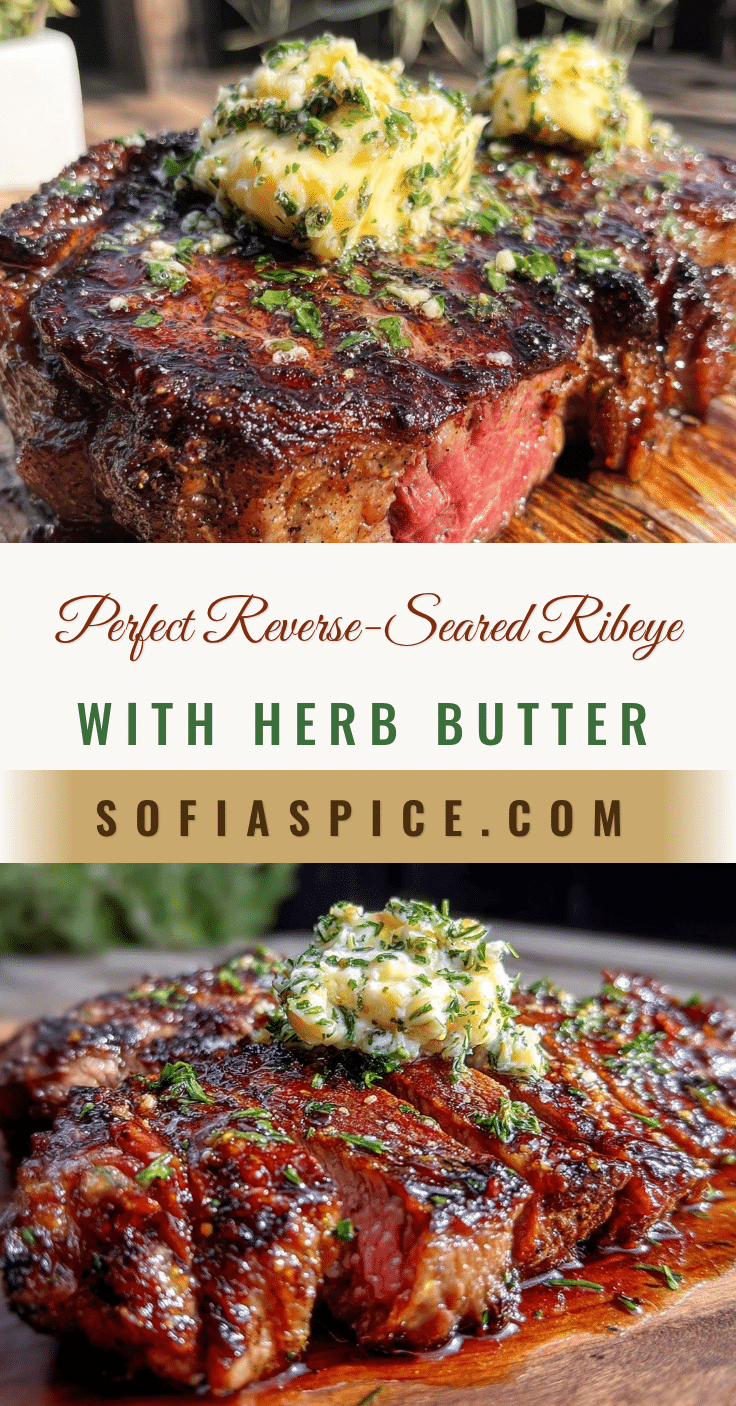
Perfect Reverse-Seared Ribeye Recipe with Easy Herb Butter Sauce
This recipe features a foolproof reverse-seared ribeye steak finished with a flavorful compound herb butter, delivering a juicy, tender interior and a perfectly caramelized crust.
- Prep Time: 10 minutes
- Cook Time: 35 minutes
- Total Time: 45 minutes
- Yield: 1 serving 1x
- Category: Main Course
- Cuisine: American
Ingredients
- 1 thick-cut ribeye steak (1.5 to 2 inches thick, 12–16 ounces / 340–450 grams)
- Kosher salt or sea salt, for seasoning
- Freshly ground black pepper, to taste
- 4 tablespoons unsalted butter (about 60 grams), softened
- 1 tablespoon fresh parsley, finely chopped
- 1 teaspoon fresh thyme, finely chopped
- 1 clove garlic, minced
- 1/2 teaspoon lemon zest (optional)
- 1 tablespoon olive oil or high-smoke-point oil, for searing
Instructions
- Bring the steak to room temperature about 30-45 minutes before cooking to ensure even cooking.
- Preheat oven to 250°F (120°C) for slow cooking.
- Pat the ribeye dry with paper towels, then season generously with kosher salt on all sides. Place on a wire rack set over a baking sheet.
- Insert a meat thermometer probe if available and bake the steak in the oven until the internal temperature reaches about 115°F (46°C) for medium-rare, approximately 30-45 minutes depending on thickness.
- While the steak cooks, combine softened butter, chopped parsley, thyme, garlic, and lemon zest in a bowl. Mix well and chill until firm.
- Heat a cast iron skillet with olive oil over high heat until shimmering and just smoking.
- Sear the steak in the hot pan for 1-2 minutes per side, including edges, until a deep brown crust forms. Sprinkle freshly ground black pepper during searing.
- Transfer the steak to a plate and let it rest for 5-10 minutes to allow juices to redistribute.
- Top the warm steak with a generous dollop of compound herb butter so it melts luxuriously.
- Slice the steak against the grain and serve immediately.
Notes
Use a meat thermometer to avoid over- or undercooking. Pat the steak dry twice for the best crust. Rest the steak after searing to keep it juicy. Keep the pan hot but not smoking excessively to prevent burning the butter. Compound herb butter can be made ahead and refrigerated.
Nutrition
- Serving Size: 1 ribeye steak (12-1
- Calories: 850
- Sodium: 600
- Fat: 70
- Saturated Fat: 30
- Carbohydrates: 1
- Protein: 60
Keywords: reverse sear, ribeye steak, herb butter, steak recipe, easy steak, cast iron steak, compound butter, medium-rare steak