I wasn’t exactly planning to whip up something fancy that afternoon. Honestly, I was just rummaging through the fridge, hoping for a dinner win with whatever was left over from a busy day. That’s when I spotted a bunch of asparagus, looking vibrant and fresh, and a ball of burrata hiding behind the usual suspects. I thought, “Why not toss them together with some pasta and a splash of lemon?” Skeptical at first—because, let’s face it, it all sounded like a hopeful mix rather than a recipe—I decided to give it a shot.
As the lemon zest hit the hot pan and the asparagus sizzled, the kitchen filled with that unmistakable fresh, almost grassy aroma that always signals spring to me. When I finally twirled the pasta with the creamy burrata melting just right on top, it was a quiet moment of “this actually works.” I found myself eating it faster than I intended, savoring the bright lemon punch balanced with the silky cheese and tender asparagus. It became an unexpected favorite, perfect for those light, easy meals when you want something satisfying but not too heavy.
Since that afternoon, I’ve made this fresh lemon asparagus pasta with creamy burrata more times than I can count—sometimes doubling the asparagus, sometimes adding a sprinkle of chili flakes when I’m feeling bold. It’s one of those recipes that feels like a personal little celebration of spring’s best flavors, simple but with personality. And honestly, it’s stuck with me because it’s so adaptable and fuss-free, yet somehow comforting in a way that’s rare for a pasta dish.
Why You’ll Love This Fresh Lemon Asparagus Pasta with Creamy Burrata Recipe
This recipe isn’t just another pasta dish—it’s a spring-inspired favorite that’s perfect when you want a quick, fresh meal without sacrificing flavor or comfort. I’ve tested this recipe multiple times, tweaking the lemon balance and burrata texture to hit that sweet spot of creamy, tangy, and crisp.
- Quick & Easy: Ready in about 25 minutes, great for busy weeknights or when you need a last-minute dinner that still feels special.
- Simple Ingredients: Uses pantry staples and seasonal produce you likely already have or can find at any grocery store this time of year.
- Perfect for Spring Meals: The bright lemon and fresh asparagus make it ideal for lighter, refreshing meals as the weather warms.
- Crowd-Pleaser: I’ve brought this dish to casual dinners and potlucks, and it always gets compliments—even from friends who usually go for heartier fare.
- Unbelievably Delicious: The creamy burrata adds a luxurious texture that pairs beautifully with the zesty lemon and crisp asparagus—comfort food with a fresh twist.
This isn’t just pasta with asparagus thrown in. The secret is in how the lemon is incorporated—using both juice and zest for a layered brightness—and in choosing a high-quality burrata that melts just enough without losing its creamy center. It’s a bit like the creamy baked mac and cheese with crispy bacon from my kitchen, but much lighter and fresher—a nice change when you want something that feels indulgent yet balanced.
Whether you’re cooking for one or hosting friends for a casual spring gathering, this pasta hits that sweet spot of easy yet memorable. It’s the kind of recipe that invites you to pause, breathe in the fresh flavors, and appreciate a simple meal done right.
What Ingredients You Will Need
This recipe uses simple, wholesome ingredients to deliver bold flavor and a satisfying texture without any fuss. Most of these staples probably already live in your kitchen, and the asparagus and lemon make it feel fresh and seasonal.
- Spaghetti or linguine pasta: About 8 ounces (225 grams) – I prefer Barilla brand for consistent texture.
- Fresh asparagus: One bunch (about 1 pound/450 grams), trimmed and cut into 2-inch pieces – look for firm stalks with closed tips.
- Extra virgin olive oil: 2 tablespoons – adds smooth richness and helps sauté the asparagus.
- Garlic: 2 cloves, minced – brings a subtle savory base to the sauce.
- Fresh lemon: Zest and juice of one large lemon – the star flavor that brightens everything up.
- Red pepper flakes: 1/4 teaspoon, optional – for a gentle kick if you like a little heat.
- Salt and freshly ground black pepper: to taste – essential for seasoning.
- Creamy burrata cheese: One ball (about 4 ounces/115 grams) – for that luscious, melt-in-your-mouth texture. Look for small-curd burrata from trusted brands like BelGioioso or local artisanal options.
- Fresh basil leaves: A handful, torn – adds freshness and a subtle herbal note.
- Grated Parmesan cheese: Optional, for serving – use Parmigiano-Reggiano for best flavor.
Note: If you want a gluten-free version, swap the pasta for your favorite gluten-free alternative. Dairy-free eaters can substitute burrata with a creamy cashew cheese or a dollop of coconut yogurt, though the flavor will be different but still delicious.
Equipment Needed
- Large pot: For boiling pasta – preferably one with a strainer insert for easy draining.
- Large skillet or sauté pan: To cook the asparagus and toss everything together. A non-stick pan works wonders here.
- Zester or microplane: For getting that fresh lemon zest without the bitter pith.
- Chef’s knife and cutting board: To prep asparagus, garlic, and basil.
- Colander: To drain pasta if you don’t have a strainer pot.
- Tongs or pasta fork: For mixing and serving pasta efficiently.
If you don’t have a zester, a fine grater or even a vegetable peeler (to carefully get thin strips of lemon peel) can work in a pinch. I’ve also used a cast-iron skillet for the asparagus sauté—just make sure it’s well-seasoned to prevent sticking. For budget-friendly options, any standard sauté pan will do; you don’t need anything fancy to make this shine.
Preparation Method
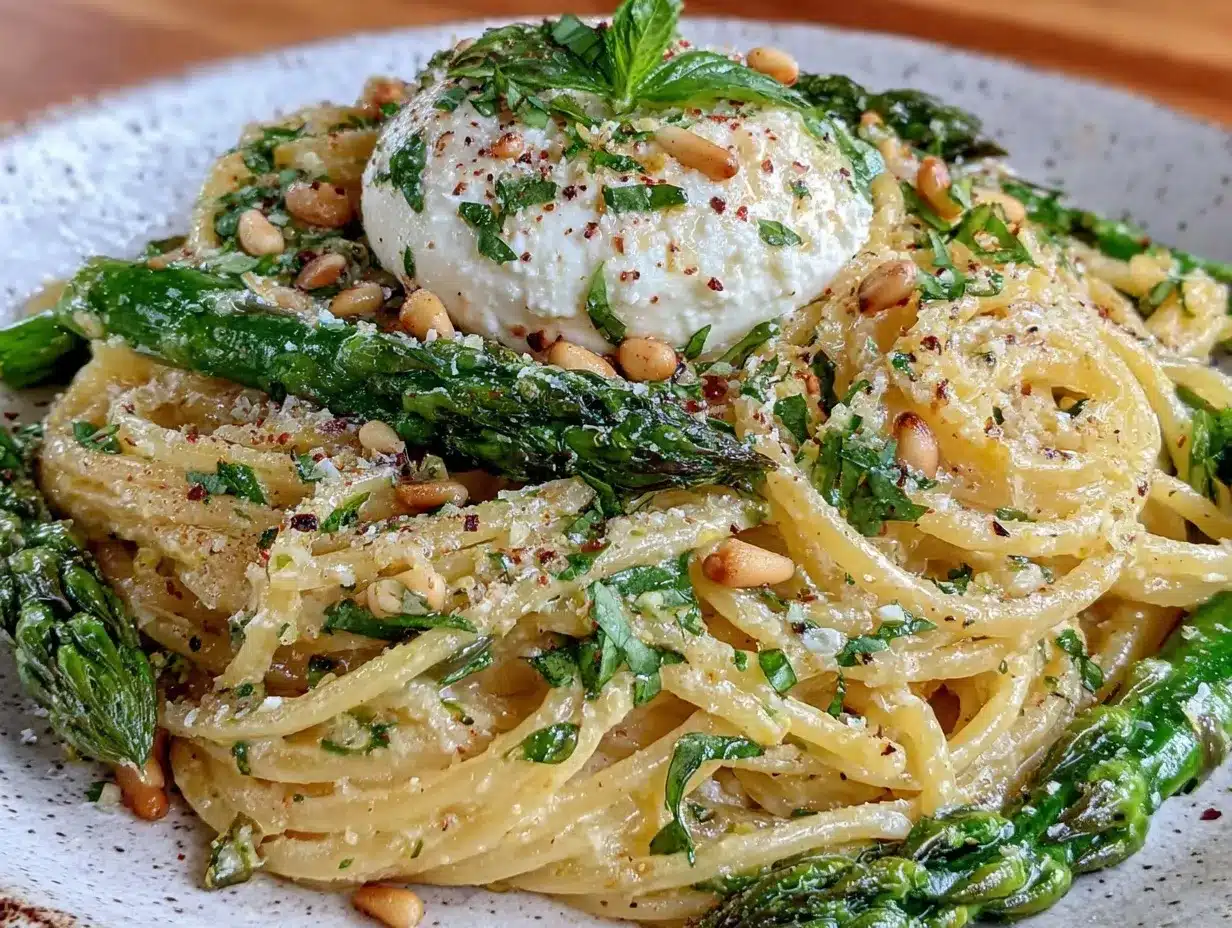
- Prepare the pasta water: Bring a large pot of salted water to a rolling boil. Salt it generously—it should taste like the sea. Add 8 ounces (225 grams) of spaghetti or linguine and cook according to package directions until al dente, usually around 8–10 minutes. Reserve 1 cup (240 ml) of pasta water before draining.
- Prep the asparagus: While pasta cooks, rinse and trim the asparagus. Cut into 2-inch pieces so they cook evenly and are easy to eat.
- Sauté the asparagus: Heat 2 tablespoons of olive oil in a large skillet over medium heat. Add the minced garlic and cook for about 30 seconds until fragrant—don’t let it brown or it’ll turn bitter. Toss in the asparagus pieces and cook for 4–5 minutes until tender-crisp and bright green. You want a little bite left.
- Add lemon and seasoning: Zest one lemon directly into the pan, then squeeze in the juice. Sprinkle in 1/4 teaspoon red pepper flakes if using, along with salt and freshly ground pepper to taste. Stir and let the flavors marry for a minute.
- Toss pasta with asparagus: Add the drained pasta to the skillet. Pour in about 1/2 cup (120 ml) of the reserved pasta water and toss everything together over low heat. The starchy water helps create a light sauce that clings to the noodles. Adjust with more water if it feels dry.
- Plate and add burrata: Divide the pasta among serving bowls. Tear the burrata gently and place a generous portion on top of each. The warmth from the pasta will soften the cheese beautifully.
- Finish with basil and optional Parmesan: Scatter torn fresh basil leaves over the top and finish with a little extra black pepper or a sprinkle of grated Parmesan if desired.
Tip: If the burrata feels too cold or firm straight from the fridge, let it sit out for 10 minutes before serving to maximize that creamy texture. Also, don’t overcook the asparagus—it should still have a slight snap for the best mouthfeel.
Cooking Tips & Techniques
Getting this pasta just right is all about timing and texture balance. One mistake I made early on was overcooking the asparagus until mushy—yuck. So, keep an eye on it and aim for tender but crisp. If you don’t have fresh asparagus, frozen can work but be sure to thaw and pat dry to avoid sogginess.
When zesting the lemon, avoid the white pith underneath—it’s bitter and can throw off the brightness. Use a microplane to get fine zest that integrates smoothly into the sauce.
Saving some pasta water is crucial. That starchy liquid is the secret to a silky sauce without cream. Add it gradually and toss well to coat every strand of pasta.
For burrata, quality matters. The fresh, creamy center really makes the dish sing. If you can’t find burrata, fresh mozzarella balls could work, but the texture and richness won’t be quite the same.
Multitasking helps here: while pasta cooks, prep your asparagus and zest your lemon. It keeps the workflow smooth and dinner on the table quickly.
Variations & Adaptations
- Protein boost: Add grilled chicken or sautéed shrimp to make it a heartier meal. The lemon and asparagus flavors pair beautifully with seafood or poultry, similar to my easy lemon garlic chicken with green beans recipe.
- Vegan version: Replace burrata with creamy cashew cheese or mashed avocado. Use nutritional yeast sprinkled on top for a cheesy note.
- Seasonal twist: Swap asparagus for fresh green beans or snap peas in early summer. You can also add cherry tomatoes for a burst of sweetness.
- Spicy kick: Increase red pepper flakes or add a dash of smoked paprika for a smoky heat.
- Low-carb option: Use zucchini noodles instead of pasta, tossing them in at the end to keep them crisp and fresh.
One personal favorite variation I’ve tried is adding a sprinkle of toasted pine nuts on top for extra crunch and nuttiness—it’s subtle but adds a lovely texture contrast that feels fancy without fuss.
Serving & Storage Suggestions
This pasta is best served warm, fresh off the stove, when the burrata is soft and melting. I like to plate it in shallow bowls, so the sauce pools just right and you get a bite of everything in each forkful.
Pair it with a crisp white wine like Sauvignon Blanc or a light sparkling water with a lemon wedge to keep the meal feeling bright and refreshing. For a side, a simple mixed green salad dressed with olive oil and vinegar works perfectly.
If you have leftovers, transfer them to an airtight container and refrigerate for up to 2 days. When reheating, add a splash of water or broth and gently warm on the stovetop to keep the pasta from drying out. Burrata doesn’t reheat well, so save fresh cheese for serving.
Flavors meld nicely overnight, so it’s actually great as a next-day lunch, just add fresh basil and a drizzle of olive oil before eating.
Nutritional Information & Benefits
This fresh lemon asparagus pasta with creamy burrata is a balanced dish that offers a good mix of carbs, protein, and healthy fats. Asparagus is rich in vitamins A, C, and K, plus fiber and antioxidants, which support digestion and immunity. Lemon adds a boost of vitamin C and a refreshing tang that helps brighten the palate.
Burrata provides calcium and protein, and though it’s indulgent, a little goes a long way in flavor and satisfaction. Using olive oil contributes heart-healthy monounsaturated fats, making this dish a wholesome choice without feeling heavy.
If you’re mindful of gluten or dairy, simple swaps like gluten-free pasta or vegan cheese ensure the recipe stays inclusive and enjoyable.
Conclusion
This fresh lemon asparagus pasta with creamy burrata recipe is one of those rare dishes that feels effortlessly elegant. It’s quick enough for a weekday dinner but special enough to share with friends on a relaxed weekend. The combination of bright lemon, tender asparagus, and rich burrata strikes a perfect harmony that’s both comforting and fresh.
I love how it invites customization—whether you want to add protein, spice it up, or keep it purely vegetarian—and yet never feels complicated. It’s like a little celebration of spring on a plate, simple but with character.
Give it a try and make it your own. I’d love to hear how you tweak the flavors or what accompaniments you pair it with. Cooking is always better when shared, even through stories and tweaks passed along in comments.
Enjoy every bright, creamy bite!
FAQs About Fresh Lemon Asparagus Pasta with Creamy Burrata
Can I use frozen asparagus for this recipe?
Yes, but thaw and drain it well before cooking to avoid excess moisture. Fresh asparagus is best for texture and flavor, but frozen works in a pinch.
What if I can’t find burrata cheese?
Fresh mozzarella balls can be a substitute, though they are firmer and less creamy. Alternatively, try creamy ricotta or mascarpone for a similar richness.
How do I keep the asparagus crisp and not mushy?
Cook it just until tender-crisp, usually 4–5 minutes over medium heat. Overcooking is the main culprit for sogginess.
Can I prepare this pasta ahead of time?
It’s best enjoyed fresh, but you can cook the pasta and asparagus in advance and reheat gently with some reserved pasta water. Add burrata right before serving.
Is this recipe suitable for a vegan diet?
Not as is, but you can swap burrata for a creamy vegan cheese or mashed avocado and use vegan pasta to make it plant-based.
For a similarly creamy yet comforting pasta experience, you might want to check out my creamy one-pot Tuscan tortellini recipe. And if you love seasonal vegetable dishes, the creamy lemon asparagus risotto is right up your alley.
Pin This Recipe!
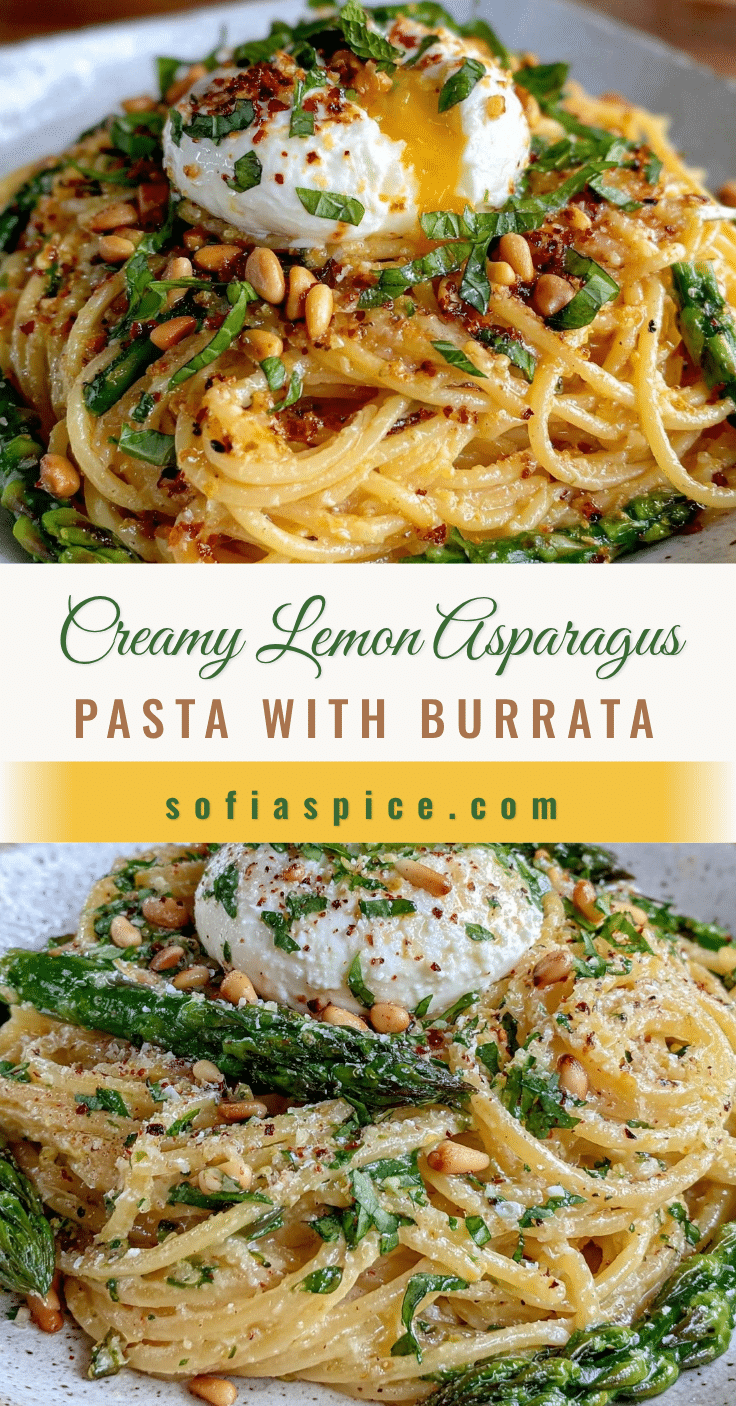
Fresh Lemon Asparagus Pasta with Creamy Burrata
A quick and easy spring-inspired pasta dish featuring tender asparagus, bright lemon, and creamy burrata cheese for a fresh and satisfying meal.
- Prep Time: 10 minutes
- Cook Time: 15 minutes
- Total Time: 25 minutes
- Yield: 4 servings 1x
- Category: Main Course
- Cuisine: Italian
Ingredients
- 8 ounces spaghetti or linguine pasta
- 1 bunch fresh asparagus (about 1 pound), trimmed and cut into 2-inch pieces
- 2 tablespoons extra virgin olive oil
- 2 cloves garlic, minced
- Zest and juice of 1 large lemon
- 1/4 teaspoon red pepper flakes (optional)
- Salt and freshly ground black pepper to taste
- 1 ball creamy burrata cheese (about 4 ounces)
- A handful fresh basil leaves, torn
- Grated Parmesan cheese (optional, for serving)
Instructions
- Bring a large pot of salted water to a rolling boil. Salt generously. Add pasta and cook according to package directions until al dente, about 8–10 minutes. Reserve 1 cup of pasta water before draining.
- While pasta cooks, rinse and trim asparagus. Cut into 2-inch pieces.
- Heat olive oil in a large skillet over medium heat. Add minced garlic and cook for about 30 seconds until fragrant. Add asparagus and cook 4–5 minutes until tender-crisp and bright green.
- Add lemon zest and juice to the pan. Sprinkle in red pepper flakes if using, and season with salt and pepper. Stir and let flavors marry for a minute.
- Add drained pasta to the skillet. Pour in about 1/2 cup reserved pasta water and toss over low heat to create a light sauce. Adjust with more water if needed.
- Divide pasta among serving bowls. Tear burrata and place on top of each serving.
- Scatter torn basil leaves over the pasta and finish with extra black pepper or grated Parmesan if desired.
Notes
Let burrata sit at room temperature for 10 minutes before serving for best creamy texture. Avoid overcooking asparagus to keep it tender-crisp. Save some pasta water to create a silky sauce without cream. Fresh asparagus is preferred but frozen can be used if thawed and drained well.
Nutrition
- Serving Size: 1 serving (about 1/4
- Calories: 420
- Sugar: 4
- Sodium: 320
- Fat: 22
- Saturated Fat: 7
- Carbohydrates: 38
- Fiber: 5
- Protein: 14
Keywords: lemon asparagus pasta, burrata pasta, spring pasta recipe, easy pasta, creamy pasta, vegetarian pasta