“Are you sure chickpea pasta will taste good?” my friend asked skeptically as I dumped the box into the pot. Honestly, I wasn’t totally convinced myself. I’d grabbed it on a whim during a rushed grocery run, lured by the promise of a protein-packed, gluten-free twist. That day, the spring vegetables I planned to roast were a little more wilted than I’d hoped, and the usual pasta was nowhere to be found. So, I thought, why not give this fresh chickpea pasta a shot and toss in those veggies with a quick homemade pesto?
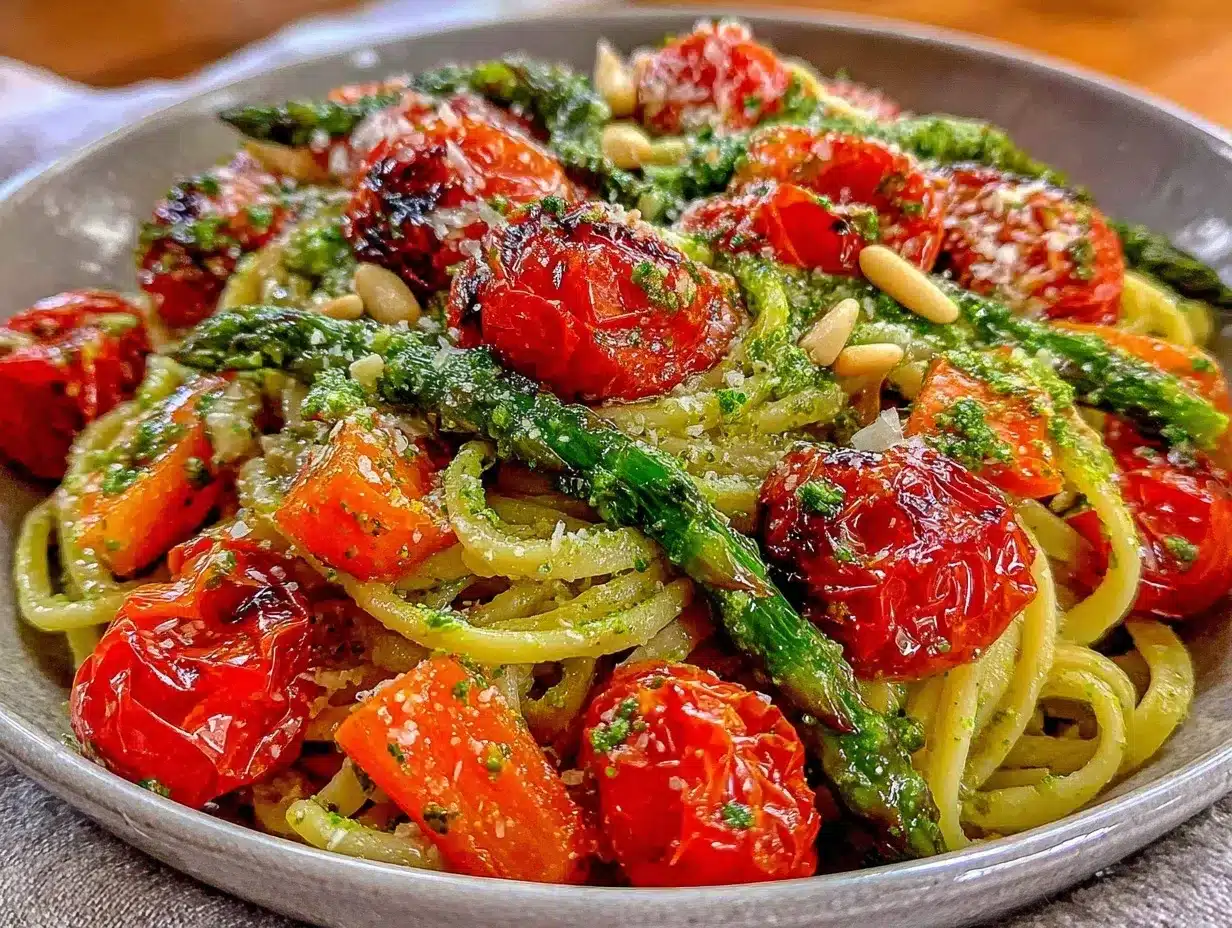
Turns out, the whole thing came together in a way I didn’t expect. The chickpea pasta held its shape beautifully, slightly nutty and satisfying, while the roasted spring vegetables—carrots, asparagus, and tender baby zucchini—caramelized just enough to add sweetness and depth. The pesto was the real kicker: fresh basil, garlic, pine nuts, and a splash of lemon juice, quick and vibrant, tying everything together with that irresistible punch.
That night, as I twirled a forkful between my fingers, I realized this was no accident. It was a recipe that stuck, a dish that felt light but comforting, fresh but hearty. It’s the kind of meal you want to make again and again, especially when spring rolls around and the market stalls burst with color. This fresh chickpea pasta with roasted spring vegetables and pesto isn’t just a dinner—it’s a quiet reminder that sometimes the best meals come from happy little kitchen accidents.
Why You’ll Love This Recipe
Coming from someone who’s tested more pasta recipes than I can count, this fresh chickpea pasta recipe stands out for several reasons that make it a keeper in my weekly rotation:
- Quick & Easy: Ready in under 30 minutes, ideal for busy weeknights or unexpected guests.
- Simple Ingredients: Uses pantry staples and seasonal produce you probably already have, no fancy runs to specialty stores.
- Perfect for Spring & Light Dinners: The roasted vegetables give it a seasonal touch that feels both nourishing and fresh.
- Crowd-Pleaser: Even skeptical eaters love the satisfying texture and flavor combo, and it’s great for sharing.
- Unbelievably Delicious: The nutty undertones of chickpea pasta and the bright, herby pesto create a balanced, soulful dish.
What makes this recipe truly different is how the fresh chickpea pasta holds up with roasting vegetables and pesto without getting soggy or overwhelming the palate. The pesto recipe itself is a quick twist, bright with lemon and toasted pine nuts, giving it an edge over the usual. You’ll find yourself closing your eyes after the first bite, savoring that harmony of textures and flavors. It’s comfort food, spring edition—lighter, with all the soul, and a dash of health-consciousness, making it perfect for impressing without stress.
What Ingredients You Will Need
This recipe leans on simple, wholesome ingredients to deliver bold flavor and satisfying texture with minimal fuss. Most are pantry staples or easy to find at your local market.
- Fresh Chickpea Pasta: 8 oz (225 g) fresh chickpea pasta (I recommend Banza for a great texture and protein boost)
- Spring Vegetables to Roast:
- 1 cup (150 g) baby carrots, peeled and halved
- 1 cup (150 g) asparagus spears, trimmed and cut into 2-inch pieces
- 1 cup (150 g) baby zucchini, sliced lengthwise
- Olive Oil: 3 tbsp, divided (extra virgin for roasting and pesto)
- Salt & Pepper: To taste
- For the Pesto:
- 2 cups (packed) fresh basil leaves
- 1/3 cup (45 g) pine nuts, toasted (can swap walnuts for budget-friendly option)
- 2 cloves garlic, minced
- 1/2 cup (50 g) Parmesan cheese, grated (or nutritional yeast for dairy-free)
- 1 tbsp fresh lemon juice (adds bright freshness)
- 1/3 cup (80 ml) olive oil
- Pinch of salt
- Optional Garnish: Extra pine nuts, grated Parmesan, or lemon zest
If you want to swap out the chickpea pasta for a gluten-free option, try using a fresh quinoa blend pasta. And if fresh basil is out of season, a mix of parsley and spinach will work just fine. For a dairy-free pesto, just skip the Parmesan or use a vegan alternative.
Equipment Needed
- Large pot for boiling pasta
- Baking sheet for roasting vegetables (a rimmed sheet works best to prevent spills)
- Food processor or blender for making pesto (a mortar and pestle will work, but it takes longer!)
- Mixing bowls for tossing pasta and vegetables
- Measuring cups and spoons for accuracy
- Colander or pasta strainer
If you don’t have a food processor, a sturdy blender can handle the pesto, just pulse carefully to avoid over-blending. For roasting, I’ve found that using parchment paper on the baking sheet saves cleanup time and prevents sticking. A good sharp knife and cutting board are your best friends here—fresh chopping makes a difference!
Preparation Method
- Preheat the Oven: Set your oven to 425°F (220°C). This high heat helps caramelize the vegetables nicely.
- Prepare the Vegetables: Toss the baby carrots, asparagus, and zucchini in 2 tablespoons of olive oil, sprinkle with salt and pepper, and spread them out evenly on the baking sheet. Roast for about 20-25 minutes, turning halfway through. Look for golden edges and a tender bite as your cue.
- Cook the Pasta: While the vegetables roast, bring a large pot of salted water to a boil. Add the fresh chickpea pasta and cook for 3-4 minutes (or according to package instructions). Fresh pasta cooks quickly, so keep an eye on it—al dente is the goal.
- Drain and Reserve: Drain the pasta, reserving about 1/4 cup (60 ml) of the cooking water. This starchy water will help the sauce stick later.
- Make the Pesto: In a food processor, combine the basil leaves, toasted pine nuts, garlic, Parmesan, lemon juice, and a pinch of salt. Pulse until coarsely blended. With the motor running, slowly drizzle in the olive oil until the mixture is smooth but still has some texture. Taste and adjust salt or lemon as needed.
- Combine Pasta and Pesto: Return the drained pasta to the pot or a large bowl. Add the pesto and toss gently to coat. If it feels thick, add reserved pasta water a tablespoon at a time until silky and evenly coated.
- Add Roasted Vegetables: Gently fold in the roasted spring vegetables. The warmth from the pasta helps bring the flavors together.
- Final Touches: Taste for seasoning, add more salt, pepper, or a squeeze of lemon if desired. Serve immediately garnished with extra pine nuts or Parmesan if you like.
Pro tip: Don’t overcook the pasta or roast the vegetables too long; you want that nice bite and caramelized flavor, not mush. Also, making the pesto fresh in small batches keeps the vibrant color and flavor intact.
Cooking Tips & Techniques
One thing I learned is that chickpea pasta is a bit more delicate than regular semolina pasta—so timing is everything. Overcooking can lead to a gummy texture, so stick to the package instructions and test early. Also, reserving pasta water is key; it helps your pesto cling perfectly without drying out the dish.
When roasting vegetables, giving them space on the pan is important. Crowding traps steam, which prevents that beautiful caramelizing magic. I’ve made that mistake more times than I want to admit! Tossing veggies halfway through roasting makes sure each side gets those golden spots.
For pesto, toasting pine nuts gently in a dry pan brings out a nuttier flavor, but watch closely—they burn quickly. If you don’t have pine nuts, walnuts or almonds work well, though the flavor shifts slightly.
Multitasking really helps here: pop the veggies in the oven first, then cook pasta while the pesto blends. That way, the whole dish comes together hot and fresh without stress.
Variations & Adaptations
- Seasonal Twist: Swap spring vegetables for roasted cherry tomatoes and fresh peas in summer, or roasted Brussels sprouts and butternut squash in fall.
- Protein Boost: Add grilled chicken, sautéed shrimp, or crispy tofu for a heartier meal.
- Nut-Free Pesto: Replace pine nuts with pumpkin seeds or sunflower seeds to accommodate allergies.
- Dairy-Free: Use nutritional yeast in place of Parmesan and check pasta ingredients for dairy.
- Spicy Kick: Toss in red pepper flakes to the pesto or sprinkle over the finished dish for some heat.
One time, I swapped the basil for fresh arugula in the pesto—gave it a peppery edge that was surprisingly good with the sweet roasted veggies. Feel free to experiment with herbs you love or have on hand.
Serving & Storage Suggestions
This fresh chickpea pasta is best served warm, right after tossing with pesto and roasted vegetables. A drizzle of extra virgin olive oil on top and a sprinkle of lemon zest add a lovely finishing touch. Pair it with a crisp green salad or a light white wine for a balanced meal.
Leftovers keep well in an airtight container in the fridge for up to 3 days. When reheating, add a splash of water or olive oil to bring back silkiness and warm gently on the stove or microwave—avoid overheating to prevent drying out.
Flavors actually deepen overnight, making it a great make-ahead lunch or dinner. Just be sure to toss again with a little fresh lemon or olive oil before serving to refresh the taste.
Nutritional Information & Benefits
This fresh chickpea pasta dish delivers a nutritious punch. Chickpea pasta is higher in protein and fiber compared to traditional wheat pasta, supporting digestion and sustained energy. The roasted spring vegetables add vitamins A and C, antioxidants, and minerals.
The homemade pesto provides healthy fats from olive oil and pine nuts, along with vitamin K and fresh herb antioxidants. It’s naturally gluten-free and dairy-free options are easy to make.
Perfect for those watching carbs but wanting a filling meal, this recipe balances wholesome ingredients without skimping on flavor or satisfaction.
Conclusion
Fresh chickpea pasta with roasted spring vegetables and pesto is one of those dishes that feels like a special occasion but comes together effortlessly. It’s wholesome, colorful, and packed with layers of flavor that make every bite interesting.
Feel free to adjust the vegetables or tweak the pesto to your taste—that’s part of the fun! I love this recipe because it turns simple ingredients into something memorable, healthy, and satisfying. Whether it’s a weekday dinner or a weekend treat, it’s one you’ll find yourself making again and again.
Let me know how you customize it or what your favorite vegetable combos are—I’m always curious to hear your twists!
Frequently Asked Questions
Can I use dried chickpea pasta instead of fresh?
Yes, dried chickpea pasta works fine but will take longer to cook (usually around 8-10 minutes). Watch closely to avoid overcooking and adjust the roasting time of vegetables as needed.
How do I store leftover pesto?
Store pesto in an airtight container in the fridge for up to 5 days. To prevent browning, drizzle a thin layer of olive oil on top before sealing.
Can I make this recipe vegan?
Absolutely! Simply omit the Parmesan or replace it with nutritional yeast for a cheesy flavor without dairy.
What’s the best way to toast pine nuts?
Toast pine nuts in a dry skillet over medium heat, stirring frequently, for 2-3 minutes until golden and fragrant. Be careful—they burn quickly!
Is chickpea pasta gluten-free?
Most chickpea pastas are gluten-free, but always check the package label to be sure, especially if you have gluten sensitivities.
For a Mediterranean-inspired spread, this dish pairs wonderfully with the creamy baba ganoush with tahini. Or if you want to round out a meal with more roasted veggies, the grilled eggplant with sweet miso glaze is a perfect companion.
Pin This Recipe!
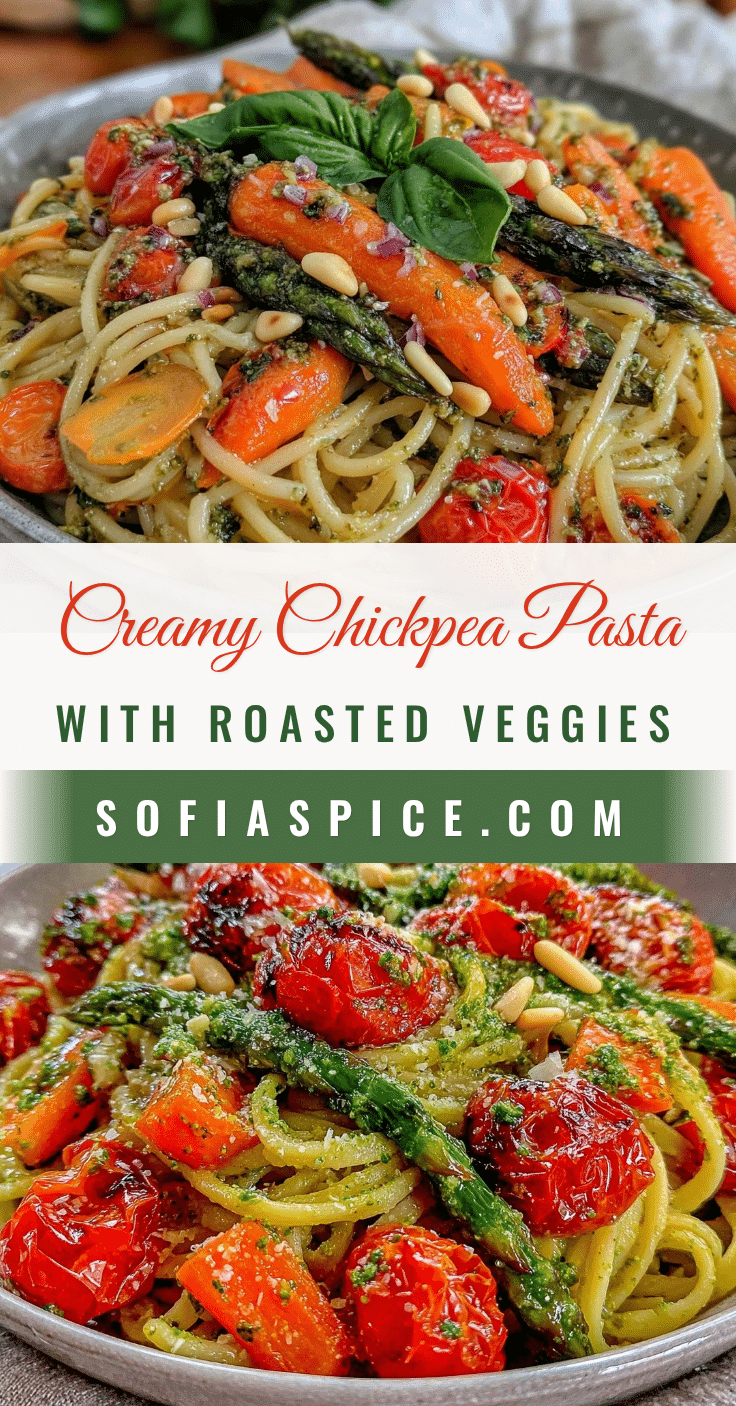
Fresh Chickpea Pasta Recipe with Roasted Spring Vegetables and Easy Pesto
A quick and easy fresh chickpea pasta dish featuring roasted spring vegetables and a vibrant homemade pesto. This gluten-free, protein-packed meal is perfect for light, nourishing dinners.
- Prep Time: 10 minutes
- Cook Time: 25 minutes
- Total Time: 35 minutes
- Yield: 4 servings 1x
- Category: Main Course
- Cuisine: Mediterranean
Ingredients
- 8 oz fresh chickpea pasta (recommend Banza)
- 1 cup baby carrots, peeled and halved
- 1 cup asparagus spears, trimmed and cut into 2-inch pieces
- 1 cup baby zucchini, sliced lengthwise
- 3 tbsp extra virgin olive oil, divided
- Salt and pepper to taste
- For the pesto:
- 2 cups packed fresh basil leaves
- 1/3 cup pine nuts, toasted (or walnuts as a budget-friendly option)
- 2 cloves garlic, minced
- 1/2 cup Parmesan cheese, grated (or nutritional yeast for dairy-free)
- 1 tbsp fresh lemon juice
- 1/3 cup olive oil
- Pinch of salt
- Optional garnish: extra pine nuts, grated Parmesan, or lemon zest
Instructions
- Preheat the oven to 425°F (220°C).
- Toss baby carrots, asparagus, and zucchini with 2 tablespoons olive oil, salt, and pepper. Spread evenly on a baking sheet and roast for 20-25 minutes, turning halfway through, until golden and tender.
- Bring a large pot of salted water to a boil. Cook fresh chickpea pasta for 3-4 minutes or according to package instructions until al dente.
- Drain pasta, reserving 1/4 cup (60 ml) of cooking water.
- In a food processor, combine basil, toasted pine nuts, garlic, Parmesan, lemon juice, and salt. Pulse until coarsely blended. Slowly drizzle in olive oil while processing until smooth but textured. Adjust seasoning as needed.
- Return pasta to pot or large bowl. Add pesto and toss to coat, adding reserved pasta water a tablespoon at a time if needed for a silky texture.
- Fold in roasted vegetables gently.
- Taste and adjust seasoning with salt, pepper, or lemon juice. Serve immediately, garnished with extra pine nuts or Parmesan if desired.
Notes
Do not overcook the chickpea pasta to avoid gummy texture. Reserve pasta water to help pesto coat the pasta smoothly. Roast vegetables with space on the pan to ensure caramelization. Toast pine nuts gently to avoid burning. For dairy-free pesto, substitute Parmesan with nutritional yeast.
Nutrition
- Serving Size: 1 serving (approxima
- Calories: 420
- Sugar: 5
- Sodium: 320
- Fat: 22
- Saturated Fat: 3.5
- Carbohydrates: 38
- Fiber: 7
- Protein: 18
Keywords: chickpea pasta, gluten-free pasta, roasted vegetables, pesto, spring vegetables, easy dinner, healthy pasta, protein-packed pasta