“You’re not seriously adding capers to that, are you?” my friend joked over the phone as I chopped eggplant in my cramped kitchen. Honestly, I was a bit skeptical myself. The idea of mixing tangy capers and briny olives with sweet tomatoes and tender eggplant sounded like a wild gamble. But that night, after a particularly chaotic day, I tossed everything into the pan with little expectation, hoping for a quick, comforting dish.
What came out surprised me. The flavors melded into this vibrant, slightly sweet, and savory stew that felt like a warm hug. The tang of the capers and the salty punch of the olives cut through the richness perfectly. I couldn’t stop nibbling on it straight from the pan, and soon enough, my friend was texting back, asking for the recipe. That was the moment I realized this Flavorful Eggplant Caponata with Capers and Olives wasn’t just a last-minute experiment—it was a keeper.
This recipe found its way into my regular rotation because it’s that rare kind of dish that feels fancy but is actually fuss-free. It’s a cozy, Mediterranean-inspired treat that’s as good on toasted bread as it is alongside a roasted chicken or even mixed into pasta. The way the eggplant softens and absorbs all those sharp, sweet, and salty notes is something I keep coming back to, especially on evenings when I want something satisfying but not complicated. And honestly, it’s a great way to sneak more veggies into a meal without anyone noticing.
It’s funny how a simple dinner chat with a friend turned into this flavorful obsession. Now, I make it often enough that I’ve learned a few tricks to get the texture just right and balance the flavors perfectly. There’s something quietly rewarding about that—like cooking that feels both nourishing and a bit indulgent. So, here’s my easy guide to making this eggplant caponata that’s definitely worth a spot in your kitchen, whether you’re a seasoned cook or just someone who appreciates a good, honest meal.
Why You’ll Love This Recipe
After testing this Flavorful Eggplant Caponata with Capers and Olives multiple times (yes, I made it three times last week alone), I can say it really hits all the right notes for a satisfying dish. Here’s why it stands out:
- Quick & Easy: The whole thing comes together in about 40 minutes, making it perfect for busy weeknights or when you need something reliable fast.
- Simple Ingredients: You probably have most of these in your pantry already—eggplant, capers, olives, and a few staples like garlic and onion. No exotic shopping trips needed.
- Perfect for Sharing: Whether it’s an impromptu gathering or a comforting family dinner, this caponata pleases a crowd without stress.
- Versatile: Use it as a side, a topping for crusty bread, or a mix-in for pasta. It’s flexible enough to suit different meals and moods.
- Unbelievably Delicious: The combo of tangy capers and briny olives against the sweetness of sautéed eggplant and tomatoes creates a taste that’s layered and exciting without being overwhelming.
What makes this recipe different? Well, I’ve found that roasting the eggplant first (instead of just frying) really deepens the flavor and keeps the texture from turning mushy. Plus, balancing the sweet and sour elements with a splash of red wine vinegar and a hint of sugar makes all the difference. It’s not just an eggplant stew—it’s a dish that invites you to savor every bite.
Honestly, every time I serve it, I catch myself closing my eyes at the first forkful. It’s a little moment of calm and comfort, like a quiet reminder that good food doesn’t have to be complicated. If you want a recipe that brings soul to the table and doesn’t take half your day, this one’s a winner.
What Ingredients You Will Need
This recipe uses simple, wholesome ingredients to deliver bold flavor and satisfying texture without any fuss. Most are pantry staples, with some fresh produce that’s easy to find year-round.
- Eggplant: 2 medium-sized (about 1.5 pounds / 700 g), peeled and cut into 1-inch cubes. Look for firm, glossy skin for the best texture.
- Olive Oil: 3 tablespoons, preferably extra virgin for richer flavor.
- Onion: 1 medium yellow onion, finely chopped (adds sweetness and depth).
- Garlic: 3 cloves, minced (fresh garlic really makes a difference).
- Celery: 2 stalks, diced (provides a nice crunch and freshness).
- Capers: 2 tablespoons, drained (I usually go for non-pareil capers for their delicate texture).
- Green Olives: 1/2 cup, pitted and sliced (Kalamata or Castelvetrano olives work wonderfully). You can swap for black olives if preferred.
- Tomatoes: 1 cup canned crushed tomatoes or fresh tomatoes peeled and chopped (summer tomatoes are perfect when in season).
- Red Wine Vinegar: 2 tablespoons (adds that signature tang, but you can use sherry vinegar for a softer touch).
- Sugar: 1 tablespoon (balances acidity, feel free to adjust to taste).
- Pine Nuts: 1/4 cup, toasted (optional but adds a lovely crunch and nuttiness).
- Fresh Basil: A handful, chopped (for garnish and fresh herbal notes).
- Salt and Pepper: To taste.
When I’m in a pinch, I sometimes swap celery for fennel for a bit of anise flavor, which is a nice twist. Also, for a gluten-free or paleo-friendly option, all these ingredients work perfectly as-is.
Equipment Needed
For this flavorful eggplant caponata, you’ll want a few basic kitchen tools that make the process smooth and enjoyable.
- Large Skillet or Sauté Pan: A heavy-bottomed pan (10-12 inches) works best to evenly cook the eggplant and vegetables. If you have a non-stick skillet, that’s even better for easy cleanup.
- Baking Sheet: For roasting the eggplant cubes. A rimmed sheet helps keep everything contained, and you can line it with parchment paper to avoid sticking.
- Sharp Knife: Essential for chopping the eggplant, onion, and celery finely and safely.
- Wooden Spoon or Silicone Spatula: For stirring gently without scratching your pan.
- Measuring Spoons and Cups: Accuracy matters, especially with vinegar and sugar for balance.
- Toaster Oven or Oven: Needed to roast the eggplant at about 400°F (200°C).
If you don’t have a large skillet, a medium one works fine—just cook in batches to avoid overcrowding. Also, a cast iron skillet is a favorite of mine for even heat distribution, but any sturdy pan will do. I’ve found that using the right tools makes the difference between soggy eggplant and beautifully tender bites.
Preparation Method
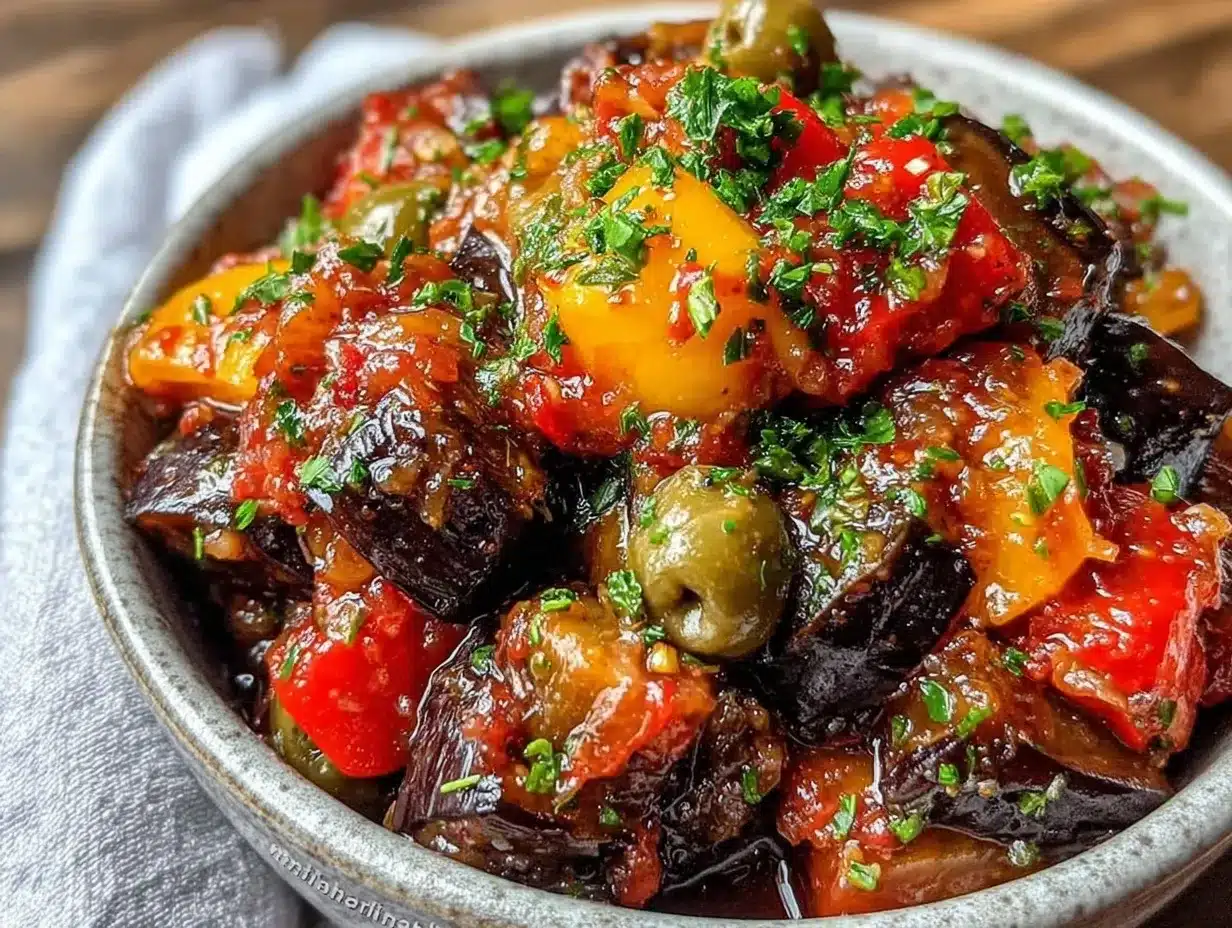
- Prepare the Eggplant: Preheat your oven to 400°F (200°C). Peel and cut the eggplant into 1-inch cubes. Spread them out in a single layer on a baking sheet, drizzle with 1 tablespoon olive oil, and toss to coat evenly. Roast for 20-25 minutes, turning halfway through, until golden and softened but not mushy. Roasting intensifies the eggplant’s flavor and prevents it from soaking up too much oil later.
- Cook the Aromatics: While the eggplant roasts, heat the remaining 2 tablespoons of olive oil in your skillet over medium heat. Add the chopped onion and celery, sauté for about 5-7 minutes until softened and translucent. Toss in the minced garlic and cook for another minute until fragrant – be careful not to burn it!
- Add Tomatoes and Capers: Pour in the crushed tomatoes, stirring to combine. Add the drained capers and sliced olives, then sprinkle in the sugar and season lightly with salt and pepper. Let this simmer gently for 10 minutes, stirring occasionally. The sauce will thicken slightly and the flavors start to meld.
- Combine with Eggplant: Once the eggplant is roasted, fold it into the tomato mixture carefully, so the cubes keep their shape. Continue to cook over low heat for 5-10 minutes, allowing the eggplant to absorb those tangy, salty notes.
- Finish and Serve: Stir in the toasted pine nuts for a bit of crunch and sprinkle fresh basil over the top. Taste and adjust seasoning if needed. Serve warm, at room temperature, or chilled. It’s delicious on toasted baguette slices or alongside grilled meats.
Pro tip: If your eggplant is soaking up too much oil, you can salt it beforehand and let it sit for 20 minutes, then rinse and pat dry before roasting. This helps reduce bitterness and excess moisture. Also, don’t rush the simmering step—it’s where all those flavors get cozy together.
Cooking Tips & Techniques
Getting the perfect caponata texture and flavor is all about a few key tricks I picked up after some trial and error:
- Roasting vs. Frying Eggplant: I used to fry eggplant cubes for this dish, but it often ended up greasy and mushy. Roasting at a high temperature caramelizes the edges and keeps the cubes firm yet tender.
- Balancing Sweet and Sour: The red wine vinegar and sugar are what make this dish sing. Too much vinegar and it’s overpowering; too little sugar and it feels flat. Start with the recommended amounts and adjust after tasting—sometimes a splash more vinegar brightens things up just right.
- Don’t Overcrowd Your Pan: When sautéing onions and celery, give them space to soften rather than steam. This builds a better flavor base.
- Multitasking: While the eggplant roasts, prep your other ingredients and simmer the sauce. Saves you time and keeps the kitchen workflow smooth.
- Fresh Herbs Last: Add basil or parsley at the end to keep their brightness.
One lesson I learned the hard way: skipping the simmer can leave flavors disconnected, and rushing roasting can result in undercooked eggplant. Patience pays off here for a luscious, layered caponata.
Variations & Adaptations
This eggplant caponata is pretty flexible, so you can tweak it to suit your tastes or dietary needs:
- Vegan Version: This recipe is naturally vegan, but if you’re serving it on toast, just pick a vegan-friendly bread or crackers.
- Nut-Free: Simply skip the pine nuts or swap for toasted sunflower seeds for crunch.
- Spicy Twist: Add a pinch of red pepper flakes during the sauté stage for a subtle heat that contrasts nicely with the sweet and sour.
- Seasonal Swaps: In summer, substitute fresh ripe tomatoes instead of canned for a brighter flavor. Or add diced zucchini or bell peppers for extra veggie variety.
- Cooking Method: If you prefer, you can pan-fry the eggplant cubes in batches until golden instead of roasting, but watch the oil amount closely to avoid sogginess.
Personally, I once tried adding a splash of balsamic vinegar instead of red wine vinegar, which gave it a richer, deeper sweetness—nice for fall dinners. Also, swapping celery for fennel bulb adds a lovely anise aroma if you want to get a bit fancy without extra effort.
Serving & Storage Suggestions
Caponata is wonderfully versatile when it comes to serving and storing:
- Serving Temperature: Serve it warm for cozy dinners or at room temperature as an appetizer spread. It’s also fantastic chilled, which makes it a great make-ahead dish.
- Presentation Ideas: Spoon it over toasted baguette slices or crostini for a simple snack. Try pairing it with grilled chicken or fish for a Mediterranean-inspired meal. It also pairs beautifully with creamy dishes like a creamy baked mac and cheese with crispy bacon to balance richness with freshness.
- Storage: Keep leftovers in an airtight container in the fridge for up to 4 days. Flavors actually deepen after a day or two, so it’s perfect for prepping ahead.
- Freezing: You can freeze caponata for up to 3 months, but the texture of the eggplant softens more after thawing. I recommend freezing only if you plan to use it in cooked dishes, like mixing into pasta or as a sauce base.
- Reheating: Warm gently on the stovetop or in the microwave. Add a splash of olive oil or a squeeze of lemon to refresh the flavors if needed.
Nutritional Information & Benefits
This eggplant caponata is not only flavorful but also packs a nutritional punch. Eggplant is rich in fiber and antioxidants, while capers and olives bring beneficial monounsaturated fats and a dose of vitamins. Here’s a rough estimate per serving (about 1/2 cup):
| Nutrient | Amount |
|---|---|
| Calories | 110 kcal |
| Fat | 8 g (mostly healthy fats) |
| Carbohydrates | 9 g |
| Fiber | 3 g |
| Protein | 2 g |
This recipe is naturally gluten-free and low in carbs, making it compatible with many diets. Keep in mind, capers and olives are salty, so adjust added salt accordingly. From a wellness perspective, this dish feels like a guilt-free treat that still satisfies those craving complex, savory flavors.
Conclusion
This Flavorful Eggplant Caponata with Capers and Olives is one of those recipes that quietly becomes a favorite because it’s simple, adaptable, and genuinely delicious. Whether you’re looking to add a Mediterranean twist to your meals or just want a vegetable side that’s bursting with personality, this caponata fits the bill.
Feel free to tweak it as you like—add a bit more tang, toss in your favorite nuts, or serve it with crusty bread or grilled meats. I love how flexible it is, making it a dependable go-to for all sorts of occasions. Plus, it pairs wonderfully with comforting dishes like a classic chicken pot pie or a hearty meatloaf, creating a balanced meal with lots of flavor layers.
If you give it a try, I’d love to hear how it turned out or what variations you made. Cooking is always better when shared, and this caponata is a dish worth sharing. So grab your eggplant and get ready for some serious flavor that’s easy to pull off but feels special every time.
FAQs About Flavorful Eggplant Caponata with Capers and Olives
Can I make eggplant caponata ahead of time?
Yes! Caponata actually tastes better after sitting for a few hours or overnight as the flavors meld. Store it in an airtight container in the fridge for up to 4 days.
What can I serve with eggplant caponata?
It’s great on toasted bread, alongside grilled meats or fish, or even stirred into pasta. It also pairs nicely with creamy dishes like mac and cheese or chicken pot pie.
Can I use fresh capers instead of jarred?
Fresh capers are rare and usually not available; jarred or salted capers work best. Just rinse salted capers well before using to reduce saltiness.
Is this recipe gluten-free?
Absolutely! All ingredients are naturally gluten-free, making it safe for gluten-sensitive diets.
How do I prevent the eggplant from getting mushy?
Roasting the eggplant at high heat and not overcrowding the pan helps keep the cubes tender but intact. Salting and draining the eggplant beforehand also reduces moisture.
Pin This Recipe!
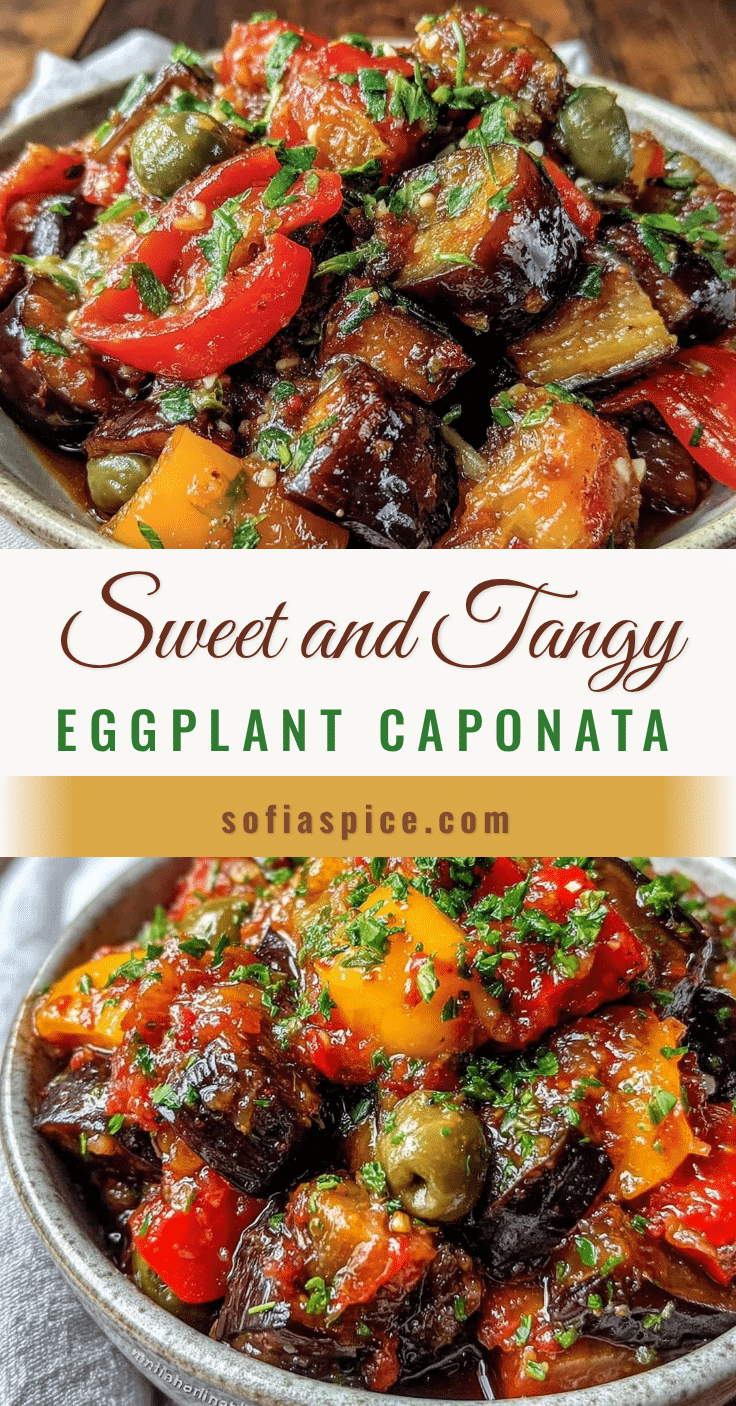
Flavorful Eggplant Caponata Recipe with Capers and Olives
A vibrant, slightly sweet and savory Mediterranean-inspired eggplant stew featuring tangy capers, briny olives, and sweet tomatoes. Perfect as a side, topping, or mix-in, this fuss-free dish is quick to prepare and packed with bold flavors.
- Prep Time: 15 minutes
- Cook Time: 25 minutes
- Total Time: 40 minutes
- Yield: 6 servings 1x
- Category: Side Dish
- Cuisine: Mediterranean
Ingredients
- 2 medium eggplants (about 1.5 pounds / 700 g), peeled and cut into 1-inch cubes
- 3 tablespoons extra virgin olive oil
- 1 medium yellow onion, finely chopped
- 3 cloves garlic, minced
- 2 stalks celery, diced
- 2 tablespoons drained capers
- 1/2 cup pitted and sliced green olives (Kalamata or Castelvetrano preferred)
- 1 cup canned crushed tomatoes or fresh peeled and chopped tomatoes
- 2 tablespoons red wine vinegar
- 1 tablespoon sugar
- 1/4 cup toasted pine nuts (optional)
- A handful fresh basil, chopped
- Salt and pepper to taste
Instructions
- Preheat oven to 400°F (200°C). Peel and cut eggplant into 1-inch cubes. Spread on a baking sheet, drizzle with 1 tablespoon olive oil, and toss to coat evenly.
- Roast eggplant for 20-25 minutes, turning halfway through, until golden and softened but not mushy.
- While eggplant roasts, heat remaining 2 tablespoons olive oil in a large skillet over medium heat.
- Add chopped onion and celery; sauté for 5-7 minutes until softened and translucent.
- Add minced garlic and cook for 1 minute until fragrant, being careful not to burn.
- Pour in crushed tomatoes, stir to combine. Add drained capers, sliced olives, sugar, salt, and pepper.
- Simmer gently for 10 minutes, stirring occasionally, until sauce thickens slightly.
- Fold roasted eggplant into the tomato mixture carefully to keep cubes intact.
- Cook over low heat for 5-10 minutes to allow eggplant to absorb flavors.
- Stir in toasted pine nuts and sprinkle chopped fresh basil on top.
- Taste and adjust seasoning if needed. Serve warm, at room temperature, or chilled.
Notes
To reduce eggplant bitterness and excess moisture, salt the cubes and let sit for 20 minutes before rinsing and drying. Roasting eggplant instead of frying prevents sogginess and enhances flavor. Adjust sugar and vinegar to balance sweet and sour notes. Add fresh herbs at the end to preserve brightness. Caponata tastes better after resting for a few hours or overnight. Store leftovers in an airtight container in the fridge for up to 4 days or freeze for up to 3 months (texture softens after freezing).
Nutrition
- Serving Size: About 1/2 cup
- Calories: 110
- Sugar: 4
- Sodium: 400
- Fat: 8
- Saturated Fat: 1
- Carbohydrates: 9
- Fiber: 3
- Protein: 2
Keywords: eggplant caponata, capers, olives, Mediterranean recipe, easy vegetable stew, vegan, gluten-free, healthy side dish