Let me tell you, the smell of fresh spring vegetables mingling with garlic and tender pasta simmering together in one pot is enough to make anyone’s mouth water. The first time I made this easy one-pot pasta primavera, I was instantly hooked—the kind of moment where you pause, take a deep breath, and just smile because you know you’re onto something truly special. Years ago, when I was knee-high to a grasshopper, my grandma would serve me colorful dishes full of garden veggies, but this recipe? It’s like she passed down a modern-day secret that’s dangerously easy and packed with pure, nostalgic comfort.
You know what? My family couldn’t stop sneaking bites off the stove while I was finishing cooking (and I can’t really blame them). Honestly, this dish feels like a warm hug wrapped in vibrant, fresh flavors—perfect for brightening up a busy weeknight or impressing guests without stress. It’s a beautiful way to celebrate spring’s bounty and is sure to become a staple in your meal rotation too. I’ve tested this recipe more times than I can count—in the name of research, of course—and it keeps getting better every single time. So if you’re looking for a quick, fresh, and satisfying meal, this one-pot pasta primavera with fresh spring vegetables is one you’re going to want to bookmark.
Why You’ll Love This Recipe
This easy one-pot pasta primavera isn’t just another pasta dish—it’s a tried-and-true favorite that’s been family-approved and chef-tested for good reason. Here’s why it stands out:
- Quick & Easy: Comes together in under 30 minutes, perfect for those hectic weeknights or unexpected dinner guests.
- Simple Ingredients: No fancy grocery trips needed; you likely have most of these fresh veggies and pantry staples on hand.
- Perfect for Spring: Highlights seasonal vegetables like asparagus, peas, and zucchini for that fresh, garden-picked taste.
- Crowd-Pleaser: Kids and adults alike rave about the colorful veggies and tender pasta combo.
- Unbelievably Delicious: The trick is cooking everything in one pot to meld flavors perfectly—no fuss, lots of flavor!
What makes this recipe different? Well, blending the pasta’s cooking water with the fresh veggies and herbs creates a natural, silky sauce that clings to every noodle. It’s comfort food that’s been reimagined—lighter, fresher, but still soul-soothing. Plus, the one-pot technique means less cleanup, which is honestly a game-changer in my kitchen. Whether you’re aiming for a cozy dinner or a quick lunch that feels special, this recipe has got you covered.
What Ingredients You Will Need
This recipe uses simple, wholesome ingredients to deliver bold flavor and satisfying texture without the fuss. Most are pantry staples or fresh spring vegetables that can be swapped seasonally.
- Pasta: 12 oz (340 g) linguine or spaghetti (I recommend Barilla for best texture)
- Vegetables:
- 1 cup (150 g) fresh asparagus, trimmed and cut into 2-inch pieces
- 1 cup (150 g) sugar snap peas, trimmed
- 1 medium zucchini, sliced into half-moons
- 1 cup (150 g) cherry tomatoes, halved
- 1/2 cup (75 g) fresh or frozen peas
- Aromatics & Flavorings:
- 3 cloves garlic, minced (adds a savory punch)
- 1 small onion, thinly sliced
- 1/4 tsp crushed red pepper flakes (optional, for a bit of heat)
- Liquids:
- 4 1/2 cups (1.1 L) vegetable broth or water
- 2 tbsp olive oil (extra virgin for richness)
- Juice and zest of 1 lemon (brightens the dish)
- Finishing Touches:
- 1/2 cup (50 g) freshly grated Parmesan cheese (or dairy-free alternative)
- 1/4 cup fresh basil leaves, torn
- Salt and black pepper, to taste
Pro tip: If you want to keep it vegan, swap Parmesan for nutritional yeast or a plant-based cheese. For a gluten-free option, use your favorite gluten-free pasta—it works beautifully here!
Equipment Needed
- A large, deep skillet or wide saucepan with a lid (at least 12 inches/30 cm diameter) – I prefer my heavy-bottomed stainless steel pan for even heat distribution.
- A wooden spoon or heat-resistant spatula for stirring.
- Measuring cups and spoons for accuracy.
- A sharp knife and cutting board for prepping vegetables.
- Optional: A microplane or fine grater for zesting the lemon and grating cheese.
If you don’t have a lid that fits your pan perfectly, a large piece of aluminum foil works just fine to trap steam and cook the pasta evenly. Honestly, I’ve used old baking sheets as covers in a pinch! Maintenance-wise, keeping your pan seasoned and clean ensures the pasta doesn’t stick, especially when cooking one-pot meals like this.
Preparation Method
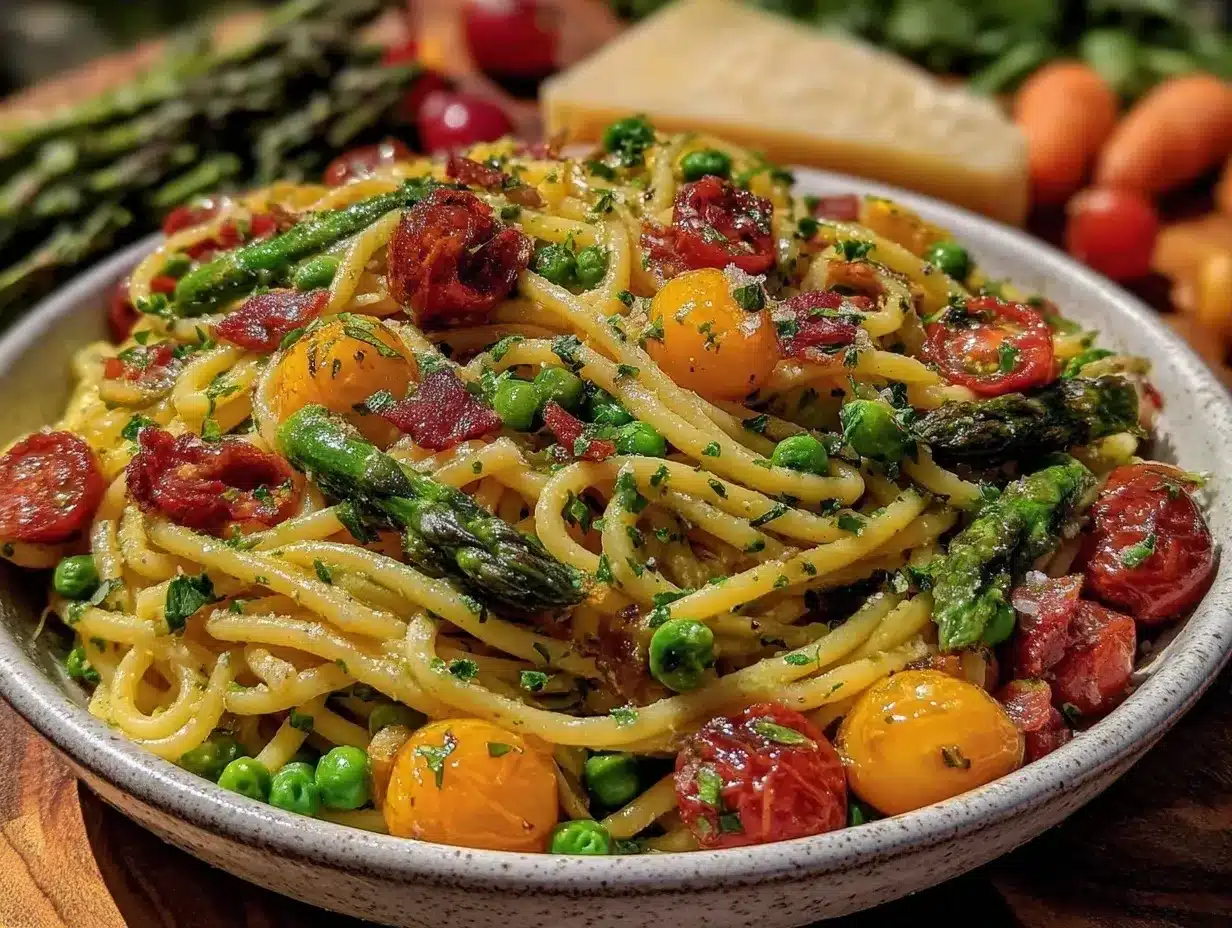
- Prep your ingredients: Rinse and trim the asparagus, snap peas, and zucchini. Halve the cherry tomatoes and mince the garlic. Slice the onion thinly. This should take about 10 minutes.
- Sauté aromatics: Heat 2 tablespoons of olive oil over medium heat in your large skillet. Add the sliced onions and cook for about 3 minutes until softened and translucent. Toss in the minced garlic and red pepper flakes, cooking for an additional 1 minute until fragrant. Watch closely so the garlic doesn’t burn!
- Add pasta and liquids: Break the linguine in half and add it to the pan, along with 4 1/2 cups (1.1 L) vegetable broth or water. Press the pasta down gently to submerge it as much as possible. Bring to a boil, then reduce to a simmer. This step takes roughly 10 minutes.
- Cook pasta and add veggies: After about 5 minutes of simmering, add the asparagus, snap peas, zucchini, peas, and cherry tomatoes to the pot. Stir gently to distribute. Cover and continue simmering, stirring occasionally to prevent sticking. The pasta should be al dente in about 10-12 minutes total. If the liquid evaporates too quickly, add a splash more broth or water.
- Finish and season: Once the pasta is tender and the vegetables are just cooked (still vibrant and slightly crisp), remove from heat. Stir in the lemon zest, lemon juice, grated Parmesan cheese, and fresh basil. Season generously with salt and black pepper to taste. Give it a final stir to combine everything into a creamy, flavorful sauce.
- Serve immediately: Spoon onto plates or bowls, garnish with extra basil or cheese if you like, and dig in!
Note: If the pasta looks dry before it’s fully cooked, add a bit more broth or water. The liquid is your friend here, helping cook the pasta while infusing flavor. Also, don’t rush the resting step after cooking; letting it sit covered for a minute helps the sauce thicken up nicely. Trust me, these little details make a big difference!
Cooking Tips & Techniques
Honestly, the magic of this one-pot pasta primavera is in the timing and layering of flavors. Here are some tips I’ve learned the hard way:
- Don’t overcrowd the pot: Use a pan large enough so the pasta can cook evenly without clumping.
- Break the pasta: Breaking long noodles like linguine or spaghetti in half helps them fit better and cook more evenly in one pot.
- Stir gently but often: This prevents pasta from sticking to the bottom but avoids breaking the noodles.
- Use flavorful broth: Vegetable broth adds depth, but if you only have water, season it well with salt before cooking.
- Watch the veggies: Add delicate vegetables like peas and tomatoes later to avoid mushiness.
- Reserve some pasta water: If you want a silkier sauce, saving a little pasta water before draining can be a game-changer.
- Don’t skip fresh herbs and lemon zest: They brighten the whole dish and make it taste fresh and lively.
One time I rushed the simmering step and ended up with mushy pasta and soggy veggies—it’s a rookie mistake but a lesson learned! Timing is everything here, and multitasking by prepping veggies while the pasta starts cooking saves a ton of time.
Variations & Adaptations
This pasta primavera is super flexible, which is one reason I love it so much. Here are some ways you can switch things up:
- Seasonal swaps: In summer, swap asparagus and snap peas for fresh green beans and bell peppers. In fall, try roasted butternut squash and kale.
- Protein additions: Add cooked chicken, shrimp, or crispy tofu for a more substantial meal.
- Dairy-free version: Skip the Parmesan and use nutritional yeast or a vegan cheese alternative.
- Gluten-free option: Use gluten-free pasta, and double-check broth ingredients.
- Spicy twist: Add a pinch more crushed red pepper flakes or a dash of hot sauce for some heat.
Personally, I once tried this with artichoke hearts and sun-dried tomatoes—it was surprisingly delicious and made for a Mediterranean vibe. Feel free to customize based on what’s in your fridge or your dietary needs!
Serving & Storage Suggestions
Serve this one-pot pasta primavera warm, straight from the pan, garnished with fresh basil and an extra sprinkle of Parmesan. It pairs beautifully with a crisp white wine or sparkling water with lemon for a refreshing contrast.
For storage, transfer leftovers to an airtight container and refrigerate for up to 3 days. When reheating, add a splash of water or broth to loosen the sauce and warm gently on the stovetop or microwave. Flavors tend to deepen overnight, so leftovers actually taste even better the next day.
If you want to freeze it, I recommend freezing the pasta and sauce separately from fresh herbs and cheese, which you can add fresh after thawing. This way, your primavera stays vibrant and fresh-tasting.
Nutritional Information & Benefits
This dish is a light yet satisfying meal that offers plenty of health perks. A typical serving provides approximately:
| Calories | 350-400 kcal |
|---|---|
| Protein | 12-15 g |
| Carbohydrates | 60-65 g |
| Fat | 8-10 g (mostly healthy fats from olive oil) |
| Fiber | 6-8 g |
The fresh spring vegetables pack the dish with antioxidants, vitamins A and C, and fiber, which support digestion and immune health. Using olive oil adds heart-healthy monounsaturated fats, and the lemon juice provides a nice dose of vitamin C. This recipe is naturally vegetarian and can be adapted to gluten-free or vegan diets with simple swaps.
Conclusion
If you’re craving a fresh, colorful, and fuss-free meal, this easy one-pot pasta primavera with fresh spring vegetables is a no-brainer. It’s quick to pull together, uses simple ingredients, and delivers big on flavor and comfort. I love how it brings the best of spring straight to my plate, and I’m sure you’ll find it just as satisfying.
Don’t hesitate to make this recipe your own—swap veggies, add proteins, or dial up the spice to suit your taste. I’d love to hear about your favorite variations or any tweaks you try, so please leave a comment or share your photos. Let’s keep the joy of cooking fresh, easy meals alive!
Happy cooking, friends—this one’s a keeper!
FAQs
Can I use frozen vegetables for this pasta primavera?
Absolutely! Frozen peas and asparagus work well, just add them a little earlier during cooking so they heat through properly.
What type of pasta works best for one-pot primavera?
Long pasta like linguine or spaghetti works great because it cooks evenly in one pot. You can also use penne or fusilli if you prefer shorter shapes.
How do I prevent the pasta from sticking in this one-pot recipe?
Make sure to stir frequently and use enough liquid. Adding a bit of olive oil helps too. If you notice it sticking, add a splash more broth or water as needed.
Can I prepare this dish ahead of time?
You can prep the veggies ahead, but I recommend cooking the pasta fresh for best texture. Leftovers reheat well and taste even better the next day.
Is there a vegan version of this recipe?
Yes! Simply omit the Parmesan cheese or swap it for nutritional yeast or vegan cheese. The olive oil and fresh veggies keep the dish flavorful.
Pin This Recipe!
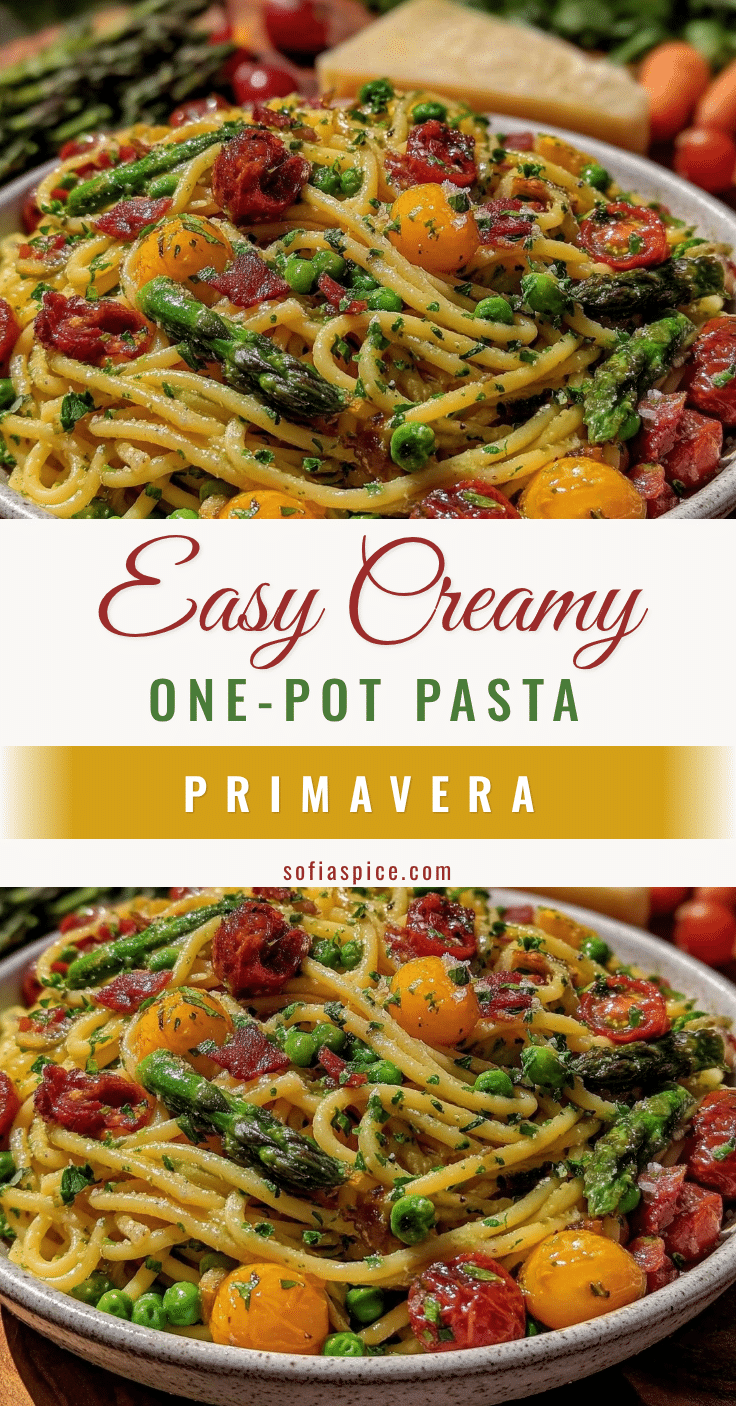
Easy One-Pot Pasta Primavera Recipe with Fresh Spring Vegetables
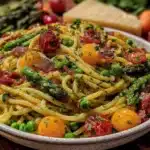
A quick and easy one-pot pasta primavera featuring fresh spring vegetables, perfect for busy weeknights or impressing guests with minimal cleanup.
- Prep Time: 10 minutes
- Cook Time: 20 minutes
- Total Time: 30 minutes
- Yield: 4 servings 1x
- Category: Main Course
- Cuisine: Italian
Ingredients
- 12 oz linguine or spaghetti
- 1 cup fresh asparagus, trimmed and cut into 2-inch pieces
- 1 cup sugar snap peas, trimmed
- 1 medium zucchini, sliced into half-moons
- 1 cup cherry tomatoes, halved
- 1/2 cup fresh or frozen peas
- 3 cloves garlic, minced
- 1 small onion, thinly sliced
- 1/4 tsp crushed red pepper flakes (optional)
- 4 1/2 cups vegetable broth or water
- 2 tbsp olive oil
- Juice and zest of 1 lemon
- 1/2 cup freshly grated Parmesan cheese (or dairy-free alternative)
- 1/4 cup fresh basil leaves, torn
- Salt and black pepper, to taste
Instructions
- Rinse and trim the asparagus, snap peas, and zucchini. Halve the cherry tomatoes and mince the garlic. Slice the onion thinly. This should take about 10 minutes.
- Heat 2 tablespoons of olive oil over medium heat in a large skillet. Add the sliced onions and cook for about 3 minutes until softened and translucent. Add the minced garlic and red pepper flakes, cooking for an additional 1 minute until fragrant.
- Break the linguine in half and add it to the pan along with 4 1/2 cups vegetable broth or water. Press the pasta down gently to submerge it as much as possible. Bring to a boil, then reduce to a simmer. Simmer for about 10 minutes.
- After about 5 minutes of simmering, add the asparagus, snap peas, zucchini, peas, and cherry tomatoes to the pot. Stir gently to distribute. Cover and continue simmering, stirring occasionally to prevent sticking. Cook until pasta is al dente and vegetables are tender-crisp, about 10-12 minutes total. Add more broth or water if liquid evaporates too quickly.
- Remove from heat. Stir in lemon zest, lemon juice, grated Parmesan cheese, and fresh basil. Season with salt and black pepper to taste. Stir to combine into a creamy sauce.
- Serve immediately, garnished with extra basil or cheese if desired.
Notes
If pasta looks dry before fully cooked, add more broth or water. Let the dish rest covered for a minute after cooking to thicken the sauce. For vegan version, substitute Parmesan with nutritional yeast or vegan cheese. For gluten-free, use gluten-free pasta and check broth ingredients. Breaking pasta in half helps it fit and cook evenly. Stir gently but often to prevent sticking.
Nutrition
- Serving Size: 1 serving (approxima
- Calories: 375
- Sugar: 6
- Sodium: 600
- Fat: 9
- Saturated Fat: 1.5
- Carbohydrates: 62
- Fiber: 7
- Protein: 14
Keywords: one-pot pasta, pasta primavera, spring vegetables, quick meals, easy dinner, vegetarian pasta, healthy pasta