“You better not burn the focaccia this time,” my partner teased as I glanced nervously at the dough rising on the counter. Honestly, I’d tried making rosemary focaccia before and ended up with something more like a dense brick than the fluffy, aromatic bread I craved. But that evening, something clicked. The kitchen smelled of fresh rosemary and sea salt, the dough was pillowy, and my skepticism melted away bite by bite. That first perfect loaf came from a mix of patience and a few little tricks I figured out along the way.
What’s wild is how this simple recipe turned into a quiet obsession—I’d make it multiple times each week, sneaking warm slices straight from the oven, often paired with a drizzle of olive oil or alongside a quick dinner. There’s something truly comforting about the way rosemary and sea salt dance on the soft crumb, and the way the bread’s golden crust crackles gently when you tear into it. It’s not fancy, but it feels like a small celebration every time.
That’s why this Easy Fluffy Homemade Rosemary Sea Salt Focaccia stuck around in my repertoire. It’s not just bread; it’s a little reset button on chaotic days and a reliable crowd-pleaser that never feels like too much work. Plus, when you know how to coax out that perfect fluffy texture, it makes you want to bake it again and again without hesitation. I’m happy to share this version with you because it’s the focaccia I trust to impress without stress—soft on the inside, crisp on the outside, and with just the right sprinkle of rosemary and flaky sea salt.
Why You’ll Love This Recipe
This Easy Fluffy Homemade Rosemary Sea Salt Focaccia is the kind of recipe that feels like a win every time you make it. I’ve tested it repeatedly (yes, multiple times a week for a while there), and it reliably delivers a soft, airy crumb with a golden, crisp crust that’s seasoned just right. Here’s why it’s worth your kitchen time:
- Quick & Easy: The hands-on time is minimal and most of it is just waiting for the dough to rise. You can have this ready in about 2 hours, perfect for weekend baking or a relaxed weeknight treat.
- Simple Ingredients: No fancy or hard-to-find items here. Just basic pantry staples plus fresh rosemary and coarse sea salt.
- Perfect for Any Occasion: Whether it’s a cozy dinner with a simple salmon and asparagus meal or an impromptu gathering, this focaccia fits right in.
- Crowd-Pleaser: I’ve never met a guest who didn’t go back for seconds. Kids to adults, everyone loves its texture and flavor.
- Unbelievably Delicious: The balanced seasoning of rosemary and sea salt combined with the tender crumb makes it a true comfort food staple.
What makes this focaccia stand out is the way the dough is treated—light kneading, proper hydration, and that final dimpled surface help create an airy loaf that’s not too dense or doughy. I also like to drizzle a little extra virgin olive oil on top before baking, which adds to the golden crust and richness without weighing it down. It’s a simple trick but makes all the difference.
Honestly, this recipe has become my go-to when I want homemade bread without fuss but with all the soul-soothing satisfaction. It’s the kind of bread that makes you pause and enjoy the moment, especially when fresh from the oven and paired with a meal like the spicy Cajun shrimp and sausage sheet pan dinner that’s bursting with flavor.
What Ingredients You Will Need
This recipe uses simple, wholesome ingredients to deliver bold flavor and a satisfying texture without the fuss. Most are pantry staples, and the fresh rosemary and sea salt really bring it to life. Here’s what you’ll want:
- All-purpose flour – 4 cups (480 grams), the base that gives structure but keeps the crumb soft. I prefer King Arthur for consistent results.
- Warm water – 1 ⅗ cups (400 ml), around 100°F (38°C) to activate the yeast without killing it.
- Active dry yeast – 2 ¼ teaspoons (one packet), the magic that makes the dough rise and fluff up.
- Granulated sugar – 1 teaspoon, to feed the yeast and help with browning.
- Fine sea salt – 2 teaspoons for the dough, balanced to enhance flavor without overpowering.
- Fresh rosemary – 2 tablespoons, finely chopped, for that signature piney aroma and taste.
- Extra virgin olive oil – ⅓ cup (80 ml) plus extra for drizzling on top, adds moisture and richness, and helps create that crisp golden crust.
- Coarse sea salt flakes – 1 tablespoon, sprinkled on top just before baking to give bursts of salty crunch.
You can swap all-purpose flour with bread flour if you want a chewier texture or even try a half whole wheat blend for a nuttier flavor. If you’re avoiding gluten, almond or chickpea flour won’t work here due to structure, but you could experiment with gluten-free blends designed for bread baking.
For rosemary, fresh is best but dried can be used in a pinch—just reduce the amount by half to avoid bitterness. The olive oil quality really makes a difference here; my favorite is a robust, peppery extra virgin olive oil from California or Italy.
Equipment Needed
To make this easy fluffy focaccia at home, you don’t need fancy tools. Here’s what I use and recommend:
- Large mixing bowl – For combining ingredients and letting the dough rise comfortably.
- Measuring cups and spoons – Accuracy matters, especially with yeast and salt.
- Stand mixer with dough hook (optional) – Speeds up kneading but hand mixing works fine for smaller batches.
- Baking sheet or rimmed pan – A 9×13 inch (23×33 cm) pan works perfectly to shape the focaccia.
- Kitchen towel or plastic wrap – For covering the dough during rising to keep it moist.
- Pastry brush – For drizzling olive oil evenly on top.
If you don’t have a stand mixer, I recommend using a large bowl and your hands—the dough is sticky but very forgiving. Just be sure to oil your hands to keep the dough from sticking. A rimmed baking sheet helps the focaccia keep its shape and creates those nice edges.
After baking, a serrated knife will help slice it without squishing the fluffy interior. I’ve tried baking on pizza stones too, which gives a nice crust but can be tricky to manage without a peel.
Preparation Method
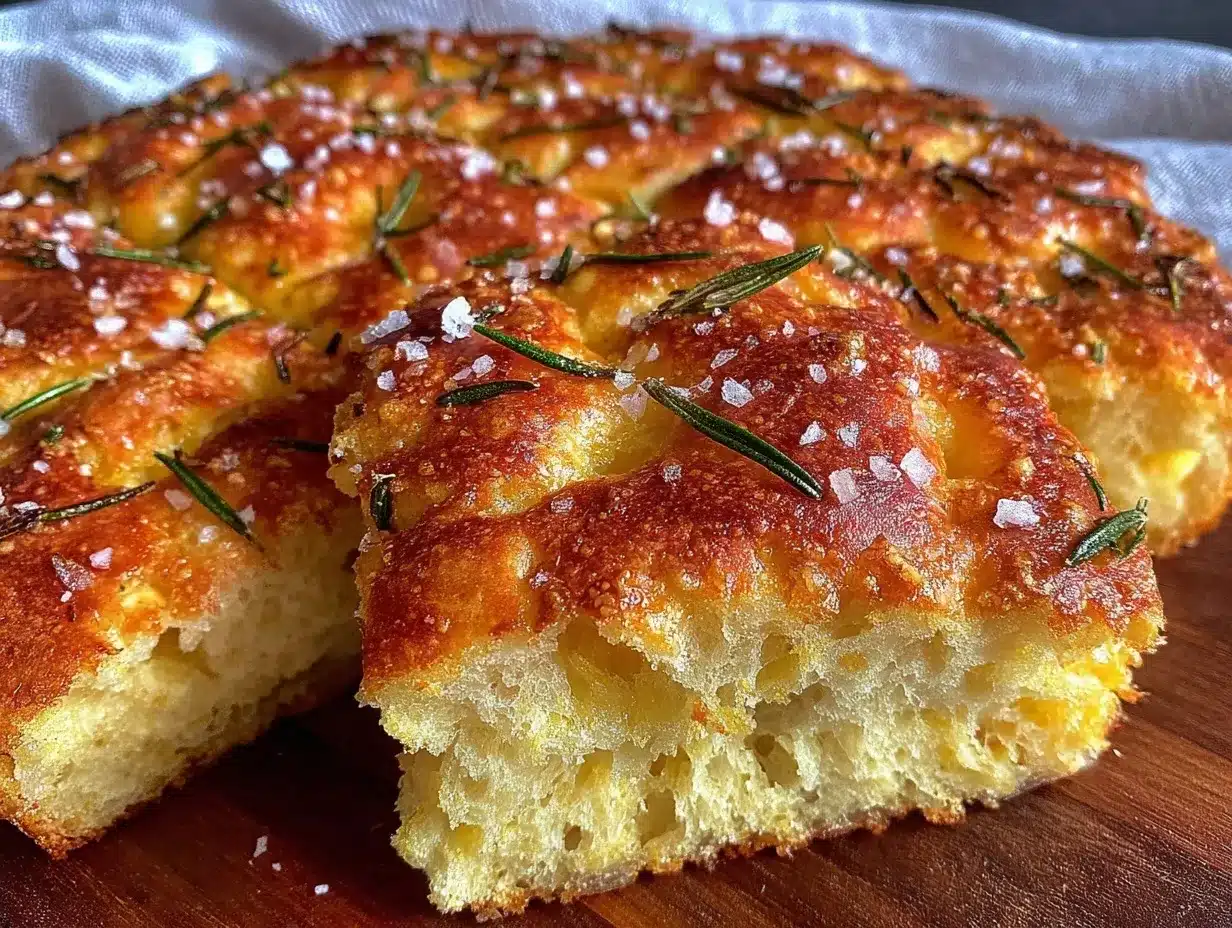
- Activate the yeast: In your large mixing bowl, combine warm water (400 ml) with the sugar and yeast. Stir gently and let it sit for 5-10 minutes until foamy and bubbly. If it doesn’t foam, your yeast might be dead—start over with fresh yeast.
- Mix the dough: Add the flour (480 g), fine sea salt (2 tsp), and ⅓ cup (80 ml) olive oil to the yeast mixture. Use a wooden spoon or your stand mixer on low speed with the dough hook to combine. The dough will be sticky and soft but should pull away from the sides after a few minutes of kneading.
- Knead: Knead the dough for about 5-7 minutes (or 8-10 minutes by hand), until smooth and elastic but still slightly tacky. If it feels too sticky, add a tablespoon of flour at a time—just enough so it’s manageable but not dry.
- First rise: Lightly oil your bowl and place the dough inside, turning once to coat with oil. Cover with a damp towel or plastic wrap and let it rise in a warm spot for 1 to 1 ¼ hours, or until doubled in size.
- Prepare the pan: Drizzle olive oil generously on a 9×13 inch (23×33 cm) baking sheet. Transfer the risen dough into the pan, spreading it out gently with your fingers. Don’t worry if it resists at first—let it rest for a few minutes and then stretch again.
- Second rise and dimpling: Cover the dough loosely and let it rise again for 30-40 minutes until puffy. Then use your fingertips to press deep dimples all over the surface. This helps trap the olive oil and sea salt, creating those signature pockets.
- Add toppings: Sprinkle chopped fresh rosemary evenly across the top, then pour a little olive oil over the surface. Finish with a generous pinch of coarse sea salt flakes.
- Bake: Preheat your oven to 425°F (220°C). Bake the focaccia for 20-25 minutes, or until golden brown and crisp on top. You’ll know it’s done when the edges are browned and the bread sounds hollow when tapped.
- Cool and serve: Let the focaccia cool in the pan for 10 minutes before slicing. Serve warm or at room temperature with more olive oil or alongside dishes like the garlic butter shrimp with zucchini noodles for a simple, satisfying meal.
Cooking Tips & Techniques
Getting fluffy focaccia really comes down to a few key details I learned the hard way. First, patience with the rising times is a must—don’t rush the yeast. I once tried speeding things up with hot water and ended up with a dense loaf, so stick to warm, not hot.
When dimpling the dough, press firmly but don’t flatten it completely. Those dimples are what hold the olive oil and create those irresistible crispy, salty pockets. Use your fingertips and go all over; if you miss spots, the texture can become uneven.
Also, don’t skimp on the olive oil—both in the dough and on top. It helps keep the crumb moist and adds flavor to the crust. My favorite trick is to drizzle a little more olive oil right after baking while the bread is still hot for extra richness.
One common mistake is over-flouring the dough. It should be sticky and soft, not stiff or dry. If you add too much flour, you lose that lovely fluffiness. Lightly oiling your hands instead of adding more flour is often better when shaping.
Finally, timing your bake matters. If your oven runs hot, check the bread a few minutes early to avoid burning the edges. And if you’re making this alongside other dishes, like a mediterranean chicken sheet pan dinner, plan to bake the focaccia last or use a second oven rack to get both done perfectly.
Variations & Adaptations
While this focaccia recipe shines as written, it’s fun to tweak and make it your own. Here are a few variations I’ve tried or recommend:
- Herb Mix: Swap rosemary for thyme, oregano, or a mix of Italian herbs for a different aromatic profile.
- Cheesy Focaccia: Sprinkle grated Parmesan or crumbled feta on top before baking for a savory kick.
- Garlic Infusion: Add thinly sliced garlic cloves scattered over the dough before baking, or mix roasted garlic into the olive oil drizzle.
- Gluten-Free Option: Use a high-quality gluten-free bread flour blend designed for yeast breads, but keep in mind texture will differ.
- Whole Wheat: Replace half the all-purpose flour with whole wheat flour for a nuttier flavor and heartier crumb.
I once made a version with sun-dried tomatoes and fresh basil on top that paired beautifully with a chilled tomato soup. It was a hit! You can also switch up the sea salt flakes for smoked salt to add a subtle smoky note.
Serving & Storage Suggestions
This Easy Fluffy Rosemary Sea Salt Focaccia is best served warm or at room temperature. If you want to gently reheat it, pop slices in a toaster oven or under the broiler for 2-3 minutes to revive the crust’s crispness without drying out the interior.
It pairs wonderfully with simple meals like a fresh salad, or alongside protein-rich dishes such as the garlic butter salmon with asparagus. It’s also fantastic as a base for sandwiches or dipped in olive oil and balsamic vinegar.
To store, wrap the focaccia tightly in plastic wrap or place in an airtight container at room temperature for up to 2 days. For longer storage, freeze the bread whole or sliced in a freezer bag for up to 3 months. Thaw at room temperature and refresh in the oven before serving.
Flavors tend to deepen with time, so if you make it a day ahead, the rosemary and sea salt meld beautifully into the crumb.
Nutritional Information & Benefits
Per serving (about 1/12th of the focaccia), this bread provides roughly 180 calories, 5 grams of fat (mostly from olive oil), 28 grams of carbohydrates, and 4 grams of protein. It’s low in sugar and naturally free from artificial additives.
Rosemary offers antioxidants and anti-inflammatory properties, while olive oil contributes heart-healthy monounsaturated fats. Using quality ingredients means you get a nourishing bread that feels indulgent but is rooted in wholesome basics.
If you need to watch gluten intake, this traditional recipe contains wheat, but adapting with gluten-free flour blends is possible with some texture trade-offs. It’s a great choice for a balanced, satisfying carb source when enjoyed in moderation.
Conclusion
This Easy Fluffy Homemade Rosemary Sea Salt Focaccia has become a staple for me because it strikes that perfect balance of simplicity and impressive flavor. Whether you’re baking for a quiet night or serving friends, it’s a recipe you can trust to come through with that crisp crust and soft, flavorful inside every time.
Don’t hesitate to adjust the herbs or salt amounts to match your taste—it’s forgiving and fun to personalize. I love how this focaccia brings a touch of homemade warmth to the table without complicated steps or intimidating ingredients.
If you give it a try, I’d love to hear how you made it yours or what you paired it with—sharing those moments makes the baking even sweeter. Happy baking and enjoy every fluffy, salty bite!
FAQs
- Can I make this focaccia dough ahead of time?
Yes! After the first rise, you can refrigerate the dough overnight. Just bring it to room temperature before shaping and the second rise. - How do I get the focaccia extra fluffy?
Use warm water to activate the yeast correctly and don’t rush the rising times. Also, avoid adding too much flour when kneading—sticky dough is good. - Can I use dried rosemary instead of fresh?
Yes, but use about half the amount since dried herbs are more concentrated and can taste bitter if overused. - What’s the best way to store leftover focaccia?
Wrap tightly in plastic or keep in an airtight container at room temperature for up to 2 days, or freeze for longer storage. - Is this recipe suitable for beginners?
Absolutely. The steps are straightforward and forgiving, making it a great place to start with homemade bread baking.
Pin This Recipe!
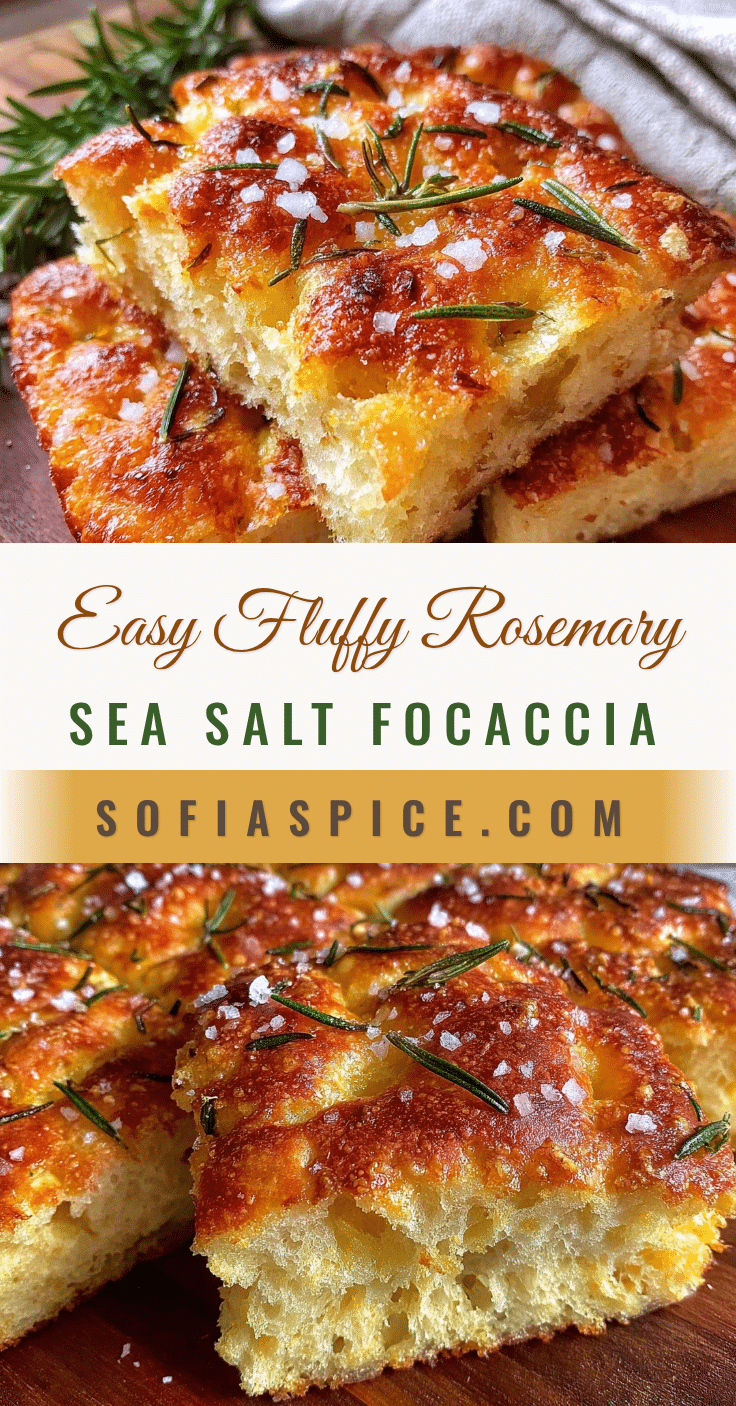
Easy Fluffy Homemade Rosemary Sea Salt Focaccia
A simple and reliable focaccia recipe that delivers a soft, airy crumb with a golden, crisp crust, seasoned with fresh rosemary and sea salt. Perfect for any occasion and easy enough for beginners.
- Prep Time: 15 minutes
- Cook Time: 25 minutes
- Total Time: 2 hours 10 minutes
- Yield: 12 servings 1x
- Category: Bread
- Cuisine: Italian
Ingredients
- 4 cups (480 grams) all-purpose flour
- 1 ⅗ cups (400 ml) warm water (around 100°F / 38°C)
- 2 ¼ teaspoons (one packet) active dry yeast
- 1 teaspoon granulated sugar
- 2 teaspoons fine sea salt
- 2 tablespoons fresh rosemary, finely chopped
- ⅓ cup (80 ml) extra virgin olive oil, plus extra for drizzling
- 1 tablespoon coarse sea salt flakes
Instructions
- Activate the yeast: In a large mixing bowl, combine warm water (400 ml) with sugar and yeast. Stir gently and let sit for 5-10 minutes until foamy and bubbly.
- Mix the dough: Add flour (480 g), fine sea salt (2 tsp), and ⅓ cup (80 ml) olive oil to the yeast mixture. Combine using a wooden spoon or stand mixer with dough hook on low speed until dough pulls away from sides.
- Knead: Knead dough for 5-7 minutes (or 8-10 minutes by hand) until smooth and elastic but slightly tacky. Add flour by tablespoon if too sticky, but keep dough soft.
- First rise: Lightly oil a bowl and place dough inside, turning to coat with oil. Cover with damp towel or plastic wrap and let rise in warm spot for 1 to 1 ¼ hours until doubled in size.
- Prepare the pan: Drizzle olive oil generously on a 9×13 inch baking sheet. Transfer risen dough and spread gently with fingers. Let rest a few minutes if resistant, then stretch again.
- Second rise and dimpling: Cover dough loosely and let rise 30-40 minutes until puffy. Use fingertips to press deep dimples all over surface.
- Add toppings: Sprinkle chopped fresh rosemary evenly on top, drizzle olive oil over surface, and finish with coarse sea salt flakes.
- Bake: Preheat oven to 425°F (220°C). Bake focaccia for 20-25 minutes until golden brown and crisp. Bread should sound hollow when tapped.
- Cool and serve: Let focaccia cool in pan for 10 minutes before slicing. Serve warm or at room temperature.
Notes
Use warm water (not hot) to activate yeast properly. Press dimples firmly but do not flatten dough completely to trap olive oil and sea salt. Drizzle extra olive oil after baking for richer flavor. Avoid adding too much flour to keep dough soft and fluffy. Dough can be refrigerated overnight after first rise; bring to room temperature before shaping and second rise.
Nutrition
- Serving Size: About 1/12th of the
- Calories: 180
- Fat: 5
- Carbohydrates: 28
- Protein: 4
Keywords: focaccia, rosemary focaccia, homemade bread, sea salt bread, easy focaccia recipe, fluffy bread, Italian bread