“You really should try making your own hummus,” my coworker texted me one hectic afternoon. Honestly, I was skeptical—homemade hummus felt like one of those things that takes forever or ends up tasting meh. But that day, my fridge was looking bare except for a stubborn bag of frozen edamame. So, I thought, why not give it a whirl?
What happened next surprised me. That first batch of healthy high-protein edamame hummus didn’t just fill a snack void—it became a mini obsession. I found myself whipping it up multiple times a week, tweaking the garlic or lemon here and there, always impressed by how that vibrant green dip made even the most mundane carrot sticks feel like a treat.
The texture? Silky but with a bit of bite from the edamame. The flavor? Bright, nutty, and just tangy enough to keep you dipping for more. It wasn’t the usual chickpea hummus I’d grown up with, but it earned a spot in my snack rotation—especially when paired with crisp veggie sticks.
What’s funny is how this recipe crept into my routine quietly, becoming a go-to whenever I needed a quick protein boost without resorting to store-bought dips loaded with mystery ingredients. It’s proof that sometimes, the best culinary surprises come from the simplest pantry finds and a moment of curiosity.
And now, every time I slice up celery or bell peppers, I can’t help but smile, knowing that this humble green hummus is waiting to make those veggies irresistible. It’s healthy, satisfying, and honestly, a bit addictive. So, here’s why this recipe might just become your new favorite snacking companion too.
Why You’ll Love This Healthy High-Protein Edamame Hummus Recipe
After testing and tweaking this recipe in my own kitchen (plus getting nods from friends and family), I’ve learned a few things that make this version stand out from the usual hummus offerings. Here’s why you’ll want to keep this one handy:
- Quick & Easy: You can have this ready in under 15 minutes. No soaking or roasting needed, making it perfect for a last-minute snack or prep-ahead dip.
- Simple Ingredients: The recipe calls for pantry staples and frozen edamame—which you probably already have or can grab easily without hunting for fancy items.
- Perfect for Healthy Snacking: Whether you’re craving an afternoon pick-me-up or need something to bring to a casual get-together, this hummus pairs beautifully with crunchy veggie sticks.
- Crowd-Pleaser: It’s a hit with kids and adults alike. The mild, creamy flavor is approachable yet interesting enough to keep everyone coming back.
- Unbelievably Delicious: The velvety texture combined with bright lemon and just the right amount of garlic make it taste fresh and satisfying—without feeling heavy.
What makes this hummus different? Well, swapping chickpeas for edamame not only amps up the protein but also gives it that unique, vibrant green color and a pleasantly nutty taste that’s a bit unexpected. I also love blending in tahini and fresh lemon juice to create a silky, luscious dip that’s more than just a snack—it’s a little celebration in every bite.
Honestly, this isn’t just hummus; it’s the kind of snack that makes you pause and savor the moment, whether you’re unwinding after work or fueling a weekend adventure. If you appreciate dips like my creamy baba ganoush or crave the fresh punch of grilled eggplant with a sweet miso glaze, this recipe fits right into that same vibe of wholesome, flavorful, and fuss-free eating.
What Ingredients You Will Need
This healthy high-protein edamame hummus uses simple, wholesome ingredients to deliver bold flavor and satisfying texture without the fuss. Most of these are staples, and the frozen edamame adds a lovely seasonal versatility—use fresh in summer or frozen any other time!
- Frozen Shelled Edamame (1 ½ cups / 225 g): The star here. I prefer organic or Trader Joe’s brand for consistent texture.
- Tahini (¼ cup / 60 ml): Adds creaminess and a subtle nutty depth—look for well-stirred, fresh tahini.
- Fresh Lemon Juice (3 tablespoons): Brightens the dip and balances richness. Freshly squeezed always wins over bottled.
- Garlic Clove (1 large, minced): Gives just the right kick without overpowering.
- Extra Virgin Olive Oil (3 tablespoons): For smoothness and a touch of fruitiness. Use your favorite quality brand.
- Water (2-3 tablespoons): To adjust consistency—add gradually for the perfect dip texture.
- Ground Cumin (½ teaspoon): Provides warm earthiness and complexity.
- Salt (½ teaspoon or to taste): Enhances all those flavors.
- Black Pepper (Freshly ground, to taste): Adds subtle heat and balance.
- Veggie Sticks (Carrots, Celery, Bell Peppers, Cucumber): Crisp and colorful for dipping. Feel free to swap or add your favorites like snap peas or jicama.
If you’re looking to switch things up, almond flour can be added for a slightly thicker texture, or swap tahini with sunflower seed butter if you’re avoiding sesame. I’ve also tried adding a pinch of smoked paprika for a smoky twist—delicious!
Equipment Needed
- Food Processor or High-Speed Blender: Essential for that smooth, creamy hummus texture. I’ve used a Vitamix and a Cuisinart, both work great.
- Measuring Cups and Spoons: For accuracy, especially with garlic, lemon, and oil.
- Spatula: To scrape down the sides and get every bit of hummus out.
- Knife and Cutting Board: For slicing veggie sticks.
- Serving Bowl: Something shallow and wide works best for easy dipping.
If you don’t have a food processor, a sturdy blender can work, but you might need to pulse and scrape more often. For budget-friendly options, older models from brands like Hamilton Beach can do the job well and are easy to clean.
Keeping your equipment clean and dry before use helps prevent any watery hummus, a little trick I learned after a few too many batches that were too runny.
Preparation Method
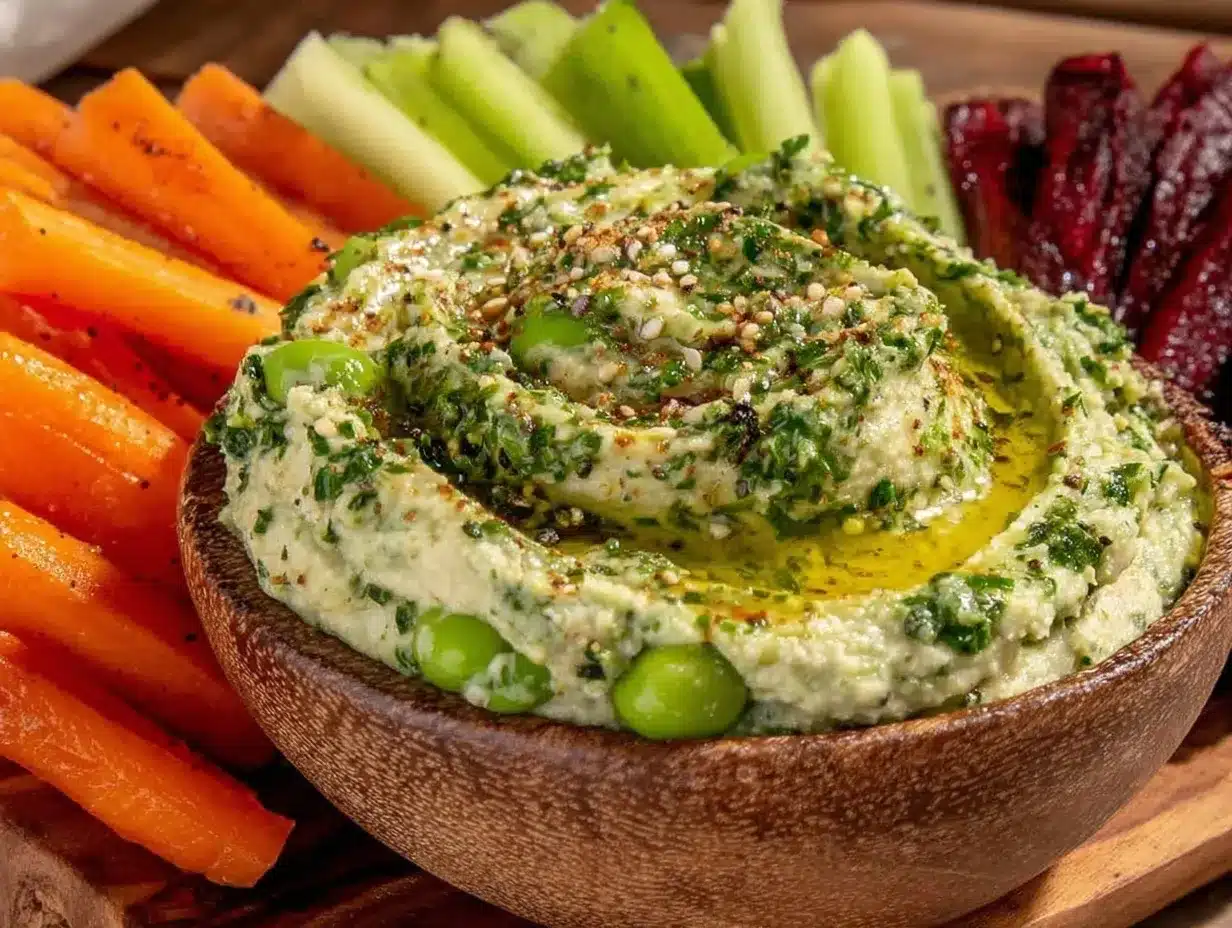
- Cook the Edamame: Boil 1 ½ cups (225 g) of frozen shelled edamame in salted water for about 5 minutes until tender but still bright green. Drain and rinse under cold water to stop cooking. This keeps the vibrant color and fresh flavor intact.
- Blend the Base: In your food processor, combine the cooked edamame, ¼ cup (60 ml) tahini, 3 tablespoons (45 ml) fresh lemon juice, and 1 large minced garlic clove. Pulse a few times to start breaking down the beans.
- Add Oil and Spices: While the processor runs, slowly drizzle in 3 tablespoons (45 ml) extra virgin olive oil. Add ½ teaspoon ground cumin, ½ teaspoon salt, and freshly ground black pepper to taste.
- Adjust Consistency: Slowly add 2 to 3 tablespoons (30-45 ml) of water, one tablespoon at a time, blending and checking texture until the hummus is creamy and smooth but not runny.
- Taste and Tweak: Stop and taste. You might want to add a splash more lemon juice for brightness or a pinch more salt. This is your moment to make it perfect.
- Prep Veggie Sticks: While blending, slice carrots, celery, bell peppers, and cucumbers into sticks. Aim for uniform thickness so they’re easy to dip and have a nice crunch.
- Serve: Transfer the hummus to a serving bowl. You can drizzle a little olive oil on top and sprinkle with paprika or chopped fresh herbs if you like a pop of color and flavor.
This whole process takes about 15 minutes, making it a snap to prepare even on busy days. If your hummus feels too thick, adding a little more water or lemon juice helps loosen it up without diluting flavor.
One trick: pulse the garlic separately at first if you want a milder garlic flavor, or add it all at once for more punch. Also, be patient scraping down the sides of the bowl to get every creamy bit blended evenly.
Cooking Tips & Techniques for Perfect Edamame Hummus
Getting that silky hummus texture is all about the blend and balance of ingredients. Here are a few tips I picked up along the way:
- Don’t Overcook Edamame: A slightly firm texture keeps the hummus from becoming gluey. Overcooked beans can make the dip watery or grainy.
- Use Fresh Lemon Juice: Bottled lemon juice lacks brightness. Fresh juice really lifts the flavor and keeps it tasting lively.
- Pulse Before Puree: Start pulsing a few times to break down the beans, then blend continuously. This helps avoid overworking the processor and keeps texture balanced.
- Scrape Often: Stopping to scrape down the sides ensures everything blends evenly—no chunky surprises.
- Adjust Water Slowly: Adding water too fast can make the hummus runny. Add in small increments to reach the perfect consistency.
- Multitask: While the edamame cooks, prep your veggies and gather ingredients. This saves time and keeps things moving smoothly.
- Storage Tip: If making ahead, cover tightly with plastic wrap pressed directly on the hummus surface to prevent browning or drying out.
Early on, I made the mistake of using canned edamame, which sometimes gave a slightly bitter taste. Frozen shelled edamame is my go-to now for the best flavor.
Finally, you can experiment with spices—try a pinch of smoked paprika or a sprinkle of za’atar for a Middle Eastern touch. It’s a fun way to keep this basic recipe fresh and exciting.
Variations & Adaptations
This healthy high-protein edamame hummus is super flexible. Here are a few ways I’ve adapted it depending on mood, season, or dietary needs:
- Spicy Kick: Add ¼ teaspoon cayenne or a small diced jalapeño for a bold, spicy hummus that’s perfect for those who like heat.
- Herbed Version: Blend in fresh herbs like cilantro, parsley, or basil for a bright, garden-fresh flavor variation.
- Roasted Red Pepper: Toss in some jarred roasted red peppers for a smoky-sweet twist that adds color and complexity.
- Low-Sodium: Cut back on salt and boost flavor with extra garlic and lemon juice, perfect for heart-conscious eaters.
- Allergen-Friendly: Substitute tahini with sunflower seed butter or omit it entirely—just add a bit more olive oil for creaminess.
I once tried a version with a splash of coconut milk for a creamier, slightly tropical hummus, which paired wonderfully with crisp snap peas as dippers. It’s always fun to experiment!
If you’re interested in other creamy dips with a vegetable twist, you might enjoy my creamy baba ganoush with pomegranate sparkle or the grilled eggplant with sweet miso glaze—both share that balance of creamy texture and bold flavor.
Serving & Storage Suggestions
This edamame hummus shines best served at room temperature, which helps bring out its full flavor and creamy texture. Let it sit out for about 10 minutes before serving if you’ve refrigerated it.
Arrange colorful veggie sticks—carrots, celery, bell peppers, and cucumber—around the bowl for a visually inviting platter. Adding a sprinkle of toasted sesame seeds or a drizzle of olive oil on top adds a nice finishing touch.
For storage, keep the hummus in an airtight container in the fridge for up to 4 days. The flavors deepen over time, making leftovers even more delicious the next day.
When reheating, gently bring it to room temperature or warm slightly in the microwave (15-20 seconds) if you prefer a softer dip. Avoid overheating, which can alter the texture.
This dip pairs wonderfully with light, fresh dishes and can be a perfect side for meals like grilled chicken or alongside a wholesome quinoa bowl.
Nutritional Information & Benefits
This healthy high-protein edamame hummus is packed with nutrients that make it a smart snack choice. A ¼ cup (60 g) serving typically contains about:
| Calories | 110 |
|---|---|
| Protein | 7 grams |
| Fat | 7 grams (mostly healthy fats) |
| Carbohydrates | 6 grams |
| Fiber | 3 grams |
Edamame is a plant-based protein powerhouse, rich in essential amino acids and fiber, making this dip filling and energizing. Tahini adds healthy fats and minerals like calcium and magnesium, while fresh lemon juice provides vitamin C.
This recipe is naturally gluten-free and can easily be adapted for vegan and nut-free diets by swapping tahini. It’s a great option for anyone wanting a balanced, wholesome snack without artificial additives.
From a wellness perspective, this dip supports muscle health, digestion, and sustained energy—ideal for busy days or post-workout refueling.
Conclusion
This healthy high-protein edamame hummus with veggie sticks isn’t just a dip—it’s a little ritual of wholesome snacking that’s quick, satisfying, and surprisingly addictive. I love how it turns everyday vegetables into something exciting and nourishing without any fuss.
Feel free to customize it to your taste—more lemon, extra garlic, a pinch of spice—make it truly yours. The simplicity and versatility are what keep me coming back, especially when life gets busy and I need a snack that’s both nourishing and delicious.
If you give this recipe a try, I’d love to hear how you tweak it or what your favorite veggies are for dipping. Sharing these little kitchen victories makes the experience even better.
Keep enjoying good food that feels good—one dip at a time.
Frequently Asked Questions About Edamame Hummus
Can I use fresh edamame instead of frozen?
Absolutely! Fresh edamame works well if you have access. Just cook them briefly until tender, then proceed with the recipe as usual.
How long does homemade edamame hummus keep in the fridge?
Stored in an airtight container, it stays fresh for up to 4 days. Flavors develop nicely, so leftovers often taste even better.
Is this hummus suitable for a vegan diet?
Yes, this recipe is naturally vegan. Just be sure your tahini brand doesn’t contain any non-vegan additives.
Can I freeze this hummus?
While freezing is possible, the texture may change slightly upon thawing. If you do freeze it, stir well after thawing and add a splash of water or olive oil to restore creaminess.
What are some good alternative dippers besides veggie sticks?
Try pita chips, whole grain crackers, rice cakes, or even use it as a spread in sandwiches or wraps for a protein boost.
Pin This Recipe!
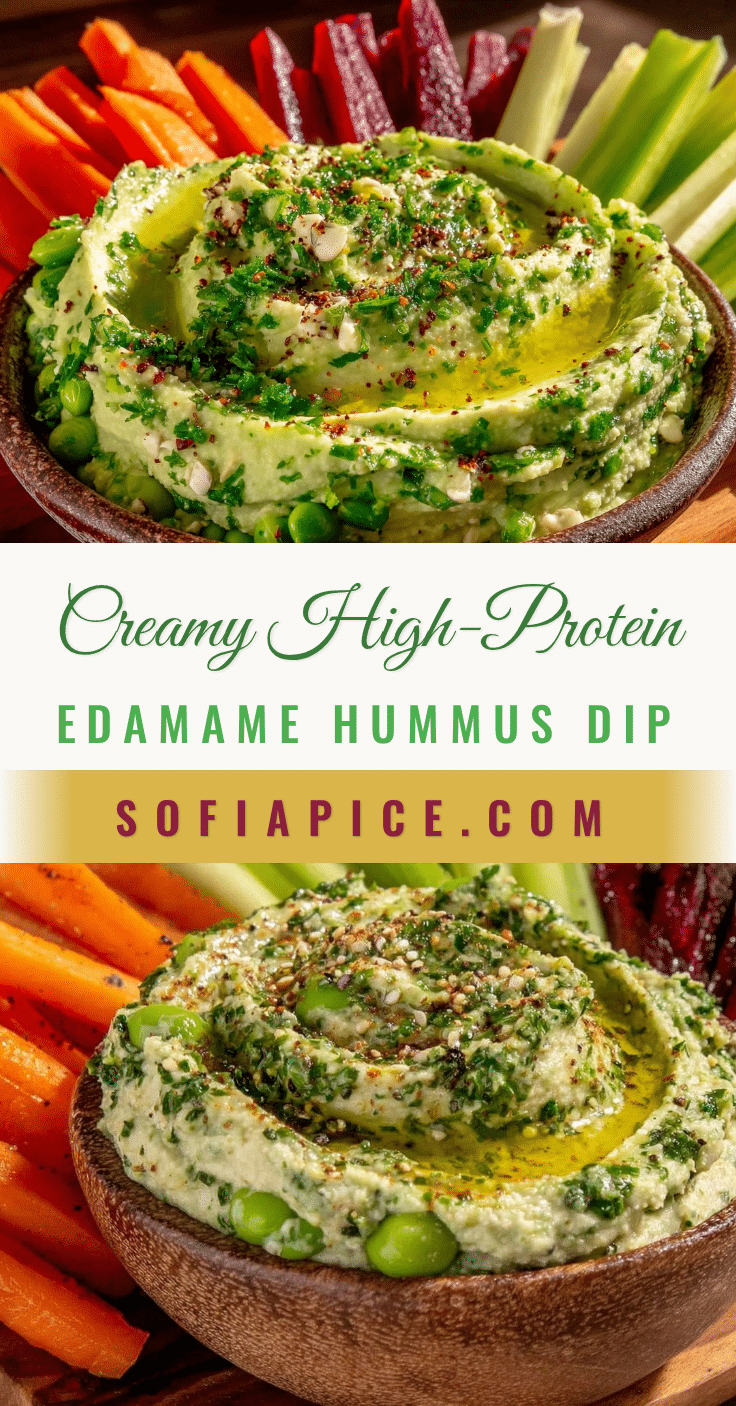
Healthy High-Protein Edamame Hummus Recipe with Easy Veggie Sticks Snack
A quick and easy homemade edamame hummus that’s high in protein, creamy, and perfect for healthy snacking with crisp veggie sticks.
- Prep Time: 10 minutes
- Cook Time: 5 minutes
- Total Time: 15 minutes
- Yield: 4 servings 1x
- Category: Snack
- Cuisine: Middle Eastern-inspired
Ingredients
- 1 ½ cups (225 g) frozen shelled edamame
- ¼ cup (60 ml) tahini
- 3 tablespoons (45 ml) fresh lemon juice
- 1 large garlic clove, minced
- 3 tablespoons (45 ml) extra virgin olive oil
- 2–3 tablespoons (30–45 ml) water
- ½ teaspoon ground cumin
- ½ teaspoon salt or to taste
- Freshly ground black pepper to taste
- Veggie sticks (carrots, celery, bell peppers, cucumber)
Instructions
- Boil 1 ½ cups (225 g) of frozen shelled edamame in salted water for about 5 minutes until tender but still bright green. Drain and rinse under cold water to stop cooking.
- In a food processor, combine the cooked edamame, ¼ cup (60 ml) tahini, 3 tablespoons (45 ml) fresh lemon juice, and 1 large minced garlic clove. Pulse a few times to start breaking down the beans.
- While the processor runs, slowly drizzle in 3 tablespoons (45 ml) extra virgin olive oil. Add ½ teaspoon ground cumin, ½ teaspoon salt, and freshly ground black pepper to taste.
- Slowly add 2 to 3 tablespoons (30-45 ml) of water, one tablespoon at a time, blending and checking texture until the hummus is creamy and smooth but not runny.
- Stop and taste. Adjust with more lemon juice or salt if desired.
- While blending, slice carrots, celery, bell peppers, and cucumbers into sticks for dipping.
- Transfer the hummus to a serving bowl. Optionally drizzle a little olive oil on top and sprinkle with paprika or chopped fresh herbs.
Notes
Do not overcook edamame to avoid gluey texture. Use fresh lemon juice for brightness. Pulse garlic separately for milder flavor. Add water slowly to adjust consistency. Store in airtight container for up to 4 days. Variations include adding cayenne for spice or substituting tahini with sunflower seed butter for nut-free option.
Nutrition
- Serving Size: ¼ cup (60 g) hummus
- Calories: 110
- Fat: 7
- Carbohydrates: 6
- Fiber: 3
- Protein: 7
Keywords: edamame hummus, high protein hummus, healthy snack, veggie sticks, homemade hummus, vegan dip, gluten-free dip