“I wasn’t really planning to cook last night—honestly, I was ready to just grab something quick. But then, a bunch of asparagus and peas in my fridge started calling my name, and well, you know how it goes. I figured I’d throw something together, maybe a risotto, even though I’m not exactly a risotto pro. Turns out, that little improvisation turned into one of those meals that you can’t stop thinking about, the kind that sneaks up and surprises you.
The creamy texture, the pop of fresh peas, and that zingy hint of lemon zest all came together so naturally. It reminded me of those quiet evenings when cooking feels like a reset button after a day packed with chaos. I wasn’t chasing perfection, just comfort—yet the result was something that felt both simple and special. I kept tasting it, thinking, “Yep, this is a keeper.”
That night, while stirring the risotto slowly on the stovetop, I realized this recipe stuck not just because it’s tasty, but because it captures a little moment of calm, freshness, and homey warmth all in one bowl. It’s the kind of dish that sneaks into your favorites without much fanfare, but once it’s there, you really miss it when it’s gone.
Why You’ll Love This Recipe
This creamy asparagus and pea risotto with bright lemon zest has become a go-to for many reasons, and I can’t help but share why it’s earned a spot in my rotation:
- Quick & Easy: You’ll have this ready in about 30 minutes, perfect when you want something comforting without spending all evening in the kitchen.
- Simple Ingredients: No need to hunt for anything fancy—just fresh asparagus, sweet peas, arborio rice, and that lively lemon zest.
- Perfect for Spring and Early Summer: When asparagus is at its peak and peas are fresh, this risotto feels like a fresh breath of seasonality.
- Crowd-Pleaser: Friends and family have always asked for seconds, and I bet it’ll win over even the pickiest eaters.
- Unbelievably Delicious: Creamy without being heavy, with a balance of sweet veggies and zesty brightness that wakes up your taste buds.
What sets this risotto apart? It’s the way the lemon zest is added right at the end—like a little spark that wakes up the whole dish. Plus, I use a gentle simmer and patient stirring method that lets the rice soak up all those flavors without getting mushy. Honestly, it’s not just another risotto; it’s the one I come back to when I want something comforting but fresh. If you want to pair it with a drink, the creamy ballerina cappuccino is a dreamy match for a cozy brunch vibe.
What Ingredients You Will Need
This recipe uses simple, wholesome ingredients to deliver bold flavor and satisfying texture without the fuss. Most are pantry staples or easy to find in any grocery store during asparagus season.
- Arborio rice (1 ½ cups / 300 grams) – The classic risotto grain, prized for its creamy starch release.
- Fresh asparagus (1 bunch / about 12 ounces / 340 grams), trimmed and cut into 1-inch pieces – Adds a tender crunch and earthy flavor.
- Fresh or frozen peas (1 cup / 150 grams) – Sweet bursts of color and taste.
- Vegetable broth (4 cups / 1 liter), warmed – The cooking liquid that infuses the rice with savory notes; I prefer brands like Swanson or homemade stock.
- Dry white wine (½ cup / 120 ml) – Helps deglaze the pan and add depth (optional but recommended).
- Shallot (1 small, finely chopped) – Brings a subtle sweetness.
- Garlic (2 cloves, minced) – For that gentle aromatic base.
- Unsalted butter (3 tablespoons / 45 grams), divided – One part to sauté, one part to finish for creaminess.
- Parmesan cheese (½ cup / 50 grams), freshly grated – For that salty, nutty finish.
- Lemon zest (from 1 medium lemon) – The bright twist that lifts the whole dish.
- Olive oil (1 tablespoon) – For sautéing the vegetables gently.
- Salt and freshly ground black pepper – To taste, seasoning throughout.
If you want to make it dairy-free, swap the butter for olive oil and use a vegan parmesan alternative. For a gluten-free option, just double-check your broth ingredients. Sometimes I swap peas for fresh green beans when peas are out of season, and it works like a charm.
Equipment Needed
- Heavy-bottomed saucepan or deep skillet: Essential for even heat distribution and preventing the rice from sticking or burning. I like using my trusty 3-quart stainless steel pan.
- Wooden spoon or silicone spatula: For gentle stirring without scratching your pan.
- Measuring cups and spoons: For precise ingredient amounts—risotto is a bit of a science.
- Microplane or fine grater: Ideal for zesting the lemon finely without the bitter pith.
- Ladle: To add broth gradually, keeping control of the cooking liquid.
If you don’t have a microplane, a fine grater or even a sharp paring knife to peel thin strips of zest will work just fine. A non-stick pan can help if you’re worried about sticking, but I find the stainless steel adds better flavor depth. When it comes to maintenance, keep your pans clean and dry after cooking, and avoid metal utensils to keep surfaces smooth and lasting.
Preparation Method
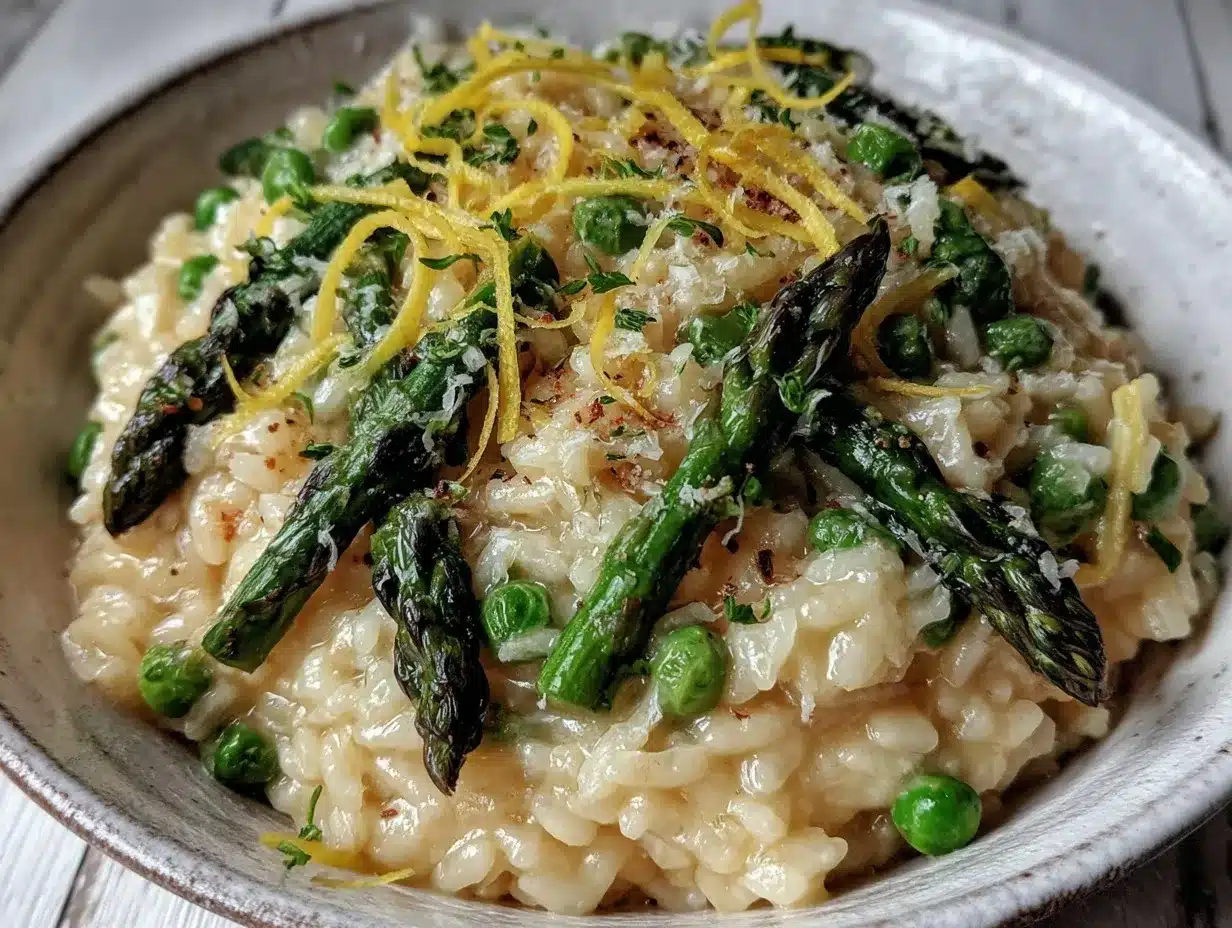
- Prepare your ingredients: Trim and cut the asparagus into 1-inch pieces. If using fresh peas, shell them; if frozen, thaw slightly. Warm your vegetable broth in a separate pot and keep it simmering gently on low heat.
- Sauté the aromatics: In your heavy-bottomed pan, heat 1 tablespoon of olive oil and 1 tablespoon of butter over medium heat. Add the finely chopped shallot and sauté for 2-3 minutes until translucent and fragrant. Toss in the minced garlic and cook for another 30 seconds, careful not to let it burn.
- Toast the rice: Add the arborio rice to the pan and stir to coat the grains with the buttery shallot mixture. Toast for about 2 minutes until the edges of the rice become translucent—this step helps develop that signature risotto creaminess.
- Deglaze with wine: Pour in the ½ cup (120 ml) dry white wine. Stir continuously until the wine mostly absorbs. If you skip the wine, just move to the next step.
- Add broth gradually: Begin adding warm vegetable broth, about ½ cup (120 ml) at a time. Stir frequently, letting the rice absorb the liquid before adding more. This process takes about 20-25 minutes. Keep the heat at medium-low to maintain a gentle simmer.
- Cook asparagus and peas: About halfway through the broth addition (after around 10 minutes), stir in the asparagus pieces. Add the peas during the last 5 minutes to keep their bright color and sweetness intact.
- Finish with butter and cheese: Once the rice is tender but still has a slight bite (al dente), remove the pan from heat. Stir in the remaining 2 tablespoons (30 grams) of butter and the grated Parmesan cheese until melted and creamy. Season with salt and freshly ground black pepper to taste.
- Add lemon zest: Finally, fold in the fresh lemon zest for that burst of brightness that makes this risotto unforgettable. Taste and adjust seasoning if needed.
- Serve immediately: Risotto waits for no one! Spoon onto warm plates and enjoy right away for the best texture and flavor.
Pro tip: If your risotto gets too thick while resting, stir in a splash of warm broth or water to loosen it up. I’ve found that patience during stirring really pays off—rushing this step can lead to unevenly cooked rice or clumpy texture.
Cooking Tips & Techniques
Risotto can seem intimidating, but with a few tricks, it’s surprisingly straightforward. Here’s what I’ve learned over the many times I’ve made this creamy asparagus and pea risotto:
- Keep broth warm: Adding cold broth slows cooking down and can shock the rice, affecting texture.
- Stir gently but consistently: This helps the rice release starch gradually, creating that silky creaminess you want.
- Don’t rush adding broth: Give the rice time to absorb each ladleful before adding more to avoid sogginess.
- Be mindful of the asparagus timing: Adding it too early can make it mushy; halfway through cooking keeps it bright and tender-crisp.
- Use fresh lemon zest: Bottled zest just doesn’t have the same pop of flavor and aroma.
- Season in layers: Taste as you go to avoid over-salting, especially since Parmesan adds saltiness.
- Don’t overcook: The rice should be tender yet with a bit of bite (al dente), or the dish feels heavy rather than light and creamy.
Years ago, I once tried to skip the wine and the slow stirring and ended up with a clumpy mess. Lesson learned, and now I stick religiously to this method. Also, multitasking works best when you prep all ingredients upfront—that way you’re not scrambling while the risotto cooks!
Variations & Adaptations
This risotto is a bit of a blank canvas, so feel free to tweak it for your taste or dietary needs. Here are some ideas I’ve tried or would recommend:
- Swap vegetables seasonally: In late summer, add roasted cherry tomatoes or zucchini instead of peas for a warmer flavor profile.
- Protein boost: Stir in some cooked shrimp or shredded rotisserie chicken toward the end for a heartier meal.
- Vegan version: Use olive oil instead of butter and nutritional yeast instead of Parmesan. The lemon zest still adds that essential brightness.
- Different grain: Try pearl barley or farro for a nuttier texture, though cooking times and liquid ratios will vary.
- Herb twist: Add fresh tarragon or basil just before serving for an aromatic lift.
I once made a version with smoked salmon and dill, which turned out to be a delightful dinner party surprise. If you want to explore other creamy recipes that keep things cozy and simple, you might appreciate the creamy one-pot Tuscan tortellini or the creamy slow cooker beef stroganoff for inspiration.
Serving & Storage Suggestions
Serve this risotto hot, right from the stove, for that perfect creamy texture. A sprinkle of extra Parmesan or a tiny drizzle of good olive oil on top makes it feel a little fancy without fuss.
Pair it with a crisp green salad or some grilled chicken for a balanced meal. A chilled glass of Sauvignon Blanc or a light sparkling water with lemon complements the zest and freshness beautifully.
Leftovers store well in an airtight container in the fridge for up to 2 days. When reheating, add a splash of broth or water and warm gently on the stove or microwave, stirring often to bring back that creamy texture. You might notice the risotto thickens as it cools, but it’ll loosen nicely upon reheating.
Flavors meld and deepen overnight, so if you can resist, it tastes surprisingly good the next day. Just remember risotto is not the kind of dish you freeze well—it tends to lose that lovely texture.
Nutritional Information & Benefits
Estimated per serving (makes about 4 servings):
| Calories | 350–400 kcal |
|---|---|
| Protein | 10–12 grams |
| Carbohydrates | 55 grams |
| Fat | 10 grams (mostly from butter and cheese) |
| Fiber | 5 grams |
The asparagus and peas bring a good dose of vitamins A, C, and K, plus fiber and antioxidants. Lemon zest adds a boost of vitamin C and helps brighten the dish without extra calories. Using vegetable broth keeps the recipe lighter and vegetarian-friendly.
People with dairy allergies can easily adapt this dish as noted, and it’s naturally gluten-free if you check your broth ingredients. From a wellness perspective, this recipe feels like a gentle balance—comforting without heaviness, fresh but satisfying.
Conclusion
This creamy asparagus and pea risotto with bright lemon zest is one of those dishes that feels like a small celebration of spring’s best flavors. It’s approachable enough for a weeknight but special enough to serve when you want to impress yourself or guests without stress.
What I love most is how easy it is to tweak—whether you want to make it vegan, add a protein, or switch up the veggies. It’s a reminder that cooking doesn’t need to be complicated to be memorable.
Give it a whirl, and I’d love to hear how you made it your own. Drop a comment or share your favorite variations—this recipe is happiest when it sparks your creativity. Here’s to cozy, bright meals that feel like a warm hug on a plate.
Frequently Asked Questions
Can I use frozen asparagus or peas for this risotto?
Yes! Frozen peas work great if thawed slightly, and frozen asparagus can be used but add it later in cooking to avoid mushiness.
What if I don’t have white wine? Can I skip it?
Absolutely. Simply skip the wine and start adding broth after toasting the rice. The risotto will still be delicious.
How do I know when the risotto is done?
The rice should be tender but with a slight bite in the center. It takes about 18-20 minutes of simmering and stirring.
Can I make this risotto ahead of time?
It’s best served fresh, but leftovers keep well in the fridge for 2 days. Reheat gently with some extra broth to restore creaminess.
What’s the best way to zest a lemon?
Use a microplane for fine zest without the bitter white pith. If you don’t have one, a sharp peeler to take thin strips works too—just mince them finely.
Pin This Recipe!
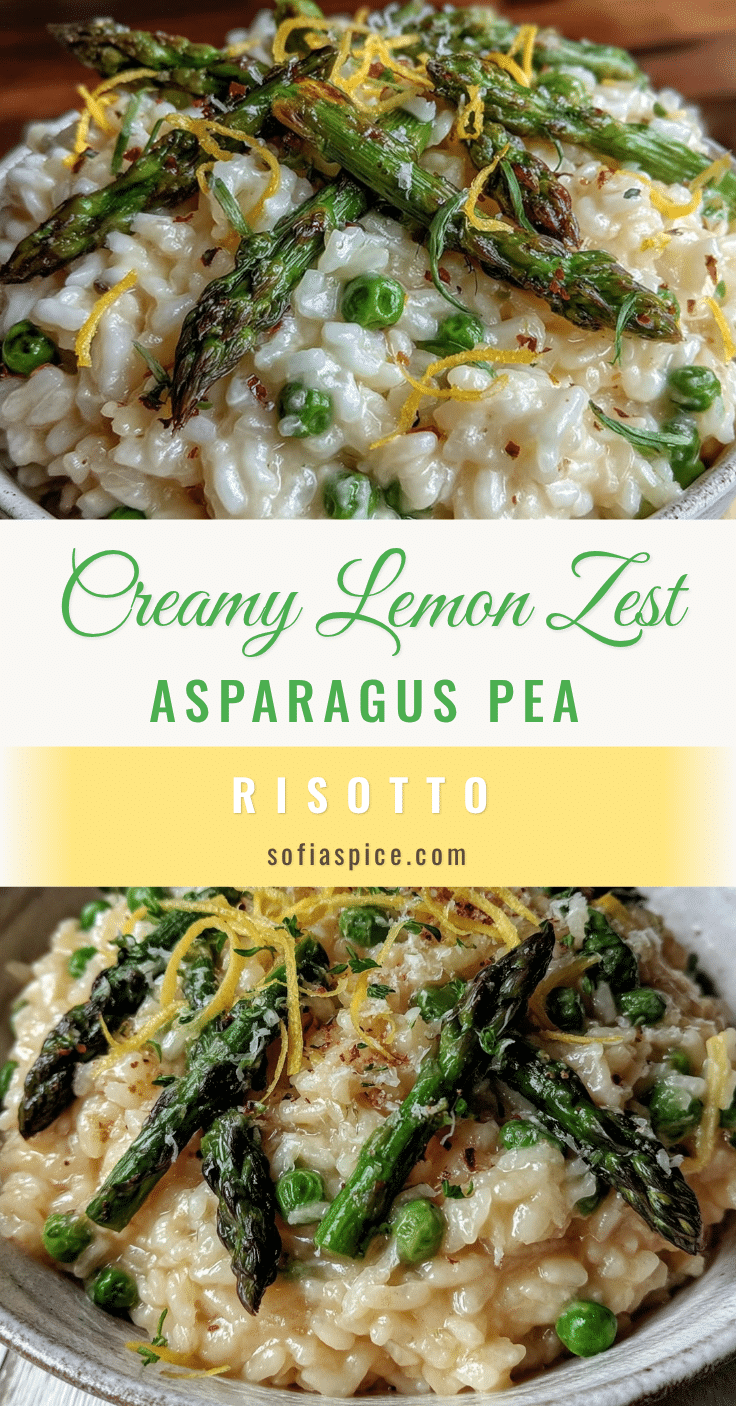
Creamy Asparagus and Pea Risotto Recipe with Easy Lemon Zest Twist

A creamy risotto featuring fresh asparagus and peas with a bright lemon zest twist, perfect for a comforting yet fresh meal ready in about 30 minutes.
- Prep Time: 10 minutes
- Cook Time: 25 minutes
- Total Time: 35 minutes
- Yield: 4 servings 1x
- Category: Main Course
- Cuisine: Italian
Ingredients
- 1 ½ cups (300 grams) Arborio rice
- 1 bunch (about 12 ounces / 340 grams) fresh asparagus, trimmed and cut into 1-inch pieces
- 1 cup (150 grams) fresh or frozen peas
- 4 cups (1 liter) vegetable broth, warmed
- ½ cup (120 ml) dry white wine (optional but recommended)
- 1 small shallot, finely chopped
- 2 cloves garlic, minced
- 3 tablespoons (45 grams) unsalted butter, divided
- ½ cup (50 grams) Parmesan cheese, freshly grated
- Zest of 1 medium lemon
- 1 tablespoon olive oil
- Salt and freshly ground black pepper, to taste
Instructions
- Prepare your ingredients: Trim and cut the asparagus into 1-inch pieces. If using fresh peas, shell them; if frozen, thaw slightly. Warm your vegetable broth in a separate pot and keep it simmering gently on low heat.
- Sauté the aromatics: In your heavy-bottomed pan, heat 1 tablespoon of olive oil and 1 tablespoon of butter over medium heat. Add the finely chopped shallot and sauté for 2-3 minutes until translucent and fragrant. Toss in the minced garlic and cook for another 30 seconds, careful not to let it burn.
- Toast the rice: Add the arborio rice to the pan and stir to coat the grains with the buttery shallot mixture. Toast for about 2 minutes until the edges of the rice become translucent.
- Deglaze with wine: Pour in the ½ cup (120 ml) dry white wine. Stir continuously until the wine mostly absorbs. If you skip the wine, just move to the next step.
- Add broth gradually: Begin adding warm vegetable broth, about ½ cup (120 ml) at a time. Stir frequently, letting the rice absorb the liquid before adding more. This process takes about 20-25 minutes. Keep the heat at medium-low to maintain a gentle simmer.
- Cook asparagus and peas: About halfway through the broth addition (after around 10 minutes), stir in the asparagus pieces. Add the peas during the last 5 minutes to keep their bright color and sweetness intact.
- Finish with butter and cheese: Once the rice is tender but still has a slight bite (al dente), remove the pan from heat. Stir in the remaining 2 tablespoons (30 grams) of butter and the grated Parmesan cheese until melted and creamy. Season with salt and freshly ground black pepper to taste.
- Add lemon zest: Finally, fold in the fresh lemon zest for that burst of brightness that makes this risotto unforgettable. Taste and adjust seasoning if needed.
- Serve immediately: Spoon onto warm plates and enjoy right away for the best texture and flavor.
Notes
If risotto gets too thick while resting, stir in a splash of warm broth or water to loosen it. Keep broth warm to avoid shocking the rice. Stir gently but consistently to release starch gradually. Add asparagus halfway through cooking to keep it tender-crisp. Use fresh lemon zest for best flavor. Season in layers and avoid overcooking rice to maintain al dente texture. For dairy-free, swap butter for olive oil and Parmesan for vegan alternative. Check broth for gluten-free compliance.
Nutrition
- Serving Size: 1 serving (about 1 c
- Calories: 375
- Sugar: 4
- Sodium: 600
- Fat: 10
- Saturated Fat: 6
- Carbohydrates: 55
- Fiber: 5
- Protein: 11
Keywords: risotto, asparagus, peas, lemon zest, creamy risotto, vegetarian, spring recipe, easy dinner