I did not trust ground beef as a stand-in for bulgogi when I first heard about this recipe. Bulgogi, to me, was always those thinly sliced, marinated beef strips that required careful grilling or pan-searing. The idea of using ground beef—well, it sounded like a shortcut that would sacrifice flavor and texture. Honestly, I thought it would just turn into a salty, mushy mess, nothing close to the authentic Korean experience I craved.
But one evening, pressed for time and craving something hearty, I gave it a shot. Cooking the bulgogi marinade with ground beef felt strange at first; the sizzling in the pan didn’t have the same satisfying sear as whole slices. Still, as the aroma filled my kitchen—sweet soy mingling with toasted sesame and a hint of garlic—I was hooked. The texture surprised me too: juicy, slightly caramelized bits that somehow captured the essence of traditional bulgogi but with an ease I hadn’t expected.
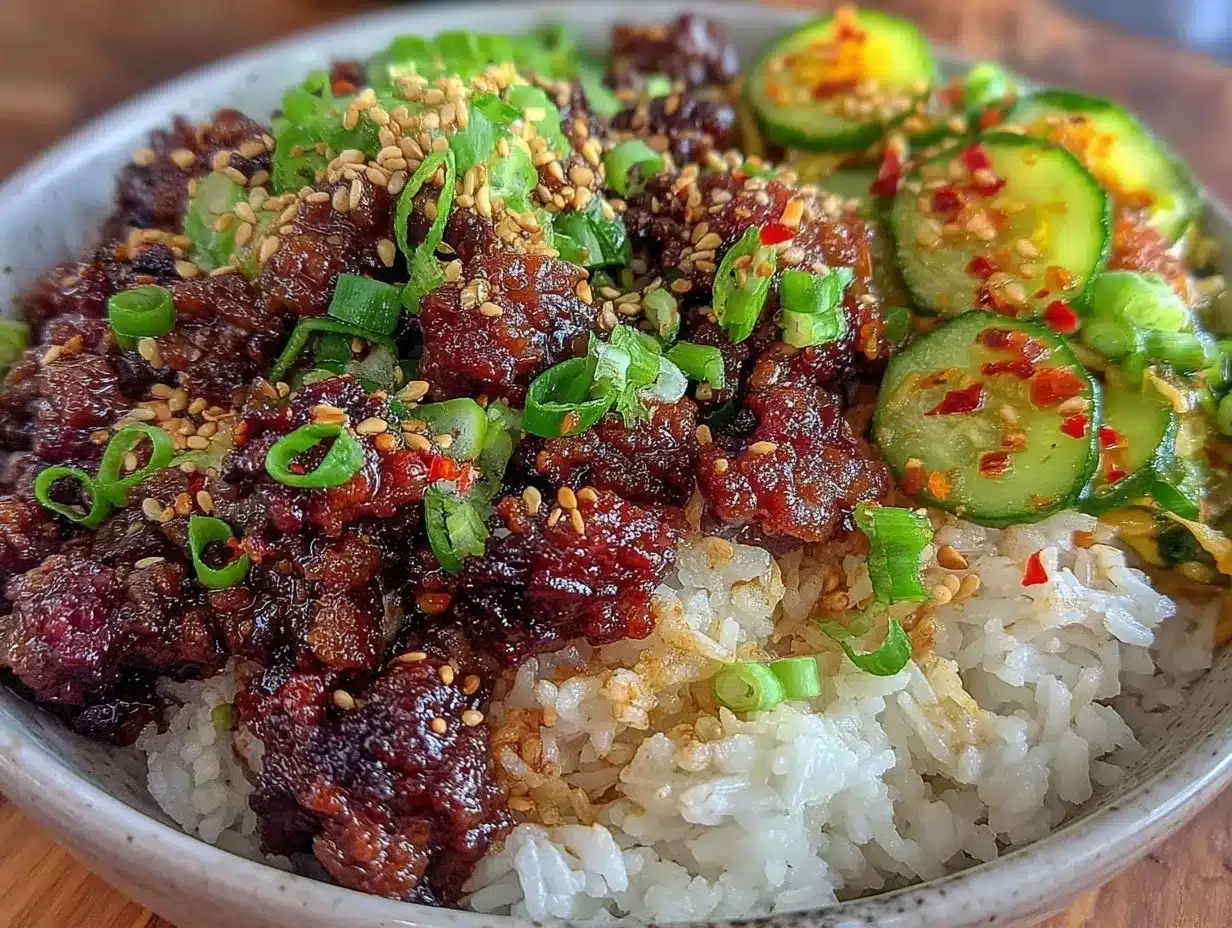
I remember scooping that first bite over steaming white rice, the hint of green onions and sesame seeds popping with flavor, and realizing this was a new kind of comfort food. It’s the kind of dish that feels familiar yet exciting, quick enough for a weeknight but full of layers you don’t get from a simple stir-fry. And honestly, since then, this savory Korean-style bulgogi ground beef rice bowl has been a quiet favorite in my dinner rotation—always ready to satisfy those moments when I want something delicious but fuss-free.
What stuck with me was how this recipe made bulgogi approachable, without the intimidation of thinly slicing meat or long marinating times. It’s a dish I trust to deliver flavor and warmth, any day of the week.
Why You’ll Love This Savory Korean-Style Bulgogi Ground Beef Rice Bowl Recipe
After testing this recipe multiple times, I’m confident it’s a keeper—and here’s why:
- Quick & Easy: You can have this bulgogi ground beef rice bowl on the table in about 25 minutes, perfect for those busy weeknights when you don’t want to compromise taste.
- Simple Ingredients: No exotic pantry hunting here—just ground beef, soy sauce, garlic, and a handful of kitchen staples. Even the kimchi or pickled veggies you add can be store-bought for convenience.
- Perfect for Any Occasion: Whether it’s a solo dinner or an informal family meal, this rice bowl feels special without being fussy. It’s a great way to bring a little Korean flavor into your everyday routine.
- Crowd-Pleaser: I’ve served this to friends who normally shy away from Korean food, and it’s always met with enthusiastic second helpings. The mild sweetness balanced with a hint of spice wins over all ages.
- Unbelievably Delicious: The savory-sweet marinade coats the beef perfectly, creating those caramelized edges and deep flavor notes you want in bulgogi, but with the ease of ground meat.
What sets this recipe apart is the marinade balance—a mix of soy sauce, brown sugar, garlic, and toasted sesame oil that clings to the beef and penetrates every bite. I also like to add a touch of grated pear or apple for natural sweetness and tenderizing effect, a little trick I picked up from traditional bulgogi recipes but adapted it to this quick ground beef version.
It’s honestly a dish that feels like comfort food reimagined—faster, easier, but with all the soul and warmth you want from Korean cuisine. Plus, it pairs well with simple sides like a fresh cucumber salad or a quick fried egg on top, making it versatile for any meal plan.
What Ingredients You Will Need
This recipe uses straightforward, wholesome ingredients to make a bold-flavored, satisfying meal without fuss. Most are pantry staples, with a few that might require a quick grocery run but are worth having on hand for many Asian-inspired dishes.
- Ground beef: 1 pound (450g), preferably 80/20 for juiciness and flavor
- Soy sauce: 1/4 cup (60ml), low sodium if preferred, brands like Kikkoman work well
- Brown sugar: 2 tablespoons, packed (adds sweetness and caramelization)
- Garlic: 3 cloves, minced fresh for punchy aroma
- Ginger: 1 teaspoon, freshly grated (optional but recommended for authentic depth)
- Toasted sesame oil: 1 tablespoon, gives that nutty, fragrant finish
- Green onions: 2 stalks, thinly sliced, for freshness and garnish
- Gochujang (Korean chili paste): 1 tablespoon, optional for mild heat and complexity
- Grated Asian pear or apple: 1/4 cup (about 50g), optional but adds natural sweetness and tenderizes the beef
- White or jasmine rice: 2 cups cooked (400g), to serve as the base
- Sesame seeds: 1 tablespoon, toasted, for garnish and crunch
- Vegetables for topping: cucumber slices, shredded carrots, or kimchi, depending on what you like or have on hand
If you want a gluten-free version, swap soy sauce with tamari. For dairy-free, this recipe is naturally safe as is. I personally like to keep it simple but fresh garnishes like pickled radish or a fried egg add nice texture and flavor contrast.
Equipment Needed
- Large skillet or non-stick frying pan: Essential for cooking the ground beef evenly and allowing the marinade to caramelize.
- Mixing bowl: To combine the marinade ingredients and coat the beef thoroughly.
- Measuring cups and spoons: For precise seasoning balance.
- Rice cooker or pot: To prepare perfectly fluffy rice, jasmine or short-grain works best.
- Grater: Useful for fresh ginger and pear/apple if you’re using them.
If you don’t have a non-stick pan, a well-seasoned cast iron skillet works beautifully but watch the heat to avoid burning the sugar in the marinade. A rice cooker isn’t mandatory, but it makes the rice consistently perfect without babysitting.
Preparation Method
- Cook the rice: Start by rinsing 1 cup (200g) uncooked jasmine or short-grain rice under cold water until the water runs clear. Cook according to package instructions—typically 1 cup rice to 1.25 cups water. This usually takes about 15-20 minutes. Keep warm when done.
- Prepare the marinade: In a mixing bowl, whisk together 1/4 cup (60ml) soy sauce, 2 tablespoons brown sugar, 3 minced garlic cloves, 1 teaspoon grated ginger, 1 tablespoon toasted sesame oil, 1 tablespoon gochujang (if using), and 1/4 cup grated Asian pear or apple. Stir until sugar dissolves completely.
- Mix beef and marinade: Add 1 pound (450g) ground beef to the marinade. Use your hands or a spoon to combine well, making sure each bit of beef is coated. Let it sit for 10 minutes if time allows — this really helps flavors soak in.
- Cook the beef: Heat a large skillet over medium-high heat. Pour in the marinated beef and spread it out evenly. Let it cook undisturbed for 3-4 minutes to get some caramelized bits, then stir and break up the meat. Continue cooking for another 5-7 minutes until beef is fully cooked and the sauce thickens slightly.
- Final touches: Taste and adjust seasoning if needed — a splash more soy or a pinch of sugar can balance it out. Stir in sliced green onions at the last minute for freshness.
- Assemble the bowl: Spoon warm rice into bowls, top generously with the bulgogi ground beef mixture. Sprinkle with toasted sesame seeds and add your choice of toppings like cucumber slices, shredded carrots, or kimchi.
Pro tip: Watch the heat closely to avoid burning the marinade’s sugar. If the pan gets dry, add a teaspoon of water to loosen any sticky bits. That’s where the flavor hides!
Cooking Tips & Techniques
Cooking bulgogi ground beef is about balancing quick caramelization with thorough cooking. Here are some things I’ve learned:
- Don’t overcrowd the pan: If you dump all the beef at once, it steams instead of browns. Cook in batches if needed for best caramelization.
- Use fresh garlic and ginger: Powdered versions don’t give the same punch and brightness.
- Let the marinade rest: Even 10 minutes makes a difference in flavor melding—trust me, it’s worth the wait.
- Adjust sweetness and heat: If you prefer milder flavors, reduce the brown sugar or omit gochujang. For a spicy kick, add a pinch of red pepper flakes or more chili paste.
- Multitasking tip: Start the rice first since it takes the longest, then prep and cook the beef while it’s getting done.
- Leftovers reheat well: Reheat gently in a skillet with a splash of water to keep the meat juicy.
One mistake I made early on was rushing the cooking and stirring too often, which prevented the beef from getting those crave-worthy crispy edges. Patience here is key.
Variations & Adaptations
This bulgogi ground beef rice bowl is a great base to customize:
- Vegetarian option: Swap ground beef with crumbled firm tofu or cooked lentils. Use mushroom soy sauce for umami depth.
- Low-carb version: Serve over cauliflower rice or sautéed greens instead of traditional rice.
- Flavor twists: Add chopped kimchi into the beef while cooking for a tangy, spicy boost. Or sprinkle crushed peanuts for extra crunch.
- Different proteins: Try ground turkey or chicken with the same marinade for a lighter dish.
- Seasonal veggies: Top with roasted sweet potatoes or steamed broccoli to make it more filling and colorful.
I once added a fried egg on top, and it brought the dish to another level of comfort—runny yolk mixing with the savory beef? Yes, please.
Serving & Storage Suggestions
This bulgogi ground beef rice bowl is best served hot, fresh from the pan. The warm rice acts as the perfect canvas for the savory, slightly sweet beef.
For sides, crisp cucumber salad or quick pickled radishes balance the richness beautifully. A simple miso soup or steamed greens also pair nicely.
Store leftovers in an airtight container in the fridge for up to 3 days. When reheating, I recommend warming gently in a skillet over medium heat with a splash of water or broth to keep the beef juicy and prevent drying out.
Flavors actually deepen after a day, so if you can wait, the next-day bowl tastes even better. Just add fresh garnishes like sliced green onions or sesame seeds before serving.
Nutritional Information & Benefits
Per serving, this bulgogi ground beef rice bowl provides roughly:
| Calories | 550-600 kcal |
|---|---|
| Protein | 35g |
| Fat | 25g (mostly from beef and sesame oil) |
| Carbohydrates | 50g (mainly from rice and brown sugar) |
The key ingredients bring health benefits too: garlic and ginger offer anti-inflammatory properties, while sesame oil provides heart-healthy fats. Using lean ground beef can reduce saturated fat intake.
This recipe can easily be adapted for gluten-free diets by swapping soy sauce for tamari. Also, it’s naturally dairy-free, making it friendly for many dietary needs.
Conclusion
This savory Korean-style bulgogi ground beef rice bowl is a recipe I keep coming back to—not just because it’s quick and easy but because it delivers satisfying, layered flavors without a fuss. It’s approachable for cooks of all levels and flexible enough to fit your pantry and taste preferences.
Whether you’re new to Korean flavors or a longtime fan, this dish brings the best of bulgogi in a way that fits into busy weeknights. I love that it pairs so well with simple sides or can stand alone as a full meal.
Try making it your own by swapping veggies, adjusting the heat, or topping with a fried egg for extra indulgence. When you do, drop a comment to share your favorite tweaks—I always love hearing how others make this recipe their own.
Here’s to simple, delicious meals that don’t overcomplicate dinner but still bring a little excitement to the table.
FAQs About Savory Korean-Style Bulgogi Ground Beef Rice Bowl
Can I use ground turkey or chicken instead of beef?
Absolutely! Ground turkey or chicken works well with the marinade but may need slightly less cooking time to avoid drying out.
How long should I marinate the ground beef?
At least 10 minutes is ideal to let flavors soak in. If you have more time, marinating up to 30 minutes in the fridge enhances the taste even more.
What can I use if I don’t have gochujang?
If you don’t have gochujang, you can substitute with a mix of chili paste or a small amount of sriracha plus a pinch of sugar to mimic the sweet-spicy flavor.
Is this recipe freezer-friendly?
Yes, you can freeze cooked bulgogi ground beef in an airtight container for up to 2 months. Thaw overnight in the fridge before reheating.
What’s the best rice to serve with this dish?
Short-grain or jasmine rice works best as they have a slightly sticky texture that holds up well under the savory beef topping.
For those who enjoy hearty bowls like this, the creamy one-pot chicken alfredo pasta is another quick dinner favorite that pairs well in a weeknight rotation. And if you want something crispy to complement your rice bowls, the crispy air fryer chicken thighs deliver flavor and texture that’s hard to beat.
Pin This Recipe!
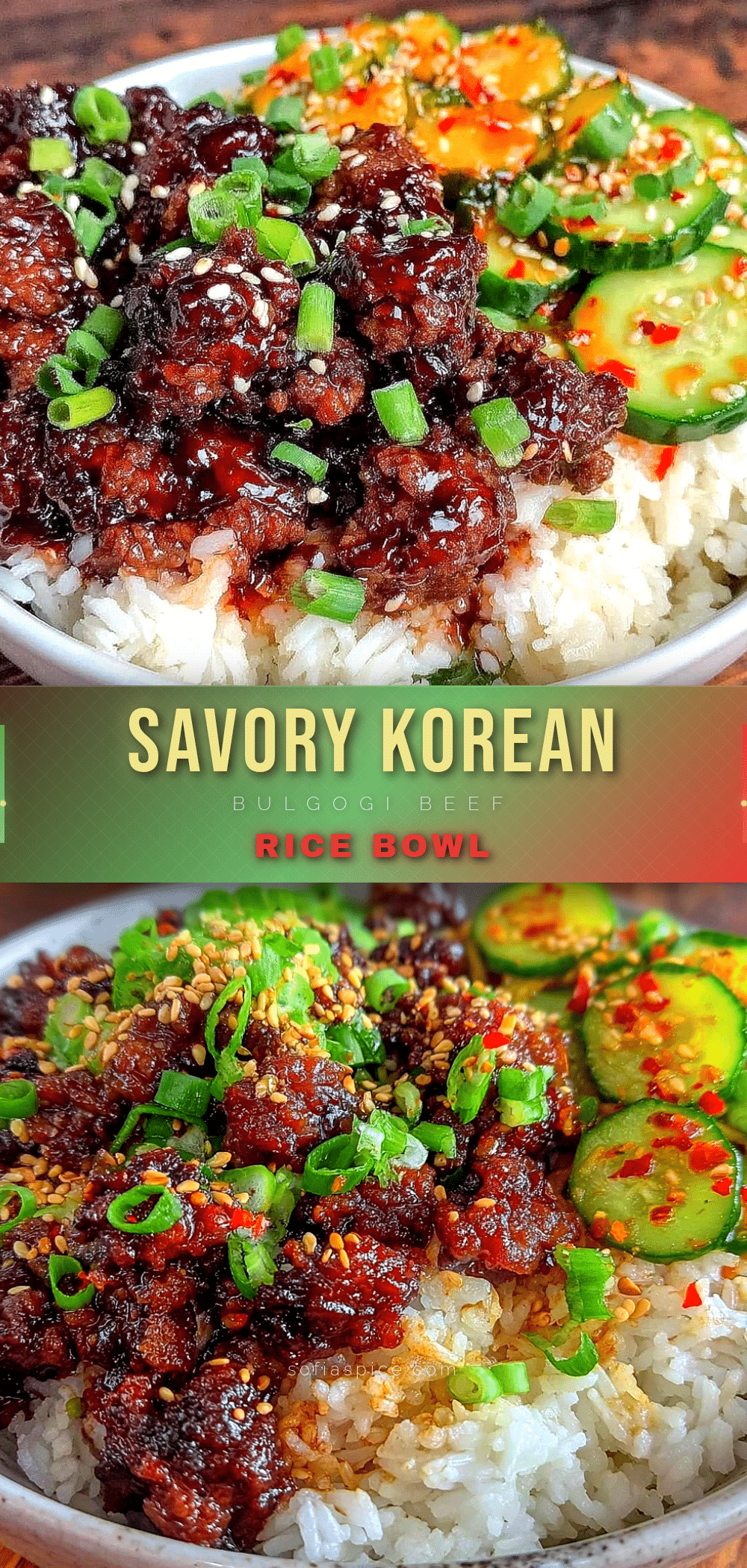
Savory Korean-Style Bulgogi Ground Beef Rice Bowl
A quick and easy Korean-inspired rice bowl featuring ground beef marinated in a savory-sweet bulgogi sauce, perfect for busy weeknights and packed with flavor.
- Prep Time: 10 minutes
- Cook Time: 15 minutes
- Total Time: 25 minutes
- Yield: 4 servings 1x
- Category: Main Course
- Cuisine: Korean
Ingredients
- 1 pound ground beef (80/20 preferred)
- 1/4 cup soy sauce (low sodium preferred)
- 2 tablespoons brown sugar, packed
- 3 cloves garlic, minced
- 1 teaspoon freshly grated ginger (optional)
- 1 tablespoon toasted sesame oil
- 2 stalks green onions, thinly sliced
- 1 tablespoon gochujang (Korean chili paste, optional)
- 1/4 cup grated Asian pear or apple (about 50g, optional)
- 2 cups cooked white or jasmine rice
- 1 tablespoon toasted sesame seeds
- Vegetables for topping: cucumber slices, shredded carrots, or kimchi
Instructions
- Rinse 1 cup uncooked jasmine or short-grain rice under cold water until water runs clear. Cook according to package instructions (typically 1 cup rice to 1.25 cups water), about 15-20 minutes. Keep warm.
- In a mixing bowl, whisk together soy sauce, brown sugar, minced garlic, grated ginger, toasted sesame oil, gochujang (if using), and grated Asian pear or apple until sugar dissolves.
- Add ground beef to the marinade and mix well to coat all the meat. Let sit for 10 minutes if possible to allow flavors to meld.
- Heat a large skillet over medium-high heat. Add the marinated beef and spread evenly. Cook undisturbed for 3-4 minutes to develop caramelized bits, then stir and break up the meat. Continue cooking for another 5-7 minutes until beef is fully cooked and sauce thickens slightly.
- Taste and adjust seasoning if needed. Stir in sliced green onions at the last minute.
- Assemble bowls by spooning warm rice into serving dishes. Top generously with bulgogi ground beef mixture. Sprinkle with toasted sesame seeds and add desired toppings such as cucumber slices, shredded carrots, or kimchi.
Notes
Do not overcrowd the pan to ensure proper caramelization. Let the marinade rest on the beef for at least 10 minutes for better flavor. Watch the heat to avoid burning the sugar in the marinade; add a teaspoon of water if pan gets dry. Leftovers reheat well in a skillet with a splash of water to keep beef juicy. For gluten-free, substitute soy sauce with tamari. Optional toppings like a fried egg or pickled radish add extra flavor and texture.
Nutrition
- Serving Size: 1 bowl (approximatel
- Calories: 575
- Sugar: 10
- Sodium: 800
- Fat: 25
- Saturated Fat: 9
- Carbohydrates: 50
- Fiber: 2
- Protein: 35
Keywords: bulgogi, ground beef, Korean rice bowl, easy dinner, weeknight meal, savory, sweet, quick recipe